

Somalia Orders UAE Ambassador to Leave Within 72 Hours as Diplomatic Dispute Deepens
Somalia has taken a major diplomatic step against the United Arab Emirates (UAE), ordering its ambassador to leave the country within 72 hours while recalling its own envoy from Abu Dhabi for consultations. The decision marks a significant escalation in tensions between the two countries, following growing accusations that the Gulf nation has been interfering in Somalia’s internal affairs and undermining its sovereignty.
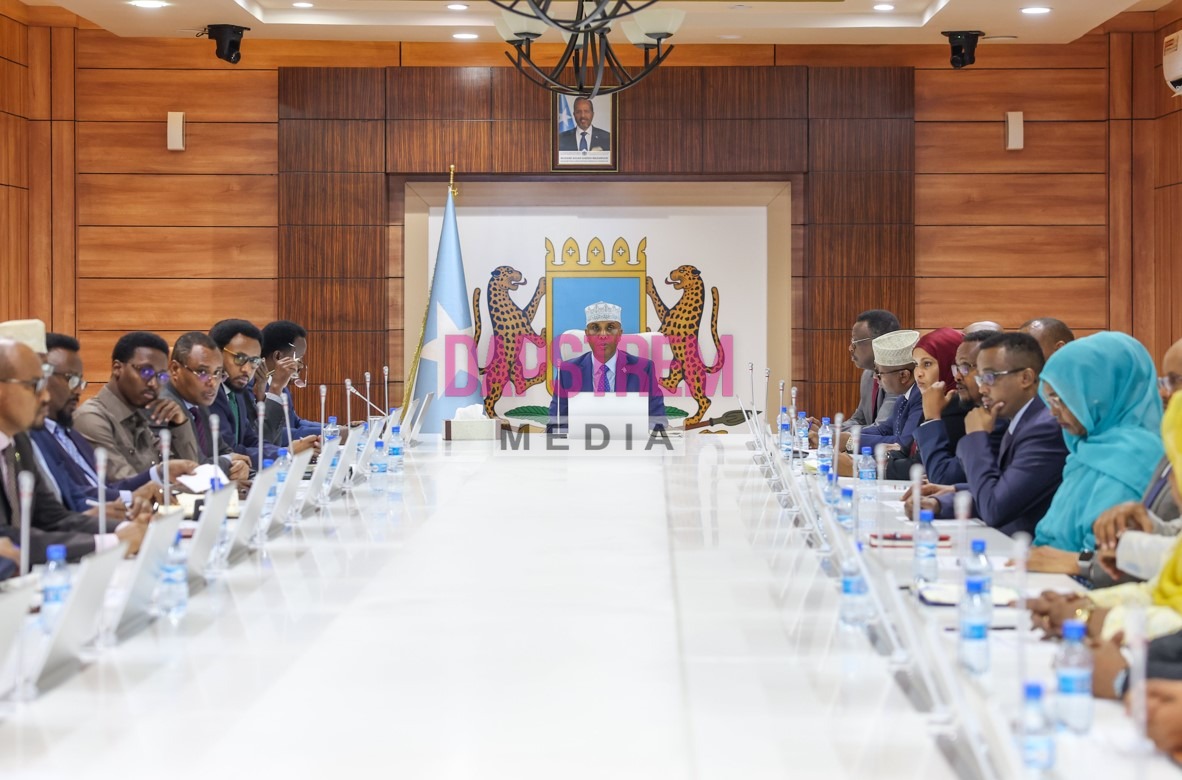
The announcement was made on Thursday, November 19, 2026, following a meeting of Somalia’s Federal Government Council of Ministers chaired by Prime Minister Hamza Abdi Barre in Mogadishu.
During the meeting, the Cabinet reviewed a report presented by the Ministry of Foreign Affairs and International Cooperation outlining what the government described as continued Emirati interference in Somalia’s domestic affairs. The report reportedly raised concerns about activities that Mogadishu believes threaten the country’s independence, territorial integrity, national security and political stability.
Following the discussions, the Cabinet directed the Foreign Affairs Ministry to formally notify the UAE ambassador to Somalia that he must leave the country within 72 hours. At the same time, Somalia ordered its ambassador in the UAE to return to Mogadishu for consultations with the country’s leadership.
Information Minister Abdulfatah Kasim Mohamud announced the decision after the Cabinet meeting, making it clear that the government considered the situation serious enough to require immediate diplomatic action.
The move comes just days after President Hassan Sheikh Mohamud publicly accused the UAE of interfering in Somalia’s internal affairs during a televised address to the nation. His remarks triggered a fresh exchange between officials from the two countries, further exposing the growing disagreement over political influence, security cooperation and control of strategic economic interests in Somalia.
Although the latest measures do not automatically mean that diplomatic relations between the two countries have been completely severed, they represent a serious deterioration in a relationship that has involved years of security cooperation, economic investment and political engagement.
The decision has also attracted attention across the Horn of Africa, where both countries have important strategic interests and where developments in Somalia can have wider implications for regional stability.
What Triggered Somalia’s Decision?
The diplomatic confrontation follows growing disagreements over the UAE’s relationship with Somalia’s federal government and regional administrations.
President Hassan Sheikh Mohamud has accused Abu Dhabi of pursuing political and security arrangements in different parts of Somalia without obtaining approval from the federal government in Mogadishu.
During his televised address on Tuesday, November 17, the Somali leader raised concerns about what he described as foreign interference in the country’s domestic affairs. He particularly questioned the establishment of military facilities and the support allegedly provided to security arrangements operating outside the control of federal institutions.
The President argued that Somalia’s sovereignty must be respected and that foreign governments cannot independently enter into agreements affecting the country’s national interests without involving the legally recognised federal authorities.
One of the major concerns raised by Mogadishu involves the UAE’s relationships with regional administrations, including Somaliland, Puntland and Jubaland.
These administrations have maintained varying levels of political, economic and security cooperation with Abu Dhabi. However, the federal government has repeatedly insisted that agreements involving foreign governments must be coordinated through national institutions.
For President Hassan Sheikh’s administration, the issue goes beyond ordinary diplomatic disagreements. It touches on the country’s constitutional authority, national unity and the ability of the federal government to control decisions affecting Somalia’s international relations.
The government believes that separate agreements between foreign powers and regional administrations risk weakening the authority of Mogadishu and creating competing centres of influence within the country.
The UAE, however, has rejected accusations of interference and defended its longstanding engagement with Somalia.
The disagreement has therefore developed into a broader diplomatic confrontation, with both sides maintaining sharply different positions on the nature and legitimacy of their relationship.
Somalia Accuses UAE of Undermining Its Sovereignty
Somalia’s government has made sovereignty the central issue in its latest diplomatic response.
In statements issued by the Ministry of Foreign Affairs, Mogadishu expressed serious concern over what it described as repeated actions by the UAE that undermine Somalia’s territorial integrity, national unity and political independence.
The ministry argued that the federal government is the country’s recognised authority responsible for conducting foreign relations and negotiating agreements with other nations.
It also rejected what it described as parallel security arrangements involving foreign governments and local administrations without the approval of national institutions.
The government maintains that foreign military cooperation, security agreements and economic arrangements affecting Somalia must follow established constitutional and diplomatic procedures.
This position reflects a longstanding challenge facing Somalia as it continues rebuilding national institutions after decades of conflict and political instability.
Although the country has made progress in establishing federal institutions, relations between Mogadishu and regional administrations have remained complicated. Disagreements over political authority, resource management and security responsibilities have frequently created tensions between the federal government and regional leaders.
The involvement of foreign governments in these relationships has added another layer of complexity.
Somalia’s leadership is concerned that external partnerships with regional administrations could further weaken national institutions and make it difficult to establish a unified approach to security and economic development.
President Hassan Sheikh has consequently called for foreign governments to respect Somalia’s federal structures and conduct their engagements through the central government.
The latest expulsion order demonstrates how seriously his administration views the matter.
However, the allegations remain disputed, and the UAE has rejected claims that it has been undermining Somalia’s sovereignty.
The Strategic Importance of Berbera, Bosaso and Kismayo Ports
One of the biggest issues behind the diplomatic dispute involves the UAE’s economic and strategic interests in Somalia, particularly its connections to major ports along the country’s coastline.
Somalia occupies an important geographical position along the Horn of Africa, with an extensive coastline bordering the Indian Ocean and the Gulf of Aden. Its location makes it strategically important for international shipping, trade and regional security.
Among the areas attracting attention are the ports of Berbera, Bosaso and Kismayo.
The UAE has developed commercial and economic relationships involving these ports, with investments and arrangements connected to maritime trade, infrastructure and security.
Berbera, located in Somaliland, has become particularly important because of its position along major international shipping routes. The port also offers a potential trade connection to Ethiopia, a landlocked country that depends heavily on neighbouring countries for access to international markets.
Bosaso, in Puntland, is another important commercial centre. Its location along the Gulf of Aden gives it strategic importance for maritime activities and trade.
Kismayo, in Jubaland, is also an important port city in southern Somalia, serving commercial and regional transportation interests.
However, Mogadishu has repeatedly questioned agreements involving these facilities when they are negotiated without the federal government’s approval.
The Somali government argues that ports and other strategic national assets should not become subjects of independent foreign agreements that bypass national institutions.
This disagreement has become a major source of tension because the UAE maintains relationships with several regional administrations that have their own political and economic interests.
For Somalia’s federal leadership, the issue is about ensuring that economic development does not come at the expense of national unity.
For the UAE, its engagement with these areas forms part of broader commercial and strategic interests across the Red Sea, the Gulf of Aden and the Horn of Africa.
The disagreement illustrates how investments in infrastructure can sometimes develop into complicated diplomatic and political disputes, particularly in countries where authority is shared between federal and regional administrations.
Somalia Had Already Cancelled Agreements With the UAE
Thursday’s decision did not emerge without warning. It followed months of deteriorating relations between Mogadishu and Abu Dhabi.
In January 2026, Somalia’s Cabinet announced the cancellation of agreements with the UAE covering defence, security and economic cooperation.
The decision included arrangements involving port operations and other strategic partnerships.
At the time, the Somali government argued that the agreements and activities associated with them had become inconsistent with the country’s sovereignty and national interests.
The cancellation represented a major shift in relations between the two countries, considering the UAE’s longstanding involvement in Somalia’s security and economic development.
Somalia’s federal authorities also questioned the legitimacy of agreements entered into with regional administrations without the participation or approval of Mogadishu.
However, the decision was not universally accepted across Somalia.
Several regional administrations, particularly those maintaining close relationships with the UAE, rejected Mogadishu’s attempt to cancel the arrangements.
This created another disagreement between the federal government and regional authorities, further complicating efforts to establish a unified foreign policy.
The dispute also demonstrated the difficulties Somalia faces in balancing its federal political structure with the need to maintain control over international agreements.
Despite the January decision, disagreements continued, with both countries maintaining opposing positions on the legitimacy of their respective actions.
The latest expulsion order is therefore part of a longer diplomatic breakdown rather than an isolated disagreement.
It also suggests that earlier efforts to resolve the dispute through diplomatic channels have not produced the desired results.
UAE Rejects Somalia’s Accusations
The UAE has pushed back against accusations that it is interfering in Somalia’s internal affairs.
Anwar Gargash, diplomatic adviser to the UAE President, publicly criticised President Hassan Sheikh Mohamud’s remarks, questioning whether the Somali leader was placing personal political considerations ahead of the country’s national interests.
Gargash also defended the UAE’s longstanding relationship with Somalia, pointing to the support Abu Dhabi has provided to the country and its people over the years.
The UAE has maintained that its involvement in Somalia has included assistance in security, military training, humanitarian activities and economic development.
However, its relationships with regional administrations have become a major source of disagreement with the federal government.
The UAE has not immediately provided a detailed response to Thursday’s latest expulsion decision. Its previous position has been to reject accusations of interference.
This difference in positions has made it increasingly difficult for the two governments to find common ground.
While Somalia insists that foreign governments must respect its central institutions, the UAE has defended its historical engagement and rejected the suggestion that its activities amount to an attack on Somali sovereignty.
The diplomatic disagreement has also raised questions about whether the two countries can restore their relationship without addressing the underlying concerns surrounding security cooperation and regional partnerships.
For now, the two sides appear to be moving further apart, with public statements and diplomatic decisions replacing the cooperation that previously characterised parts of their relationship.
The UAE’s Longstanding Security and Military Role in Somalia
Another important aspect of the dispute involves the UAE’s historical contribution to Somalia’s security sector.
For several years, Abu Dhabi has supported different security initiatives in Somalia, including military training, logistical assistance and financial support for security personnel.
According to Reuters, the UAE trained hundreds of Somali troops between 2014 and 2018. It has also continued providing salary support and logistical assistance to approximately 3,400 military police and special forces personnel in and around Mogadishu, according to Somali sources cited in the report.
This involvement has made the UAE an important external partner in Somalia’s efforts to strengthen its security institutions.
Somalia continues to face serious security challenges, particularly from the militant group al-Shabaab, which has carried out attacks against government institutions, security personnel and civilians.
The government has therefore depended on international partners to support military operations, training programmes and other security initiatives.
However, the latest disagreement raises questions about the future of security cooperation between the two countries.
If diplomatic relations deteriorate further, Somalia could face additional challenges in maintaining some of the support previously provided by the UAE.
At the same time, the federal government appears determined to ensure that foreign security assistance operates within arrangements approved by its national institutions.
The situation presents a difficult balance. Somalia needs international partnerships to strengthen its security sector, but its leadership also wants to ensure that such partnerships do not undermine national authority.
The UAE, meanwhile, has its own strategic interests in the region and has invested considerable resources in maintaining relationships across the Horn of Africa.
The diplomatic dispute therefore extends beyond the ambassador’s departure. It involves important questions about military cooperation, foreign influence and the future direction of Somalia’s security partnerships.
What the Diplomatic Expulsion Means for Both Countries
Ordering an ambassador to leave within 72 hours is a serious diplomatic measure that communicates deep dissatisfaction between governments.
Ambassadors serve as the main representatives of their countries in foreign capitals. They facilitate communication, negotiate agreements, address disagreements and maintain relationships between governments.
When a country orders a foreign ambassador to leave, it signals that the existing diplomatic relationship has reached a difficult stage.
Somalia’s decision to recall its own ambassador from Abu Dhabi further demonstrates the seriousness of the situation.
The recall allows the Somali government to consult directly with its representative and assess the next steps in its relationship with the UAE.
It also reduces the normal diplomatic engagement between the two governments at a time when communication is particularly important.
However, the expulsion of an ambassador does not automatically mean that all diplomatic relations have been terminated.
The two countries can still maintain diplomatic channels through other representatives or intermediaries, depending on the decisions taken by their respective governments.
Nevertheless, the latest development could affect cooperation in several areas, including trade, security, investment and diplomatic engagement.
For Somalia, the move is intended to demonstrate that the government will not tolerate activities it considers a threat to national sovereignty.
For the UAE, the decision creates another diplomatic challenge in a region where it has invested heavily in commercial and strategic relationships.
The coming days will be particularly important in determining whether the disagreement develops into a complete diplomatic breakdown or creates an opportunity for renewed negotiations.
Regional Implications for the Horn of Africa
The diplomatic dispute between Somalia and the UAE comes at a time when the Horn of Africa is experiencing growing geopolitical competition involving several regional and international powers.
Countries in the region have increasingly attracted foreign investment because of their strategic locations, natural resources, ports and access to important international shipping routes.
The Red Sea and Gulf of Aden are particularly important because they connect major international trade routes between Europe, Asia and Africa.
The UAE has expanded its economic and security relationships across the region, investing in ports, infrastructure and other strategic projects.
Somalia’s position along these important waterways makes it an especially significant country in the broader geopolitical environment.
The latest disagreement could therefore attract the attention of other countries with commercial, security and diplomatic interests in the region.
It also presents challenges for regional cooperation, particularly at a time when governments are dealing with security threats, economic pressures and political disagreements.
For neighbouring countries, stability in Somalia remains important because developments there can affect regional security, trade and cross-border relations.
Kenya, for instance, has significant security and economic interests in Somalia and has previously been involved in regional efforts to address instability.
Any prolonged diplomatic confrontation involving Somalia and an influential Gulf partner could therefore have implications beyond the two countries.
However, the immediate focus remains on whether Mogadishu and Abu Dhabi can find a diplomatic solution before the disagreement develops into a more serious regional confrontation.
What Happens Next?
With the UAE ambassador ordered to leave within 72 hours and Somalia’s own envoy recalled to Mogadishu, attention is now turning to the next steps both governments will take.
The Somali government has maintained that protecting national sovereignty and territorial integrity remains a priority.
Its leadership is expected to continue pushing for all foreign engagements involving Somalia to be conducted through the federal government.
The UAE, on the other hand, will have to decide how to respond to the latest diplomatic measures while protecting its interests in Somalia and the wider Horn of Africa.
The possibility of renewed diplomatic negotiations remains important because both countries have previously maintained extensive economic and security relationships.
A prolonged breakdown could affect businesses, investment arrangements and security cooperation that have developed over several years.
The international community will also be watching the situation, particularly because Somalia continues to face significant security and political challenges.
For now, the 72-hour deadline represents the clearest indication yet of how far relations between Mogadishu and Abu Dhabi have deteriorated.
Somalia’s decision to order the UAE ambassador to leave within 72 hours marks a major escalation in diplomatic tensions between the two countries.
The disagreement centres on allegations of interference in Somalia’s internal affairs, competing political and security arrangements, and disagreements over strategic ports and regional partnerships.
President Hassan Sheikh Mohamud’s administration maintains that the country’s sovereignty must be respected and that foreign governments should conduct their dealings through federal institutions.
The UAE has rejected accusations of interference and defended its longstanding involvement in Somalia.
As both countries navigate the diplomatic fallout, the coming days could determine whether the dispute leads to further isolation or creates an opportunity for negotiations.
Beyond the immediate diplomatic confrontation, the situation highlights the growing importance of sovereignty, political authority and strategic economic interests in the Horn of Africa.
The biggest question now is whether Somalia and the UAE can resolve their differences without permanently damaging a relationship that has played an important role in the region’s security and economic affairs.