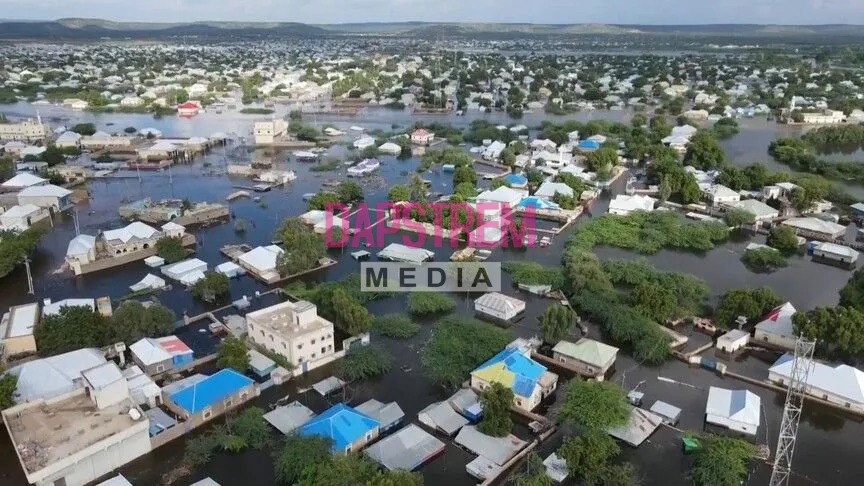
Somalia Floods Could Displace 874,000 People Over Next Three Months as IOM Warns of Growing Humanitarian Crisis
Nearly 874,000 people in Somalia could be forced to leave their homes over the next three months as heavy rainfall and rising river levels threaten communities already struggling with drought, hunger and repeated displacement.
The International Organization for Migration (IOM) issued the warning on Wednesday, October 21, 2026, citing projections developed jointly with the Danish Refugee Council. The estimates indicate that 874,319 people could be displaced between October and December, with flooding expected to account for approximately 92 per cent of the projected displacement.
The warning comes as Somalia enters the Deyr rainy season, which runs from October to December. Weather forecasts point to above-normal rainfall in several parts of the country, increasing concerns that rivers could overflow and flood settlements, farmland and essential infrastructure.
For thousands of families living in low-lying areas, the coming weeks could determine whether they remain in their homes or are forced to seek shelter elsewhere. The anticipated floods threaten to destroy houses, damage crops, kill livestock and disrupt access to clean water, healthcare and food supplies.
The situation is particularly concerning because many communities have yet to recover from previous climate shocks. Repeated droughts have weakened household incomes, depleted food reserves and forced families to leave their homes in search of assistance and better living conditions.
Humanitarian agencies fear that another major flooding emergency could deepen the existing crisis and increase pressure on displacement camps and host communities. Families that have already lost homes and livelihoods may have few resources left to help them survive another disaster.
IOM Somalia Chief of Mission Manuel Marques Pereira warned that hundreds of thousands of people could lose their homes within weeks if the anticipated flooding intensifies. He called for urgent financial support to help communities protect their homes and livelihoods, move to safer locations when necessary and avoid another cycle of displacement.
The agency has stressed that the risk remains manageable if authorities and humanitarian partners act early. However, preparations are being constrained by a significant funding gap, raising concerns about whether enough resources will be available to support the people most at risk.
Flood-prone communities face the greatest danger
Several parts of Somalia are facing an increased risk as heavy rainfall threatens to raise river levels and flood vulnerable settlements. IOM has identified Beletweyne and Gaalkacyo among the locations facing particularly serious risks of displacement.
Nearly 229,000 people in Beletweyne could be displaced, while approximately 82,000 people in Gaalkacyo are also considered at risk. These projections highlight the scale of the potential emergency and the importance of directing preparedness efforts towards communities likely to experience the greatest impact.
Beletweyne, located along the Shabelle River, has experienced destructive flooding in previous rainy seasons. Communities living close to the river are especially vulnerable when heavy rainfall causes water levels to rise beyond the riverbanks.
Rising river levels can inundate residential neighbourhoods, destroy household property and cut off roads connecting communities to markets and essential services. Even when floodwaters do not completely destroy homes, damage to buildings and surrounding infrastructure can make it unsafe for residents to remain in affected areas.
Gaalkacyo and other vulnerable locations also face risks from intense rainfall, localised flooding and the disruption of essential services. The scale of the impact will depend on rainfall patterns, river conditions, drainage capacity and the ability of authorities to move people away from dangerous areas before floodwaters arrive.
IOM has reported early signs of the growing threat in several locations. In Dollow, the Jubba River was approaching flood levels, while the Shabelle River was rising towards the top of its banks in Jowhar. Heavy rainfall in Baidoa had also damaged houses and forced some families to flee affected neighbourhoods.
These developments show why humanitarian agencies are calling for immediate action rather than waiting until widespread flooding occurs. Once water covers roads and residential areas, evacuation operations become more difficult and emergency teams may struggle to reach people who need assistance.
Authorities must therefore identify high-risk settlements, communicate warnings clearly and prepare evacuation routes before conditions deteriorate. Families may also need help identifying safer locations where they can stay if their homes become inaccessible or unsafe.
The danger extends beyond people living near rivers. Heavy rainfall can overwhelm drainage systems, flood informal settlements and damage roads even in areas that are not directly beside major waterways. This makes local assessments and early warning systems essential for identifying communities that could be affected.