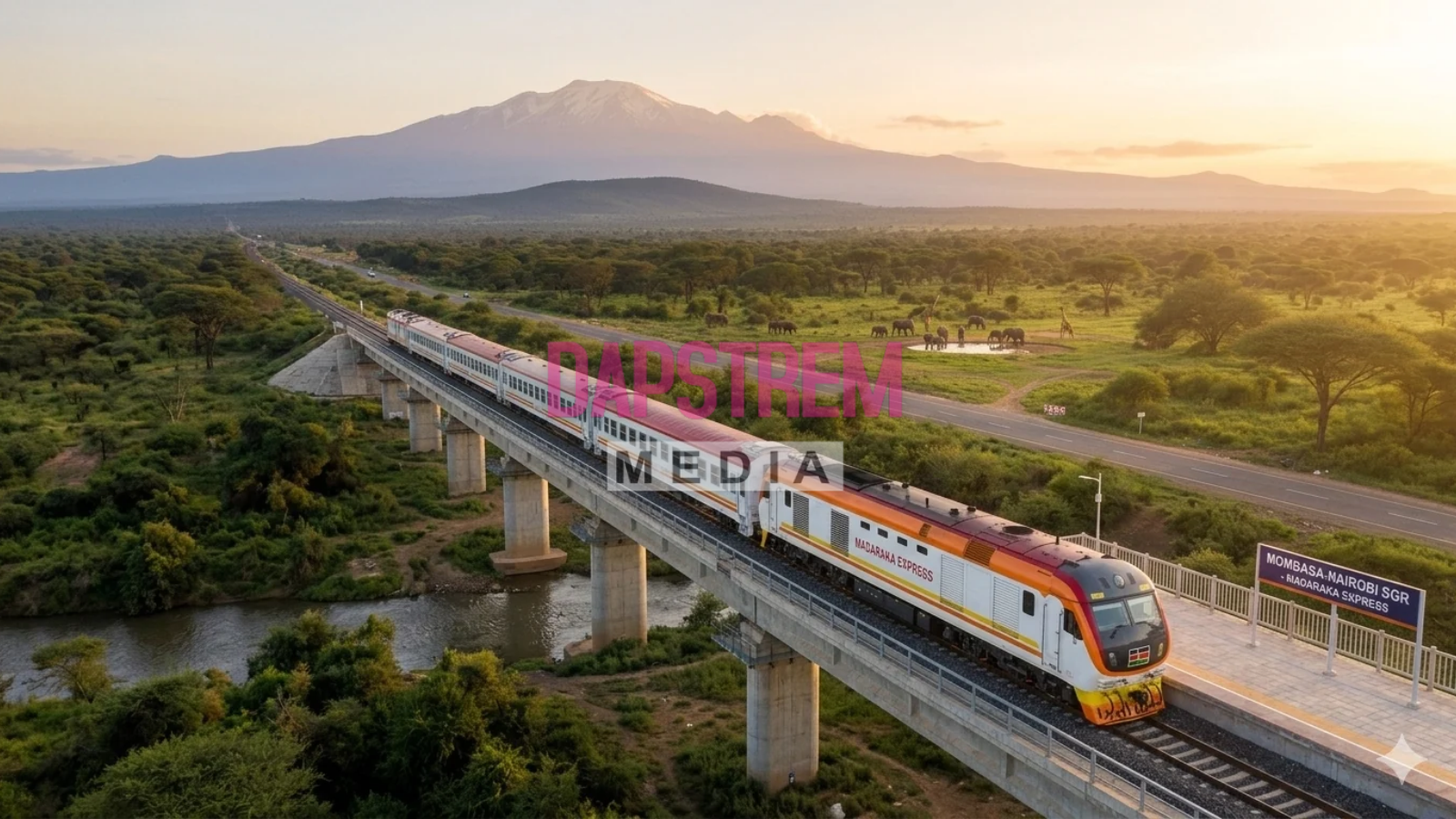
Kenya’s Standard Gauge Railway (SGR) recorded a sharp decline in passenger traffic in September 2026, with the number of travellers falling by 28 per cent as passenger revenue dropped by Sh113.3 million, raising fresh questions about the railway’s ability to sustain growth in its passenger business.
Data from the Kenya National Bureau of Statistics (KNBS), contained in its September 2026 Leading Economic Indicators report, shows that the railway transported 208,542 passengers during the month, down from 289,689 recorded in August.
The decline represents 81,147 fewer passengers in a single month, reversing some of the gains recorded during the preceding month when travel demand was significantly higher.
The drop in passenger numbers was accompanied by a reduction in ticket revenue, which fell from Sh505.3 million in August to Sh392 million in September, representing a decline of approximately 22.4 per cent.
The figures highlight the changing demand for passenger rail services, which remain an important component of Kenya’s transport network, particularly along the Nairobi-Mombasa corridor.
September decline follows strong August travel demand
The August figures reflected a particularly strong period for domestic travel, with school holidays typically encouraging families, students and holidaymakers to move between major towns.
The September slowdown could therefore partly reflect the return to normal travel patterns after the holiday period. However, KNBS did not provide a specific explanation for the decline, meaning seasonal demand remains a possible explanation rather than an established cause.
The latest figures also show that the decline was not necessarily a reversal of the railway’s longer-term recovery.
A comparison with September 2025 indicates that SGR passenger numbers actually increased from 192,802 to 208,542, representing growth of approximately 8.2 per cent.
Passenger revenue also improved year-on-year, rising from Sh347.3 million to Sh392 million, an increase of about 12.9 per cent.
This suggests that although September recorded a significant month-on-month decline, the railway was still performing better than it did during the corresponding period last year.
SGR’s passenger business had been recovering
The latest decline comes after a period of improved passenger performance in the first half of 2026.
According to KNBS data reported by Business Daily, SGR transported approximately 1.31 million passengers between January and June 2026, compared with 1.19 million during the corresponding period in 2025.
Passenger revenue increased by 14.6 per cent to Sh2.37 billion from Sh2.07 billion, reflecting stronger demand and improved earnings from ticket sales.
April recorded the highest monthly passenger numbers during the first half, with 278,925 travellers generating Sh492.6 million in revenue.
The improved performance followed a difficult period in 2024, when passenger numbers fell after Kenya Railways increased fares by approximately 50 per cent in January.
The Nairobi-Mombasa economy-class fare rose from Sh1,000 to Sh1,500, while first-class tickets increased from Sh3,000 to Sh4,500.
The fare adjustment initially affected demand as some travellers reconsidered the cost of using the railway compared with alternative transport options.
However, passenger numbers began recovering as travellers continued to value the convenience, reliability and relatively predictable journey times offered by the train
Freight business also records a slowdown
The September decline extended beyond passenger services, with SGR’s cargo transportation business also recording reduced activity.
KNBS data shows that freight volumes fell from approximately 754,900 metric tonnes in August to 641,300 tonnes in September, representing a reduction of about 15 per cent.
Freight revenue also declined from approximately Sh1.72 billion to Sh1.68 billion, translating into a reduction of about Sh40 million.
The simultaneous decline in passenger and freight activity suggests that September was a weaker month for both major SGR revenue streams.
Cargo transportation remains particularly important to the railway’s financial performance because it generates a substantial share of its operating income.
The railway plays a significant role in transporting goods from the Port of Mombasa to inland destinations, including the Nairobi metropolitan area and Naivasha.
However, its freight business has faced competition from road transport following the government’s decision to remove the compulsory cargo transportation arrangement that had previously directed some imports to the railway.
The change gave importers greater flexibility in choosing between rail and road transportation, increasing competitive pressure on Kenya Railways.
Metre Gauge Railway records growth
In contrast to the SGR’s declining passenger numbers, Kenya’s Metre Gauge Railway (MGR) recorded an increase in passenger traffic during September.
KNBS reported that MGR passenger numbers rose from 271,931 in August to 310,151 in September, representing an increase of approximately 14 per cent.
Revenue from the service also increased from Sh14.9 million to Sh16.2 million during the same period.
The contrasting performance highlights differences in demand across the country’s railway services, although the MGR operates on a different network and serves different travel needs.
SGR revenue and the debt burden
The latest figures also bring renewed attention to the financial sustainability of the Standard Gauge Railway, which has faced years of scrutiny over its construction costs, operating expenses and debt obligations.
Kenya borrowed approximately $5.08 billion from China Exim Bank in 2014 and 2015 to finance the Mombasa-Naivasha railway line.
Repayment obligations began in January 2020 following a five-year grace period, placing additional pressure on the railway’s ability to generate sufficient revenue.
In 2025, the SGR generated approximately Sh21.4 billion in total revenue, up from Sh18.1 billion in 2024, supported by improved passenger and cargo earnings.
The growth offered some relief to the railway’s financial position, although revenue performance alone does not establish whether the corporation can independently meet its operating costs and debt-related obligations.
Passenger revenue remains an important component of the railway’s income, but freight transportation continues to account for a significantly larger share of its earnings.
Consequently, sustained declines in both passenger numbers and cargo volumes could complicate efforts to strengthen the railway’s commercial performance.