Four Arrested Over Railway Line Vandalism in Nairobi’s Industrial Area
Four suspects have been arrested in Nairobi’s Industrial Area after they were allegedly caught cutting and stealing sections of railway tracks using specialised gas-cutting equipment. The arrests followed a tip-off from members of the public who spotted suspicious activities at the Fuji area, raising fresh concerns over the vandalism and theft of critical public infrastructure.
According to the Directorate of Criminal Investigations (DCI), the suspects were allegedly carrying out the operation under the cover of darkness when members of the public noticed them cutting through the railway tracks. The concerned individuals immediately alerted a Kenya Railways Corporation security officer, who relayed the information to police officers.
Officers from the Railways Police Station responded to the report and rushed to the scene. Upon arrival, they reportedly found the suspects hiding in nearby bushes in an apparent attempt to evade arrest. The officers moved in and apprehended all four before they could escape with additional railway components.
The incident has drawn attention to the security challenges facing railway infrastructure in Nairobi, particularly the vulnerability of public assets to organised vandalism and theft. Railway tracks are important components of the country’s transport network, and their destruction can expose infrastructure to safety risks, cause operational disruptions and lead to expensive repairs.
The arrests also highlight the importance of cooperation between members of the public and security agencies in preventing crime. In this case, information provided by observant members of the public enabled railway security personnel and police officers to respond before more railway property could allegedly be removed.
Gas cylinders and cutting equipment recovered
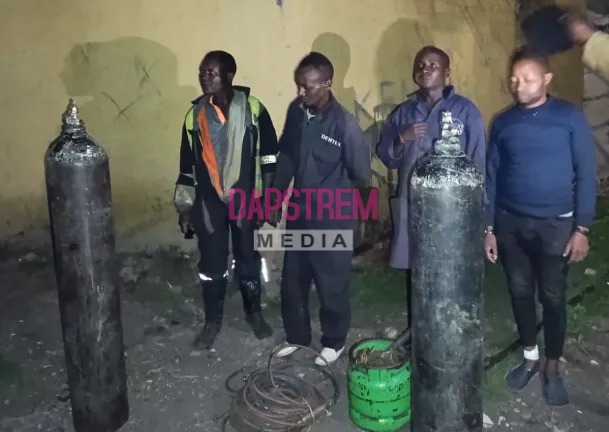
Following the arrests, officers conducted a search at the scene and recovered several items believed to have been used in the alleged vandalism operation.
The recovered equipment included two large gas cylinders, a long gas pipe and a smaller six-kilogramme gas cylinder. Investigators believe the equipment was used to cut through the railway tracks and remove sections of the metal rails.
Preliminary investigations established that sections of the railway line measuring between three and five metres had already been cut off and stolen.
The discovery suggests that the suspects had managed to remove part of the railway infrastructure before police arrived. Authorities are now working to establish the full extent of the damage and trace the missing railway components.
The recovered equipment is expected to form part of the evidence as detectives investigate the incident. Investigators may also seek to establish whether the suspects were acting independently or were connected to a wider network involved in stealing and selling railway materials.
The use of gas-cutting equipment is particularly concerning because removing railway tracks requires tools capable of cutting through heavy metal. Such an operation can cause significant damage to public infrastructure and potentially expose railway corridors to serious safety risks.
The DCI confirmed that efforts to trace and recover the stolen railway components were ongoing. The four suspects remained in police custody as detectives completed investigations and prepared for their arraignment in court.
citizen.digital+1
Public cooperation helps police make arrests
The successful arrest of the four suspects highlights the importance of public participation in crime prevention.
According to the DCI, the operation was uncovered after members of the public noticed suspicious activities around the railway line and reported the matter to Kenya Railways security personnel.
Their decision to alert authorities enabled officers to respond quickly and apprehend the suspects before they could allegedly remove more railway property.
Security agencies have repeatedly encouraged citizens to report suspicious activities, particularly around public infrastructure, where vandalism can occur without immediate detection.
Railway corridors cover extensive areas, making it difficult for security officers to monitor every section continuously. This creates opportunities for criminals to target isolated areas, especially at night when visibility is limited and fewer people may be present.
Members of the public who live or work near railway lines can therefore play an important role by reporting unusual activities, suspicious movements and attempts to interfere with railway equipment.
However, citizens are also encouraged to avoid confronting suspected criminals directly. Reporting suspicious activities to the relevant authorities allows security officers to respond while protecting the safety of those providing information.
The DCI has continued encouraging Kenyans to share information through its #FichuaKwaDCI initiative, which provides channels for reporting suspected criminal activities.
tv47.digital+1
Why railway vandalism is a serious concern
The theft and destruction of railway infrastructure goes beyond the loss of public property. It can have wider consequences for transport operations, public safety and the economy.
Railway lines are designed to withstand heavy loads and support the movement of trains carrying passengers and goods. Every component plays an important role in maintaining the safety and stability of railway operations.
When sections of a railway line are removed or damaged, the affected area may become unsafe for train movement. Depending on the location and nature of the damage, authorities may be forced to inspect the affected section, undertake repairs or introduce temporary operational restrictions.
Such disruptions can affect the movement of goods and passengers, particularly where railway services support businesses and communities that depend on reliable transport.
Kenya has invested heavily in developing and maintaining railway infrastructure as part of its wider transport network. Protecting these assets is therefore important to ensuring that public investments continue serving their intended purpose.
Vandalism also creates additional financial pressure because the government and railway authorities may be forced to spend money repairing damage that could have been prevented.
Resources that could otherwise support infrastructure development, maintenance and service improvements may instead be directed towards replacing stolen components and strengthening security.
The Industrial Area incident therefore serves as a reminder that protecting railway infrastructure requires consistent monitoring, public cooperation and firm enforcement of the law.
Investigations expected to establish whether more people were involved
Although four suspects have been arrested, investigators still have important questions to answer regarding the alleged theft.
Detectives will need to establish the circumstances surrounding the incident, how the suspects accessed the railway corridor and where the stolen sections were taken.
They may also investigate whether there were potential buyers or other individuals who could have assisted in transporting, storing or disposing of the stolen railway materials.
The recovery of the gas cylinders and cutting equipment could help investigators reconstruct how the operation was carried out and establish the extent of the damage.
Authorities will also need to determine whether similar incidents have occurred in the surrounding area and whether the suspects could be linked to other cases involving the theft of public infrastructure.
The ongoing investigation is important because railway vandalism can involve more than the individuals physically removing the materials. Where stolen infrastructure is sold or transported through organised channels, identifying the wider network may help prevent future incidents.
For now, the four suspects remain in custody as the authorities complete the necessary investigations ahead of their court appearance. Their alleged involvement will ultimately be determined through the legal process, and they remain entitled to the presumption of innocence until proven guilty.
DCI warns against destruction of public infrastructure
The Directorate of Criminal Investigations has reaffirmed its commitment to protecting critical national infrastructure and pursuing individuals involved in vandalising and stealing public assets.
The agency warned that those found responsible for damaging public property would be brought to account under the law.
The warning comes amid continued efforts by security agencies to address vandalism targeting important infrastructure across the country.
Public assets such as railway lines, electricity installations, communication equipment, roads and water facilities are essential to the functioning of the economy. Their destruction can inconvenience millions of people and undermine the delivery of essential services.
The government and relevant agencies therefore have a responsibility to strengthen security around these facilities while ensuring that suspected offenders are investigated and prosecuted in accordance with the law.
Kenya Railways Corporation also relies on cooperation with law enforcement agencies and surrounding communities to protect its infrastructure against theft and destruction.
The latest arrests demonstrate how information from members of the public can support these efforts and help prevent further damage.
Conclusion
The arrest of four suspects over the alleged vandalism of railway tracks in Nairobi’s Industrial Area has renewed attention on the need to protect public infrastructure against theft and destruction.
The suspects were reportedly caught after members of the public spotted them cutting railway tracks in the Fuji area and alerted Kenya Railways security officers. Police officers subsequently arrested the four, recovering two large gas cylinders, a long gas pipe and a six-kilogramme gas cylinder believed to have been used in the operation.
Investigators established that sections of railway line measuring between three and five metres had already been cut off and stolen, with efforts to recover the missing components continuing.
Beyond the arrests, the incident highlights the financial and safety risks associated with vandalism of essential infrastructure. Railway facilities represent significant public investments, and their protection is necessary to ensure reliable transport services and prevent avoidable repair costs.
The case also demonstrates the value of public cooperation in fighting crime. The information provided by members of the public enabled security officers to intervene and arrest the suspects before they could allegedly remove more railway property.
As investigations continue, authorities will be expected to establish the full extent of the damage, recover the stolen materials and determine whether other individuals were involved.
Protecting public infrastructure is a shared responsibility, and the latest arrests serve as a warning that vandalism and theft of essential national assets will attract serious scrutiny from security agencies.