Tanzania Court Sentences Tundu Lissu to Four Years in Prison After Acquitting Him of Treason
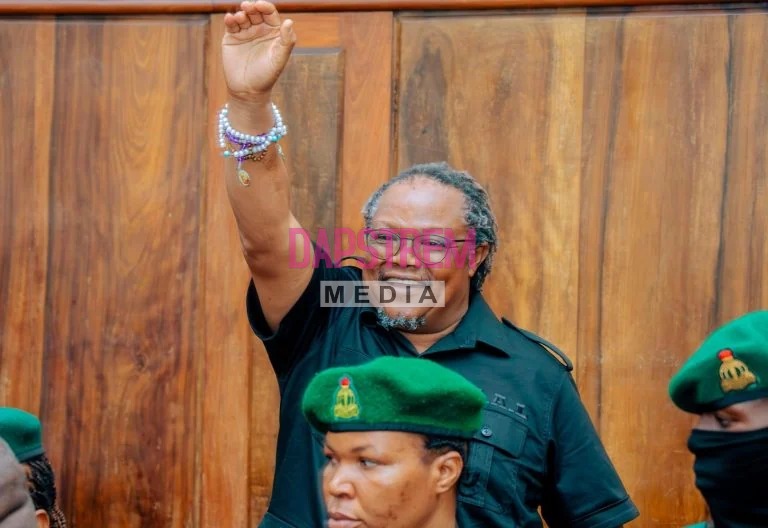
Tanzania’s political and legal landscape has been thrust into the spotlight after the High Court in Dar es Salaam sentenced opposition leader Tundu Lissu to four years in prison following a lengthy treason trial. The ruling, delivered on Friday, November 6, 2026, brought a major turn in a case that has attracted national, regional and international attention.
In a significant development, the court acquitted Lissu of the more serious treason charge but found him guilty of the lesser offence of incitement. The decision followed approximately 19 months of legal proceedings after the CHADEMA chairman was arrested in April 2025.
The verdict has sparked fresh debate about political freedom, electoral reforms, the independence of the justice system and the treatment of opposition leaders in Tanzania. Although Lissu escaped conviction on a charge that could have carried the death penalty, his four-year prison sentence means he will remain behind bars as he considers his next legal steps.
The three-judge panel delivered its decision at the High Court’s Dar es Salaam Sub-Registry. The judges concluded that the prosecution had failed to establish an essential element of the treason offence. However, they found that some of Lissu’s political statements amounted to incitement, leading to his conviction under a lesser charge.
The ruling represents a major development in one of Tanzania’s most closely watched political trials in recent years.
Court Clears Lissu of Treason but Finds Him Guilty of Incitement
Lissu had initially faced a treason charge under Tanzania’s Penal Code, an offence considered among the most serious in the country’s criminal justice system. The charge arose from remarks he allegedly made during a political meeting at CHADEMA headquarters in Dar es Salaam on April 3, 2025.
Prosecutors accused the opposition leader of making statements intended to mobilise citizens to disrupt the October 2025 general election and threaten the government.
The prosecution relied on remarks associated with his political campaign slogan, “No Reforms, No Election”. According to the State, the statements demonstrated an intention to prevent the election from taking place and mobilise public resistance against the authorities.
However, the judges ruled that the prosecution had not proved a key element required to establish treason. The court therefore acquitted Lissu of that offence.
Despite the acquittal, the judges found sufficient grounds to convict him of incitement. They concluded that his statements encouraging the public to prevent or disrupt the 2025 elections met the requirements of the lesser offence.
The court relied on Section 319 of Tanzania’s Criminal Procedure Act, which allows a court to convict an accused person of a lesser offence where the evidence supports it, even where that offence was not separately included in the original charge.
The judges subsequently found Lissu guilty of incitement under Section 390 of the Penal Code and sentenced him to four years in prison.
The decision has created a complicated outcome for the opposition leader. While he avoided the more serious treason conviction, he still faces a substantial prison term over statements made in the course of his political activities.
How Lissu’s Political Campaign Led to the Treason Case
The case traces back to Lissu’s campaign for electoral and constitutional reforms ahead of Tanzania’s October 2025 general election.
As chairman of CHADEMA, one of Tanzania’s leading opposition parties, Lissu had become a prominent voice in calls for changes to the country’s electoral system.
His campaign centred on the slogan “No Reforms, No Election”. Through the campaign, he and other opposition figures demanded changes they argued were necessary to guarantee credible, transparent and democratic elections.
Among the reforms sought by Lissu were the establishment of an electoral commission with independently appointed commissioners, greater protection for opposition parties and an end to alleged police intimidation during political activities.
He also called for political parties to have greater freedom to monitor the counting of votes without harassment. Another major demand involved allowing presidential election results to be challenged in court.
Lissu maintained that these demands were part of a legitimate political campaign aimed at strengthening Tanzania’s democratic institutions.
However, prosecutors interpreted some of his statements differently. They argued that his calls to block or disrupt the election went beyond political criticism and amounted to an attempt to intimidate the government and undermine the constitutional process.
The disagreement over the meaning and intention behind his remarks eventually became the central issue in the treason proceedings.
Lissu was arrested on April 9, 2025, in Mbinga, Ruvuma Region, shortly after addressing a political rally linked to the campaign.
His arrest marked the beginning of a lengthy legal battle that would place Tanzania’s political environment under increased scrutiny.
A Trial That Attracted National and International Attention
The proceedings attracted considerable attention because of the seriousness of the charge and Lissu’s position as one of Tanzania’s most influential opposition figures.
Treason carries the possibility of the death penalty under Tanzanian law, making the case particularly significant.
Throughout the proceedings, prosecutors sought to demonstrate that Lissu’s statements and actions met the legal requirements for the offence.
The prosecution presented 17 witnesses, while the defence called five witnesses to challenge the allegations. Lissu also represented himself during parts of the trial.
The court was required to examine whether the prosecution had established the essential elements of treason beyond reasonable doubt.
These included whether Lissu owed allegiance to Tanzania, whether he formed an intention to intimidate the government, and whether he demonstrated that intention through publications or other overt acts.
The prosecution argued that his public statements and the circulation of his remarks through media platforms demonstrated the required intention.
Lissu, however, disputed the interpretation of his words. He maintained that his statements were political expressions intended to demand reforms rather than evidence of an attempt to overthrow or intimidate the government.
His defence also challenged the prosecution’s interpretation of how his remarks had been published and whether the evidence met the legal threshold required for a treason conviction.
The final judgment therefore became a defining moment in the legal battle, particularly because the court had to determine whether political statements made during an election campaign could establish the serious offence alleged by prosecutors.
Lissu Challenges the Incitement Conviction
Following the ruling, Lissu strongly questioned the court’s decision to convict him of incitement after acquitting him of treason.
The opposition leader argued that he had spent 577 days in detention facing one of the gravest criminal accusations under Tanzanian law, only for the court to find him guilty of a different and lesser offence.
He described the incitement conviction as an offence that had effectively been introduced into the proceedings after the original treason charge failed.
Lissu told the judges that the change raised serious questions about the legal basis of his prolonged detention.
He also alleged that the case was politically motivated and argued that the court proceedings had become an avenue for punishing him because of his political positions and criticism of the government.
His remarks reflected his longstanding position that the prosecution was not simply about criminal law but also about the political disagreements surrounding electoral reforms in Tanzania.
The opposition leader further questioned the legal implications of the conviction, particularly the punishment applicable to the lesser offence.
Nevertheless, the court maintained that the evidence supported a conviction for incitement under the relevant provisions of the law.
Lissu Given Permission to Appeal
Despite the four-year sentence, the legal battle may not be over.
Lissu has been granted leave to appeal against the decision at Tanzania’s Court of Appeal, the country’s highest appellate court.
He has also indicated that he intends to pursue bail, arguing that the incitement conviction creates an opportunity to seek release that was not available under the original treason charge.
An appeal could provide another opportunity to challenge the court’s interpretation of his political statements, the use of the lesser offence and the legal basis of his conviction.
The outcome of any appeal will be important in determining whether the four-year sentence stands or whether a higher court will overturn or alter the decision.
For now, however, the sentence means that Lissu remains in prison as he pursues the available legal options.
Tanzania’s Political Climate Under Fresh Scrutiny
The ruling comes against the backdrop of heightened political tensions surrounding Tanzania’s 2025 general election.
The election was controversial, particularly after major opposition figures were prevented from participating in the presidential contest. Lissu was among the prominent opposition leaders who did not take part.
President Samia Suluhu Hassan was declared the winner with approximately 98 per cent of the vote, a result that opposition groups criticised.
The election was followed by widespread protests and a security crackdown that attracted criticism from human rights organisations and international observers.
Reports of deaths, arrests and alleged abuses by security agencies raised questions about the country’s political direction and the protection of fundamental rights.
A commission appointed by President Hassan reported that at least 518 people had died during the election-related violence, while the government rejected allegations by human rights groups that security forces had used excessive force.
The broader political environment has continued to influence discussions about opposition activities, democratic participation and the independence of institutions.
Against this background, Lissu’s trial became more than an individual criminal case. It developed into a major test of how Tanzania handles political opposition, public criticism and demands for electoral reform.
His conviction on the lesser charge is therefore likely to generate further discussion about the boundaries between legitimate political expression and criminal incitement.
What the Ruling Means for CHADEMA and Tanzania’s Opposition
Lissu’s imprisonment presents a major challenge for CHADEMA, which has relied on his political leadership and public profile in its campaign for reforms.
As the party’s national chairman, he has played a central role in mobilising supporters around constitutional changes and demands for a more transparent electoral system.
His continued detention could affect the party’s political organisation, leadership activities and ability to engage in public campaigns.
However, the case may also strengthen the opposition’s determination to continue demanding electoral reforms.
The party has maintained that the legal proceedings against its chairman should be viewed within the wider political environment in which opposition activities have faced significant challenges.
The latest ruling is also likely to attract attention from regional and international observers concerned about democratic governance in East Africa.
For neighbouring countries, including Kenya, the developments in Tanzania carry wider significance because political stability and democratic accountability remain important issues across the region.
A Major Legal and Political Turning Point
The sentencing of Tundu Lissu marks a significant turning point in Tanzania’s political and judicial landscape.
Although the High Court cleared him of treason, the four-year sentence for incitement ensures that the opposition leader’s legal troubles are far from over.
The decision has also raised important questions about the interpretation of political speech, the use of lesser offences in criminal proceedings and the treatment of opposition leaders in a democratic society.
For Lissu, the immediate priority will be pursuing an appeal and exploring the possibility of bail. For CHADEMA, the ruling presents another challenge in its campaign for political and electoral reforms.
Meanwhile, Tanzania faces renewed scrutiny over the state of its democratic institutions and the space available for political opposition.
As the case moves towards a possible appeal, attention will remain focused on the Court of Appeal and whether it will uphold or overturn the decision.
The outcome could have consequences extending beyond Lissu himself, shaping future debates about political expression, electoral accountability and the relationship between the government and opposition parties in Tanzania.