Trump Signs Order to Preserve Oval Office as National Monument
United States President Donald Trump has signed a historic proclamation designating the White House Oval Office, the adjacent Cabinet Room and the Outer Oval Office as a national monument, in a move aimed at protecting the iconic presidential spaces from major structural alterations by future administrations.
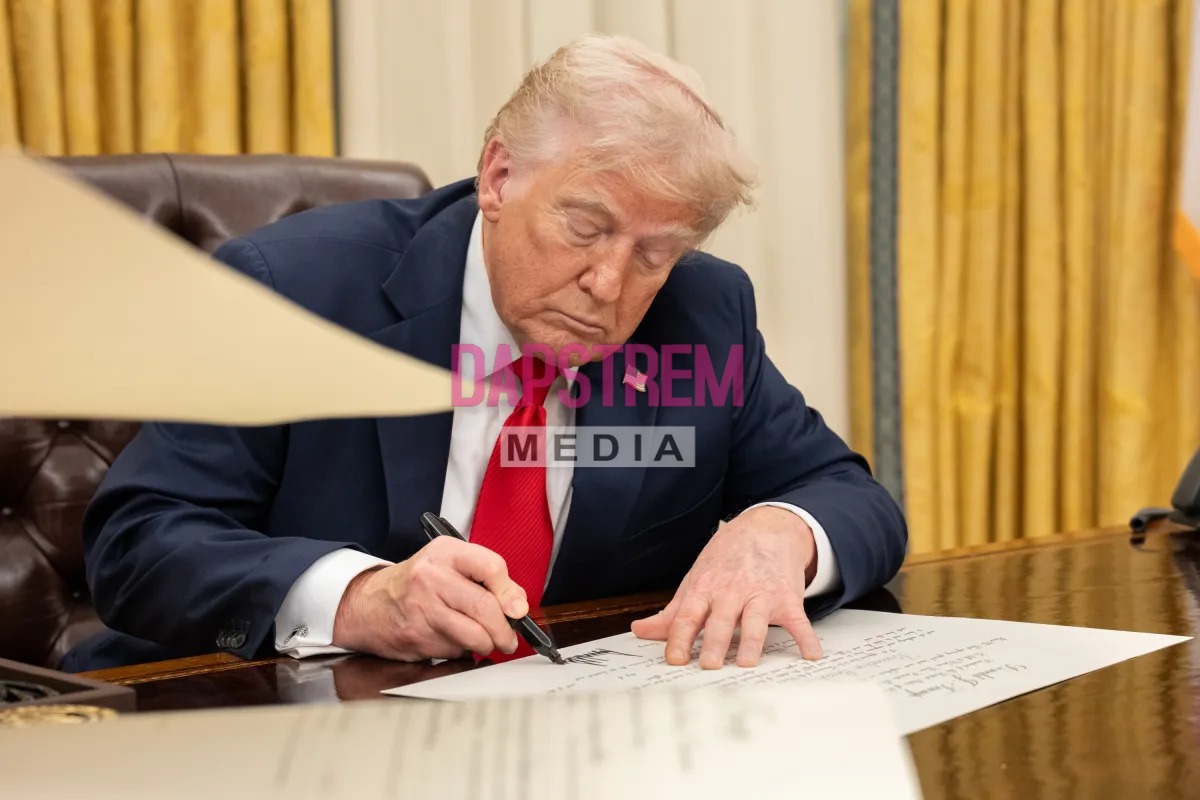
The proclamation, signed on Thursday, November 5, 2026, establishes what the administration describes as the Oval Office National Monument. It directs the Department of the Interior, through the National Park Service, to oversee the preservation and management of the designated spaces, ensuring that their historical and architectural significance is protected for future generations.
Speaking during the signing ceremony at the White House, Trump said the decision was intended to prevent future occupants from undertaking major renovations that could fundamentally change the appearance and character of the presidential office.
“We’re making it a national monument, and it will not be allowed to be touched by anybody,” Trump told reporters while displaying the signed proclamation.
The president further argued that the Oval Office represents an important part of American history and should not be subjected to unnecessary structural changes. He expressed concern that a future administration could decide to substantially alter the office’s design, insisting that its historical character should be preserved.
The decision comes amid Trump’s extensive renovation and beautification projects at the White House and other prominent locations across Washington, D.C. Since returning to office in January 2025, the president has overseen several changes to the historic presidential residence, including significant decorative alterations to the Oval Office.
Under the new proclamation, the protected monument covers three areas: the Oval Office itself, the Outer Oval Office and the White House Cabinet Room. These spaces have played important roles in the administration of the United States and have witnessed numerous political, diplomatic and security decisions that have shaped both American history and international relations.
The Oval Office, in particular, remains one of the most recognizable political spaces in the world. Located in the West Wing of the White House, it serves as the principal working office of the American president and provides the setting for meetings with foreign leaders, senior government officials, military commanders and other influential figures.
Over the decades, the room has become closely associated with presidential leadership, executive decision-making and some of the most consequential moments in modern history.
The White House administration maintains that granting the space national monument status will provide additional recognition and a framework for protecting its historic structure and architectural features.
Under the proclamation, the Secretary of the Interior is required to develop a management plan in consultation with relevant government departments and agencies. The plan will prioritize the preservation of the monument’s structural and significant architectural features while ensuring that any proposed major alterations undergo proper documentation and review.
The National Park Service will also coordinate with the Committee for the Preservation of the White House and other relevant advisory bodies to ensure that preservation decisions take the building’s historical significance into consideration.
However, the proclamation does not completely prevent future presidents from making changes to the Oval Office. It expressly allows the president to redecorate the space, select furniture and undertake ordinary operational or security modifications, provided such changes do not substantially damage its historic structure or architectural character.
Trump’s announcement therefore introduces a preservation framework rather than an absolute ban on all future changes.