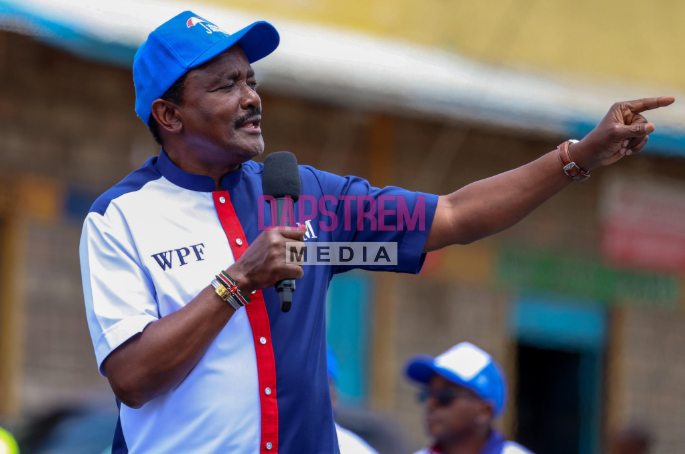
Kalonzo Pledges to Declare June 25 National Accountability Day if Opposition Takes Power
Wiper Patriotic Front leader Kalonzo Musyoka has pledged to declare June 25 a National Accountability Day if the opposition wins power in the 2027 General Election, renewing calls for justice, remembrance and accountability over the deadly 2024 Gen Z protests.
The former Vice President says the date should serve as a permanent reminder of the sacrifices made by young Kenyans who took to the streets to challenge the controversial Finance Bill 2024. His pledge places the events of June 25 at the centre of the opposition’s political agenda as leaders continue to position themselves ahead of the next general election.
Kalonzo’s proposal is more than a promise to establish a commemorative day. It represents a political commitment to keep the memory of the young protesters alive while demanding answers over the deaths, injuries and alleged human rights violations witnessed during the demonstrations.
The June 25 protests remain one of the most defining moments in Kenya’s recent political history. Thousands of young people mobilised against proposed tax increases, expressing concerns about the cost of living, unemployment, economic hardship and the management of public resources.
The demonstrations, which were largely driven by Generation Z, quickly evolved into a wider national conversation about governance, accountability and the relationship between citizens and the government.
For Kalonzo, recognising June 25 as a National Accountability Day would provide an opportunity for the country to reflect on the events that unfolded and honour those who lost their lives while participating in the protests.
The pledge also comes as opposition leaders seek to consolidate their political influence and present themselves as an alternative to President William Ruto’s administration ahead of the 2027 elections.
June 25: A Date That Changed Kenya’s Political Landscape
The events of June 25, 2024, remain deeply etched in the country’s collective memory.
The day marked a major escalation of the nationwide protests against the Finance Bill 2024, which proposed several tax measures that many Kenyans considered burdensome amid an already difficult economic environment.
Young people, particularly members of Generation Z, took to the streets in large numbers, demanding that Parliament reject the proposed legislation.
The demonstrations were largely organised through social media platforms, with participants using digital communication to mobilise, share information and coordinate their activities across different parts of the country.
Unlike traditional political protests, the movement was largely decentralised and did not initially revolve around established political leaders or political parties.
Its central message was that citizens, particularly young people, wanted a greater say in decisions affecting their economic and social future.
On June 25, demonstrators converged on Nairobi and other major towns as Parliament considered the Finance Bill. The situation in Nairobi escalated dramatically when protesters breached Parliament’s perimeter and entered parts of the parliamentary complex.
The events were followed by clashes between demonstrators and security officers, with reports of shootings, deaths, injuries and property destruction.
The day became a turning point in Kenya’s political discourse, intensifying public debate over the use of force during demonstrations and the responsibility of the government to protect citizens.
President William Ruto subsequently announced the withdrawal of the Finance Bill 2024, following widespread public opposition.
However, the withdrawal did not end the public anger surrounding the protests. Instead, questions about the deaths, injuries and alleged abuses continued to dominate conversations about governance and human rights.
The protests also demonstrated the growing political influence of young Kenyans, who increasingly demanded transparency, responsible leadership and accountability from public institutions.
For many supporters of the movement, June 25 represents a day when ordinary citizens stood up against policies they believed threatened their economic welfare.
Kalonzo’s proposal seeks to ensure that the significance of the day is not forgotten.
Why Kalonzo Wants June 25 Recognised as National Accountability Day
Kalonzo has repeatedly argued that the country must remember the young people who lost their lives during the 2024 protests and ensure that their sacrifices are not reduced to political rhetoric.
His proposal for a National Accountability Day is intended to create a formal occasion for national remembrance and reflection.
The former Vice President has previously advocated for June 25 to be recognised as Liberation Day, describing it as a day that should honour Kenyans who defended freedom and demanded accountability.
In June 2026, Kalonzo renewed his call for the date to be formally recognised as a national public holiday, arguing that it should serve as a permanent reminder of the sacrifices made by young people.
He said the day should be dedicated to remembrance, reflection and accountability while honouring those who lost their lives in the struggle for a better future.
The latest pledge appears to extend that position by linking the proposed recognition to the opposition’s potential assumption of power following the 2027 elections.
Under Kalonzo’s proposal, the day would provide an opportunity for the country to assess its progress in addressing the concerns raised during the protests.
It could also serve as a platform for discussions about police accountability, constitutional rights, economic justice, public participation and the protection of citizens during demonstrations.
The proposal is particularly significant because it places accountability at the centre of the opposition’s political messaging.
Rather than treating the protests as an isolated historical event, Kalonzo is presenting June 25 as a continuing national issue that should influence how the country approaches governance.
The pledge also appeals to a generation of voters who have increasingly demonstrated their willingness to participate in political debates and challenge established leadership structures.
The Unfinished Question of Justice for Protest Victims
One of the central issues surrounding the June 25 protests is the demand for justice for those who died or suffered injuries during the demonstrations.
Families of victims have continued to seek answers about the circumstances surrounding the deaths of their loved ones.
For many of them, the issue goes beyond compensation. They want investigations to establish what happened, identify those responsible and ensure that appropriate legal action is taken where wrongdoing is established.
Opposition leaders, including Kalonzo, have repeatedly called for accountability and compensation for victims and their families.
In June 2026, the United Opposition demanded that the government compensate victims of the 2024 Gen Z protests before the anniversary commemorations.
Kalonzo argued that the proposed compensation should be handled transparently and that the families affected by the demonstrations deserved support.
However, opposition leaders have also emphasised that financial compensation alone cannot replace justice.
The demand for accountability includes calls for credible investigations into deaths and injuries, the prosecution of individuals found responsible for unlawful conduct and measures to prevent similar incidents in the future.
Former Chief Justice David Maraga and other opposition figures have also insisted that compensation should not be treated as a substitute for accountability.
The debate reflects a wider concern about how Kenya addresses alleged violations of constitutional rights during public demonstrations.
For families who lost relatives, the passage of time has not necessarily brought closure. Many continue to demand answers and recognition of the suffering they experienced.
Kalonzo’s pledge to establish a National Accountability Day therefore carries a symbolic significance. It would create an annual reminder of the unresolved questions surrounding the protests and the need for the country to address them.
Gen Z’s Role in Reshaping Kenya’s Politics
The 2024 demonstrations marked a significant shift in Kenya’s political landscape, particularly in the role played by young people.
For decades, political mobilisation in the country has largely been associated with established parties, influential leaders and regional political networks.
The Gen Z protests challenged that traditional model by demonstrating how young people could mobilise independently around shared concerns.
Social media became a central tool for organising demonstrations, sharing information about the Finance Bill and encouraging citizens to participate in public affairs.
The movement also highlighted the growing importance of civic education and public participation.
Many young Kenyans actively examined the proposed legislation, discussed its implications and challenged political leaders to explain how the tax measures would affect ordinary citizens.
The protests demonstrated that young people were not simply passive observers of national politics. They were increasingly willing to participate in debates about economic policy, governance and the use of public resources.
Kalonzo has previously praised Gen Z and millennials for their role in forcing Parliament to reconsider the Finance Bill.
He has argued that the protests demonstrated the power of civic engagement and the ability of citizens to influence national policy.
The proposed National Accountability Day could therefore serve as a recognition of the role young people played in shaping Kenya’s political discourse.
It could also provide an opportunity for future generations to reflect on the importance of peaceful participation, constitutional rights and responsible leadership.
Opposition’s 2027 Political Strategy
Kalonzo’s pledge comes at a time when opposition leaders are increasingly positioning themselves for the 2027 General Election.
The emerging opposition formations have been calling for unity, electoral reforms, accountability and a change in leadership.
The Wiper leader has presented the opposition as a political alternative capable of addressing the concerns raised by Kenyans during the Gen Z protests.
By linking the proposed National Accountability Day to the possibility of the opposition taking power, Kalonzo is making a political commitment that could become part of the coalition’s broader campaign agenda.
The proposal also provides the opposition with an opportunity to connect with young voters, many of whom remain concerned about the cost of living, unemployment, public accountability and the protection of constitutional rights.
However, the pledge also raises questions about how the opposition would translate its promises into concrete government policy.
Declaring a commemorative day would be one step, but addressing the underlying issues that contributed to the protests would require broader reforms.
These could include strengthening independent institutions, improving accountability mechanisms, ensuring transparency in public spending and protecting citizens’ rights during demonstrations.
The opposition would also need to demonstrate how it intends to address the economic challenges that continue to affect many households.
For Kalonzo and his allies, the proposed National Accountability Day could become a symbol of their commitment to a different approach to governance.
Nevertheless, voters will ultimately assess the opposition based not only on its promises but also on the policies and leadership it presents ahead of the election.
Can the Opposition Declare a National Public Holiday?
Kalonzo’s pledge also raises an important constitutional and legal question concerning the authority to declare a national public holiday.
In Kenya, the formal declaration of public holidays falls under the relevant legal framework and the authority of the national government.
Opposition leaders do not automatically have the legal power to establish an official public holiday while outside government.
The pledge should therefore be understood as a political commitment to pursue formal recognition if the opposition assumes power.
The proposal could require the appropriate government procedures and legal steps before June 25 is officially recognised as a national public holiday.
This distinction is important because an opposition declaration, by itself, would not necessarily create a legally recognised public holiday for the entire country.
However, the date could still be commemorated through public events, memorial activities and civic engagements organised by political groups, civil society organisations and families of victims.
The legal process would be necessary to transform the proposal into an official national observance.
A Promise That Could Shape Kenya’s Future
Kalonzo’s pledge to declare June 25 National Accountability Day if the opposition takes power has renewed attention on one of the most painful and politically significant events in Kenya’s recent history.
The proposal seeks to honour young Kenyans who lost their lives during the 2024 protests while keeping the demand for justice and accountability alive.
It also reflects the growing influence of youth-led movements in shaping national political conversations.
For the families of victims, the pledge may provide hope that the events of June 25 will remain a priority for future leadership.
For young Kenyans, it represents a promise that their participation in public affairs and their demands for responsible governance will not be forgotten.
However, the significance of the proposal will ultimately depend on whether it is translated into meaningful action.
A commemorative day could provide an important platform for remembrance, but the broader demand for accountability requires credible investigations, justice for victims, institutional reforms and a commitment to protecting constitutional rights.
As Kenya approaches the 2027 General Election, June 25 is likely to remain an important issue in political debates.
Kalonzo and other opposition leaders will face the challenge of convincing voters that they can deliver on their promises and address the concerns that drove the protests.
The proposed National Accountability Day could become a defining part of the opposition’s agenda, particularly if young voters continue to demand that the country confront the events of 2024.
Ultimately, June 25 represents more than a date on the national calendar. It is a reminder of the relationship between citizens and the state, the importance of accountability and the consequences of failing to address public grievances.
Kalonzo’s pledge has placed that reminder firmly within the political conversation ahead of 2027.