Gachagua Hosts Kalonzo at Wamunyoro as Opposition Leaders Intensify Unity Talks Ahead of 2027 Elections
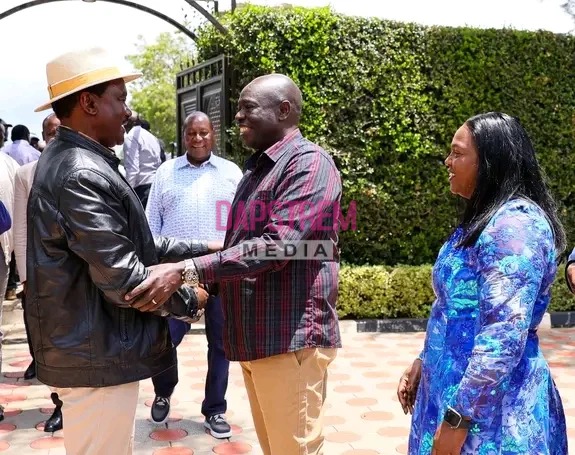
Former Deputy President Rigathi Gachagua has hosted Wiper Patriotic Front leader Kalonzo Musyoka at his Wamunyoro residence in Nyeri County, in a meeting that has drawn attention to ongoing efforts to unite opposition leaders ahead of the 2027 General Election.
The meeting, held on Monday, October 26, 2026, comes at a time when opposition figures are holding consultations on how to strengthen their political cooperation and establish a formidable challenge to President William Ruto’s administration in the next election.
Gachagua welcomed Kalonzo to his rural home, describing him as his cousin and emphasising the importance of unity among political leaders. In a message shared after the meeting, he stated, “Welcome to Wamunyoro, my cousin Kalonzo Musyoka. Unity of purpose is vital!”
Although the two leaders did not publicly disclose the full details of their discussions, the visit has added momentum to the wider political conversations surrounding opposition unity, leadership and the possibility of a common political platform.
The meeting also comes as political parties and movements begin positioning themselves for the 2027 elections, with questions emerging over who will lead the opposition, how competing ambitions will be reconciled and whether different political formations can agree on a shared strategy.
Gachagua and Kalonzo Renew Focus on Opposition Cooperation
The meeting between Gachagua and Kalonzo is significant because both leaders have remained influential figures in Kenya’s opposition politics. Their continued engagement could help shape discussions on the future direction of the opposition and its strategy for challenging the current administration.
Gachagua has continued building his political networks since his removal from the deputy presidency in October 2024. Through the Democracy for the Citizens Party (DCP), he has positioned himself as a key opposition figure and has repeatedly participated in consultations with leaders from different political backgrounds.
Kalonzo, on the other hand, leads the Wiper Patriotic Front and has remained one of the established figures in opposition politics. His political experience and influence, particularly in the Ukambani region, make him an important participant in any serious effort to assemble a broad opposition alliance.
Their latest meeting therefore carries political significance beyond a courtesy visit between friends. It provides another opportunity for the two leaders to discuss areas of common interest as the opposition considers how to approach the next election.
However, the meeting should not automatically be interpreted as evidence that the leaders have reached an agreement on a presidential candidate or a formal coalition arrangement. Neither leader publicly announced such an agreement following the visit.
Instead, the engagement forms part of the broader consultations taking place among opposition figures as they explore ways to cooperate while retaining their individual political identities and party interests.
Wamunyoro Emerges as a Key Venue for Political Consultations
Gachagua’s Wamunyoro residence has increasingly become a meeting point for politicians and other influential figures seeking to discuss Kenya’s political future.
The latest visit by Kalonzo follows a meeting on October 20, when Gachagua hosted Nairobi Senator Edwin Sifuna and members of the Linda Mwananchi Movement. That engagement focused on Kenya’s political future and discussions around the formation of what Gachagua described as the Sixth Administration.
The October 20 meeting attracted attention because it brought together leaders associated with different political formations at a time when opposition figures are exploring the possibility of working under a common electoral platform.
Sifuna and members of the Linda Mwananchi Movement have been involved in conversations about political change, while Gachagua has continued reaching out to leaders who could contribute to a broader opposition arrangement.
The subsequent meeting with Kalonzo adds another dimension to these consultations. It places the Wiper leader in direct engagement with Gachagua at a time when the opposition is under pressure to resolve questions about leadership, strategy and the selection of a possible presidential candidate.
The growing number of political meetings at Wamunyoro suggests that informal consultations are playing an important role in shaping the opposition’s emerging strategy. Such discussions can allow leaders to exchange views, identify common priorities and assess the possibility of working together before making formal announcements.
Nevertheless, the success of these engagements will ultimately depend on whether the leaders can translate their discussions into clear political commitments, agreed principles and an electoral strategy that their supporters can understand.
Kalonzo Defends His Relationship With Gachagua
The Wamunyoro meeting follows Kalonzo’s public defence of his relationship with Gachagua amid questions about opposition unity.
On October 24, Kalonzo said the two leaders had remained friends and political allies since Gachagua’s impeachment. He argued that their visits to each other’s homes should not be treated as a source of controversy.
Kalonzo noted that Gachagua had previously visited his home in Tseikuru, Kitui County, and described his own visit to Wamunyoro as a continuation of their relationship.
He also insisted that his commitment to bringing opposition leaders together remained firm, arguing that national political interests should take priority over individual ambitions.
His remarks came amid growing public discussion about how opposition leaders will coordinate their activities ahead of the 2027 General Election.
Kalonzo’s position indicates that he wants to maintain communication with Gachagua while continuing to engage other political leaders. It also highlights the importance of personal relationships and direct consultations in a political environment where competing interests can complicate coalition-building efforts.
However, personal friendship does not necessarily guarantee agreement on every political question. The leaders may share an interest in challenging the current administration while holding different views about the best candidate, coalition structure or distribution of responsibilities within a future government.
The challenge will therefore be to transform their working relationship into a practical arrangement that can accommodate their political ambitions and the expectations of their respective supporters.
Opposition Unity Faces Questions Over Leadership and Presidential Candidate
One of the biggest challenges facing the opposition is how to agree on a common presidential candidate ahead of the 2027 General Election.
While opposition leaders have repeatedly spoken about the need for unity, the process of identifying a single candidate could prove difficult. Several politicians have national ambitions, established support bases and political parties that they want to strengthen before the election.
The recent engagement between Gachagua and the Linda Mwananchi Movement has added to discussions about Nairobi Senator Edwin Sifuna’s possible role in the opposition’s presidential contest.
DCP Deputy Party Leader Cleophas Malala has publicly argued that the party wants Kalonzo to support Sifuna’s presidential bid. Malala has described Sifuna as capable of leading the opposition and indicated that efforts were being made to persuade other leaders to support the proposal.
However, Wiper has pushed back against the suggestion that Kalonzo’s planned meeting with Gachagua was intended to convince him to endorse Sifuna. The party, through its spokesperson Ndegwa Njiru, criticised the claims and warned against narratives that could create divisions within the opposition.
The disagreement highlights a central problem in the unity talks: leaders may agree on the need for cooperation but still differ over who should lead the alliance.
Kalonzo’s own political experience and presidential ambitions are likely to remain relevant to these discussions. Gachagua also has his own political base and influence, while Sifuna has attracted attention through his role in the Linda Mwananchi Movement.
For a united opposition to emerge, the leaders will need to establish a transparent process for choosing a candidate. They will also need to agree on how political parties will participate in the alliance and how disputes will be resolved.
Without such arrangements, public declarations of unity could struggle to produce a cohesive political movement capable of sustaining cooperation throughout the election campaign.
What the Meeting Means for the 2027 General Election
With the 2027 General Election approaching, the meeting between Gachagua and Kalonzo comes at a crucial moment for opposition politics.
Political alliances are likely to influence how parties organise their campaigns, mobilise supporters and negotiate for positions within a possible coalition. Leaders who establish strong working relationships early may have an advantage when negotiations over presidential candidates and campaign strategies intensify.
For Gachagua, continued engagement with Kalonzo could help strengthen his efforts to bring different opposition figures together. For Kalonzo, maintaining dialogue with Gachagua allows him to remain involved in discussions about the opposition’s future while preserving his own political position.
The two leaders also have an opportunity to demonstrate that opposition unity can extend beyond public declarations. Regular consultations, shared political priorities and respectful negotiations could help build confidence among supporters who want to see a credible alternative to the current administration.
However, the opposition must also contend with the expectations of voters who want political leaders to focus on issues affecting their daily lives. The cost of living, employment opportunities, healthcare, education, corruption and public accountability are among the concerns that political parties must address as they prepare for the election.
A successful political alliance will therefore require more than bringing influential leaders together. It will need a clear policy agenda that explains how a future government would respond to the challenges facing ordinary Kenyans.
Voters will also want to understand how the proposed alliance intends to improve governance, protect public resources and ensure that campaign promises translate into tangible results.
The ability of opposition leaders to communicate a common vision could ultimately prove as important as their negotiations over candidates and political positions.
Will the Talks Produce a United Opposition?
The biggest question following the Wamunyoro meeting is whether the ongoing consultations will lead to a formal agreement among opposition leaders.
For now, the visit confirms continued engagement between Gachagua and Kalonzo, but it does not establish that the two have settled on a joint presidential candidate or agreed on the structure of a future coalition.
The discussions involving Sifuna and the Linda Mwananchi Movement add another layer to the negotiations. They demonstrate that the opposition is exploring different possible partnerships, even as disagreements over leadership and political strategy remain unresolved.
The coming months will be important in determining whether these engagements develop into a coordinated political movement or remain a series of separate consultations.
Opposition leaders will need to establish clear channels of communication, address disagreements early and agree on a fair method of selecting their preferred candidates. They must also reassure supporters that cooperation will not mean abandoning the principles and priorities that brought them into politics.
Equally important will be their ability to avoid public exchanges that could deepen mistrust before negotiations are complete. Disagreements are common in coalition-building, but how leaders manage them will determine whether their political partnership can survive the pressures of an election campaign.
Gachagua’s decision to host Kalonzo at Wamunyoro has therefore added another chapter to the evolving discussions about the opposition’s future. It signals that dialogue remains ongoing, even as questions about leadership and the presidential ticket continue to shape political debate.
As Kenya moves closer to the 2027 General Election, the opposition’s challenge will be to turn calls for unity into a practical and credible arrangement. Whether Gachagua, Kalonzo, Sifuna and other opposition figures can agree on a shared strategy remains uncertain.
What is clear is that their decisions in the coming months could have a significant influence on the shape of the next electoral contest.
The Wamunyoro meeting may not have produced a publicly announced coalition agreement, but it has reinforced the importance of consultation at a time when opposition leaders are weighing their options. The ultimate test will be whether these discussions lead to a united political platform capable of presenting voters with a clear alternative and a convincing plan for Kenya’s future.