The United Kingdom’s reported plan to deploy fighter jets to help defend Saudi Arabia against attacks by Yemen’s Houthi movement would mark a significant development in Western efforts to protect Gulf security and contain the wider regional fallout from the conflict in Yemen.
The move comes against the backdrop of years of hostilities between the Iran-aligned Houthi movement and Saudi Arabia, as well as a broader escalation of attacks involving commercial shipping, military installations and strategic infrastructure across the Middle East. It also underscores the continuing importance of Saudi Arabia to British security and economic interests.
However, the precise details of the reported deployment including the number and type of aircraft, their operating base, the duration of the mission and the rules governing their use need to be established from official British and Saudi statements before they can be treated as confirmed facts.
A renewed focus on Saudi Arabia’s air defence
Saudi Arabia has faced repeated missile and drone threats from the Houthis, who seized Yemen’s capital, Sanaa, in 2014 and subsequently became embroiled in a regional conflict involving a Saudi-led military coalition.
The Houthis have used a combination of ballistic missiles, cruise missiles and unmanned aerial vehicles to target Saudi territory. Their attacks have demonstrated how relatively inexpensive weapons can threaten critical infrastructure, including airports, oil facilities and military installations.
One of the most consequential incidents occurred in September 2019, when attacks on the Abqaiq oil-processing facility and Khurais oil field temporarily disrupted a substantial portion of Saudi oil production. The incident exposed vulnerabilities in the kingdom’s energy infrastructure and demonstrated the potential global economic consequences of attacks on Gulf energy supplies.
Although a United Nations-brokered truce in Yemen, which began in April 2022, helped reduce large-scale cross-border fighting, it did not produce a comprehensive political settlement. The conflict remains unresolved, and the Houthis retain significant missile and drone capabilities.
A British fighter deployment would therefore need to be understood within this longer history of regional insecurity, rather than as an isolated military decision.
Why Britain would become involved
The United Kingdom has longstanding defence, diplomatic and economic ties with Saudi Arabia. Both countries have an interest in protecting critical infrastructure, maintaining the security of international trade routes and preventing the conflict in Yemen from triggering a wider regional confrontation.
For London, assistance to Saudi Arabia could serve several strategic purposes.
First, it would demonstrate support for a major Gulf partner facing potential missile and drone attacks. Second, it could contribute to the protection of regional airspace and critical infrastructure. Third, it would reinforce Britain’s broader commitment to maritime security and the stability of international trade.
The Red Sea and the adjacent Gulf of Aden are particularly important because they form part of a major shipping corridor connecting Europe with Asia through the Suez Canal. Houthi attacks on vessels in these waters have forced some shipping companies to divert journeys around the Cape of Good Hope, increasing transit times, fuel consumption and operating costs.
British involvement would also carry a political message: London is prepared to work with regional partners to counter threats that could affect not only the Middle East but also international commerce and European economic security.
Nevertheless, the rationale for defending Saudi territory must be distinguished from the separate question of participating in offensive operations against Houthi targets in Yemen. A defensive mission would not automatically authorise British aircraft to conduct strikes inside Yemen.
What the British deployment will involve
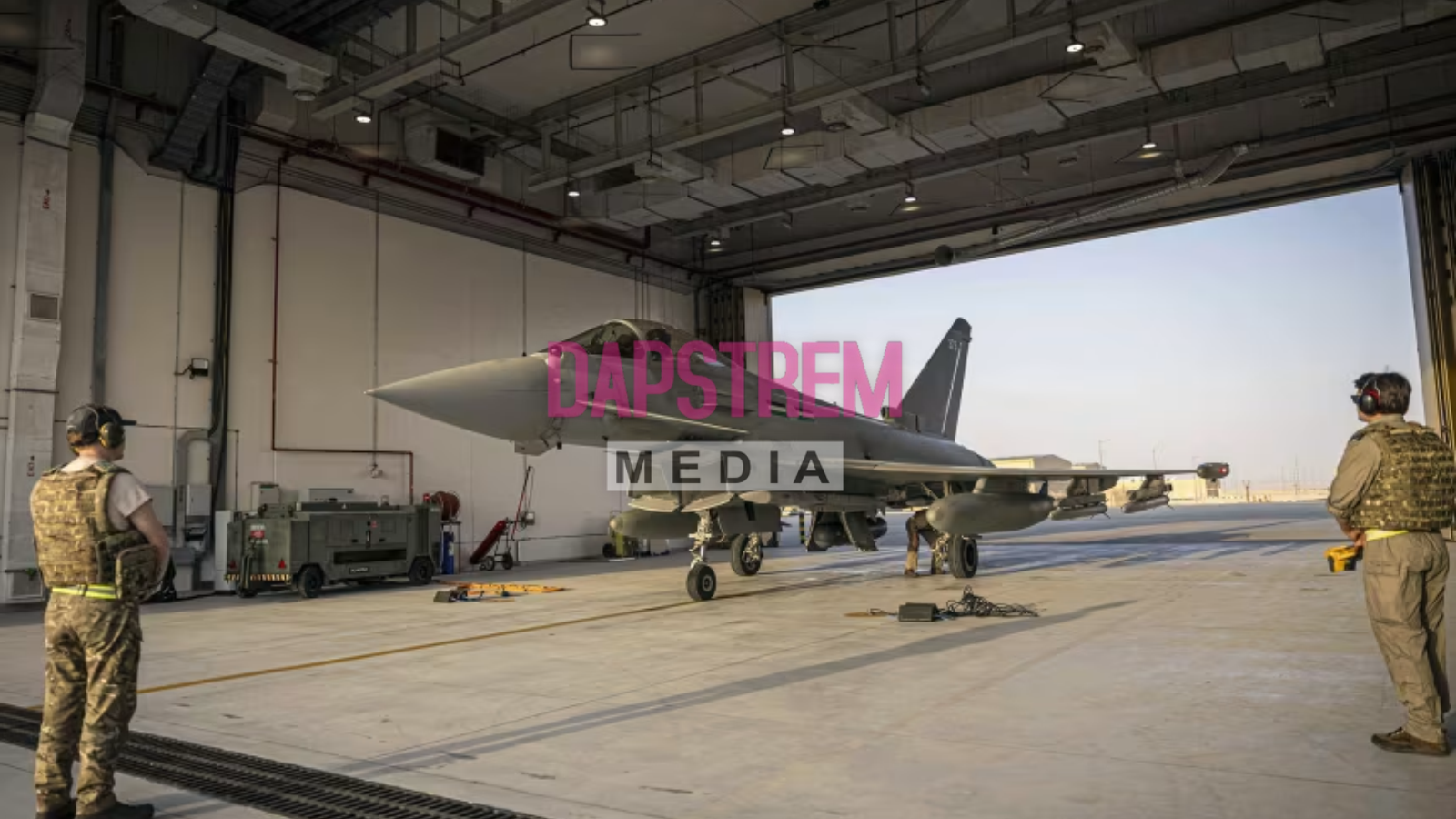
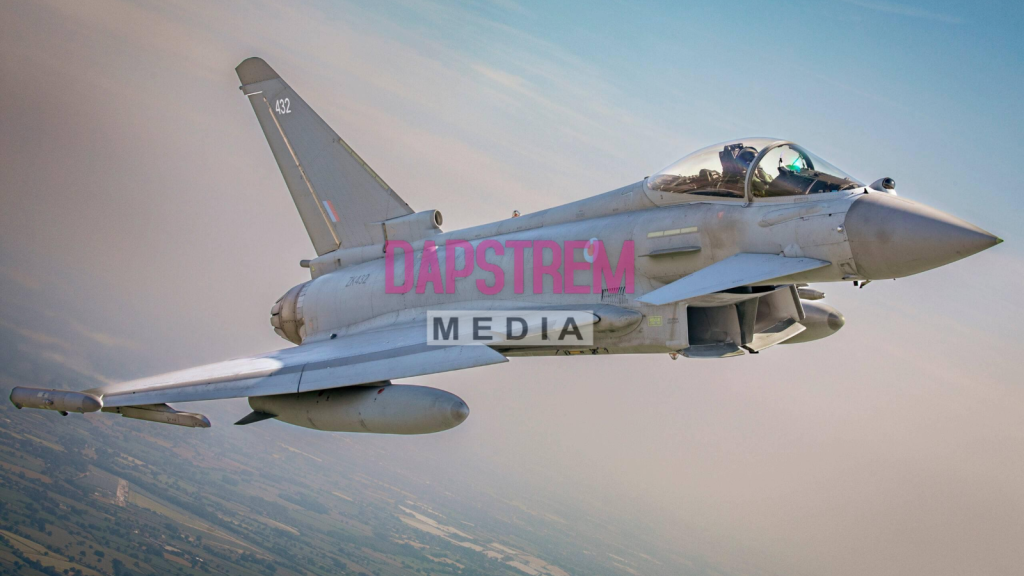
The British government confirmed the expanded military commitment on 20 October 2026, following a request from Saudi Arabia and an escalation of Houthi attacks. According to the Ministry of Defence, the deployment will include Royal Air Force (RAF) Typhoon fighter jets conducting defensive air missions over Saudi Arabia.
The package comprises four main elements:
RAF Typhoon fighter jets: The aircraft will conduct defensive counter-air operations to help protect Saudi cities, civilians and critical infrastructure from incoming missiles and drones.
An RAF A400M Atlas transport aircraft: The aircraft will support the movement of military equipment and other defence materiel within Saudi Arabia.
Military advisers: British personnel will assist Saudi staff officers with their defensive operations.
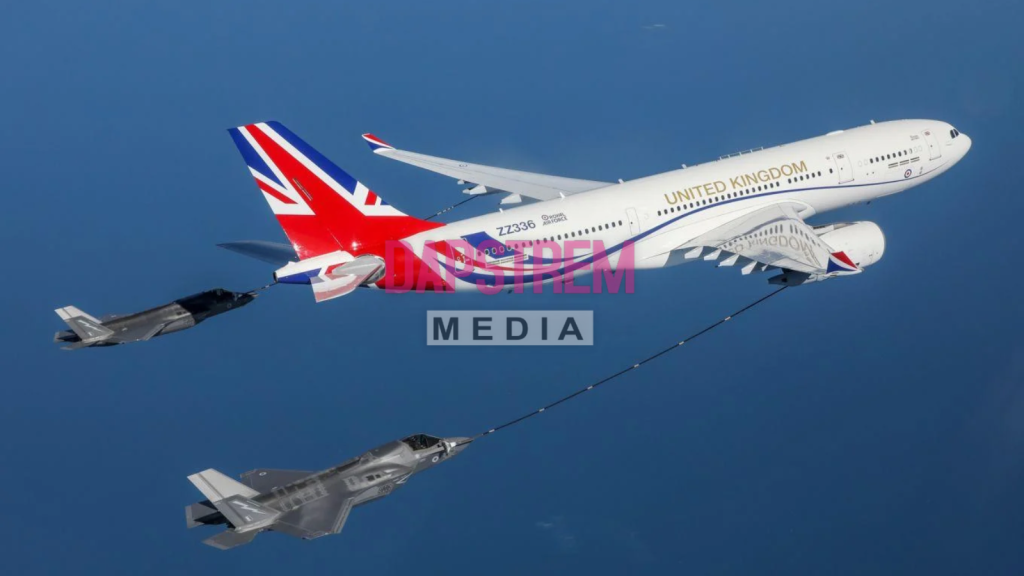
Extended aerial refuelling support: Britain will extend its provision of an RAF Voyager tanker aircraft for another 90 days to support Saudi defensive air operations.
The government has not specified the number of Typhoon fighters involved or disclosed a complete operational timetable in its published announcement.
Crucially, British officials have drawn a distinction between defending Saudi airspace and attacking Houthi positions. The RAF fighters will not conduct offensive strikes against the group under the announced mission. This restriction does not mean that all British military assistance is disconnected from operations against Houthi forces: the government has separately described refuelling support for Saudi defensive air operations that include efforts to degrade Houthi military targets threatening Saudi Arabia and Yemen.
That distinction will be important in determining how far Britain’s involvement extends as the conflict develops.
Riyadh attacks raise the stakes
The immediate backdrop to the British announcement is a renewed Houthi offensive that has brought the threat closer to Saudi Arabia’s principal population centres and economic assets.
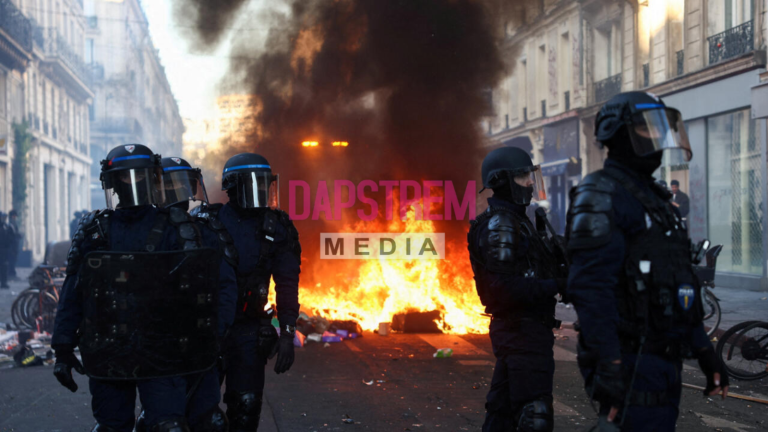
According to Reuters reporting published on 14 October, attacks during the escalation included strikes on King Khalid International Airport in Riyadh and Saudi Aramco’s headquarters in Dhahran. The airport attack reportedly killed at least 13 people and injured more than 300, making it the deadliest reported incident in Saudi Arabia during this phase of the conflict. The Houthis also threatened further attacks against airports and oil facilities.
These incidents have heightened concerns about the vulnerability of civilian aviation, energy infrastructure and the kingdom’s wider economic ambitions.
For Saudi Arabia, protecting its airports is particularly important because the country is investing heavily in tourism, religious travel, international business and major development projects under its Vision 2030 programme. Sustained attacks could undermine investor confidence, disrupt travel and increase the costs of protecting infrastructure.
Oil infrastructure presents an equally serious concern. Saudi Arabia is one of the world’s leading oil producers, and interruptions to its exports can influence global energy markets. The threat is especially significant when regional shipping routes are already under pressure from wider conflict.
The British deployment is therefore intended to address a security problem with implications well beyond Saudi Arabia’s borders.
Why Typhoon fighters matter against missiles and drones
The Eurofighter Typhoon is a multirole combat aircraft operated by the RAF and several European air forces. It is designed for air-to-air combat as well as other military missions.
In a defensive counter-air role, Typhoon aircraft can patrol designated airspace, respond to warnings of incoming threats and engage suitable aerial targets when authorised and operationally feasible.
This capability could provide an additional layer of protection against certain drones and cruise missiles. However, the effectiveness of fighter aircraft depends on the type of threat, the time available to respond, radar coverage, intelligence, weapons carried and coordination with ground-based air-defence systems.
Ballistic missiles present a different challenge because they travel at high speeds and may offer only a short window for interception. Fighter jets are therefore not a universal solution to every type of missile or drone attack.
Saudi Arabia’s existing air-defence network, including ground-based interceptors, radar systems and command-and-control facilities, will remain essential. The RAF deployment is best understood as an additional component of a wider defensive system rather than a replacement for Saudi air defences.
Aerial refuelling also matters. The Voyager allows compatible aircraft to receive fuel in flight, helping extend their time on patrol or their ability to operate over greater distances. The additional transport and advisory support could assist with the logistics and coordination needed to sustain the mission.
The Houthis and the wider regional conflict
The Houthi movement, formally known as Ansar Allah, emerged in Yemen’s northern highlands and became a major force in the country’s political and military landscape. It seized Sanaa in 2014, triggering a conflict that drew in a Saudi-led coalition in 2015 in support of Yemen’s internationally recognised government.
The war caused extensive destruction, mass displacement and a severe humanitarian crisis. Although a UN-brokered truce in 2022 reduced major cross-border hostilities for a period, it did not deliver a comprehensive peace settlement.
The Houthis have developed the capacity to launch missiles and drones over considerable distances. Their military capabilities and regional relationships have also made the movement a significant factor in the wider Middle Eastern security environment.
The group is aligned with Iran, although the nature and extent of Iranian assistance and influence vary across weapons systems and operational capabilities. Describing the Houthis simply as an Iranian proxy risks overlooking their own political objectives, domestic power base and independent decision-making.
Their attacks have also extended beyond Saudi Arabia. Houthi operations against commercial vessels in the Red Sea and Gulf of Aden have disrupted maritime traffic and prompted international military responses. These waters include the strategically important Bab al-Mandab Strait, which connects the Red Sea with the Gulf of Aden and forms part of the route to the Suez Canal.
For Britain, protecting these routes is a direct economic and security concern. Disruptions can increase shipping costs, delay deliveries and contribute to higher prices for businesses and consumers.
The new deployment consequently links the defence of Saudi territory with a broader British interest in containing regional instability and safeguarding international trade.
A difficult balance between defence and escalation
Despite the stated defensive purpose of the RAF mission, the deployment carries political and military risks.
The first is the possibility of escalation. If British aircraft intercept Houthi missiles or drones, the movement could portray the action as direct British participation in the conflict. Although London has ruled out offensive strikes by the deployed Typhoons, the interception of incoming weapons would still place British forces directly in the path of hostilities.
The second concern is the possibility of a prolonged commitment. Missile and drone attacks can be sustained over extended periods, requiring aircraft, pilots, maintenance personnel, intelligence assets and logistical support. The British government has not publicly set out a definitive end date for the fighter deployment.
A third challenge concerns the protection of civilians. Air-defence operations are intended to prevent casualties and damage, but no defensive system can guarantee that every incoming weapon will be intercepted. Debris from intercepted weapons can also pose risks to people and infrastructure on the ground.
There is also a broader strategic question: whether increased military protection will create space for diplomacy or further entrench the opposing sides in a prolonged confrontation.
The British government has acknowledged this dilemma. Its parliamentary statement said there was no long-term military solution to the conflict in Yemen and reaffirmed support for a UN-led political process. It also said that countries receiving British assistance must comply with their obligations under international law, including the protection of civilians.
What the deployment means for Saudi Arabia
For Riyadh, the arrival of British fighter support would reinforce its security partnership with a major Western power at a time when attacks are testing the country’s defences.
Saudi Arabia has spent years investing in advanced military equipment, including combat aircraft and missile-defence systems. Yet the continued threat from comparatively inexpensive drones and missiles illustrates a problem faced by many militaries: defending a large territory against repeated aerial attacks can be expensive and operationally demanding.
International assistance can help distribute that burden, improve coordination and strengthen deterrence. It can also reassure investors and international partners that the kingdom is taking additional measures to protect its population and strategic assets.
However, the deployment should not be interpreted as proof that Saudi Arabia’s existing air defences have failed across the board. Nor does the announcement alone establish how much additional protection the RAF aircraft will provide. Those assessments will depend on operational performance and the pattern of attacks in the weeks ahead.
For London, the mission represents a more direct military role in the defence of a key Gulf partner. It also tests Britain’s ability to balance its regional security commitments with the risks of being drawn deeper into an increasingly complex conflict.
International implications
The decision comes as Western and regional governments reassess how best to respond to attacks on Saudi territory and shipping routes.
Britain’s contribution builds on earlier assistance announced in September 2026, when it agreed to provide an RAF Voyager for aerial refuelling following a Saudi request. The October announcement expands that assistance to include fighter missions, transport capacity and military advisers.
The broader significance lies in the potential for the crisis to affect several interconnected areas:
Energy security: Further attacks on oil facilities or export infrastructure could disrupt supplies and increase volatility in energy markets.
International shipping: Continued threats in the Red Sea and nearby waters could force more vessels to reroute, increasing freight costs and delivery times.
Regional diplomacy: Greater military involvement by outside powers could strengthen deterrence but also complicate efforts to secure a negotiated settlement.
Humanitarian conditions: Renewed fighting risks worsening the already severe humanitarian situation in Yemen, where civilians have endured years of conflict and economic hardship.
The deployment will therefore be judged not only by whether British aircraft help intercept incoming threats, but also by whether the additional protection reduces the risk of a wider regional confrontation.
Britain’s decision to deploy RAF Typhoon fighters for defensive missions over Saudi Arabia marks a significant expansion of its military assistance to the kingdom. It follows a series of reported Houthi attacks on strategic and civilian targets, including Riyadh’s international airport, and reflects growing concern about the security of Saudi territory, regional energy infrastructure and international trade.
The stated mission is limited: the fighters are intended to protect Saudi cities and critical infrastructure against aerial attack, not to conduct offensive strikes against Houthi positions. That distinction is central to the British government’s justification for the deployment, although the mission still exposes British forces to the risks of an active conflict.
In the immediate term, the operation could strengthen Saudi Arabia’s ability to respond to missile and drone threats. In the longer term, however, fighter patrols and air-defence systems cannot resolve the political divisions that have sustained Yemen’s war.
The durability of regional security will ultimately depend on whether military deterrence can be combined with diplomatic engagement, protection of civilians and a credible political settlement.
For Britain and Saudi Arabia, the challenge is to defend against immediate threats without allowing a defensive deployment to become the beginning of a much wider war.