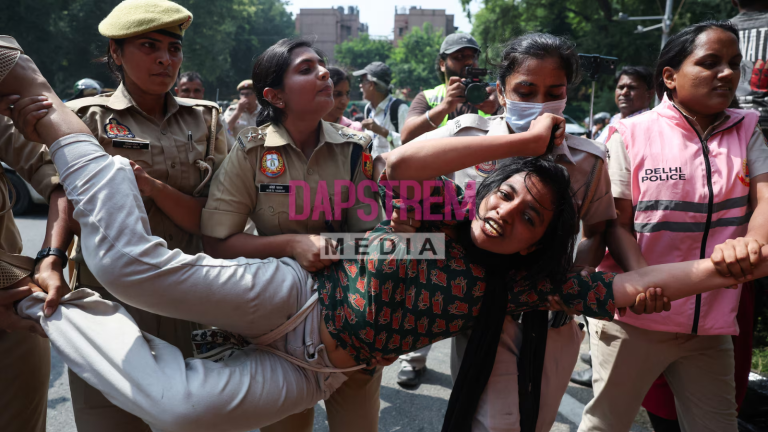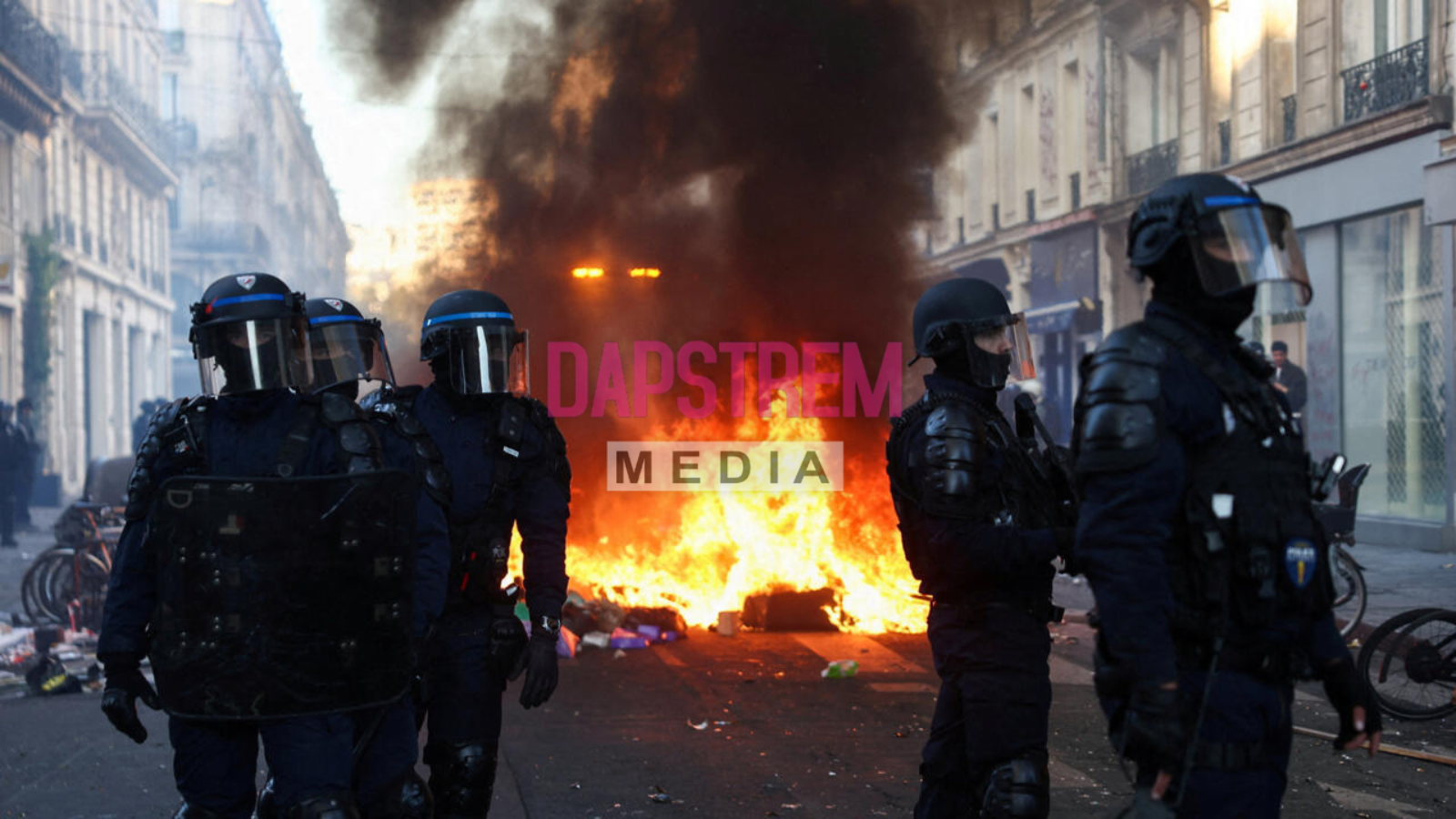
More than 1,800 people have been arrested across France following nationwide protests that descended into violent clashes, arson and looting, Interior Minister Laurent Nuñez has announced.
The demonstrations, held on Saturday, October 17, brought thousands of people onto the streets to protest rising living costs, inflation and deteriorating public services, including poor conditions in schools. However, peaceful marches were overshadowed by outbreaks of violence in Paris and several other major cities.
Nuñez announced the arrest figure on Sunday, saying investigations were under way to identify those responsible for attacks on police officers, public institutions and businesses. He also reported that approximately 500 police officers, firefighters and paramedics had been injured, although the figure was provisional.
“The Republic will yield nothing to those who seek to impose disorder and violence,” the minister said, reaffirming the government’s position that peaceful protest is a fundamental right but violence and destruction are unacceptable.
Historic Buildings and Businesses Targeted
The unrest caused extensive damage in several parts of France, with Paris recording 855 arrests, a figure described by police as a record for the capital.
In the central city of Limoges, a fire severely damaged the historic 19th-century town hall. Authorities said the blaze was deliberately started, while shops and other public buildings were targeted in cities including Marseille, Lyon, Bordeaux and Strasbourg.
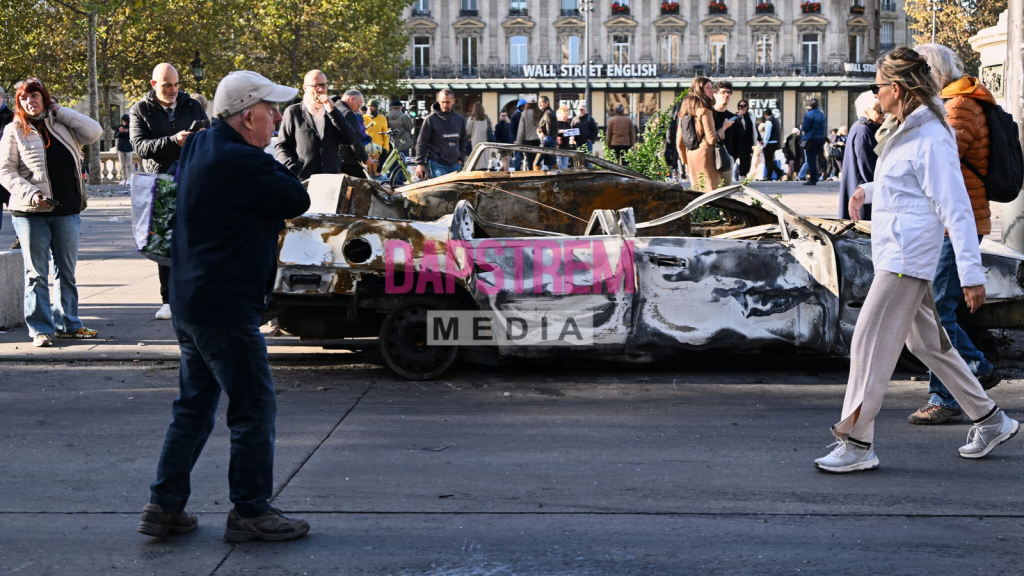
In Paris, streets were left littered with debris, damaged shopfronts and the remains of burning barricades. Police deployed tear gas and water cannon as some demonstrators threw projectiles and fireworks at security officers.
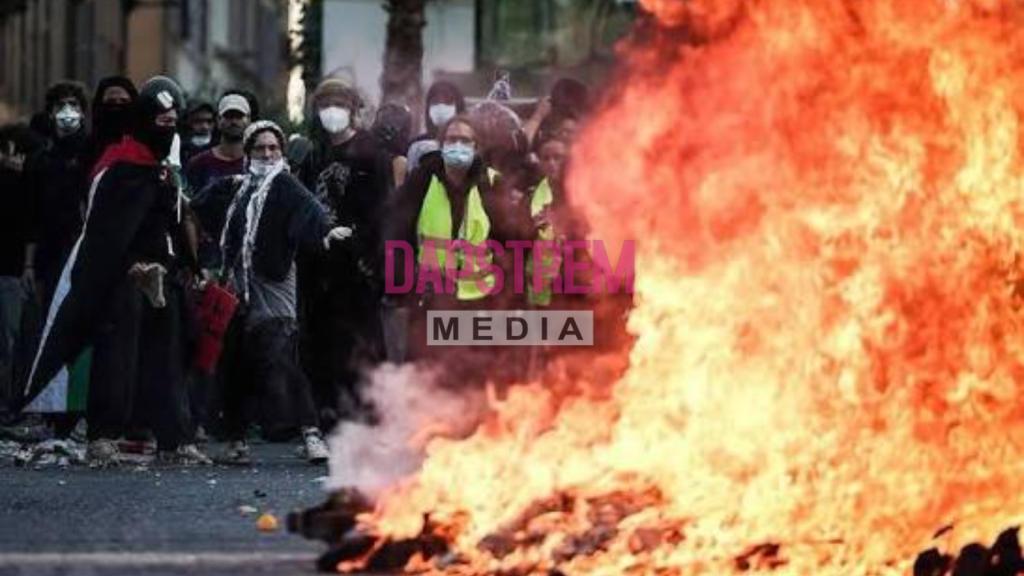
Prosecutors in Paris reported that hundreds of people remained in custody as investigations continued. Suspected offences included receiving stolen goods, participation in groups intending to commit violence and vandalism.
The scale of the destruction has raised concerns among business owners and local authorities, particularly over the cost of repairing damaged buildings and restoring affected commercial areas.
The demonstrations emerged from weeks of student-led protests over conditions in French schools, including teacher shortages, deteriorating classrooms and concerns about the education system.
The movement subsequently broadened, attracting workers, trade union members and other residents frustrated by inflation, rising fuel prices and the increasing cost of everyday necessities.
Organisers and supporters argue that deteriorating public services and pressure on household budgets have left many people struggling to maintain their living standards.
The unrest has also revived memories of France’s 2018 Yellow Vest movement, which began over fuel taxation before expanding into a wider campaign against the cost of living and perceived economic inequality.
According to figures reported by French authorities, approximately 550,000 people participated in Saturday’s demonstrations, while the CGT trade union estimated the turnout at 800,000.
Although many demonstrators marched peacefully, authorities said violent groups took advantage of the gatherings to attack businesses and public institutions.
Macron Condemns Violence as Government Faces Pressure
President Emmanuel Macron condemned the destruction and called for calm, insisting that legitimate public grievances must be distinguished from criminal acts.
Following emergency meetings with senior officials, Macron vowed that those responsible for violence and looting would face justice. He also promised stronger security measures but stopped short of declaring a state of emergency or imposing a nationwide curfew.
The government has blamed extremist groups and opportunistic criminals for much of the violence. However, the response has prompted wider political debate about policing, public spending and the government’s handling of mounting social discontent.
The unrest comes as France approaches its 2027 presidential election, adding political significance to an already difficult period for Macron’s administration.
The government has also faced questions about whether security agencies adequately anticipated the scale of the demonstrations and deployed sufficient officers to prevent attacks on public buildings.
In an update on Monday, October 19, reports said the number of arrests had risen to nearly 2,400, while almost 1,000 police officers and gendarmes had reportedly been injured. These later figures superseded the interior minister’s initial announcement of more than 1,800 arrests.
Businesses Count the Cost
The destruction has left shop owners and local authorities facing significant repair bills. Damaged storefronts, looted shops, burned vehicles and vandalised public buildings have complicated efforts to restore normal activity in affected areas.
French Economy Minister Roland Lescure pledged support for affected businesses and said those responsible for the damage should be held accountable.
The violence has also renewed concerns about the economic consequences of prolonged instability, particularly for small businesses already struggling with higher operating costs.
Meanwhile, reports of injuries among demonstrators have intensified scrutiny of police crowd-control tactics. Authorities are expected to investigate individual incidents alongside the criminal cases arising from the unrest.
What Happens Next?
The coming days will test the government’s ability to restore order while addressing the economic and social concerns that brought people onto the streets.
For authorities, priorities include identifying suspects, prosecuting those responsible for criminal acts and protecting vulnerable businesses and public institutions.
For protesters and their supporters, the central issues remain the affordability of daily life, the quality of public services and the government’s response to growing financial pressure on households.
The scale of the demonstrations suggests that the underlying grievances cannot be resolved through policing alone. Any lasting solution is likely to require a combination of public dialogue, economic measures and improvements to services.
France is facing a serious test of public order following nationwide demonstrations that combined genuine social and economic grievances with widespread violence and destruction.
More than 1,800 arrests were initially reported by Interior Minister Laurent Nuñez, with subsequent reports placing the total at nearly 2,400. The unrest also left hundreds of emergency personnel injured and caused extensive damage to businesses and public buildings.
As President Macron’s government works to restore calm, the challenge will be to hold those responsible for violence accountable without losing sight of the concerns expressed by peaceful demonstrators.
The events have underscored the depth of frustration over living costs and public services, leaving France facing two urgent tasks: restoring public order and rebuilding trust between citizens and the state.