Aliko Dangote Acquires 25% Stake in Kenya Pipeline Company in Major Energy Investment
Nigerian billionaire Aliko Dangote has acquired a significant stake in Kenya Pipeline Company, strengthening his investment presence in Kenya as plans for a major oil refinery in Lamu reshape discussions about the country’s energy future.
Nigerian billionaire and industrialist Aliko Dangote has acquired approximately 25 per cent of the Kenya Pipeline Company (KPC), marking a significant development in Kenya’s petroleum sector and expanding his business interests in East Africa. The acquisition gives Dangote a substantial ownership position in one of the country’s most strategic energy infrastructure companies, which plays a central role in transporting and distributing petroleum products across the region.
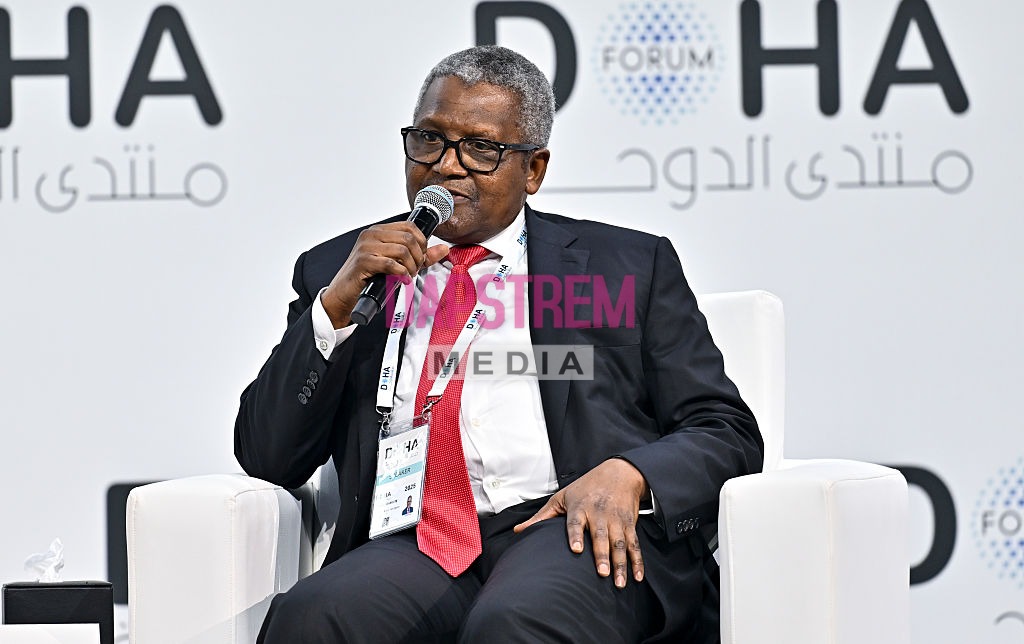
Dangote announced the investment on Wednesday, October 21, 2026, during the Financial Times Africa Summit in London. According to reports, his company acquired a 24.76 per cent stake in KPC from state-linked institutions that had previously held shares in the company. The transaction makes the Nigerian billionaire one of the most influential shareholders in the petroleum transportation business.
The investment comes at a critical time for Kenya’s energy industry, with the government pursuing reforms intended to attract private capital, improve infrastructure and strengthen the country’s position as a regional petroleum distribution hub.
It also adds another dimension to Dangote’s expanding commercial interests in Kenya, particularly following the launch of plans for a multibillion-dollar oil refinery in Lamu. His growing involvement in the country’s energy industry raises expectations about the future of petroleum supply, infrastructure investment and regional economic cooperation.
However, the acquisition has also drawn attention to the circumstances surrounding the sale of the shares, especially the involvement of public institutions that had invested in KPC during its initial public offering earlier this year.
How Dangote’s acquisition changes Kenya Pipeline Company’s ownership
Kenya Pipeline Company is a critical component of Kenya’s petroleum supply chain. The company operates infrastructure used to transport and store petroleum products, helping ensure that fuel reaches different parts of the country and neighbouring markets.
Its operations support fuel distribution to industries, transport companies, aviation services, manufacturers and households. By providing an alternative to transporting large volumes of fuel exclusively by road, the pipeline network helps facilitate the movement of petroleum products from major supply points to distribution centres.
The company also serves regional markets, making it an important player in East Africa’s economic and energy integration.
Dangote’s acquisition of approximately 24.76 per cent of KPC represents a substantial investment in this strategic infrastructure. The stake gives him significant exposure to the company’s future earnings, operations and long-term development plans.
Business Daily reported that state-linked institutions sold shares valued at approximately KSh42.5 billion. The transaction followed the company’s listing on the Nairobi Securities Exchange in March 2026.
The sale means a sizeable block of shares previously held by public institutions has moved into private ownership. It also places Dangote among the largest shareholders in a company whose infrastructure is essential to Kenya’s petroleum sector.
Although the investment does not amount to outright ownership of KPC, a stake of this size can carry considerable influence in corporate governance and strategic discussions. The precise extent of that influence will depend on the company’s governance arrangements, shareholder rights and applicable regulations.
For Dangote, the acquisition offers an opportunity to participate in a business that occupies an important position in the regional energy market. For Kenya, it creates another connection between domestic petroleum infrastructure and one of Africa’s largest industrial business groups.
The sale follows Kenya Pipeline Company’s initial public offering
The acquisition cannot be fully understood without examining the events that preceded it.
In early 2026, the Kenyan government took KPC to the capital markets through an initial public offering (IPO). The exercise formed part of the government’s broader effort to raise revenue, broaden public participation in state-owned enterprises and change the ownership structure of selected public corporations.
The IPO opened in January and closed in February 2026, with shares offered at KSh9 each. The company subsequently began trading on the Nairobi Securities Exchange on March 9.
According to the official IPO announcement, the offer involved approximately 11.81 billion ordinary shares. The government’s divestment generated substantial proceeds for the National Treasury, providing funds for government priorities while allowing investors to acquire ownership in the company.
The IPO attracted considerable interest from institutional and individual investors. Reuters reported in March that the offer achieved a subscription rate of 105.7 per cent, with Kenyan individual and institutional investors receiving 67.32 per cent of the shares offered.
Several public institutions also acquired significant holdings. These included the National Social Security Fund (NSSF), the Public Servants Pension Scheme and other funds linked to public employees and government institutions.
However, the subsequent sale of a combined 24.76 per cent stake by state-linked institutions has raised questions about the sequence of investments and disposals.
Business Daily reported that the institutions sold approximately KSh42.5 billion worth of shares to a foreign investor. Dangote’s announcement subsequently identified his company as the buyer of the approximately 25 per cent stake.
The development has placed the IPO and the subsequent share transaction under renewed scrutiny.
Questions have emerged over why public institutions that acquired shares during the IPO later sold a substantial portion of their holdings within months. Investors and members of the public may also seek clarification on the prices at which the shares were sold, the investment rationale behind the transactions and whether the institutions achieved their financial objectives.
These questions are particularly important where pension-related funds are involved because their investment decisions can affect the long-term financial interests of members and beneficiaries.
Nevertheless, the sale of shares by institutional investors does not automatically establish that the original investment was unsuccessful. A proper assessment would require details of the purchase prices, selling prices, dividends received, transaction costs and the investment objectives of each institution.
The acquisition therefore presents an opportunity for the relevant institutions and regulators to provide clear information about the transaction and demonstrate that the decisions were made in the interests of their beneficiaries.
Why Kenya Pipeline Company is attractive to Dangote
One of the main reasons KPC is strategically important is its position within the petroleum distribution network.
Fuel remains essential to Kenya’s economy. It supports road transport, aviation, agriculture, manufacturing, electricity generation in some applications and numerous commercial activities.
The movement of petroleum products also has implications beyond Kenya’s borders. Several landlocked countries in East and Central Africa depend on regional infrastructure to obtain fuel supplies, making reliable transportation and storage systems essential to their economies.
According to Kenya’s Privatisation Authority, KPC supplies more than 91 per cent of petroleum products consumed in several key regional markets, including Uganda, Rwanda, South Sudan, Burundi, the Democratic Republic of Congo and parts of northern Tanzania.
This regional role makes KPC more than a domestic infrastructure provider. It is part of a wider commercial network connecting petroleum suppliers, transport systems, storage facilities and fuel distributors.
For an industrialist with extensive interests in refining, manufacturing and commodity distribution, an investment in such infrastructure can offer strategic advantages.
Dangote already operates a major refinery near Lagos in Nigeria. His business empire also spans cement, fertiliser, sugar and other industrial activities.
His investment approach has frequently involved building businesses around essential products and the infrastructure required to manufacture, transport and distribute them.
A stake in KPC could therefore provide exposure to a business that generates revenue from petroleum transportation and storage. It may also create opportunities to explore partnerships and operational efficiencies, subject to the company’s commercial arrangements, regulations and existing customer relationships.
However, it is important to distinguish strategic possibilities from confirmed plans. Dangote’s acquisition does not, by itself, establish that KPC will exclusively transport products from his businesses or that existing fuel suppliers will lose access to the network.
KPC’s commercial operations and obligations will continue to be governed by applicable laws, regulatory requirements and contractual arrangements.
The long-term significance of the investment will depend on how the new shareholder participates in the company’s development and whether the investment supports improved services, stronger infrastructure and sustainable financial performance.
Connection to the planned Lamu oil refinery
The acquisition has attracted additional attention because it coincides with Dangote’s planned investment in a major oil refinery in Lamu County.
On September 30, 2026, President William Ruto and Dangote participated in the groundbreaking ceremony for the proposed East African refinery project. The facility is planned to have a processing capacity of approximately 700,000 barrels of crude oil per day, although its eventual completion and operation will depend on financing, construction, regulatory approvals and other project requirements.
The refinery has been presented as a potentially transformative investment for Kenya and the wider region.
If successfully developed and operated at the planned scale, it could expand regional petroleum-processing capacity, reduce dependence on imported refined products and create opportunities for industrial development.
The project could also support employment across construction, engineering, logistics, energy services and other related industries.
For Kenya, the proposed refinery represents an ambition to move beyond importing finished petroleum products towards participating more extensively in the processing and distribution of energy commodities.
Dangote’s KPC investment adds a separate infrastructure component to his expanding presence in the country’s energy industry.
A refinery and a petroleum pipeline network serve different functions. The refinery processes crude oil into usable products, while pipelines transport petroleum products between supply points, storage facilities and distribution centres.
When developed and operated efficiently, complementary infrastructure can help improve the movement of products through the supply chain.
This creates a potential strategic relationship between Dangote’s refining ambitions and his investment in KPC. However, the acquisition should not be interpreted as confirmation that the pipeline company has entered into a specific supply agreement with the proposed refinery.
Any future commercial arrangements would need to be assessed on their own terms, including their compliance with competition rules, infrastructure-access requirements and other applicable regulations.
The refinery project has also faced legal scrutiny over land and disclosure issues. A court-related dispute reported in September raised questions about land claims and the project’s development process. Such issues demonstrate why large infrastructure investments must balance economic ambitions with legal compliance, environmental safeguards and the rights of affected communities.
Consequently, the success of the broader energy strategy will depend not only on the scale of investment but also on whether projects are completed transparently and deliver sustainable benefits.
What the acquisition means for Kenya’s energy security
Energy security is a major concern for countries that rely heavily on imported petroleum products.
International oil prices, geopolitical conflicts, shipping disruptions, exchange-rate movements and changes in global demand can all affect the cost and availability of fuel.
Kenya’s dependence on international petroleum markets exposes businesses and households to developments beyond the country’s direct control.
Efficient transportation and storage infrastructure can help reduce certain logistical challenges. Reliable pipelines can move large quantities of petroleum products more consistently than road transportation alone, while adequate storage facilities can support supply planning and distribution.
KPC’s strategic importance therefore extends to the country’s ability to maintain a dependable flow of fuel to consumers and neighbouring markets.
A financially strong company with access to capital may be better positioned to maintain ageing infrastructure, expand capacity, improve operational systems and respond to rising demand.
Dangote’s investment could contribute to these objectives if it is accompanied by productive capital allocation, sound corporate governance and a long-term commitment to infrastructure development.
His experience in large-scale industrial operations could potentially bring additional commercial expertise and investment opportunities.
Nevertheless, the acquisition does not automatically guarantee lower fuel prices or eliminate supply disruptions.
Retail fuel prices depend on several factors, including international crude oil prices, the cost of imported refined products, exchange rates, shipping expenses, taxes, levies, distribution costs and the applicable domestic pricing framework.
Pipeline transportation is only one part of this broader system.
Any improvements in operational efficiency would need to be substantial enough to influence the overall cost structure before consumers could experience meaningful savings.
Similarly, a more diversified ownership structure does not remove Kenya’s exposure to international energy markets.
The investment’s contribution to energy security will therefore be measured through tangible outcomes, including infrastructure reliability, transportation efficiency, storage capacity, supply continuity and the company’s ability to support regional demand.
Will the deal create jobs and attract more investment?
Major investments in strategic infrastructure can generate economic benefits beyond the companies directly involved.
A stronger KPC could support employment through pipeline maintenance, engineering, information technology, logistics, security and other operational activities.
Expansion projects may also create opportunities for local contractors, equipment suppliers and specialised service providers.
If the company undertakes new infrastructure developments, Kenyan firms could potentially participate in construction, technical services and other supporting activities.
However, the acquisition itself does not necessarily mean KPC will immediately recruit additional employees. Employment growth will depend on future investment decisions, operational requirements and the scale of any expansion.
The transaction could also attract attention from other investors interested in Kenya’s infrastructure, energy and capital markets.
International investors often examine the ownership structures, financial performance and governance arrangements of strategic companies before committing capital.
Dangote’s participation could increase international visibility for KPC, particularly because of his reputation as a major African industrialist.
Yet investment confidence ultimately depends on more than the identity of a shareholder. Predictable regulations, transparent transactions, reliable infrastructure, effective dispute resolution and sound financial management remain essential.
Kenya must therefore ensure that the transaction contributes to a business environment in which investors can participate while public interests remain protected.
For the wider economy, the most important outcome would be sustained investment that improves productive capacity, creates worthwhile employment and strengthens regional trade.
Public concerns over the sale of shares
Although Dangote’s acquisition is a major commercial development, the circumstances surrounding the sale have generated political debate.
Kiharu Member of Parliament Ndindi Nyoro publicly criticised the transactions involving public institutions and KPC shares. In comments reported by People Daily on October 21, he alleged that pension funds and other public entities had been pressured into purchasing shares during the IPO before selling their holdings to a private investor.
He also raised allegations linking the share transaction to the proposed Lamu refinery and questioned whether individuals with political connections could benefit from the arrangement. These remain allegations attributed to Nyoro and should not be treated as established facts.
The allegations have added a political dimension to an investment that would otherwise be assessed mainly through its commercial implications.
At the centre of the debate is the role of public institutions in the original share offering and their subsequent decision to dispose of a substantial portion of their holdings.
Pension funds and other institutional investors are expected to make decisions based on financial considerations, investment mandates and their obligations to beneficiaries.
Where public institutions participate in major transactions, transparency is especially important because citizens have a legitimate interest in understanding how public resources and pension-related investments are managed.
A clear account of the sale would help establish whether the institutions achieved appropriate financial returns and whether the transaction complied with the relevant rules.
It would also help distinguish ordinary portfolio management from any potential conflict of interest or improper influence.
At the same time, allegations of wrongdoing require evidence and independent examination. The identity of a buyer, the size of an investment or the involvement of a prominent businessperson does not, on its own, prove that a transaction was improper.
The appropriate response is to examine the relevant records, including the sale terms, shareholding disclosures, institutional investment decisions and any applicable regulatory findings.
Such scrutiny would help protect public confidence while ensuring that legitimate private investment is not confused with unproven accusations.
What the deal means for Kenyan investors
KPC’s listing on the Nairobi Securities Exchange created an opportunity for individual and institutional investors to participate in the ownership of a major infrastructure company.
Dangote’s acquisition could influence how investors assess the company’s future prospects, although the actual effect on its share price will depend on market conditions, company performance and investor expectations.
A major investor can sometimes provide confidence in a company’s commercial prospects. However, the presence of a wealthy shareholder does not eliminate investment risk or guarantee future returns.
KPC’s financial performance, capital expenditure, dividend policy, debt obligations and regulatory environment will remain important considerations for shareholders.
Business Daily reported that KPC recorded a net profit of KSh11.58 billion for the financial year ending June 2026, representing a 13 per cent increase. The company also paid approximately KSh5.81 billion in dividends.
These figures demonstrate the company’s capacity to generate earnings and distribute part of its profits to shareholders.
However, investors must distinguish past performance from future expectations. Maintaining profitability will depend on operating costs, demand for transportation services, infrastructure maintenance and broader developments in the petroleum sector.
The sale also raises a broader question about the relationship between public ownership and private investment in strategic infrastructure.
A company can benefit from a broader shareholder base if the arrangement supports accountability, access to capital and effective management. However, ownership changes must be accompanied by appropriate safeguards to protect competition, customers and the public interest.
For retail investors, the most useful approach is to examine the company’s published financial statements and official disclosures rather than relying solely on headlines surrounding a high-profile acquisition.
Implications for regional trade and East African integration
Kenya occupies an important position in East Africa’s transport and logistics network.
The Port of Mombasa serves as a major entry point for goods destined for Kenya and several neighbouring countries. From the coast, transport infrastructure connects imports to inland markets across the region.
Petroleum products form a particularly important part of this trade because fuel is required for transport, industrial production and many essential services.
KPC’s infrastructure helps support the movement of these products from supply points to domestic and regional destinations.
A strong and efficient pipeline network can improve the reliability of petroleum distribution and help reduce some of the logistical challenges associated with moving fuel over long distances.
Dangote’s investment could strengthen international commercial interest in this network and potentially create opportunities for further cooperation between businesses operating in different African markets.
It also reflects a broader question about how African countries can mobilise domestic and continental capital to develop infrastructure that supports regional economic growth.
Rather than relying exclusively on investment from outside the continent, African businesses can participate in financing and operating assets that connect regional markets.
However, greater regional integration requires more than investment alone. Countries must also coordinate regulations, maintain reliable transport links, support fair competition and establish clear rules for cross-border trade.
The involvement of a major industrial investor may help open commercial opportunities, but governments and regulators will continue to play a central role in ensuring that those opportunities benefit the wider region.
The road ahead for Kenya Pipeline Company
The immediate significance of Dangote’s acquisition lies in the change in KPC’s shareholder structure and the arrival of a major industrial investor with extensive interests in the energy sector.
The longer-term impact will depend on the decisions made after the transaction.
Investors will be watching whether the company maintains its financial performance, improves operational efficiency and invests adequately in infrastructure.
They will also be interested in how the company’s leadership balances shareholder returns with its responsibility to provide reliable services to customers and regional markets.
The government and relevant institutions will face questions about the management of public investments, the transparency of share transactions and the protection of pension beneficiaries.
For Dangote, the investment provides an opportunity to deepen his presence in a market where petroleum transportation and storage are commercially significant.
His wider investment plans could create opportunities for cooperation across refining, logistics and energy distribution, provided that any arrangements are commercially viable and comply with applicable laws.
However, the success of these ambitions will depend on careful implementation, sound management and the ability to navigate the regulatory and economic challenges associated with major infrastructure projects.
Kenya must also guard against excessive concentration of influence in strategic markets. Private investment can support efficiency and growth, but the benefits are strongest when competition remains fair and infrastructure services remain accessible under transparent conditions.
This is particularly important for a company whose operations support a large share of the country’s petroleum supply chain and several neighbouring markets.
Conclusion
Aliko Dangote’s acquisition of approximately 25 per cent of Kenya Pipeline Company represents a major development in Kenya’s energy industry and its relationship with African private capital.
The investment gives the Nigerian billionaire a substantial stake in a company that supports petroleum transportation, storage and regional distribution.
It also comes as Dangote advances plans for a major oil refinery in Lamu, creating fresh interest in the future of Kenya’s energy infrastructure and the country’s ambition to strengthen its position in regional petroleum markets.
The transaction could create opportunities for additional investment, improved infrastructure and stronger commercial cooperation. However, those benefits will depend on concrete decisions, rather than the size or reputation of the investor alone.
The sale has also highlighted questions about the role of public institutions in the KPC share offering, the management of pension-related investments and the transparency of transactions involving strategic state-linked assets.
These issues deserve clear explanations, independent scrutiny and evidence-based reporting.
Ultimately, the acquisition’s importance will be determined by whether it strengthens KPC’s operations, supports reliable fuel distribution, creates lasting economic opportunities and protects the interests of Kenyan investors and consumers.
For Kenya, the challenge is to attract the capital and expertise needed to develop its energy infrastructure while ensuring that transparency, accountability and the public interest remain central to the process.