Court Grants 14 Days to Detain Inspector Sang Over Murders of Victoria Mutiso and Lawyer Kyalo Mbobu
A Nairobi court has granted detectives 14 days to detain Police Inspector Kenneth Kipkemboi Sang as investigations continue into the murders of clinical psychologist Dr Victoria Nthunya Mutiso and prominent lawyer Mathew Kyalo Mbobu.
Senior Principal Magistrate Paul Mutai approved the application by the Directorate of Criminal Investigations (DCI), allowing investigators additional time to question Sang, conduct searches, pursue possible recoveries and complete investigations into the two killings.
The ruling marks a significant development in investigations that have attracted public attention because of the alleged involvement of serving police officers and suspicions that the two murders could be connected.
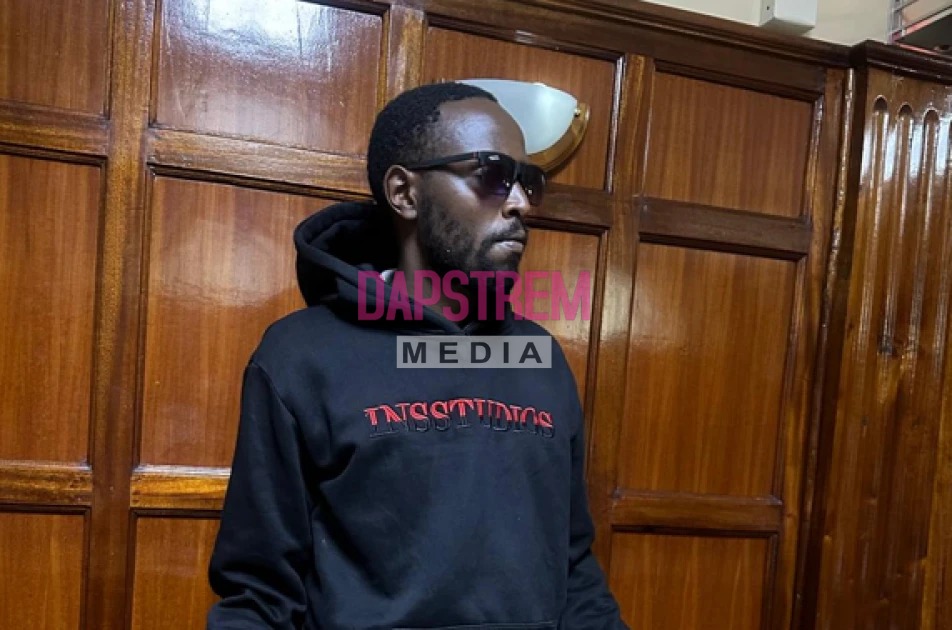
Sang appeared before the Milimani Law Courts on Monday, October 26, following his arrest in Eldoret, Uasin Gishu County, over the weekend. Detectives had been searching for him as they investigated his alleged role in the deaths of Mutiso and Mbobu.
According to the prosecution, investigators require additional time to examine evidence, record statements and establish the extent of Sang’s alleged involvement. They also told the court that some suspected accomplices were still at large, raising concerns about possible interference with witnesses, collusion and the destruction of evidence.
The defence opposed the request for continued detention and urged the court to release Sang. His lawyers argued that other suspects had already been charged and that the related cases were already before the courts.
However, the magistrate allowed the detectives’ application, finding that the issues raised by investigators required further examination. The matter is scheduled to be mentioned on November 9, 2026.
The detention order gives investigators a limited period to pursue outstanding leads before the next court appearance. It does not, by itself, establish Sang’s guilt or amount to a conviction.
Inspector Sang Arrested After Manhunt in Eldoret
Sang’s appearance in court followed an intelligence-led operation in Eldoret, where detectives from the DCI headquarters arrested him on Saturday, October 24.
According to police reports, officers intercepted him along Uganda Road in Eldoret’s Central Business District while he was driving a silver Toyota Fielder. The DCI said he had reportedly been attempting to sell the vehicle to raise money for his daily upkeep.
He was initially taken to Eldoret Police Station for processing before being escorted to Nairobi, where he was held at Kilimani Police Station ahead of his court appearance.
His arrest ended a period during which investigators had been seeking to trace his whereabouts. The officer had remained at large as detectives pursued leads in the two murder investigations.
The arrest is important because investigators suspect Sang played a coordinating or planning role in the attacks. However, the prosecution will still be required to present admissible evidence supporting any criminal charges brought against him.
The DCI has maintained that investigations are continuing to establish the full circumstances surrounding the killings and determine whether other individuals were involved.
The case has also renewed public debate about accountability within the National Police Service. Allegations involving serving officers raise serious questions about the use of official weapons, access to investigative information and the responsibility of law enforcement agencies to protect the public.
At the same time, the investigation must follow the law and respect the rights of everyone involved. The evidence collected by detectives will need to withstand scrutiny in court, where individual responsibility must be established through the legal process.
Ballistic Evidence Forms Part of the Investigation
One of the major issues presented to the court concerned forensic evidence that investigators say links a firearm issued to Sang to the killing of Dr Mutiso.
According to the prosecution, ballistic examination linked cartridges and a bullet recovered during investigations to a Mini Jericho pistol bearing serial number 47302127. Investigators told the court that the firearm had been issued to Sang.
The alleged ballistic link is an important line of inquiry because forensic examination can help investigators establish whether ammunition recovered from a crime scene may have been fired from a particular weapon.
However, the significance of the evidence will depend on the full forensic findings, the circumstances in which the firearm was handled and the other evidence presented in the case. The prosecution must establish the relevance of such findings to the specific allegations against each suspect.
The court was also told that Mutiso had reported an earlier incident on July 7, 2026, when two armed men riding a motorcycle allegedly confronted her near Junction Mall along Ngong Road and pointed a gun at her.
Mutiso reportedly escaped the encounter and reported the incident at Kilimani Police Station.
The earlier incident has become relevant to the investigation because detectives are examining whether it could have been connected to the subsequent attack. Investigators will need to establish the identities of those involved, their possible motives and whether there is reliable evidence linking the incident to the murder.
The July report also raises questions about whether the threat was investigated and whether any information obtained at the time could assist detectives in reconstructing the events leading to her death.
Such questions are particularly important in cases involving alleged targeted attacks. Investigators must establish whether earlier threats were isolated incidents or part of a wider sequence of events.
The evidence gathered from witness statements, forensic examinations, communication records and other investigative procedures could help clarify these issues as the case progresses.
How the Murder of Dr Victoria Mutiso Unfolded
Dr Victoria Nthunya Mutiso, a clinical psychologist and mental health researcher, was fatally shot in Nairobi’s Upper Hill area on July 29, 2026.
Her death shocked many people who knew her through her professional work and attracted widespread attention because of the circumstances surrounding the shooting.
Investigators have been examining the attack alongside allegations of a possible connection to a long-running property dispute involving her husband, Professor David Musyimi Ndetei, and his former wife, Rose Mbithe Mulwa.
According to the prosecution’s account, detectives suspect the dispute may have provided a motive for the attacks. They are also investigating the alleged roles of different people in planning, facilitating or carrying out the killings.
These claims remain allegations that must be tested through the court process. A suspected motive, even when investigators believe it provides a possible explanation for a crime, does not independently establish the guilt of any particular individual.
The investigation into Mutiso’s death has involved several suspects, some of whom have already faced court proceedings. Detectives have been working to establish how the alleged participants may have interacted and whether the available evidence supports the theory that the killing was planned.
The case has therefore developed beyond identifying the person suspected of firing the fatal shots. Investigators are also examining whether other people allegedly played roles in planning the attack, providing logistical support or helping those involved evade detection.
The court proceedings will be important in determining which allegations can be supported by evidence and whether the prosecution can establish the criminal responsibility of the individuals charged.
For Mutiso’s family and those who knew her, the investigation represents an effort to establish what happened and ensure that the circumstances of her death are properly examined.
Lawyer Kyalo Mbobu’s Murder Also Under Investigation
Sang is also suspected of playing a planning role in the murder of Nairobi lawyer Mathew Kyalo Mbobu, who was shot dead on September 9, 2025, while driving along Magadi Road in Nairobi.
Mbobu was a prominent lawyer who also served as a university lecturer and chaired the Political Parties Disputes Tribunal. His killing raised serious concerns because of the nature of the attack and the time it took investigators to identify people suspected of involvement.
Detectives have alleged that the lawyer’s killing was a targeted attack involving several individuals, including police officers.
Investigators previously identified Police Constable Julius Kipkoech Cheruiyot as the suspected gunman in Mbobu’s murder. The DCI has said that ballistic examination linked a Ceska pistol issued to Cheruiyot to the shooting.
Sang is alleged to have played a role in coordinating the operation. The prosecution will need to demonstrate the basis of that allegation and establish whether the evidence connects him to the planning or execution of the crime.
The fact that the two murders occurred at different times has not stopped investigators from examining whether they may have been connected through a common motive or alleged network of participants.
Mutiso was killed in July 2026, while Mbobu died in September 2025. Detectives suspect that the two cases may be linked to the property dispute involving Ndetei and Mulwa.
Establishing such a connection requires more than similarities between the cases. Investigators must identify evidence demonstrating how the alleged participants, events and motives may be related.
The two investigations have also resulted in court proceedings involving other suspects. Those proceedings will be central to determining the evidence against each individual and whether the prosecution’s allegations can be proved.
The latest detention order gives detectives an opportunity to investigate Sang’s suspected role further and assess whether additional evidence can clarify the relationship between the two killings.
Police Seek More Time to Investigate Possible Accomplices
During the court proceedings, the prosecution argued that detectives needed more time because some suspected accomplices were still at large.
Investigators expressed concern that releasing Sang could create opportunities for suspected individuals to interfere with evidence, coordinate their accounts or evade arrest. They also described him as a flight risk, alleging that he had deserted his workstation and gone into hiding.
The defence challenged the continued detention, arguing that other suspects had already been charged and that the cases were active before the courts.
The competing arguments highlight a recurring issue in criminal investigations: balancing the need to protect evidence and complete inquiries against the constitutional rights of a person under investigation.
Police may seek additional detention where they can demonstrate compelling reasons, but the court must independently assess whether the request is justified. Continued detention is not intended to serve as punishment before a person has been convicted.
The 14-day period will allow detectives to pursue the investigative steps presented to the court. These include recording Sang’s statement, conducting searches, recovering potential evidence and facilitating a mental assessment before any plea-taking.
The investigation may also involve examining communication records, tracing movements and comparing witness accounts with forensic findings. Any evidence obtained must be collected and handled lawfully if it is to be relied upon in subsequent proceedings.
The prosecution will ultimately have to establish whether there is sufficient evidence to charge Sang and proceed with a case against him. Investigators must also determine whether other suspected participants can be identified and whether their alleged roles can be substantiated.
The next court mention on November 9 is expected to provide an opportunity for the court to receive an update on the progress of the matter and consider the next steps.
Case Raises Questions About Police Accountability
The allegations against Sang have brought renewed attention to police accountability, particularly where serving officers are suspected of involvement in serious crimes.
Police officers are entrusted with protecting lives, enforcing the law and ensuring public safety. They also have access to official resources, including firearms, information and investigative procedures, which makes accountability essential.
When a serving officer is suspected of using or facilitating the use of a weapon in a criminal attack, the investigation must establish the facts independently and transparently. Any evidence of misconduct must be addressed through the appropriate legal and disciplinary processes.
The case also highlights the importance of reliable firearm records, proper supervision and effective internal controls. Investigators must establish how weapons were issued, whether they were handled in accordance with regulations and whether forensic findings support the allegations being made.
At the same time, the allegations should not be taken as proof that every officer within the service is involved in wrongdoing. The responsibility of the courts is to examine the evidence against each individual and determine whether the legal threshold for conviction has been met.
The public has a legitimate interest in knowing whether those responsible for the killings will be held accountable. Families of victims also deserve an investigation that is thorough, impartial and capable of establishing the truth.
The credibility of the process will depend on the quality of the evidence, the independence of the investigators and the fairness of the proceedings. Any attempt to conceal evidence, interfere with witnesses or shield suspects because of their positions would undermine public confidence in the justice system.
What Happens Next in the Investigation?
The court’s decision gives detectives 14 days to pursue outstanding investigative leads before the matter returns to court.
During this period, investigators are expected to question Sang, conduct searches and pursue potential evidence that could clarify his alleged involvement in the two murders. They will also need to examine the forensic findings and determine whether they support the claims presented in court.
The investigation will have to establish the individual roles of the suspects rather than rely solely on the theory that the killings were connected. Detectives must demonstrate how each person allegedly participated in the planning, facilitation or execution of the crimes.
The mental assessment ordered as part of the next steps will also be relevant before plea-taking. The court will need to receive the necessary reports and consider the matter in accordance with the applicable legal procedures.
The November 9 mention will be an important date in determining the progress of the investigation and the next procedural steps.
For now, the detention order represents a development in the search for answers surrounding the deaths of Mutiso and Mbobu. It does not settle the question of who is criminally responsible, and the allegations against Sang remain subject to the legal process.
The families of the two victims continue to await the outcome of investigations into killings that have raised serious questions about targeted attacks, possible links between criminal cases and accountability within the police service.
Ultimately, the success of the investigations will be measured by whether detectives can establish the facts and present sufficient evidence for the courts to determine the responsibility of each accused person.
As the case proceeds, the focus will remain on forensic findings, witness accounts, the alleged connections between the two murders and whether investigators can identify everyone who may have been involved.
The court proceedings will provide the appropriate forum for testing the evidence and ensuring that justice is pursued without compromising the rights of the accused.