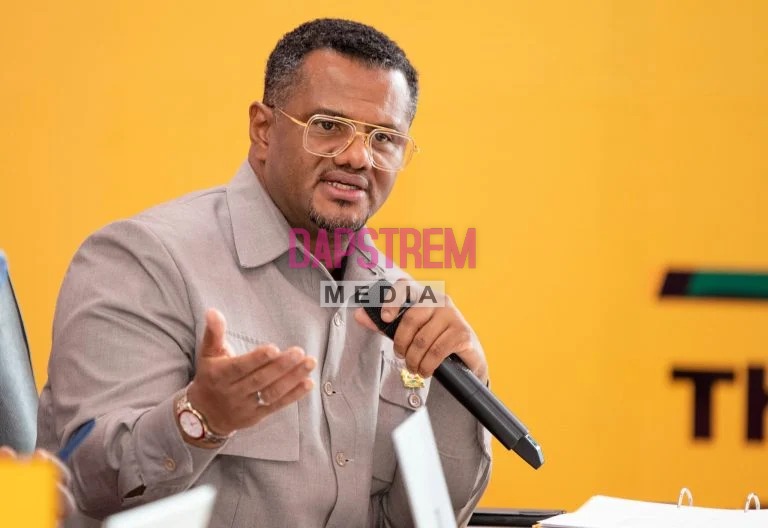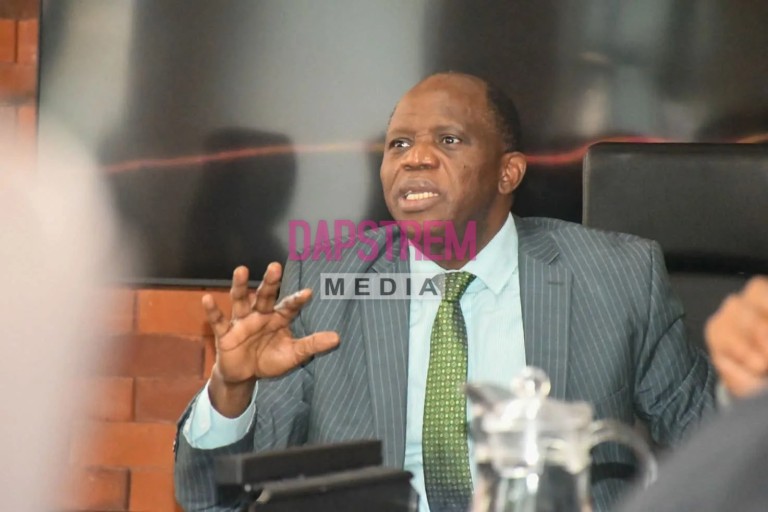
Kalonzo Arrives in London Ahead of Chatham House Keynote Address on Kenya’s 2027 Political Future
Wiper Patriotic Front leader Kalonzo Musyoka has arrived in London, United Kingdom, ahead of a high-profile keynote address at Chatham House, where he is expected to outline the opposition’s policy agenda and vision for Kenya as the country prepares for the August 10, 2027, General Election.
Kalonzo, who also leads The Ukombozi Alliance (TUA), arrived in the British capital on Monday, October 12, 2026, for a series of engagements focused on Kenya’s economic prospects, investment opportunities and political future. His visit comes at a time when political leaders and parties are increasingly positioning themselves ahead of the next general election.
The former Vice-President is scheduled to deliver his keynote address on Tuesday, October 13, under the title “The Opposition’s Outlook and Policy Agenda on the Road to 10 August 2027.” The address is expected to present his perspectives on the country’s political direction, economic management, governance and the priorities he believes should guide Kenya in the years ahead.
The London visit combines political engagement with economic diplomacy, placing Kalonzo before an international audience at a time when Kenya continues to grapple with public debt, the cost of living, employment challenges and questions about the management of public resources.
His engagements also provide an opportunity to discuss Kenya’s relationship with international investors and the role that domestic savings, pension funds, financial institutions and diaspora remittances could play in financing development.
For the opposition leader, the visit comes as the country approaches another important electoral period. Political parties are expected to present competing ideas about economic recovery, public accountability, service delivery and the future direction of the country.
Although the Chatham House address is centred on the opposition’s outlook, the wider programme also focuses on how Kenya can strengthen its position as a regional financial centre and attract investment that supports businesses, creates jobs and expands economic opportunities.
Kalonzo Attends House of Commons Reception Ahead of Keynote
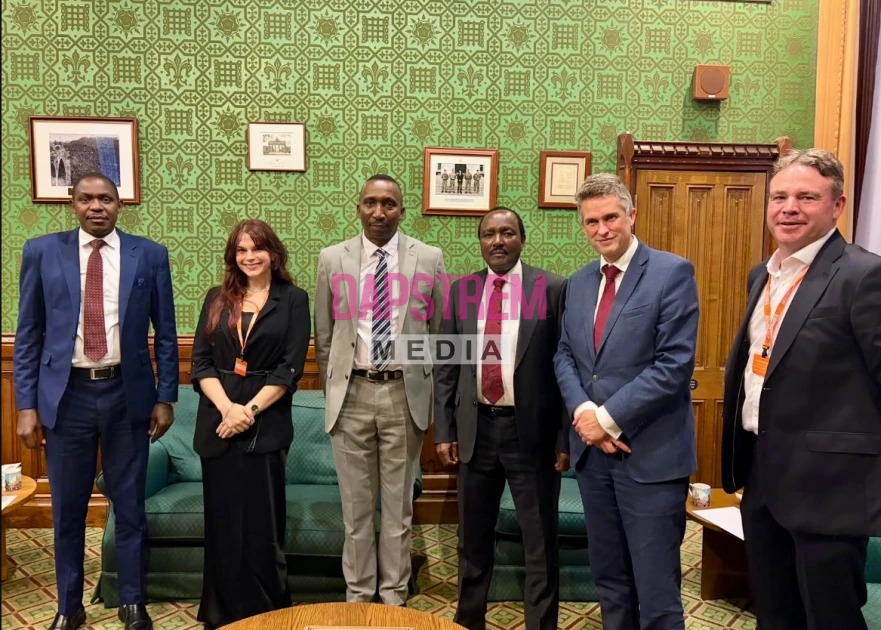
Before the scheduled Chatham House address, Kalonzo attended a reception at the House of Commons on Monday evening, where he served as the chief guest at an event organised by the Westminster Africa Business Group in partnership with the Eastern Africa Association.
The reception was hosted by Conservative Member of Parliament Sir Gavin Williamson, who chairs the Westminster Africa Business Group. It brought together participants interested in economic cooperation, regional financial markets and investment opportunities involving Kenya and the wider East African region.
The event was held under the theme “Kenya as a Regional Financial Hub and the Future of East African Capital Markets.” Discussions focused on Kenya’s potential to attract international capital, mobilise resources within the region and strengthen connections between African and international financial markets.
Addressing the gathering, Kalonzo argued that Kenya should rethink how it finances economic development, saying the country should not depend exclusively on foreign investors and external borrowing.
He pointed to domestic savings, pension funds, financial institutions, local businesses and money sent home by Kenyans living abroad as potential sources of capital that could support development projects and strengthen the economy.
“Kenya is no longer simply a country in which others invest. It is a country whose own savings, pension funds, financial institutions, enterprises and diaspora can help finance the transformation of our region,” he said, according to Citizen Digital.
The remarks placed local resource mobilisation at the centre of his economic message. Rather than treating Kenya only as a destination for foreign investment, Kalonzo argued that the country should also make better use of the financial resources already available within its borders and among its citizens abroad.
His argument reflects a broader policy question facing many African economies: how to attract foreign capital while ensuring that domestic resources also contribute meaningfully to infrastructure, enterprise development and employment creation.
Kenya has a relatively developed banking sector and a substantial pension industry compared with many markets in the region. Its diaspora also sends significant remittances home, supporting families, education, housing, businesses and other economic activities.
However, turning these resources into large-scale productive investment requires appropriate financial products, investor confidence, transparent institutions and effective oversight. Savings do not automatically translate into economic growth unless they can be channelled into viable projects with clear returns and manageable risks.
Kalonzo’s remarks therefore pointed towards an economic model that would seek to combine domestic financing with international investment while placing greater emphasis on how the resulting resources benefit Kenyans.
Public Debt and Accountability Take Centre Stage
Kalonzo also used the London engagement to raise concerns about Kenya’s public debt burden and the cost of servicing government loans.
He argued that high debt repayments were limiting the resources available for essential public services and development priorities. According to figures cited in his remarks, debt servicing consumed approximately US$13.2 billion, equivalent to about KSh1.7 trillion, out of government revenue of US$18.6 billion, or roughly KSh2.4 trillion, during the 2024/25 financial year.
The figures formed part of his argument that Kenya must examine how public finances are managed and ensure that borrowing delivers tangible benefits to citizens.
Public debt has remained an important issue in Kenya’s economic debate. Governments borrow to finance infrastructure, support public programmes and meet other expenditure needs. However, borrowing also creates repayment obligations that can place pressure on future budgets.
When a large share of government revenue goes towards servicing debt, less money may be available for other priorities, depending on the structure of the budget and the government’s overall financing position. These pressures can affect spending on healthcare, education, roads, water, social protection and other public services.
The challenge is not simply whether a government should borrow. It is whether borrowing is sustainable, whether funds are used effectively and whether the economic and social benefits justify the cost.
Kalonzo’s comments placed accountability at the centre of that debate. He argued that Kenya’s economic difficulties cannot be addressed solely by attracting more money from abroad if public resources are not managed transparently and efficiently.
“Kenya is not short of wealth. We are short of a system that puts our wealth to work for our people,” he said.
The statement captures the economic argument he presented to the audience: Kenya needs a system that converts available resources into productive investment, jobs and better public services.
For ordinary Kenyans, the debate over public debt is closely connected to daily economic pressures. Households face expenses related to food, transport, housing, healthcare and education, while businesses must manage operating costs and access to credit.
Young people seeking employment also have a direct interest in how the economy performs. Investment that supports manufacturing, agriculture, technology, tourism and small businesses could help expand employment opportunities, but the benefits depend on the quality of projects and the conditions under which businesses operate.
The policy challenge is therefore to ensure that economic growth translates into improvements in living standards rather than remaining limited to headline figures or large infrastructure announcements.
Kalonzo’s comments at the House of Commons reception are part of the opposition’s effort to place these concerns within a wider discussion about Kenya’s economic future. The effectiveness of the proposals will ultimately depend on the detailed policies, funding arrangements and accountability measures that accompany them.
Kalonzo Calls for Investment Partnerships That Protect Kenya’s Interests
Beyond public debt, Kalonzo addressed the need for Kenya to attract foreign investment while protecting national interests.
He argued that international companies should have opportunities to invest in Kenya, but that public assets and procurement processes must be managed transparently, competitively and in the public interest.
“The issue is not whether foreign companies should invest in Kenya. They should. The issue is whether national assets are managed transparently, competitively and in the public interest,” he said.
The remarks reflect a debate that has featured prominently in discussions about development financing across Africa. Governments often seek international investors to provide capital, expertise and technology. At the same time, they must ensure that investment agreements offer value for money and do not expose the public to unreasonable financial or contractual risks.
Foreign investment can support economic growth by expanding productive capacity, creating jobs, improving infrastructure and connecting local businesses to international markets. However, the benefits depend on the terms of individual projects, the strength of regulatory institutions and the ability of governments to enforce the law.
Transparent procurement is particularly important where public resources, infrastructure or strategic assets are involved. Open competition and effective oversight can help reduce the risk of inflated costs, conflicts of interest and decisions that fail to serve the public.
Kalonzo also called for deeper economic cooperation between Kenya and the United Kingdom, alongside stronger financial integration within East Africa.
Among the proposals he presented were closer cooperation between Kenyan and British financial markets, a Kenyan-shilling-denominated infrastructure bond accessible to investors in London and Nairobi, and mechanisms to channel diaspora savings into productive projects at home.
A shilling-denominated bond could offer investors a way to finance eligible projects in Kenya through a financial instrument linked to the local currency. Such a proposal would, however, require careful consideration of investor demand, currency exposure, interest rates, repayment arrangements and the credibility of the projects being financed.
Diaspora investment schemes could similarly provide opportunities for Kenyans abroad to contribute to development while seeking returns on their savings. For such initiatives to succeed, investors would need clear information, credible institutions, transparent management and confidence that their money would be used for the stated purposes.
Kalonzo said the objective should be to mobilise capital for productive activities rather than simply adding to the country’s debt burden.
“We are not asking Britain to build Kenya for us. We are inviting Britain to build with us—as partners, not patrons; through investment, not extraction; and in pursuit of prosperity that both our peoples can share,” he said.
The message presents Kenya as a potential partner in economic development rather than merely a recipient of foreign assistance. It also reflects the importance of negotiating investment arrangements that balance commercial interests with national development priorities.
Chatham House Address Puts Opposition Agenda in the International Spotlight
The keynote address at Chatham House is expected to be the central political engagement of Kalonzo’s London visit.
Chatham House is a London-based international affairs think tank that provides a platform for discussions involving policymakers, political leaders, researchers, business representatives and other influential participants in global affairs.
For Kenyan political leaders, speaking before an international audience can provide an opportunity to explain their views on governance, economic policy, foreign relations and the country’s role in regional and international affairs.
Kalonzo’s scheduled address, “The Opposition’s Outlook and Policy Agenda on the Road to 10 August 2027,” places the opposition’s priorities at the centre of the engagement.
With the next general election approaching, the speech is expected to address the direction the opposition believes Kenya should take and the policy questions likely to shape political debate in the coming months.
The 2027 election will be an important test for political parties seeking to persuade voters that their proposals can address the country’s economic and governance challenges. Leaders will face questions about job creation, taxation, public spending, healthcare, education, corruption, public debt and the cost of living.
The opposition’s challenge will be to explain not only what it considers wrong with the current direction of government but also what it would do differently. Voters are likely to look for clear proposals, realistic financing plans and evidence that political commitments can be translated into practical outcomes.
Kalonzo’s appearance at Chatham House offers a platform to communicate such priorities beyond Kenya’s domestic political arena. It also allows international observers to hear how the opposition understands the country’s challenges and the policies it believes could address them.
However, an international speech does not in itself determine electoral outcomes or establish public support at home. The proposals presented in London will need to be debated, scrutinised and explained to Kenyan voters, who will ultimately assess political leaders according to their priorities and expectations.
The address also comes as parties and political alliances prepare for the next electoral contest. Kenya’s political landscape can change considerably before election day, as leaders negotiate partnerships, clarify their positions and seek support from different communities and interest groups.
In this environment, the substance of Kalonzo’s policy agenda will be important. The public will be interested in whether his proposals offer detailed responses to the country’s economic difficulties and whether they can be implemented within realistic financial and institutional limits.
His London engagements combine two related objectives: communicating the opposition’s political vision and presenting ideas about Kenya’s place in regional and international economic cooperation.
Kenya’s Economic Future and the Road to 2027
The timing of Kalonzo’s visit gives the engagements added significance because economic questions are expected to remain central to Kenya’s political debate ahead of the August 2027 General Election.
For many households, the most immediate concerns include the cost of living, access to jobs, business opportunities, taxation and the quality of public services. These issues shape how citizens assess the performance of government and the credibility of alternative political programmes.
A credible economic agenda must address both the need to raise resources and the responsibility to use them effectively. Governments require revenue to fund public services and infrastructure, but citizens also expect transparency, accountability and measurable benefits from public expenditure.
The debate over investment is similarly important. Kenya needs capital to support development, but the success of investment depends on whether projects create sustainable economic value and whether their costs and risks are properly managed.
Kalonzo’s emphasis on domestic savings and diaspora resources highlights the potential role of Kenyan citizens in financing development. His call for stronger links with international financial markets also reflects the importance of attracting external capital and expanding opportunities for businesses.
At the regional level, closer integration could help East African countries develop larger markets and improve access to financing. Harmonising capital-market regulations, facilitating cross-border listings and easing the movement of capital could create opportunities for businesses seeking to expand beyond national borders.
Such changes would require cooperation between governments, regulators and financial institutions. They would also need safeguards to ensure that the benefits of regional integration are broadly shared and that financial markets remain transparent and stable.
For Kenya, the challenge is to combine domestic resource mobilisation, responsible borrowing, private investment and regional cooperation into a coherent development strategy.
The opposition’s proposals will need to be evaluated against these practical questions. A strong policy programme should explain where funding will come from, how projects will be prioritised, how public institutions will be held accountable and how economic gains will reach ordinary citizens.
As the country approaches 2027, these details are likely to matter as much as political speeches and alliances. Voters will want to understand how competing programmes intend to improve their lives and how the promises made during the campaign can be implemented.
Kalonzo’s London visit provides an opportunity to present his perspective on these issues to international audiences. His keynote address is expected to outline the opposition’s outlook, while the economic engagements have already placed investment, debt management and accountability at the centre of his message.
Ultimately, the significance of the visit will depend on the ideas presented, the discussions they generate and whether the proposals are developed into practical policies. For Kenya, the broader question remains how to build an economy that attracts investment, uses public resources responsibly, creates opportunities and delivers sustainable improvements in living standards.
As political leaders prepare for the next general election, the debate over Kenya’s economic future is likely to intensify. Kalonzo’s appearance in London places him among the voices seeking to shape that discussion, with his Chatham House address offering an international platform for the opposition’s policy agenda.