45 People Still Missing as Eastleigh Building Collapse Rescue Enters Fourth Day
The search for survivors following the collapse of an 18-storey building in Eastleigh, Nairobi, has entered its fourth day, with 45 people still reported missing as emergency teams continue working through the rubble.
According to the Kenya Red Cross figures cited in a People Daily report published on Monday, October 26, 47 people had been reported missing following the disaster, while two people had been rescued from beneath the debris at the time of the report. The figures highlight the scale of the emergency as families continue searching for relatives whose whereabouts remain unknown.
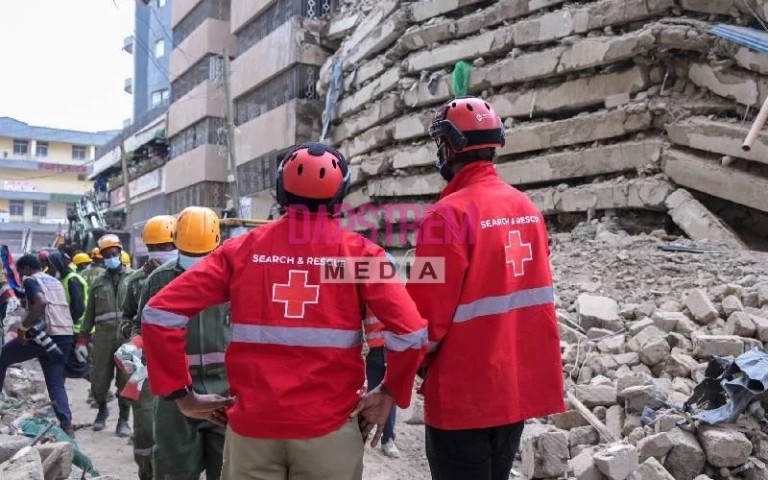
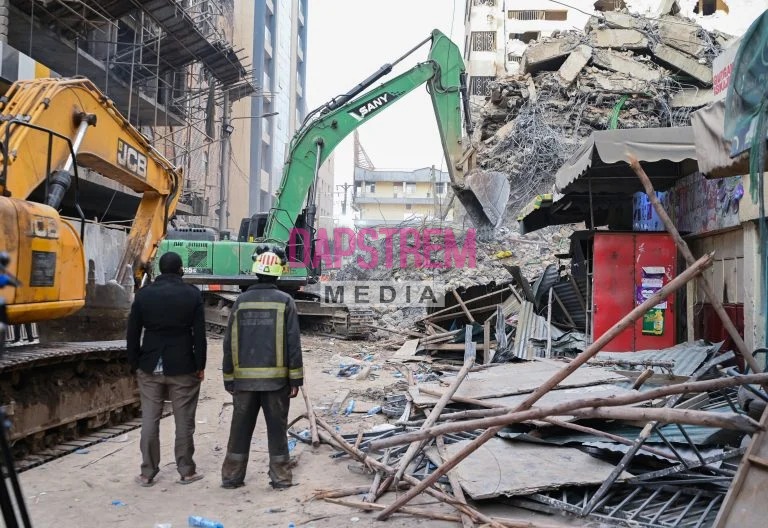
The building collapsed on Friday, October 23, 2026, leaving a large pile of concrete, metal and other construction materials where the structure had stood. The incident triggered an extensive rescue operation involving emergency responders and specialised teams working to locate people who may have become trapped.
As the search continues, families are facing days of uncertainty while waiting for information about their loved ones. Some relatives have remained close to the scene, hoping that rescue teams will find survivors and bring them to safety.
The operation has also renewed concerns about construction safety, building approvals and the enforcement of regulations governing developments in Nairobi. Authorities have launched investigations to establish what caused the structure to collapse and whether negligence or breaches of building regulations contributed to the tragedy.
The immediate priority, however, remains the search for anyone who may still be alive beneath the wreckage. Rescuers are working against time while taking precautions to avoid exposing trapped people and emergency personnel to additional danger.
Families Wait Anxiously as Search for Missing Relatives Continues
For families whose relatives have not been accounted for, the collapse has brought days of anxiety, fear and uncertainty.
The missing-person reports submitted to the Kenya Red Cross have become an important part of efforts to establish who was inside or near the building when it came down. However, the exact locations and conditions of the missing people remain unclear.
Relatives are hoping that the rescue operation will bring positive news, even as the passing hours make the situation increasingly difficult. Each update from emergency responders carries enormous emotional weight for families who have been waiting to hear whether their loved ones are safe.
The collapse has affected not only people who may have been working at the construction site but also those who could have been in the surrounding area. Establishing the whereabouts of everyone reported missing is therefore a critical part of the response.
The Kenya Red Cross has been receiving reports from concerned relatives and helping coordinate information about missing people. Such records are essential in emergencies involving large numbers of potentially affected individuals, although the figures may change as authorities verify reports and identify those who have been rescued or accounted for.
Families have been urged to use the official channels established by emergency responders to report missing relatives and obtain information. The National Police Service has advised those searching for loved ones to contact the emergency response number 1199 or report to the Kenya Red Cross desk at the scene.
Authorities have also asked members of the public to avoid the affected area so that emergency teams can work without unnecessary interruptions. Keeping access routes clear is important because rescue operations require space for specialised equipment, emergency vehicles and personnel.
The emotional toll on families is likely to continue for as long as their relatives remain unaccounted for. Beyond the immediate rescue operation, affected households may need support with accommodation, communication, medical assistance and the psychological impact of the disaster.
For those waiting at the scene, the priority remains simple but urgent: to find their missing relatives and establish what happened to them.
Rescue Teams Race Against Time to Find Survivors
Emergency responders have continued removing debris and examining sections of the collapsed building in an effort to reach people who may still be trapped.
The operation requires careful coordination because large concrete slabs and unstable sections of the structure can make it difficult to access areas beneath the rubble. Moving debris without assessing the risks could cause further structural shifts and endanger both rescuers and anyone who remains trapped.
The collapse has created a complicated rescue environment in which teams must balance speed with caution. Heavy machinery can help clear large quantities of material, but rescuers must also assess where and how to remove debris without compromising areas that may contain survivors.
Specialised rescue operations often involve identifying spaces where people could have survived, listening for signs of life and determining the safest way to reach them. Every decision must consider the condition of the wreckage and the possibility that shifting one section could affect another.
The challenge is especially serious in a multi-storey building collapse, where floors and structural elements can fall onto one another. The resulting layers of concrete and construction materials may leave people trapped in confined spaces that are difficult to reach.
Rescue teams must therefore work systematically, coordinating their movements and using available equipment to access the wreckage. The objective is to locate survivors while minimising the risk of further injury or loss of life.
The number of people reported missing has increased pressure on the teams to continue their work. However, emergency responders also face the practical limitations of working around a heavily damaged structure and must take measures to protect those conducting the search.
The rescue operation has involved multiple agencies working toward a common goal. Their efforts are crucial not only in locating survivors but also in recovering people who may have died and helping authorities establish a clearer account of the incident.
As the operation enters its fourth day, families and the public continue to look for updates on progress. The focus remains on searching all accessible areas, accounting for those reported missing and ensuring that no potentially survivable section of the wreckage is overlooked.
Earlier Rescues Offer Hope Amid the Tragedy
The rescue of survivors has offered a measure of hope during an otherwise distressing operation.
The National Police Service reported on Sunday that four people had been rescued and were receiving medical attention in hospital. This was an update from the earlier figure of two survivors announced on Saturday.
The differing figures in successive updates underline the importance of relying on the latest verified information when reporting the progress of a developing emergency. The Monday People Daily report cited two rescues in its account of the 45 people still missing, while the police had announced four rescues the previous evening. The latest confirmed number of missing people therefore requires clarification from the relevant authorities.
Even with these figures still requiring reconciliation, the rescues demonstrate the importance of sustained efforts to reach people trapped beneath the debris. They also provide encouragement to families whose relatives have not yet been located.
The survivors have been taken to hospital for medical attention. Their recovery will depend on the nature of their injuries and the treatment they require, while authorities continue working to establish the circumstances of the collapse.
The search has also demonstrated why emergency teams must continue to assess the wreckage carefully. People trapped beneath debris may be difficult to locate, and the condition of the collapsed structure can complicate efforts to reach them.
For families still waiting, the rescue of other people provides a reason to continue hoping, although the condition and location of those still missing remain unknown.
The authorities have not yet established a final casualty figure. The number of people who may have been inside or around the building at the time of the collapse also remains an important part of the ongoing inquiry.
As rescue operations continue, accurate communication will be essential. Families need reliable information, while the public needs clear updates that distinguish confirmed rescues, missing-person reports and any casualties formally established by authorities.
DPP Orders Investigation Into the Building Collapse
Beyond the search for survivors, the disaster has raised serious questions about how the building was planned, approved, supervised and constructed.
The Office of the Director of Public Prosecutions has directed the Directorate of Criminal Investigations to conduct a thorough investigation into the collapse.
In a statement reported on Monday, the ODPP said Nairobi City County had not forwarded an inquiry file to its office concerning possible wrongdoing by the developer, construction professionals or county government officials in connection with the building.
The clarification places renewed attention on the responsibilities of the agencies and professionals involved in the development and approval of buildings in Nairobi.
The DCI is expected to investigate the circumstances surrounding the collapse, including whether any actions or omissions by those involved in planning, approving, supervising or constructing the building contributed to the incident. Once investigations are complete, the file is expected to be submitted to the ODPP for independent review and directions on possible prosecution.
The investigation will be important in establishing whether the collapse resulted from structural weaknesses, construction defects, failure to comply with approved plans or other factors. These are matters that require evidence and technical examination rather than assumptions based solely on the scale of the destruction.
Investigators may need to examine construction records, approval documents, engineering reports, inspection records and the work carried out at the site. They will also need to establish the responsibilities of the developer, contractors, engineers and any public officials whose decisions may be relevant.
Where evidence indicates that a person or organisation breached legal obligations and contributed to the disaster, the findings could form the basis for further legal action. However, criminal responsibility can only be established through the appropriate legal process.
The DPP has warned developers, contractors, construction professionals and public officials against disregarding building regulations, safety standards and approval requirements. The office has indicated that prosecution may follow where sufficient evidence of criminal culpability is established.
The investigation is therefore expected to examine both the immediate circumstances of the collapse and the systems that were supposed to ensure the building was safe.
For affected families, accountability is an important part of the search for answers. Establishing the cause of the collapse could help determine whether the tragedy was preventable and what action should be taken to prevent similar incidents.
Building Safety and Enforcement Under Scrutiny
The Eastleigh disaster has intensified scrutiny of building safety and the enforcement of construction regulations in Nairobi.
Nairobi Governor Johnson Sakaja previously said the building was under construction without approved plans, despite enforcement action earlier in the year. That claim has increased pressure on the relevant authorities to explain how construction continued and what measures were taken to address the alleged violations.
If a building proceeds without the necessary approvals, questions arise about whether inspections were conducted, whether enforcement orders were issued and whether those responsible ensured compliance with the law. The ongoing investigation will need to establish the facts surrounding this particular development.
Building regulations exist to protect workers, residents, businesses and members of the public from structural failures and other construction-related hazards. Developers are expected to follow approved designs, while qualified professionals must ensure that construction meets the required engineering and safety standards.
County authorities also have responsibilities in reviewing plans, conducting inspections and taking appropriate action where construction violates regulations. The effectiveness of these measures depends on consistent enforcement, professional accountability and timely intervention when risks are identified.
The collapse has raised questions about whether the systems intended to prevent unsafe construction are working as they should. However, the specific failures, if any, must be established through the investigation rather than assumed before the evidence is examined.
The tragedy also highlights the risks faced by construction workers, who may spend long hours at sites where structural safety is essential. Employers and developers have a responsibility to provide safe working conditions and ensure that construction activities comply with applicable standards.
For Nairobi, the incident is a reminder that rapid urban development must go hand in hand with proper planning, professional supervision and enforcement of building regulations. The growth of residential and commercial developments should not come at the expense of human life.
Authorities will need to establish whether the building had the required approvals, whether construction followed the approved plans and whether any warnings or enforcement measures were ignored. The findings should inform any necessary legal action and improvements to inspection and enforcement systems.
A Tragedy That Demands Answers and Accountability
As rescue teams continue searching the wreckage, the Eastleigh building collapse remains both an urgent humanitarian emergency and a serious test of the institutions responsible for public safety.
The first priority is to locate those who remain missing, rescue anyone who may still be alive and provide appropriate assistance to survivors and affected families. Emergency responders must be allowed to carry out their work safely, while relatives deserve timely and accurate information about the search.
At the same time, the investigation must establish how the building collapsed and whether negligence, regulatory failures or violations of construction standards contributed to the disaster.
The findings should not end with identifying possible mistakes. Where evidence supports criminal responsibility, the relevant authorities must take appropriate action through the justice system. Where administrative or regulatory weaknesses are identified, the responsible agencies should address them to reduce the risk of similar tragedies.
The incident also calls for greater transparency in the management of building approvals and enforcement actions. Developers, construction professionals and public officials must understand that safety requirements are not optional procedures but essential safeguards intended to protect lives.
For the families waiting for their loved ones, however, the immediate concern remains the rescue operation. Each person who has not been accounted for represents a family waiting for answers and hoping for a safe return.
The coming days will be critical as investigators examine the circumstances of the collapse and rescue teams continue their search. Authorities must communicate verified updates clearly, particularly as reports of missing people and confirmed rescues are reconciled.
Ultimately, the Eastleigh tragedy should lead to answers about what happened, accountability where wrongdoing is established and stronger measures to protect people living and working around construction sites.
Until then, the focus remains on finding those still missing, supporting the affected families and ensuring that the investigation establishes the truth behind one of Nairobi’s most distressing building disasters.