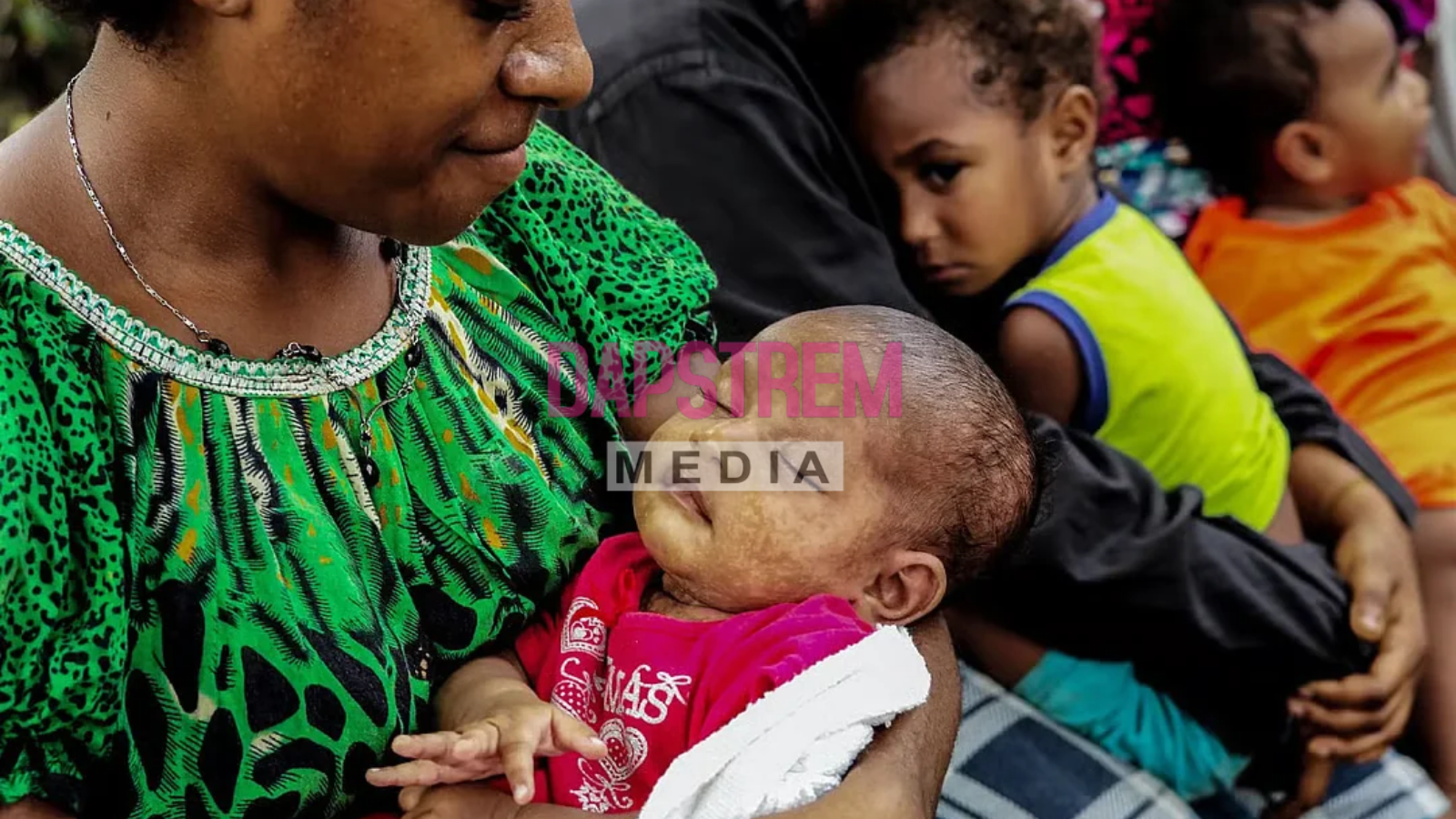
Papua New Guinea is considering an ambitious three-child family planning policy as the government seeks to slow rapid population growth and ease mounting pressure on schools, hospitals and other essential public services.
Prime Minister James Marape announced the proposed policy, which would encourage families to have no more than three children, arguing that uncontrolled population growth is placing increasing economic and social pressure on households and the country’s limited infrastructure.
Marape made the announcement on November 6 while visiting the maternity wing of the newly opened Dr Kaven Memorial Hospital at Palmalmal Station in Pomio, East New Britain Province.
He said the government intended to introduce a national family planning framework aimed at preventing unplanned pregnancies, improving maternal health and reducing the financial burden associated with raising large families.
“This is to ensure that there is prevention of unplanned pregnancies and births, and families will be encouraged to have no more than three children,” Marape said.
According to Papua New Guinea’s National Statistics Office, the country’s population has reached approximately 10.18 million, with an annual growth rate of 2.6 per cent. This translates to more than 180,000 additional people every year.
The rapid expansion has increased demand for classrooms, teachers, healthcare workers, hospitals, housing and employment opportunities, creating challenges for a country where many communities remain geographically isolated.
Policy raises questions about reproductive rights
Despite the government’s ambitions, the proposal has already sparked important questions about how the three-child recommendation will be implemented and whether families will retain complete freedom over reproductive decisions.
The government has not yet explained whether the policy will involve financial incentives, expanded access to contraceptives or other measures. There is also no indication that families exceeding three children will face legal penalties.
Paul Barker, executive director of Papua New Guinea’s Institute of National Affairs, argued that successful family planning should focus on empowerment and awareness rather than enforcement.
He noted that some women who would have preferred two or three children had been unable to access the necessary family planning services.
Rural communities face the biggest challenge
The proposed policy also highlights longstanding inequalities in access to reproductive healthcare, particularly in remote communities.
Women in isolated parts of Papua New Guinea often travel considerable distances to reach functioning health facilities, making access to maternal care and contraceptive services difficult.
The country’s National Health Plan 2021–2030 identifies a total fertility rate of 4.2 children per woman, with rural women averaging 4.4 compared with 3.5 among urban women.
The same report highlights an unmet demand for family planning, indicating that access to reproductive healthcare remains a significant challenge.
For Marape’s proposal to succeed, expanding access to voluntary contraception, maternal healthcare and reproductive health education will be essential.
The announcement therefore represents more than an attempt to reduce population growth. It presents a major policy test for a government seeking to balance economic development, public service delivery and individual reproductive rights.
Whether the proposed three-child framework will translate into meaningful improvements for families will depend on the details of its implementation.