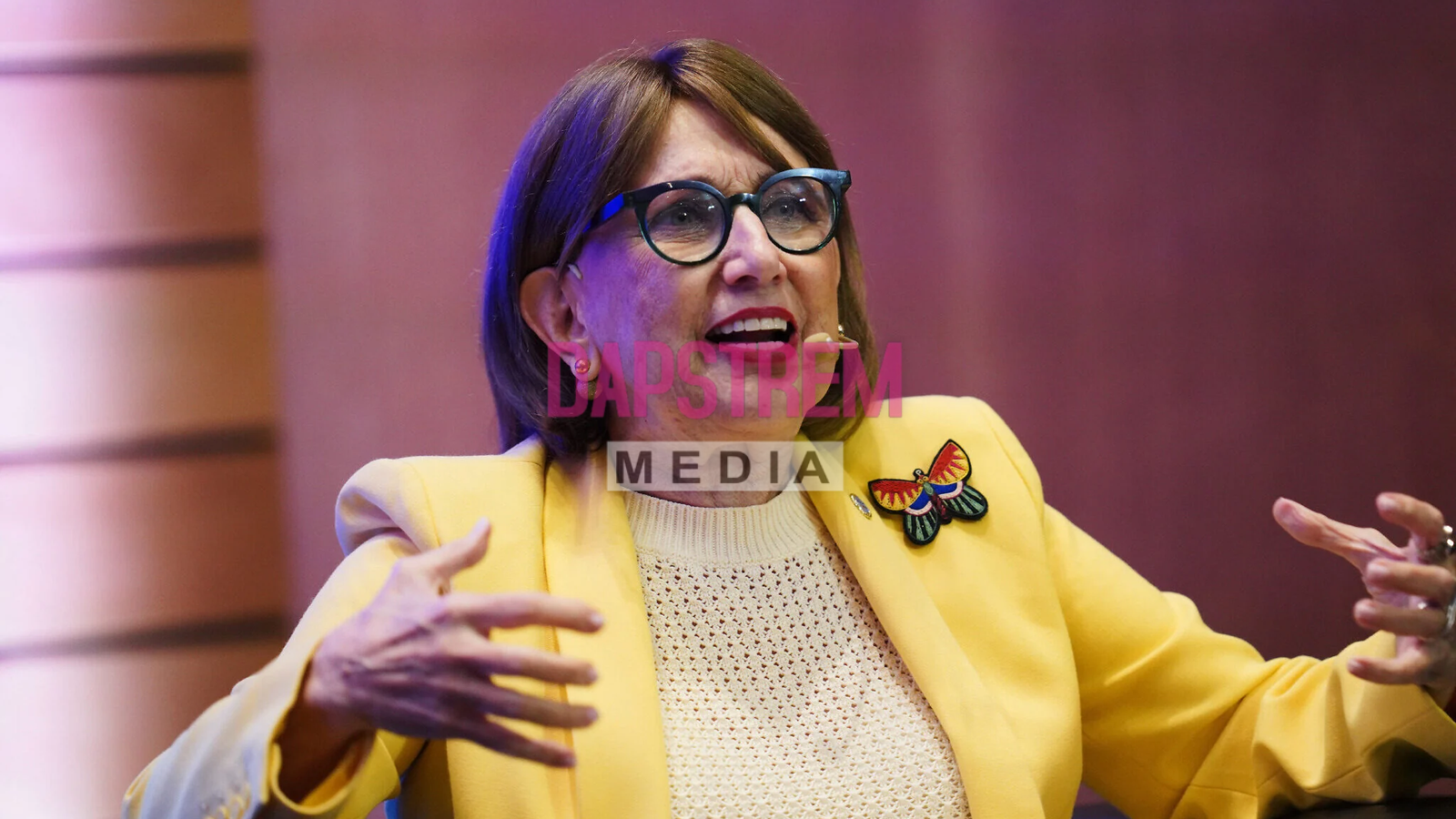
Around 30 former foreign ministers from Latin America have reportedly rallied behind Costa Rican diplomat Rebeca Grynspan’s bid to become the next United Nations secretary-general, strengthening a regional campaign to secure the organisation’s top leadership position.
The endorsement comes as the contest to succeed António Guterres enters a decisive phase, with Latin American governments increasingly arguing that the region deserves an opportunity to lead the 193-member international organisation.
The diplomatic initiative coincides with growing political support for Grynspan at the highest levels. At the Ibero-American Summit in Madrid on November 5, Costa Rican President Laura Fernández publicly urged international leaders to support her compatriot, describing the candidacy as an opportunity for Latin America and the Caribbean to contribute to restoring confidence in multilateralism.
Grynspan’s campaign has also received backing from Maria Angela Holguín, the United Nations envoy on Cyprus, who has openly advocated for a woman from Latin America to become the organisation’s next secretary-general.
A respected economist and former vice-president of Costa Rica, Grynspan brings extensive experience in government and international diplomacy. She served as Costa Rica’s vice-president between 1994 and 1998 before holding senior positions within the United Nations Development Programme and the Ibero-American General Secretariat.
Since 2021, she has headed the United Nations Conference on Trade and Development (UNCTAD), where she has championed developing countries’ interests in global trade, investment and economic cooperation.
Her candidacy has gained considerable momentum in the Security Council’s informal voting process. In the November 5 ballot, Grynspan received 12 favourable votes against three opposing votes, her strongest showing in the successive rounds. Argentina’s Rafael Grossi received nine favourable votes, while Guyana’s Carolyn Rodrigues-Birkett secured eight.
However, the regional campaign faces significant diplomatic challenges. The Security Council’s five permanent members the United States, China, Russia, France and the United Kingdom possess veto powers that could prevent any candidate from advancing, regardless of wider regional support.
Grynspan’s emergence also carries historic significance. No woman has ever occupied the United Nations’ highest office in its more than eight decades of existence. Her election would therefore represent a major breakthrough in gender representation and give Latin America another opportunity to shape global diplomacy.
The outgoing secretary-general, António Guterres, completes his second term on December 31, 2026. His successor is expected to assume office on January 1, 2027.
For Latin America, the campaign is about more than securing an influential international appointment. It is a test of regional unity, diplomatic influence and the ability to translate collective political support into decisive votes at the United Nations.