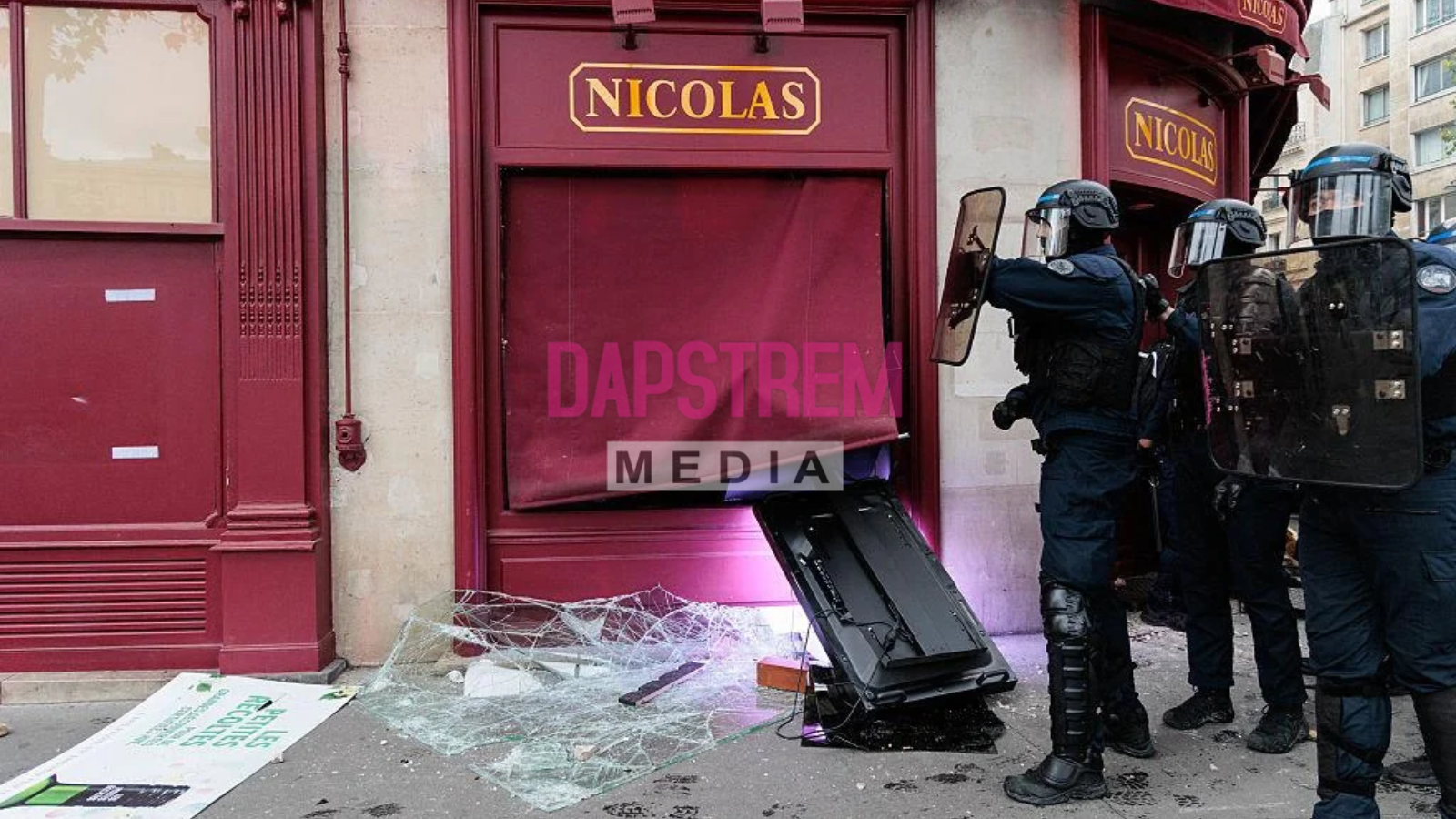
France’s Senate has approved a controversial bill that could make people financially liable for damage caused during violent demonstrations, including in some circumstances when they did not personally carry out the destruction. The proposed legislation also opens the door to the seizure of certain social benefits to recover compensation, raising concerns about the right to peaceful protest and the financial security of vulnerable households.
The bill, adopted by 229 votes to 105 in the early hours of Wednesday, October 28, now moves to the National Assembly, the lower house of parliament, where lawmakers will debate its future. The Senate’s vote does not make the proposal law.
The legislation, commonly referred to in France as the casseurs-payeurs bill, or “rioters pay” bill, was introduced to address the financial consequences of violence, looting and vandalism during public gatherings. Its passage comes amid renewed unrest that has intensified pressure on the government to demonstrate that those responsible for destruction will be held accountable.
But the proposal has also exposed a fundamental disagreement over where to draw the line between holding perpetrators responsible for damage and protecting people who exercise their democratic right to demonstrate.
A response to a wave of unrest
The government’s proposal was initially developed after violence that followed Paris Saint-Germain’s victory over Arsenal in the UEFA Champions League final in May 2026. It gained urgency after fresh clashes, looting and property damage during demonstrations on October 17, amid public anger over inequality and rising living costs.
The scale of the economic damage has added pressure on authorities to find ways of compensating businesses and other victims. According to French parliamentary broadcaster LCP, France’s Chambers of Commerce and Industry reported that more than 2,500 businesses had been affected by the October 17 unrest.
For shopkeepers, the consequences of street violence can extend beyond broken windows, damaged premises and stolen goods. Businesses may also lose revenue when they are forced to close, secure their buildings or suspend operations. Reuters reported that French retailers said they had suffered millions of euros in losses from vandalism, looting and precautionary closures.
The government argues that the public should not bear the cost of damage caused by people participating in violent gatherings. The proposed law seeks to strengthen the ability of the state and victims to recover compensation from those held financially responsible.
Interior Minister Laurent Nuñez has defended the proposal as a means of making those responsible pay rather than leaving the wider public to absorb the losses. He has also rejected claims that the bill creates collective punishment, arguing that it establishes joint responsibility instead.
What the bill would change
The Senate-approved version introduces a system of joint civil liability for certain people who participate in violent gatherings. Under the adopted text, an individual could be required to contribute to compensation for damage caused by another participant, even if that individual did not personally commit the destructive act.
The legislation sets a ceiling of €10,000 per person under the proposed liability provisions. However, this is not an automatic fine imposed on every protester. The provisions specify circumstances involving knowing participation in a group associated with violence, theft or property destruction, as well as circumstances in which people remain in a violent crowd despite police orders to disperse. The text also provides an exception for people who remain in a gathering for a legitimate reason under the relevant provision.
The distinction is important. Participation in a peaceful demonstration, by itself, is not the same as satisfying the legal conditions laid out in the bill. But the proposal could broaden the circumstances in which a person faces financial consequences for damage they did not personally cause.
The Senate’s version also expands the mechanisms available to recover compensation. If a person held liable cannot pay, certain social benefits could be subject to deductions under the proposed rules.
These include family allowances, housing assistance and France’s minimum-income benefit, known as the Revenu de solidarité active (RSA). The Senate debate also resulted in provisions extending the mechanism to additional benefits, including the family supplement, back-to-school allowance and activity bonus.
Human rights groups warn of a threat to peaceful protest
The bill’s most contentious feature is the possibility that people could be made financially responsible for actions committed by others. Human rights organisations and lawyers argue that the provisions could make demonstrators reluctant to attend protests, particularly when a peaceful gathering turns violent.
Amnesty International criticised the proposal ahead of the Senate debate on October 26, warning that it could discourage people from exercising their rights to freedom of expression and peaceful assembly. The organisation argued that responsibility should be based on evidence of an individual’s own conduct and culpability.
The concern is not limited to the €10,000 liability cap. It also relates to how authorities would establish that someone knowingly participated in a group covered by the legislation, and how that person’s involvement would be distinguished from the presence of a peaceful demonstrator near an incident of violence.
Hanna Bouchareb, a Paris-based lawyer who represented people accused of participating in the October 17 unrest, told Reuters that peaceful protesters could find themselves exposed to legal consequences despite having no involvement in acts of destruction. The concern reflects the difficulty of distinguishing participants in violence from bystanders and peaceful demonstrators during rapidly evolving street clashes.
Critics also question the potential impact of seizing social benefits. Family allowances and housing assistance are intended to help households meet essential expenses, while the RSA provides a minimum income to people with little or no income. Amnesty argues that deductions could deepen financial hardship, including for family members who were not responsible for the damage.
The possibility of parents being held financially responsible in cases involving their children has added another layer to the controversy.
These are objections to the proposed law, rather than findings that it has already violated constitutional or international legal standards. Whether particular provisions would withstand legal scrutiny remains a separate question.
A broader security package emerges from the Senate
The financial liability provisions are only one part of the legislation approved by senators. During more than six hours of debate, the Senate expanded the original proposal with additional security measures, turning a bill focused on compensation into a wider package addressing public disorder.
Among the measures included in the Senate-approved text are:
Restrictions on attending demonstrations: provisions allowing certain individuals considered likely to repeat violent acts to be barred from specified public places during future demonstrations.
Expanded surveillance powers: measures concerning the use of drones and algorithmic analysis of video surveillance to help detect events associated with risks to public order.
Tougher penalties: changes affecting penalties for certain offences and provisions for additional restrictions on participation in demonstrations.
Removal of online content: an emergency procedure under which authorities could request the removal of online material considered likely to cause serious public disorder, with platforms facing possible blocking or de-indexing if they failed to comply within the specified period.
These measures have broadened the dispute beyond compensation. Questions about surveillance, online expression, administrative restrictions and the proportionality of penalties are likely to form part of the parliamentary debate.
France’s Senate has voted to make financial accountability a more prominent part of its response to violent demonstrations. The government says the proposal will help victims recover losses and ensure that taxpayers are not left to bear the costs of destruction. Critics warn that its reach could extend beyond those who actually cause damage, with consequences for peaceful assembly and the economic security of vulnerable families.
Both the compensation mechanism and the proposed enforcement powers will now face further legislative and legal scrutiny. The decisive question is not simply whether people responsible for violence should pay for the damage they cause, but how the law can establish responsibility without undermining individual accountability and the right to peaceful protest.