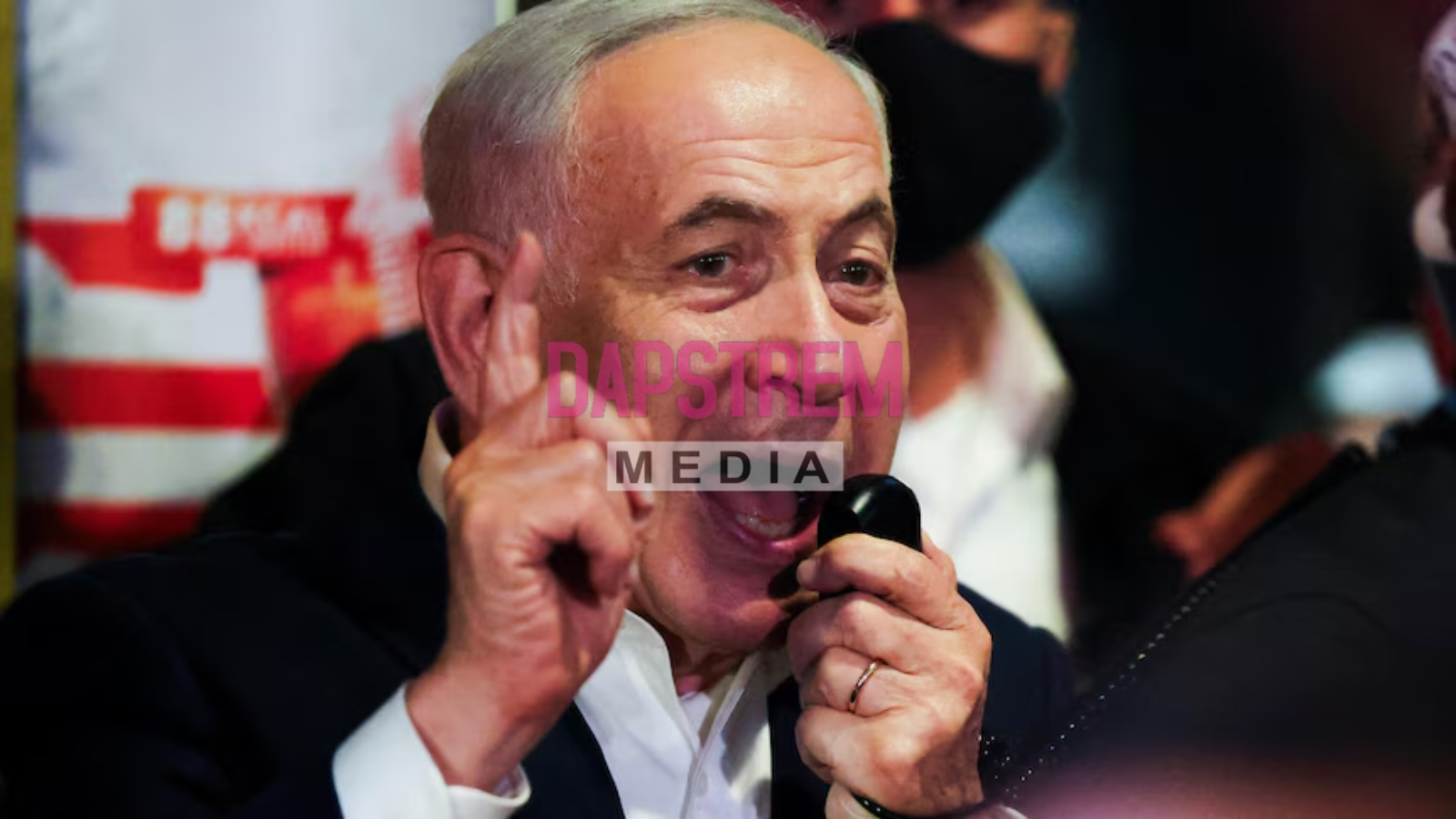
Israel’s longest-serving prime minister, Benjamin Netanyahu, faces one of the most consequential tests of his political career as Israelis vote in a closely contested parliamentary election on October 27, 2026.
After nearly two decades in power across three separate periods, Netanyahu is seeking another term amid public anger over the security failures surrounding the October 7, 2023, Hamas-led attacks, the devastating wars that followed, a prolonged corruption trial and growing international pressure over Israel’s conduct in Gaza.
His principal challenger, former military chief Gadi Eisenkot, has built his campaign around accountability and the need for a different approach to national leadership. Final opinion polls suggest neither Netanyahu’s governing bloc nor the opposition has a clear path to the 61 seats required for a parliamentary majority.
The election is therefore about more than who finishes first. It will test whether Netanyahu can assemble another governing coalition, whether voters are ready for political change and how Israel will address the security, diplomatic and domestic divisions that have deepened during his latest term.
Gadi Eisenkot emerges as a formidable challenger
Netanyahu’s principal challenger is Gadi Eisenkot, a former chief of staff of the Israel Defense Forces who has emerged as a significant opposition figure.
Eisenkot, whose son was killed while serving in Gaza, has used his military background to challenge Netanyahu’s claim that he is uniquely qualified to protect Israel.
His campaign combines a security-focused outlook with calls for accountability over October 7. This has allowed him to appeal to voters who favour a strong defence policy but believe the current leadership has failed to provide sufficient answers about the attack.
Eisenkot’s Yashar party has performed strongly in opinion polls ahead of the election, while Netanyahu’s Likud faces competition from a fragmented political landscape.
Final surveys published by Israeli television broadcasters projected Yashar winning approximately 22 to 23 seats, compared with 19 to 21 for Likud. The projections are estimates rather than election results, and neither major bloc was expected to secure a majority on its own.
The contest demonstrates an important feature of Israeli politics: a challenger does not necessarily need to defeat Netanyahu’s party outright to prevent him from remaining prime minister. The decisive question is which political camp can assemble a governing coalition.
Coalition politics could decide his fate
Israel’s parliamentary system makes coalition-building central to the formation of governments.
The Knesset has 120 seats, and a governing majority requires the support of at least 61 lawmakers. Because no party has historically secured an outright majority on its own, prime ministers depend on alliances with other parties.
Netanyahu’s current political strength has rested on cooperation with ultra-Orthodox religious parties and far-right nationalist groups, including parties associated with Itamar Ben-Gvir and Bezalel Smotrich.
These alliances have helped him remain in power, but they have also exposed him to criticism from Israelis who oppose the influence of his more hard-line partners.
Disagreements over military service exemptions for ultra-Orthodox men have been particularly contentious, with critics arguing that the burden of national service should be shared more fairly. The issue has also created tensions among voters who otherwise support Netanyahu’s security policies.
The opposition, meanwhile, includes parties with differing positions on security, religion and the Palestinian question. Their ability to cooperate after the election could prove as important as their combined vote totals.
If neither side can secure a majority, Israel could face prolonged coalition negotiations. Netanyahu could remain caretaker prime minister while political parties attempt to form a government, potentially prolonging uncertainty.
Corruption trial adds to the pressure
Alongside the election, Netanyahu continues to face a long-running criminal trial involving three corruption cases.
The charges include allegations of bribery, fraud and breach of trust. Prosecutors have accused him of accepting benefits from wealthy associates and of seeking favourable media coverage through political dealings.
Netanyahu denies wrongdoing and has described the cases as politically motivated. The allegations remain matters for the courts, and he has not been convicted in these proceedings.
The trial has deepened divisions within Israel, with critics arguing that a sitting prime minister should not govern while facing such serious allegations. Supporters counter that the legal process has been used to undermine an elected leader.
The dispute has also become entangled with Netanyahu’s broader efforts to change Israel’s judicial system.
His government’s proposed judicial reforms in 2023 sought to reduce certain judicial powers and increase political influence over aspects of the justice system. Supporters argued that the changes would rebalance power between elected officials and unelected judges, while opponents warned that they threatened judicial independence.
The proposals triggered some of the largest protest movements in Israel’s history and intensified an already polarised political environment.
International isolation and the Gaza war
Netanyahu also faces mounting international pressure over Israel’s conduct in Gaza.
The scale of Palestinian civilian suffering, destruction of infrastructure and restrictions affecting humanitarian assistance have prompted criticism from foreign governments, international organisations and human rights advocates.
In November 2024, the International Criminal Court issued arrest warrants for Netanyahu and former Israeli defence minister Yoav Gallant over alleged crimes against humanity and war crimes connected to the Gaza conflict. The allegations have not been adjudicated in a criminal trial, and Netanyahu rejects the accusations. Israel has also challenged the court’s jurisdiction.
The warrants have created diplomatic complications for Netanyahu and raised questions about how countries that are parties to the Rome Statute should respond if he travels to their territory.
At the same time, Netanyahu’s government has continued to defend its military operations as necessary for Israel’s security.
His relationship with US President Donald Trump has become an important feature of his campaign. Netanyahu has highlighted American support and cooperation against regional threats, particularly Iran, as evidence of his ability to maintain strong international partnerships.
However, close ties with Washington have not removed the wider diplomatic challenges facing Israel. Relations with European governments and other international partners have been strained by the war, humanitarian concerns and disagreements over the future of Palestinian statehood.
The next Israeli government will inherit these challenges regardless of the election outcome.
What Netanyahu is promising voters
Netanyahu has framed the election as a choice between continuing his security agenda and allowing opponents to change Israel’s direction.
His campaign has emphasised military achievements, the confrontation with Iran and the argument that his experience makes him best placed to defend the country.
He has also warned supporters that a victory for his opponents could lead to policies he considers dangerous, including concessions on Palestinian statehood.
The opposition has countered that Israel needs a change in leadership, greater accountability for the October 7 failures and a different approach to governing.
Eisenkot and other opposition figures have argued that military strength must be accompanied by credible leadership, effective oversight and a clearer strategy for the country’s future.
The competing messages reflect a society divided over security, political accountability, religion and the consequences of prolonged conflict.
For Netanyahu, the challenge is to convince voters that his record and experience outweigh the failures and controversies associated with his leadership.
A defining moment in Netanyahu’s political legacy
Benjamin Netanyahu has survived numerous political crises throughout his career, repeatedly returning to power after periods in opposition. His ability to build alliances, communicate a clear security message and navigate Israel’s fragmented political system has made him one of the country’s most consequential leaders.
But the 2026 election comes after a series of events that have placed unprecedented pressure on his leadership: the October 7 security failures, the wars that followed, deep domestic divisions, legal proceedings and international scrutiny.
His supporters continue to view him as an experienced leader capable of confronting regional threats. His critics argue that the consequences of his policies and the failures under his watch demand a different direction.
The outcome of the election will depend not only on public opinion but also on turnout, the performance of smaller parties and the ability of competing blocs to secure parliamentary support.
As Israelis cast their votes, Netanyahu faces a question that has followed him throughout his long career but now carries particular weight: can the politician who has dominated Israeli politics for decades persuade the electorate to give him another term?