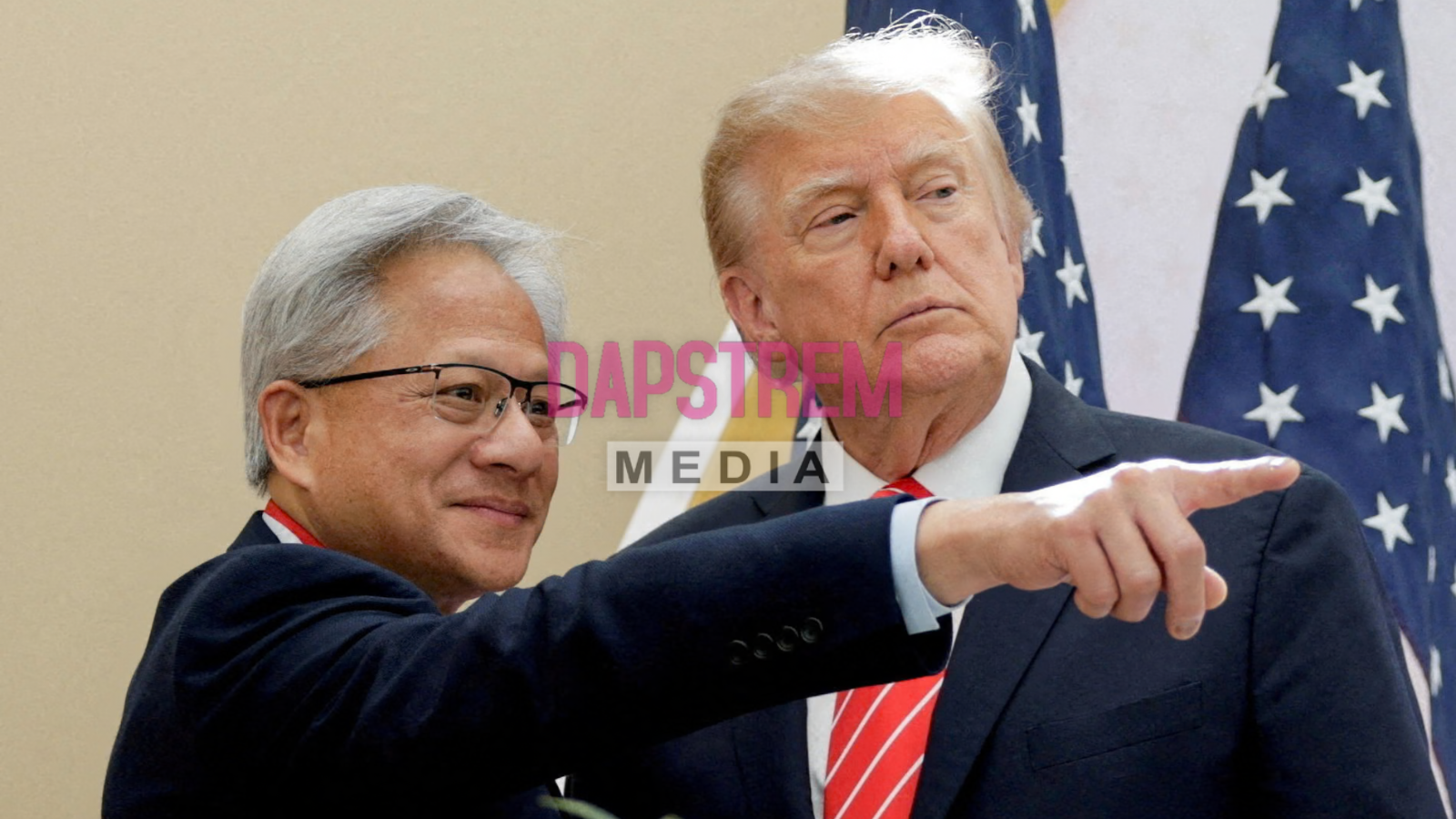
US President Donald Trump could be heading for a multimillion-dollar financial windfall following his intervention in the dramatic return of Nvidia chief executive Jensen Huang, raising fresh questions about the intersection of presidential influence, corporate power and personal wealth.
According to a report by the Financial Times published on November 24, Trump’s Nvidia stock holdings may have increased in value by between $1.3 million and $15 million after the chipmaker’s shares surged 31.5 per cent on Monday.
The rally followed Nvidia’s surprise decision to reinstate Huang, just 11 days after his resignation on November 12 amid controversy surrounding alleged extramarital relationships, including one involving a woman suspected by US officials of having links to Chinese intelligence.
Trump publicly acknowledged playing a significant role in bringing the technology executive back. Speaking to CNBC, he said he had spoken to Nvidia’s board and convinced its members to reverse their decision.
“I convinced them … I made the deal,” Trump said, suggesting his intervention had been instrumental in securing Huang’s return.
Nvidia’s board also confirmed receiving input from senior levels of the US government, adding that it was confident Huang’s reinstatement presented no national security risk.
Financial windfall raises questions
Trump’s latest financial disclosures, filed with the US Office of Government Ethics on November 5, indicate that he could have held between 32,000 and 370,000 Nvidia shares as of September 30.
The wide range reflects disclosure rules requiring assets and transactions to be reported within financial bands rather than through exact figures.
Based on these estimates, the Financial Times calculated that Monday’s share-price rally could have increased the value of Trump’s Nvidia investment by as much as $15 million.
However, the figure represents a potential increase in the value of his holdings, not confirmed cash profits. The disclosures also do not account for transactions made in October and November.
Political influence and corporate interests
The episode has intensified scrutiny of Trump’s involvement in private-sector decisions, particularly because he personally holds investments in companies affected by government policy and presidential intervention.
Democratic Senator Ruben Gallego called for an investigation into stock positions taken before the announcement, raising concerns about the timing of potential trades.
The White House has previously maintained that Trump’s investment portfolio is independently managed through discretionary accounts, without his direct involvement in individual investment decisions.
Nevertheless, the circumstances surrounding Nvidia’s leadership reversal have renewed debate over potential conflicts of interest and transparency.
Beyond Trump’s personal finances, Huang’s return carries enormous significance for the global artificial intelligence industry. Nvidia remains a central supplier of advanced chips powering AI development, data centres and major technology companies.
Ultimately, the episode illustrates how decisions at the intersection of Washington and Silicon Valley can produce consequences extending far beyond corporate boardrooms potentially reshaping markets while delivering extraordinary financial gains to America’s most powerful political figure.