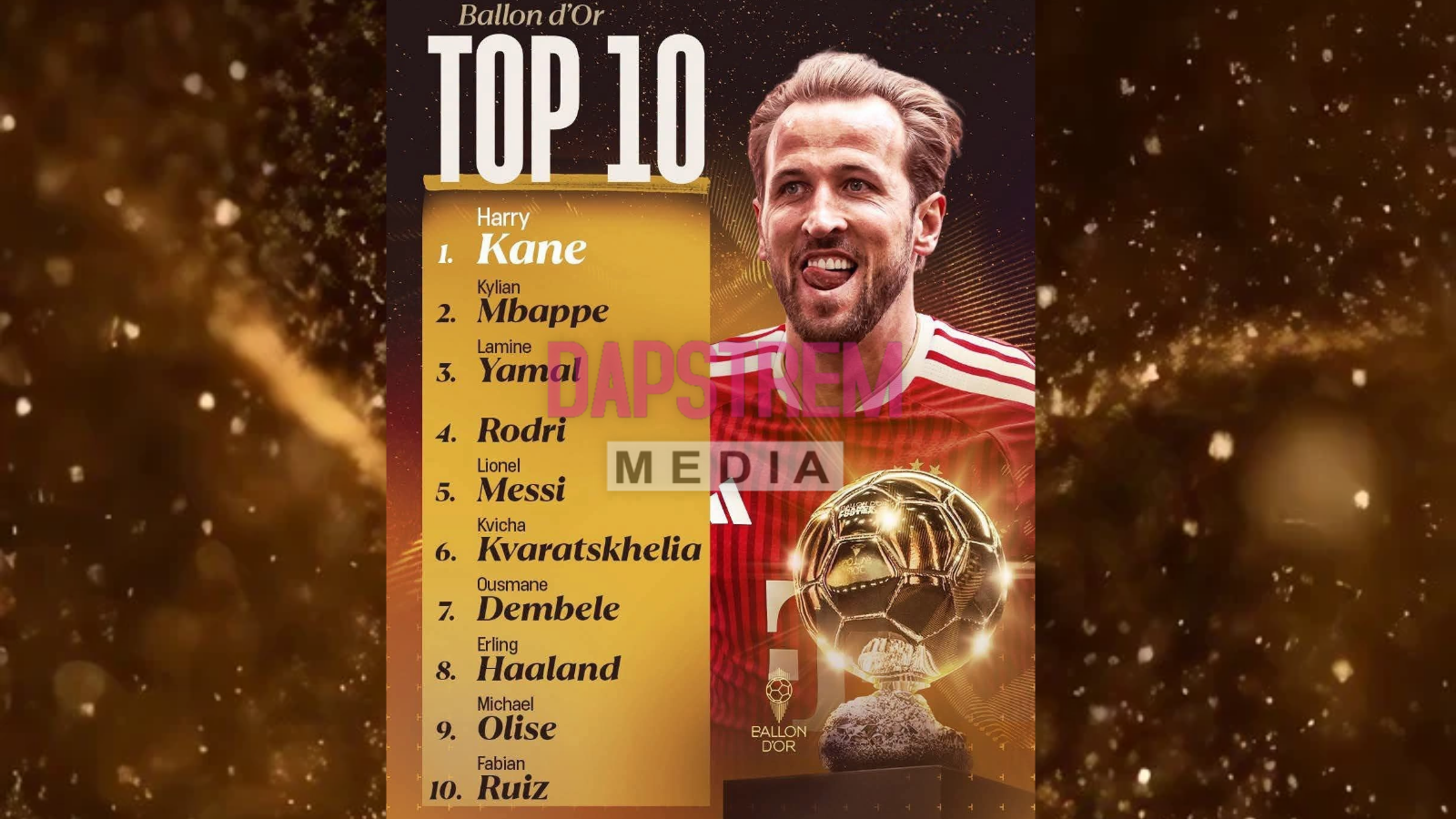
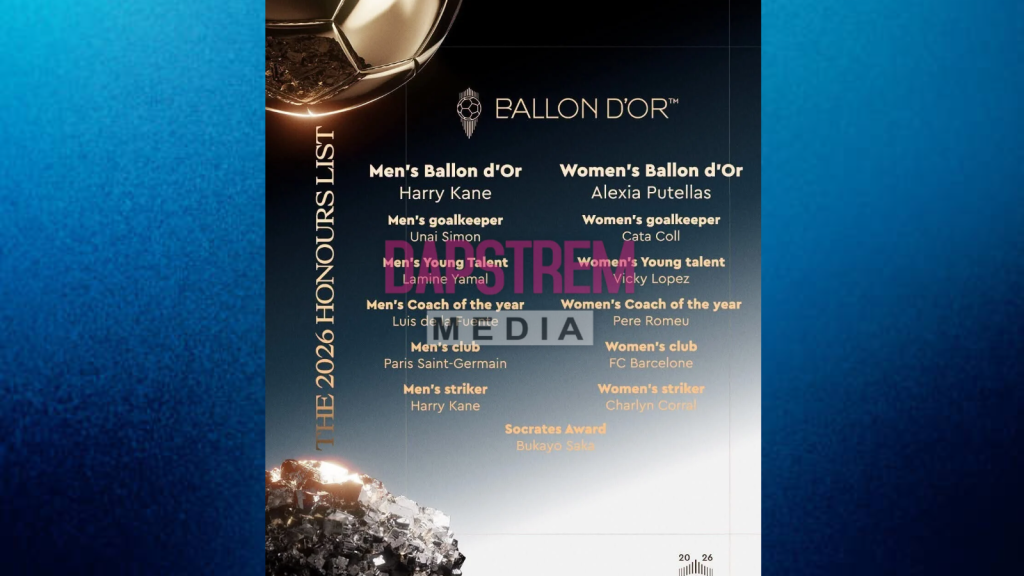
The 2026 Ballon d’Or rankings have delivered a fascinating snapshot of the current football landscape, with Harry Kane crowned the world’s best men’s footballer ahead of Kylian Mbappé and Lamine Yamal at a historic ceremony in London on Monday night.
The Bayern Munich striker claimed the prestigious individual honour after a remarkable season in which he scored 73 goals for club and country, helping Bayern retain their Bundesliga title as part of a domestic treble. His victory made him the first Englishman to win the men’s Ballon d’Or since Michael Owen in 2001.
The final top 10 brought together prolific goalscorers, creative attackers, midfield leaders and established champions. It also highlighted the continued influence of European football’s biggest clubs, with Bayern Munich, Real Madrid, Barcelona, Paris Saint-Germain and Manchester City all represented.
Here is a closer look at the ten players who finished at the top of the 2026 Ballon d’Or rankings and the achievements that shaped their campaigns.
Ballon d’Or 2026: The top 10 players
1. Harry Kane — England, Bayern Munich
Kane claimed the top prize after an outstanding campaign in which his goalscoring consistency and contribution to Bayern’s success made him a leading contender. His performances in domestic competition and the Champions League strengthened his case, while his leadership and ability to create opportunities for teammates demonstrated that his influence extends beyond finishing.
The victory represents a major milestone in Kane’s career and places him among the distinguished English players to have won the award, following legends such as Sir Stanley Matthews, Sir Bobby Charlton, Kevin Keegan and Michael Owen.
2. Kylian Mbappé — France, Real Madrid
Mbappé finished second, reinforcing his position among the most influential forwards of his generation. Known for his pace, technical ability and clinical finishing, the Real Madrid star continues to be a formidable attacking presence.
Although he missed out on the top prize, his position among the leading contenders highlights his continued ambition to win the Ballon d’Or and add another major individual honour to his career.
3. Lamine Yamal — Spain, Barcelona
Yamal continued his extraordinary rise by securing third place. The Barcelona winger has become one of the most exciting young players in world football, admired for his dribbling, creativity and confidence in one-on-one situations.
His performances demonstrate how quickly he has established himself among the game’s elite. His recognition in the young-player category further underlines his growing influence at club level.
4. Rodri — Spain, Manchester City
Rodri’s position among the leading contenders reflects the importance of midfielders who control the rhythm of matches. His ability to retain possession, break up opposition attacks and dictate the tempo has made him an influential figure in modern football.
His recognition also reinforces the argument that a player’s contribution should not be measured solely by goals and assists. Midfield intelligence, tactical discipline and consistency can be equally important to a team’s success.
5. Lionel Messi — Argentina, Inter Miami
Messi remained among the world’s leading players, finishing fifth in a field featuring some of the game’s brightest talents.
The Argentine legend has won the Ballon d’Or eight times, an unmatched record that continues to define his place in football history. His presence in the rankings alongside a younger generation illustrates the enduring significance of his career and achievements.
6. Khvicha Kvaratskhelia — Georgia, Paris Saint-Germain
Kvaratskhelia secured sixth place, earning recognition for his creativity, dribbling and attacking unpredictability. The Georgian forward is capable of beating defenders, opening up compact defences and creating opportunities in difficult situations.
His position reflects the importance of dynamic wide players in modern football, particularly those who can combine individual skill with productive contributions to their teams.
7. Ousmane Dembélé — France, Paris Saint-Germain
Dembélé finished seventh after another campaign in which his versatility and attacking qualities attracted attention. His acceleration, close control and ability to operate across different forward positions make him a valuable option.
His ranking also reflects the increasing importance of forwards who can contribute both as creators and finishers rather than specialising in a single attacking role.
8. Erling Haaland — Norway, Manchester City
Haaland claimed eighth place, continuing his presence among the leading forwards in world football. His physical strength, intelligent movement and exceptional finishing have made him one of the most dangerous strikers of his generation.
The Norwegian’s inclusion underlines the intense competition among elite goalscorers, where even prolific performances must stand out against the achievements of other world-class players.
9. Michael Olise — France, Bayern Munich
Olise finished ninth, joining Kane in the top 10 and highlighting Bayern Munich’s attacking strength. The French winger is recognised for his technical quality, passing range, vision and ability to create chances from wide positions.
His recognition reflects the growing value of creative players who can influence matches through assists, intelligent movement and the ability to unlock organised defences.
10. Fabián Ruiz — Spain, Paris Saint-Germain
Ruiz completed the top 10, earning recognition for his midfield contributions. His composure in possession, passing accuracy and ability to connect defensive and attacking phases make him an important component of his team’s structure.
His inclusion is a reminder that successful teams rely on players whose contributions may not always generate headlines but remain essential to controlling games and creating opportunities.
Harry Kane’s historic breakthrough
Kane’s victory was the defining story of the ceremony. For years, he had been regarded as one of the most consistent goalscorers in football, but the Ballon d’Or had remained beyond his reach.
His move from Tottenham Hotspur to Bayern Munich in 2023 provided a new opportunity to compete for major trophies. Since then, he has continued to demonstrate his value as a goalscorer, creator and leader.
The 2025–26 season proved decisive. His remarkable scoring record and contribution to Bayern’s domestic success strengthened his case for the award, while his performances in European competition demonstrated his ability to deliver against elite opposition.
For England, the victory ended a long wait. Michael Owen was the country’s last men’s Ballon d’Or winner in 2001, making Kane’s achievement a significant moment in the nation’s football history.
Mbappé and Yamal lead the challenge
Messi’s fifth-place finish provided another notable storyline. Despite playing outside European football, the Argentine remains a major figure in the global game.
His record eight Ballon d’Or victories have set a benchmark for future generations, while his continued presence among the leading names demonstrates the lasting impact of his career.
However, the 2026 rankings also highlight a changing landscape. Kane, Mbappé and Yamal now occupy the spotlight, reflecting the arrival of new contenders and the continuing evolution of elite football.
What the top 10 reveals about modern football
The rankings demonstrate that individual recognition depends on more than goals alone.
Kane’s success illustrates the importance of consistent scoring and team achievements. Yamal, Kvaratskhelia and Olise highlight the value of creativity and attacking versatility, while Rodri and Ruiz represent the importance of midfield control and tactical awareness.
The list also reflects the concentration of elite talent at Europe’s leading clubs, with Bayern Munich and Paris Saint-Germain featuring multiple players in the top 10.
At the same time, Messi’s inclusion illustrates the continued influence of established champions alongside emerging stars.
A historic night in London
The 2026 ceremony was held in London for the first time, providing a fitting setting for Kane’s historic victory. The event also recognised achievements across women’s football, coaching, goalkeeping and other areas of the sport.
The evening celebrated not only individual brilliance but also the collective achievements that help shape football’s greatest stories.
For Kane, the award represents the culmination of years of hard work and persistence. For Mbappé and Yamal, it provides a benchmark against which future campaigns will be measured. For the other players in the top 10, it is recognition of their contributions to the highest level of the game.
The 2026 Ballon d’Or top 10 reflects a sport in transition, with established legends sharing the spotlight with a new generation of exceptional players.
Harry Kane emerged as the headline winner, ending England’s long wait for the award. Mbappé and Yamal completed the top three, while Messi and other leading stars demonstrated the depth of talent across modern football.
Ultimately, the rankings celebrate different forms of excellence: goalscoring, creativity, leadership, tactical intelligence and consistency. As the next season unfolds, the challenge will be to see who can build on these achievements and emerge as the leading contender for the next Ballon d’Or.