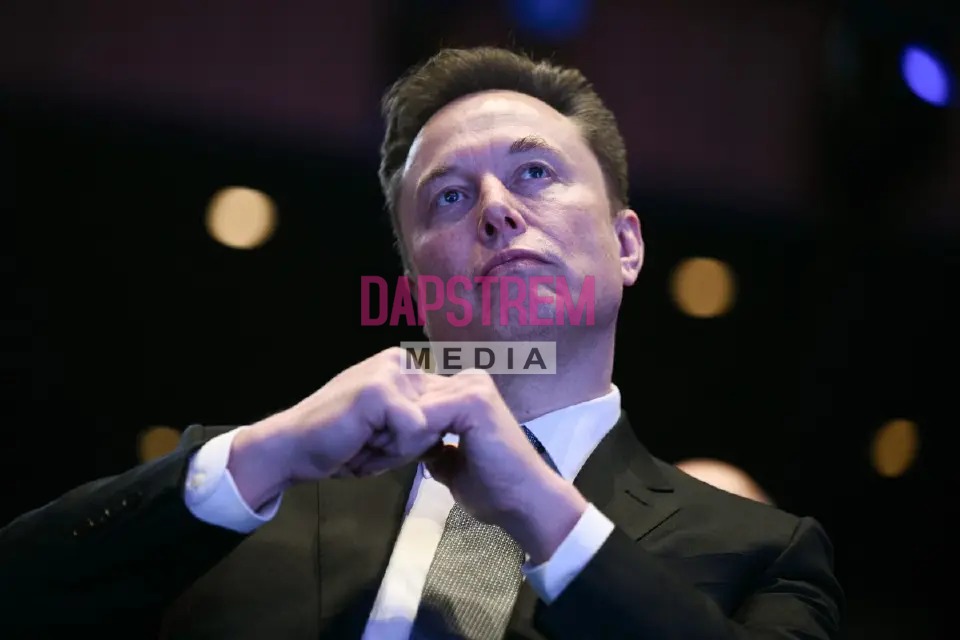
Elon Musk Says He Feels ‘Pretty Foolish’ After Spending Nearly $500 Million on Failed US Election Campaigns
Billionaire businessman Elon Musk has admitted that he regrets spending nearly half a billion dollars supporting Republican candidates in the 2026 United States midterm elections after the party suffered significant defeats across the country.
Musk, who owns Tesla, SpaceX and social media platform X, made the remarks during a virtual appearance at The New York Times DealBook Summit on Wednesday, November 18, 2026. Speaking to interviewer Andrew Ross Sorkin, the technology billionaire acknowledged that his enormous financial contribution had not delivered the political results he expected.
The admission has attracted attention because Musk was among the most influential financial backers of Republican candidates during the election cycle. His involvement went beyond ordinary political donations, with hundreds of millions of dollars directed towards campaigns seeking to strengthen Republican control of Congress and preserve the party’s influence in key states.
However, the election results delivered a major setback to those efforts, with Democrats winning control of both chambers of Congress and securing important victories in several contests.
Reflecting on the outcome, Musk said he felt “pretty foolish” about spending so much money without achieving the results he had hoped for. He also acknowledged that, given another opportunity, he would probably have spent less.
The comments represent a significant moment in the political journey of a businessman whose financial resources, public statements and close relationship with President Donald Trump have made him one of the most prominent figures in American political discussions.
They also raise fresh questions about the influence of wealthy individuals in democratic elections and whether large financial contributions can genuinely determine how voters cast their ballots.
Nearly Half a Billion Dollars Failed to Deliver the Expected Political Results
Musk’s political spending during the 2026 midterm elections was among the largest contributions made by an individual donor in American electoral history.
Reports indicate that he spent approximately $446 million supporting Republican candidates and political groups during the election cycle. His contributions were intended to help Republicans maintain their influence in Congress and prevent Democrats from gaining control of the country’s major legislative institutions.
The billionaire had invested heavily in campaigns supporting Republican candidates, particularly in competitive races where control of the Senate and other important political positions was at stake.
His financial involvement was especially visible in Texas, a state that has become an important centre for several of his business operations.
Tesla and SpaceX have significant operations in Texas, making the state’s political direction particularly relevant to Musk’s wider business interests. The billionaire therefore had reasons to pay close attention to the state’s elections, beyond his general support for the Republican Party.
Despite the substantial financial resources directed towards Republican campaigns, the results were disappointing for Musk and other supporters of the party.
Democrats managed to win control of both the House of Representatives and the Senate, creating a significant shift in the balance of power in Washington.
The defeats meant that Musk’s financial support had not achieved its central political objective. Instead of strengthening Republican control, the election results handed Democrats an opportunity to exercise greater influence over Congress and challenge the administration’s policies.
During the DealBook Summit interview, Musk admitted that his spending had produced relatively limited results.
He nevertheless suggested that it was possible Republican candidates might have performed even worse without his financial support.
His remarks reflected some uncertainty about the actual impact of the money invested in the campaigns. While he questioned the value of his spending, he did not completely dismiss the possibility that his contributions had helped Republican candidates in certain races.
However, he acknowledged that American elections cannot simply be won by putting enormous amounts of money behind preferred candidates.
The Washington Post+2
Texas Becomes One of the Biggest Setbacks for Musk
One of the most significant disappointments for Musk came from Texas, where Republicans suffered major electoral setbacks despite receiving substantial financial backing.
The state has traditionally been an important Republican stronghold, making the results particularly notable.
Musk directed considerable resources towards Republican campaigns in Texas, including efforts to support Republican Senate candidate Ken Paxton.
Reports indicated that he contributed heavily to political groups backing Paxton, with estimates of his support reaching hundreds of millions of dollars across the wider campaign effort.
However, Paxton lost the Senate contest to Democratic candidate James Talarico, delivering a major blow to the Republican campaign and Musk’s investment.
The Texas outcome was particularly significant because Musk’s companies have established major operations in the state.
Tesla and SpaceX are among the businesses with important interests in Texas, while Musk has also pursued wider technology and industrial projects connected to the region.
The billionaire had hoped Republicans would retain political control in the state and protect the political environment under which his businesses had operated.
The election results, however, demonstrated that even substantial financial support could not guarantee victory.
Democrat Gina Hinojosa also defeated Republican Greg Abbott in the Texas gubernatorial race, giving Democrats another major victory in a state where Republican influence has remained strong for years.
The results represented a wider political setback for Republicans and raised questions about the effectiveness of their campaign strategies.
Asked about the incoming Democratic governor, Musk appeared less concerned about the political change than some Republican supporters might have expected.
He described Hinojosa as a moderate and expressed confidence that Texas would continue operating normally under her leadership.
His comments suggested that he was prepared to work with the incoming administration despite having invested heavily in efforts to support Republican candidates.
For Musk, the Texas results were a reminder that voters ultimately make their own decisions, regardless of how much money wealthy individuals contribute to political campaigns.
Musk Questions the Influence of Money in American Elections
Beyond expressing regret over his personal spending, Musk used the interview to reflect on the broader relationship between money and political influence in the United States.
For years, wealthy individuals and business leaders have played an important role in financing political campaigns, supporting candidates and influencing public debates.
Large campaign contributions can help candidates reach more voters, organise rallies, advertise their policies and build stronger political networks. However, Musk’s experience has demonstrated that financial resources do not automatically translate into electoral success.
He acknowledged that a candidate or political party can receive enormous financial backing but still struggle to convince voters.
According to Musk, American elections are not simply determined by the amount of money invested in campaigns. His comments suggested that other factors, including public opinion, candidate popularity, political messaging and dissatisfaction with government policies, can have a much greater influence on the final outcome.
The admission is particularly notable because Musk has become one of the most financially influential figures in American politics.
His contributions have helped fund political organisations and campaigns supporting Republican candidates, while his ownership of X has also given him a significant platform for communicating political opinions to millions of users.
However, the latest election results have demonstrated the limitations of relying on financial influence alone.
Even with extensive advertising and campaign resources, candidates must still persuade voters that they deserve their support.
The results also suggest that voters can reject candidates supported by powerful business figures when they believe those candidates do not represent their interests.
For political strategists, Musk’s remarks could provide an important lesson about the limits of campaign financing and the need to connect electoral messages with the concerns of ordinary citizens.
Billionaire Also Attempts to Distance Himself From the MAGA Movement
Another major talking point during the interview was Musk’s attempt to clarify his political identity and relationship with the Make America Great Again (MAGA) movement associated with President Donald Trump.
Despite his extensive support for Trump and Republican candidates, Musk told Sorkin that he did not consider himself MAGA.
He described his political views as relatively moderate, arguing that he did not hold extreme positions and did not blindly support every policy associated with the Republican Party.
Musk also suggested that both major American political parties had positive and negative aspects.
His comments attracted attention because they appeared to contrast with some of his earlier public statements in support of Trump and the MAGA movement.
During the 2024 election campaign, Musk openly embraced the movement and even described himself as “Dark MAGA” while addressing Trump supporters.
He also spent hundreds of millions of dollars supporting Trump’s return to the White House and backing other Republican candidates.
His political involvement continued after Trump’s victory, with Musk briefly becoming one of the most prominent figures in the administration through his work with the Department of Government Efficiency (DOGE).
The initiative was associated with efforts to reduce government expenditure and restructure federal operations.
However, Musk’s relationship with Trump later experienced a public disagreement over government policy and spending legislation. The two eventually reconciled, although questions about their political relationship continued attracting attention.
His latest comments therefore represent an interesting shift in tone, particularly at a time when Republicans have suffered major electoral losses.
By describing himself as moderate and distancing himself from blind loyalty to the Republican Party, Musk appeared keen to communicate that his political views were not tied entirely to one political movement.
He also indicated that he could recognise positive ideas from both parties rather than automatically supporting every position taken by Republicans.
His Political Spending Comes After Earlier Promises to Reduce Donations
Musk’s latest admission has also revived questions about previous statements in which he suggested that he intended to reduce his political spending.
Following his involvement in the 2024 elections, the billionaire had indicated that he would spend considerably less money on future political campaigns.
His comments came after he contributed hundreds of millions of dollars to support Trump and other Republican candidates.
In 2025, Musk also invested approximately $20 million in a Wisconsin judicial election supporting a Republican candidate who eventually lost.
Following that defeat, he indicated that he would reduce his involvement in political spending, suggesting that he had already done enough.
However, the 2026 midterm elections saw him return to the political arena with an even larger financial commitment.
His contributions reportedly reached approximately $446 million, making him one of the most significant individual donors during the election cycle.
The scale of the spending, followed by the Republican defeats, has placed his earlier promises under renewed scrutiny.
It also highlights the challenges wealthy individuals face when attempting to translate personal political preferences into successful election outcomes.
Musk has enormous financial resources and considerable influence in the technology industry. Nevertheless, the election results have shown that these advantages do not necessarily give him control over the political decisions of millions of American voters.
Democrats’ Victory Could Increase Scrutiny of Musk’s Business and Political Activities
The Republican losses could also have consequences beyond the immediate political disappointment experienced by Musk.
With Democrats gaining control of both chambers of Congress, the incoming legislative leadership is expected to have greater opportunities to investigate government decisions, question administration officials and scrutinise relationships between powerful business figures and political leaders.
Musk’s involvement in the Trump administration, particularly through DOGE, has already attracted considerable political attention.
His business interests have also become part of wider discussions about the relationship between government policy, public resources and private companies.
Democratic lawmakers have previously raised concerns about his influence and have indicated that they want greater scrutiny of certain activities connected to his work with the administration.
During the DealBook Summit interview, Musk appeared dismissive of suggestions that political opponents could successfully pursue criminal action against him without evidence of wrongdoing.
He argued that people should not face imprisonment without first committing an actual crime.
His response reflected his position that criticism of his political involvement should not automatically translate into criminal accusations.
Nevertheless, Democratic control of Congress could create a more challenging political environment for the billionaire, particularly as lawmakers gain greater authority to demand documents, conduct hearings and investigate government operations.
The development could also affect the wider relationship between the technology industry and Washington, especially as companies increasingly depend on government decisions involving regulation, contracts, taxation and emerging technologies.
For Musk, the challenge will be navigating a changing political environment while continuing to manage his extensive business interests.
Musk Turns Attention Back to Business and Artificial Intelligence
Despite the political controversy surrounding his election spending, Musk remains heavily involved in his technology and industrial ventures.
During the same DealBook Summit appearance, he discussed his artificial intelligence ambitions and the future of computing infrastructure connected to SpaceX.
He indicated that AI company Anthropic was highly likely to continue renting computing capacity from SpaceX and could seek a substantial increase in the resources it uses.
Musk identified an additional 10 gigawatts of computing capacity as the most likely outcome of the discussions.
The comments highlighted how his business interests continue expanding into areas that extend beyond electric vehicles and space exploration.
Artificial intelligence has become one of the most competitive areas in the technology industry, with companies investing heavily in computing power, data centres and advanced infrastructure to develop increasingly sophisticated systems.
SpaceX’s potential involvement in providing computing capacity could therefore become another important part of Musk’s wider business strategy.
His comments also illustrated the contrast between his political setbacks and his continued ambitions in the technology sector.
While his spending failed to deliver the Republican victories he wanted, he remains a major figure in industries that are shaping global economic and technological developments.
The latest interview therefore covered more than political disappointment. It offered an insight into how Musk views his political involvement, the limits of financial influence and the priorities he intends to pursue going forward.
A Political Lesson for Wealthy Donors
Musk’s admission that he feels foolish about spending nearly half a billion dollars on unsuccessful election campaigns has opened a wider debate about the influence of wealth in democratic systems.
His experience demonstrates that financial power can help shape political campaigns, but it cannot guarantee that voters will support the candidates receiving the money.
The Republican defeats also raise questions about whether campaign strategies that rely heavily on wealthy donors can effectively address the concerns of ordinary voters.
Political candidates still need public trust, convincing policies and a strong connection with the electorate.
For Musk, the results have provided an expensive lesson about the limitations of political donations.
His comments may also influence how he approaches future elections, particularly after acknowledging that he would have spent less money if he had the opportunity to make the decision again.
However, his remarks do not necessarily mean that he intends to withdraw completely from American politics. His financial resources, public profile and relationship with influential political leaders mean that he could remain an important voice in future political debates.
What has become clear is that the latest election results have challenged the assumption that enormous campaign spending can secure political victories.
As Democrats prepare to exercise greater influence in Congress and Republicans assess their losses, Musk’s remarks are likely to remain part of the wider discussion about campaign financing, political influence and the power of American voters.
For a billionaire who invested hundreds of millions of dollars hoping to shape the country’s political direction, the outcome has been a costly reminder that money can influence an election, but it cannot purchase the support of an entire electorate.