Sifuna’s Linda Mwananchi Overtakes ODM to Become Kenya’s Second Most Popular Political Outfit – TIFA
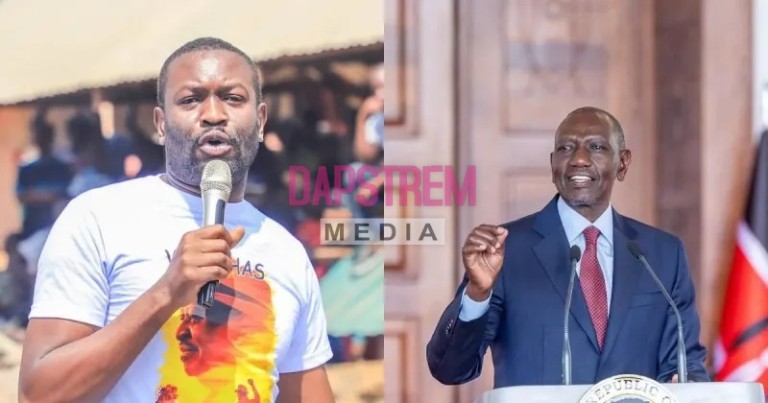
Nairobi Senator Edwin Sifuna’s Linda Mwananchi movement has emerged as Kenya’s second most popular political outfit, overtaking the Orange Democratic Movement (ODM), according to the latest opinion poll by Trends and Insights For Africa (TIFA).
The findings point to a significant shift in Kenya’s political landscape as the country gradually moves towards the 2027 General Election. The growing popularity of Linda Mwananchi signals an emerging challenge to established political formations, particularly ODM, which has maintained a strong presence in national politics for years.
The movement, associated with Sifuna and several other prominent political leaders, has increasingly attracted attention through its criticism of government policies, public mobilisation activities and calls for greater accountability.
Its latest position in the TIFA survey comes amid growing disagreements within ODM over the party’s political direction and its relationship with President William Ruto’s administration.
According to the latest findings, President Ruto’s United Democratic Alliance (UDA) remains the country’s most popular political outfit with 25 per cent support. Linda Mwananchi follows with 17 per cent, while ODM has dropped to third position with 10 per cent.
The results represent an important development for Sifuna, who has increasingly established himself as one of the prominent voices in Kenya’s opposition politics.
The movement’s rise also raises questions about ODM’s ability to maintain its traditional support base following internal disagreements over its participation in the broad-based government arrangement.
With the next general election approaching, the latest findings could influence political realignments, coalition discussions and the strategies adopted by different political leaders.
Linda Mwananchi’s Growing Influence in Kenyan Politics
Linda Mwananchi has gradually evolved from a political grouping associated with disagreements within ODM into a movement seeking broader national recognition.
The movement has attracted leaders who believe ODM should maintain an independent opposition position rather than work closely with President Ruto’s administration.
Sifuna has emerged as its most recognisable figure, using his position as Nairobi Senator and ODM Secretary General to advance arguments about governance, accountability and the economic challenges facing ordinary Kenyans.
Other prominent politicians associated with the movement include Embakasi East MP Babu Owino and Siaya Governor James Orengo, among other leaders who have expressed support for its political direction.
Their mobilisation efforts have helped the movement attract attention beyond its traditional political networks.
Linda Mwananchi has also organised political meetings and public rallies in different parts of the country, providing a platform for leaders to communicate their positions on national issues.
The movement’s messaging has largely focused on the interests of ordinary citizens, with leaders questioning government policies on taxation, the cost of living, unemployment and public accountability.
Its supporters argue that Kenya needs a stronger political voice capable of challenging government decisions and demanding better service delivery.
The movement’s growing popularity suggests that its message is finding an audience among Kenyans who want a more assertive opposition.
However, the challenge will be maintaining this support and transforming its growing public profile into a sustainable political organisation.
ODM’s Declining Popularity Raises Questions About Its Future
The latest survey presents a significant challenge for ODM, which has dropped to third position with 10 per cent support.
For a political organisation that has played a central role in Kenya’s multiparty democracy, the decline represents an important development.
ODM built its national influence through years of opposition politics, political mobilisation and its involvement in major constitutional and governance debates.
For many years, the party enjoyed strong support in Nyanza and other parts of the country, largely through its association with the late former Prime Minister Raila Odinga.
Raila’s political influence helped establish ODM as one of the most recognisable political movements in Kenya.
However, his death and subsequent disagreements over the party’s political direction have introduced new challenges.
The party is currently facing competing views over its relationship with the Kenya Kwanza administration and whether it should continue operating as an independent opposition formation.
One side supports cooperation with Ruto’s government through the broad-based arrangement, arguing that political engagement can provide opportunities to influence government decisions and advance national development.
The other side believes ODM should retain its opposition identity and continue holding the government accountable.
These disagreements have created divisions among party leaders and supporters, with Linda Mwananchi emerging as a major platform for those opposed to closer cooperation with the administration.
The latest TIFA findings could therefore strengthen concerns among ODM leaders about the party’s ability to retain its traditional political influence.
For the party, the challenge is no longer limited to managing disagreements among its senior officials. It must also convince ordinary supporters that it remains relevant to their political and economic interests.
Sifuna’s Political Profile Continues to Grow
The rise of Linda Mwananchi has also strengthened Edwin Sifuna’s position as an increasingly influential figure in national politics.
The Nairobi Senator has attracted attention through his outspoken criticism of government policies and his calls for greater accountability.
His political messaging has particularly resonated with Kenyans concerned about the cost of living, unemployment, taxation and the general economic environment.
Sifuna has also become a prominent voice in conversations about the future of ODM, especially following disagreements over the party’s cooperation with the government.
His position has enabled him to attract attention beyond Nairobi, with the Linda Mwananchi movement seeking to establish a stronger presence in different regions.
The politician’s growing popularity has also placed him among the leaders being discussed in conversations about the opposition’s possible presidential candidates ahead of 2027.
In TIFA’s June 2026 presidential preference survey, Sifuna recorded 15 per cent support, placing him behind President William Ruto, who had 24 per cent. Former Interior Cabinet Secretary Fred Matiang’i followed with 14 per cent, while Wiper leader Kalonzo Musyoka recorded 13 per cent.
Although these figures represent a separate measure from party popularity, they demonstrate Sifuna’s growing national profile.
His latest political performance could provide him with greater influence in future opposition negotiations.
However, moving from popularity to electoral success will require a broader political strategy, stronger grassroots structures and the ability to attract support from different communities.
The Broad-Based Government Debate Behind ODM’s Political Divisions
One of the major issues contributing to the divisions within ODM is the party’s relationship with President Ruto’s administration.
The broad-based government arrangement has generated different reactions among political leaders and supporters, with some viewing it as an opportunity for cooperation while others consider it a departure from the party’s traditional opposition role.
Supporters of the arrangement argue that political cooperation can help address national challenges and create opportunities for the implementation of policies that benefit Kenyans.
Those opposed to it maintain that ODM risks losing its identity by working too closely with an administration it previously criticised.
Linda Mwananchi has positioned itself around the latter argument, with its leaders insisting that the party should remain committed to defending the interests of ordinary citizens.
Earlier TIFA findings illustrated the depth of this disagreement.
A June 2026 survey found that 74 per cent of ODM supporters identified with the Linda Mwananchi position, compared with 20 per cent who supported the rival Linda Ground position associated with Oburu Oginga and his allies.
The findings suggested that a significant section of ODM’s support base preferred a more independent opposition approach.
The latest national party popularity results provide another indication of how these political disagreements could influence the country’s political landscape.
For ODM, resolving the differences will be important in determining whether it can maintain its national influence ahead of the next election.
UDA Maintains Its Position as Kenya’s Most Popular Political Outfit
While Linda Mwananchi has overtaken ODM, UDA remains at the top of the latest popularity rankings with 25 per cent support.
The ruling party’s position provides President Ruto’s political establishment with an important advantage as it prepares for the 2027 General Election.
However, the figures also show that the ruling party cannot afford to ignore the growing influence of emerging political formations.
Linda Mwananchi’s second-place position demonstrates that the competition for national political support is becoming increasingly dynamic.
UDA will need to maintain its grassroots mobilisation and convince Kenyans that its development agenda is delivering meaningful improvements in their lives.
Economic issues are likely to remain central to the political debate, particularly concerns about taxation, unemployment, public debt and the cost of essential goods and services.
The government will also face pressure to demonstrate progress in areas such as healthcare, education, infrastructure and job creation.
For the opposition, the latest findings could provide encouragement that there is room for alternative political formations to challenge the ruling party’s influence.
However, the emergence of several competing opposition groups could also make it difficult to establish a united political front.
Linda Mwananchi Faces the Challenge of Building a Strong National Political Structure
Despite its improved popularity, Linda Mwananchi still faces the challenge of developing a strong organisational structure capable of sustaining its national influence.
Political movements often attract significant attention through rallies, public statements and social media campaigns. However, translating that attention into electoral success requires consistent grassroots mobilisation and a clear political strategy.
The movement will need to establish structures that can operate effectively across counties and constituencies.
It will also need to communicate its policies on important national issues and explain how its proposed approach would address the challenges facing ordinary Kenyans.
Another important question concerns its future relationship with established opposition parties.
With leaders such as Kalonzo Musyoka, Rigathi Gachagua and Fred Matiang’i also seeking to influence the political direction ahead of 2027, Linda Mwananchi will need to determine whether it intends to pursue an independent political path or participate in a wider opposition coalition.
Sifuna’s growing influence could make the movement an important participant in future negotiations.
However, the movement’s long-term success will depend on its ability to balance individual political ambitions with the broader interests of its supporters.
What the Latest TIFA Findings Mean for the 2027 General Election
The latest survey comes at a time when political formations are increasingly positioning themselves ahead of the 2027 General Election.
The emergence of Linda Mwananchi as the second most popular political outfit could reshape discussions about opposition leadership and possible political alliances.
For Sifuna, the findings provide an opportunity to strengthen his national profile and demonstrate that his political influence extends beyond his Nairobi political base.
For ODM, the results raise questions about its ability to retain its traditional supporters while navigating disagreements over its relationship with the government.
UDA, meanwhile, will have to maintain its leading position while responding to the growing competition from emerging political movements.
Another important factor is the number of Kenyans who remain undecided or do not identify with any political party.
The latest findings place this group at 28 per cent, indicating that a considerable portion of the electorate has not settled on a political formation.
This presents an opportunity for all political formations to attract additional supporters through meaningful engagement and credible policy proposals.
Nevertheless, party popularity should not be confused with presidential voting intentions. A movement’s national support does not automatically translate into votes for a particular presidential candidate.
The final electoral outcome will depend on several factors, including candidate selection, regional support, coalition agreements, voter mobilisation and turnout.
A New Political Reality for ODM and the Opposition
The latest TIFA findings highlight the changing nature of Kenyan politics as established parties face competition from emerging movements.
Linda Mwananchi’s rise above ODM represents more than a change in opinion-poll rankings. It reflects the growing debate over the future of opposition politics and the direction Kenya’s political formations should take.
For Sifuna and his allies, the challenge will be turning the movement’s growing popularity into a lasting political force capable of influencing national decisions.
For ODM, the priority will be addressing internal divisions and rebuilding confidence among supporters who may be considering alternative political platforms.
The coming months will also be important in determining whether opposition leaders can agree on a common strategy ahead of the next general election.
Ultimately, the rise of Linda Mwananchi demonstrates that Kenya’s political landscape remains fluid, with new formations increasingly challenging established political organisations.
As the country moves closer to 2027, all eyes will be on Sifuna and his allies to see whether they can sustain their momentum and establish themselves as a major force in the country’s political future.