Ruto and Sifuna Tie at 31% in 2027 Presidential Race as TIFA Poll Reveals Major Political Shift
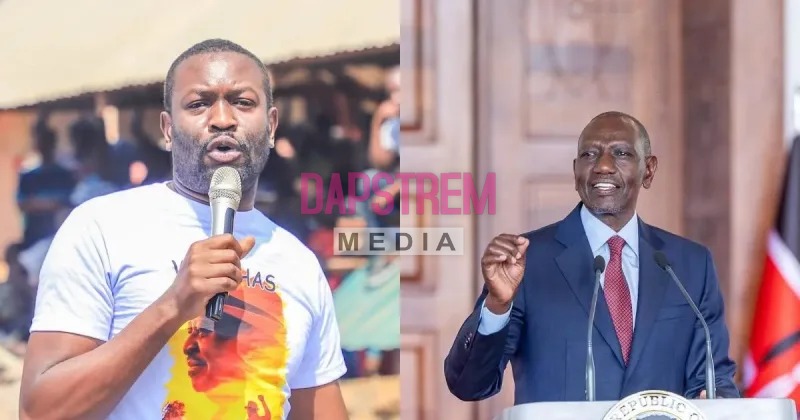
President William Ruto and Nairobi Senator Edwin Sifuna have emerged as joint frontrunners in the race for the presidency ahead of the 2027 General Election, according to a new opinion poll released by Trends and Insights for Africa (TIFA).
The latest survey places the two politicians at 31 per cent each, signalling a potentially competitive presidential contest as political temperatures continue rising across the country.
The findings represent a significant development for Sifuna, who has experienced a remarkable increase in popularity over the past several months. His growing political influence has positioned him among the leading figures in the emerging opposition movement, challenging the dominance of established political personalities.
For President Ruto, the results indicate a recovery in his popularity following several years of political challenges, public criticism and growing debates surrounding the government’s economic policies and leadership.
The survey, released on Thursday, November 12, 2026, provides an interesting picture of how Kenyans are positioning themselves ahead of the next presidential election. It also highlights the changing dynamics within the opposition, where younger political figures are increasingly attracting national attention.
According to the findings, former Vice-President Kalonzo Musyoka follows the two frontrunners with nine per cent support. Former Interior Cabinet Secretary Fred Matiang’i comes next with five per cent, while former Deputy President Rigathi Gachagua records four per cent.
Another 15 per cent of respondents remain undecided about their preferred presidential candidate, while four per cent declined to disclose their choice.
The results suggest that the 2027 presidential contest could become more competitive than previously anticipated, particularly if opposition leaders manage to consolidate their political support behind a single candidate.
Sifuna’s Remarkable Rise Changes the Political Conversation
One of the biggest revelations from the latest survey is the impressive political growth recorded by Edwin Sifuna.
The Nairobi Senator has moved from having virtually no measurable support in earlier TIFA surveys to matching the sitting President at 31 per cent.
His popularity has increased significantly within a relatively short period, suggesting that his political influence is extending beyond his traditional support base in Nairobi.
In the earlier surveys conducted between August 2022 and November 2025, Sifuna did not register measurable support as a preferred presidential candidate. However, his popularity began increasing in 2026, reaching 10 per cent in May before rising to 15 per cent in June.
The latest findings show that his support has more than doubled since June, placing him at the same level as Ruto.
His growing popularity comes amid increased political activity surrounding his Linda Mwananchi movement, which has attracted attention from Kenyans interested in alternative political leadership.
Sifuna has increasingly positioned himself as a vocal critic of the current administration, frequently raising questions about governance, public accountability, economic management and the government’s handling of national affairs.
His communication style and willingness to challenge established political figures have also helped him attract attention, particularly among younger Kenyans.
The latest survey could therefore represent more than an improvement in his personal popularity. It may also reflect growing interest in a different political direction among sections of the electorate.
However, matching Ruto in a national opinion poll does not automatically translate into an electoral victory. Sifuna would still need to establish a strong nationwide political organisation, build alliances and demonstrate that his support can translate into votes across different regions.
Nevertheless, the 31 per cent result gives him considerable political visibility and strengthens his position in discussions about the opposition’s possible presidential candidate.
Ruto Records a Significant Recovery Ahead of 2027
While Sifuna’s rise has attracted considerable attention, President William Ruto’s performance in the latest survey is equally significant.
The President has recorded a steady improvement in his preferred-candidate ratings, rising from 18 per cent in August 2022 to 24 per cent in May and June 2026 before reaching 31 per cent in November.
The latest findings suggest that Ruto has regained some political ground as he prepares for a possible second-term campaign.
His political journey since the 2022 General Election has been marked by several challenges, including public dissatisfaction with the cost of living, taxation, unemployment and government expenditure.
The administration has also faced criticism from different sections of the population over its approach to economic management and governance.
Despite these challenges, Ruto has continued pursuing government programmes and political engagements aimed at strengthening his support base.
His administration has placed considerable emphasis on development projects, affordable housing, healthcare reforms, infrastructure and employment opportunities.
These issues are likely to remain important in determining how voters assess his leadership ahead of 2027.
The improvement in his polling performance suggests that the President remains a formidable political force despite the emergence of new opposition personalities.
However, the fact that Sifuna has reached the same level of support introduces a new challenge for Ruto as he considers the political strategy required to secure another electoral victory.
With the two politicians tied at 31 per cent, the next phase of the political contest could depend heavily on their ability to maintain existing supporters while attracting undecided voters.
Kalonzo Musyoka and Matiang’i Trail the Two Front-Runners
The latest survey also highlights the challenges facing some of the country’s established opposition figures.
Former Vice-President Kalonzo Musyoka recorded nine per cent support, placing him behind Ruto and Sifuna.
Kalonzo has remained an important figure in Kenya’s opposition politics for several years and has previously featured prominently in presidential election discussions.
His political experience, leadership of the Wiper Democratic Movement and influence in the Ukambani region make him an important player in any discussions surrounding the opposition’s 2027 strategy.
However, his latest polling performance suggests that he faces increased competition from emerging political personalities.
Former Interior Cabinet Secretary Fred Matiang’i also recorded five per cent support.
Matiang’i previously attracted considerable attention following his service in government, particularly during his tenure in the Interior Ministry.
He had earlier emerged as a leading potential presidential contender, recording 32 per cent support in August 2022.
His latest performance represents a significant decline from that earlier position.
Former Deputy President Rigathi Gachagua recorded four per cent support.
Gachagua has remained politically active since leaving the Deputy President’s office and has continued positioning himself as an important figure in the opposition landscape.
His political influence, particularly in the Mount Kenya region, could become an important factor in future coalition negotiations.
However, the latest figures indicate that he currently trails the two leading candidates by a considerable margin.
The declining support recorded by some established opposition figures could also increase pressure on political leaders to reconsider their strategies ahead of the next election.
Linda Mwananchi Movement Gains Political Significance
Sifuna’s impressive performance comes at a time when his Linda Mwananchi movement is increasingly attracting attention in Kenya’s political landscape.
The movement has become an important platform for political mobilisation, particularly among Kenyans who want stronger accountability and changes in the country’s leadership.
Its growing visibility has introduced another dimension to the opposition’s political organisation ahead of 2027.
For years, Kenya’s opposition politics has largely revolved around established political parties and personalities. However, the emergence of new political movements could change how political support is organised.
Sifuna’s growing popularity suggests that some voters may be increasingly interested in political alternatives outside traditional party structures.
The movement’s ability to attract supporters from different regions could become an important factor in determining whether it develops into a major political force.
However, political popularity and organisational strength are two different things.
For the movement to become a serious contender in the next general election, it will need to establish structures across the country, attract influential political figures and develop a clear national agenda.
It will also need to demonstrate that its growing popularity can translate into support at the ballot.
Nevertheless, the latest TIFA findings provide an important boost to Sifuna and the political movement associated with him.
Opposition Unity Could Determine the 2027 Presidential Outcome
The latest poll also raises important questions about the future of opposition politics and whether different political formations can agree on a common presidential candidate.
With Sifuna and Ruto tied at 31 per cent, the opposition could view the findings as an opportunity to strengthen its chances of challenging the incumbent President.
However, the opposition remains made up of different political personalities and formations, each with its own interests and ambitions.
Kalonzo Musyoka, Fred Matiang’i, Rigathi Gachagua and other opposition figures all have political support bases that could influence the direction of the next election.
The challenge will be finding a way to bring these leaders together without creating disagreements over leadership positions and political representation.
The TIFA findings suggest that other potential opposition candidates collectively command a considerable share of support.
However, it would be premature to assume that their supporters would automatically transfer their preferences to Sifuna if the opposition settled on him as its presidential candidate.
Political alliances require more than agreements between leaders. They also depend on whether supporters are willing to embrace a new political arrangement.
For Sifuna, building relationships with established opposition figures could help expand his political reach beyond the urban constituencies where his message has gained considerable attention.
For Kalonzo, Matiang’i and Gachagua, the latest figures could encourage discussions about cooperation and the importance of presenting a united political front.
Whether such an arrangement becomes possible remains one of the major questions surrounding the 2027 presidential contest.
15 Per Cent of Voters Remain Undecided
Another important detail emerging from the latest survey is the number of respondents who have not yet settled on their preferred presidential candidate.
According to TIFA, 15 per cent of respondents remain undecided, while another four per cent declined to disclose their preference.
This represents an important section of the electorate whose political choices could influence the direction of the next general election.
The undecided voters could become a major target for presidential candidates as campaigns intensify.
Their eventual choices may depend on several issues, including the cost of living, employment opportunities, taxation, healthcare, education, corruption and the overall performance of the government.
The economy is particularly likely to remain central to the political debate.
Many Kenyans continue to evaluate political leadership based on its ability to improve their financial circumstances and create opportunities for ordinary households.
Consequently, presidential candidates will need to present convincing economic plans and demonstrate how their policies can address the challenges facing citizens.
For Ruto, the challenge will be convincing voters that his administration deserves another term.
For Sifuna and other opposition figures, the responsibility will be presenting credible alternatives that address public concerns.
The 15 per cent undecided figure also demonstrates why it is too early to treat the current polling results as a final prediction of the 2027 election outcome.
What the Latest TIFA Poll Means for Kenya’s Political Future
The latest survey represents a significant development in Kenya’s preparations for the 2027 General Election.
For the first time in the polling trend highlighted by TIFA, Edwin Sifuna has reached the same level of preferred-candidate support as the sitting President.
This development could reshape political conversations within both the ruling establishment and the opposition.
Ruto remains an influential political figure with the advantages that come with holding the presidency, including national visibility and an established political network.
However, Sifuna’s rapid rise suggests that the opposition could be entering a new phase in which younger political figures play increasingly influential roles.
The findings may also encourage established opposition leaders to reconsider their positions as political alliances and negotiations gradually take shape.
At the same time, the President’s recovery in the polls indicates that his political support base remains competitive despite the criticism directed at his administration.
It is important to note that the survey measures respondents’ preferred presidential candidate rather than guaranteeing how they will vote in 2027. Political preferences can change considerably depending on campaign activities, alliances, candidates and developments in the country.
The eventual presidential race will also be influenced by the candidates’ ability to mobilise supporters, establish strong campaign structures and address issues that matter to voters.
For now, the political contest appears increasingly open, with no clear indication of how the final presidential race will unfold.
The coming months will therefore be important as political leaders position themselves, movements strengthen their structures and potential coalitions begin taking shape.
With Ruto and Sifuna both commanding 31 per cent support, the latest TIFA findings have introduced an unexpected dimension to the 2027 presidential contest.
Whether Sifuna can maintain his momentum and transform his growing popularity into a nationwide electoral challenge remains to be seen.
Likewise, Ruto will have to find ways of strengthening his support base and convincing Kenyans that he remains the best candidate to lead the country for another five years.
One thing is becoming increasingly clear: Kenya’s 2027 presidential race is shaping up to be an interesting political contest, and the latest survey has placed Edwin Sifuna firmly at the centre of that conversation.