KPSEA, KJSEA Exams Kick Off as 3.6 Million Learners Register for National Assessments
The 2026 Kenya Primary School Education Assessment (KPSEA) and Kenya Junior School Education Assessment (KJSEA) have officially kicked off across the country, marking a significant milestone for millions of learners as Kenya continues implementing the Competency-Based Curriculum (CBC).
A total of 3,634,846 candidates have registered for this year’s national assessments and examinations, according to figures released by the Kenya National Examinations Council (KNEC). The figure covers candidates undertaking different national assessments and examinations, including KPSEA, KJSEA and the Kenya Certificate of Secondary Education (KCSE).
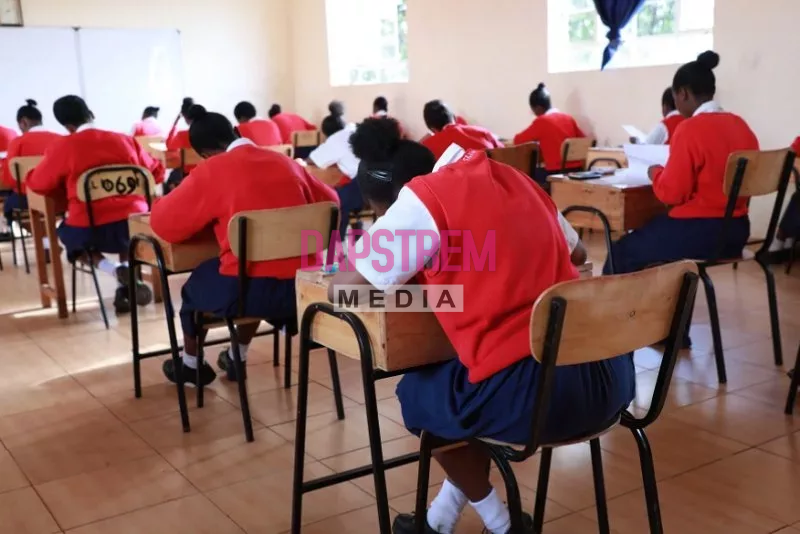
The assessments began on Monday, October 26, 2026, with Grade 6 learners sitting KPSEA and Grade 9 learners undertaking KJSEA. The exercise marks an important stage in the education journey of learners preparing to complete primary and junior school education before proceeding to their next levels of learning.
Education Cabinet Secretary Julius Ogamba witnessed the opening of an examination container at the Makindu Deputy County Commissioner’s Office in Makueni County as examination materials were prepared for distribution to assessment centres.
The exercise marked the beginning of a nationwide process involving education officials, teachers, security agencies and other stakeholders tasked with ensuring that the assessments are administered smoothly and fairly.
The government has assured learners, parents and teachers that the necessary arrangements have been made to protect examination materials, support candidates and address possible disruptions during the assessment period.
Ogamba urged learners to approach the assessments with confidence and discipline, reminding them that the exercise provides an opportunity to demonstrate the knowledge and competencies they have developed throughout their education.
He also called on parents and guardians to offer encouragement and emotional support, noting that their involvement can help learners remain calm and focused during the assessment period.
The commencement of KPSEA and KJSEA comes as the country continues to transition from the previous 8-4-4 education system to the competency-based framework, which places greater emphasis on continuous assessment, practical skills and the development of learners’ abilities.
More Than 2.5 Million Learners Sit KPSEA and KJSEA
According to KNEC figures, 1,380,463 Grade 6 learners have registered for the 2026 KPSEA, while 1,206,028 Grade 9 learners are expected to undertake KJSEA.
Combined, the two assessments account for 2,586,491 learners across the country.
The number of candidates represents an increase compared with the previous year. In 2025, KPSEA registered 1,298,089 candidates, while KJSEA had approximately 1.13 million learners.
The increase means education officials must coordinate a large-scale exercise involving the preparation, secure transportation and distribution of assessment materials to thousands of schools and centres.
The exercise also requires adequate numbers of supervisors, invigilators, centre managers and other personnel to ensure that candidates receive the appropriate instructions and that assessment procedures are followed.
For Grade 6 learners, KPSEA marks an important stage in their transition from primary education to junior school. It provides an opportunity to assess the knowledge and skills developed during their primary school years.
For Grade 9 learners, KJSEA carries particular significance because it forms part of the process guiding their transition to senior school under the CBC framework.
The two assessments therefore represent more than the completion of another academic year. They are part of a wider system intended to evaluate learning progress and support decisions about learners’ educational pathways.
The large number of registered candidates also demonstrates the scale of responsibility facing the Ministry of Education and KNEC as they oversee national assessments under the evolving curriculum.
Ensuring that every candidate receives the correct assessment materials, adequate supervision and a fair opportunity to demonstrate their abilities remains one of the central priorities during the exercise.
Government Assures Candidates of Adequate Preparation
Speaking during the launch of the assessments, Education Cabinet Secretary Julius Ogamba said the government had put measures in place to support the smooth administration of the exercise.
He assured Kenyans that relevant agencies were working together to ensure that assessment materials reached centres and that candidates were able to undertake their papers in an organised environment.
Ogamba also commended KNEC, the Teachers Service Commission (TSC), the Ministry of Interior and National Administration, the National Police Service, teachers and other stakeholders for their involvement in preparing for the assessments.
The coordination of these institutions is essential because the administration of national assessments requires cooperation beyond the education sector.
KNEC is responsible for overseeing the assessment process, while teachers and examination personnel manage activities at assessment centres. Security agencies assist in protecting materials and addressing security concerns, while government administrators help coordinate operations at local levels.
The government has also emphasised the importance of giving all learners a fair opportunity to demonstrate what they have learned.
This includes ensuring that assessment materials are handled securely, examination instructions are followed and any challenges affecting candidates are addressed promptly.
For parents and learners, the assurances are intended to provide confidence that the exercise has been organised with the necessary preparations.
However, the success of the assessments will depend on how effectively these arrangements work on the ground, particularly in areas facing logistical, weather-related or security challenges.
Education officials will therefore be expected to remain alert throughout the assessment period and respond quickly to any problems that could interfere with the administration of papers.
KPSEA and KJSEA Timetables and the Importance of the Assessments
The two assessments are being administered over different periods, with KPSEA scheduled to run from October 26 to October 28, while KJSEA continues until October 30.
The timetable requires candidates to follow the instructions provided by their respective schools and assessment centres, with teachers and officials responsible for ensuring that papers begin and end according to the prescribed schedule.
The first day marked the start of a crucial period for Grade 6 and Grade 9 learners, many of whom have spent months preparing through classroom lessons, revision exercises and school-based assessments.
KPSEA is designed to assess learners completing Grade 6 before they progress to junior school. It forms part of the broader CBC framework, which seeks to evaluate learning through different stages rather than relying exclusively on one final examination.
KJSEA assesses learners at the end of Grade 9 and contributes to decisions concerning their progression to senior school.
Under the CBC framework, the assessment process incorporates both national and school-based evaluations. For Grade 9 learners, KJSEA contributes 60 per cent of the final evaluation, while school-based assessments account for the remaining 40 per cent. The results therefore form part of a broader picture of learners’ academic progress and competencies.
The approach differs from the previous 8-4-4 system, which placed substantial emphasis on major national examinations at the end of primary and secondary education.
The competency-based framework aims to recognise learners’ abilities in areas such as problem-solving, communication, creativity and practical application of knowledge, alongside their understanding of academic subjects.
As the country continues implementing the system, the administration of KPSEA and KJSEA provides another opportunity for education officials to assess how effectively national assessment arrangements are supporting learners’ progression.
The results will also be important to families preparing for the next stages of their children’s education, particularly Grade 9 learners awaiting placement into senior school.
Examination Security Strengthened to Prevent Malpractice
As the assessments began, the government reiterated its warning against examination malpractice, saying that any attempt to compromise the integrity of the exercise would not be tolerated.
Ogamba cautioned candidates, parents and members of the public against individuals claiming to possess examination papers before they are officially administered.
He warned that fraudsters sometimes demand money from unsuspecting families by promising advance access to examination questions. Such claims, he said, are fraudulent, and members of the public should report suspected activities to the relevant authorities.
The warning comes as national assessments attract heightened attention from learners and families hoping for strong academic performance.
Promises of leaked examination papers can create anxiety among candidates, particularly when fraudulent individuals use social media or private messages to convince parents that paying for advance access will improve their children’s results.
KNEC has introduced and strengthened several measures intended to protect examination materials and reduce opportunities for irregularities.
Among the measures are smart electronic padlocks on examination storage containers, which enable monitoring of when containers are opened and secured. The council has also expanded its network of secure storage facilities to improve the handling and distribution of examination materials.
Additional controls include measures to protect the identity of candidates during marking and restrictions on the use of mobile phones by examination personnel during assessment sessions.
These measures are intended to strengthen accountability throughout the process, from the storage and transportation of papers to their administration at assessment centres.
The government has made it clear that examination malpractice can attract serious consequences. Candidates and officials are expected to follow the rules governing the exercise, and suspected violations may be investigated under the applicable laws and regulations.
Protecting examination integrity is important because the public must have confidence that results reflect learners’ abilities rather than access to leaked papers, impersonation or other forms of cheating.
For learners, the message is to focus on their preparation and follow official instructions rather than trust people claiming to have privileged access to examination materials.
Parents have also been urged to support their children without placing them under pressure to seek shortcuts that could jeopardise their academic progress.
Heavy Rains and Flooding Pose Logistical Challenges
The assessments are taking place during a period when heavy rainfall, flooding and difficult terrain could disrupt transport and access to some schools.
The Ministry of Education has therefore made contingency arrangements to respond to challenges that may arise during the exercise.
Ogamba said the government was working with the Ministry of Interior and National Administration, KNEC and other relevant agencies to address potential disruptions and ensure that assessment materials reach their intended destinations.
The preparations are particularly important for remote areas where poor road conditions, flooding or insecurity can make the movement of examination materials more difficult.
In some locations, heavy rainfall can affect access to schools, delay transport and make it challenging for candidates and examination personnel to reach assessment centres on time.
Such disruptions require advance planning because national assessments must be administered according to a coordinated timetable across the country.
The government has said it has mapped flood-prone areas and established arrangements to respond to possible disruptions. Where road access becomes difficult, authorities may need to use alternative delivery arrangements to ensure materials reach the relevant centres.
The objective is to prevent candidates from being unfairly disadvantaged because of circumstances beyond their control.
Learners in areas affected by flooding or difficult terrain should receive the same opportunity to undertake their assessments as those in locations where transport and weather conditions are more favourable.
The contingency plans also require coordination between local administrators, education officials and security agencies so that emerging problems can be reported and addressed without unnecessary delays.
As the assessment period continues, the effectiveness of these arrangements will be important in ensuring that the exercise proceeds smoothly across all counties.
Parents and Teachers Urged to Support Candidates
As learners begin their assessments, the Ministry of Education has urged parents and guardians to provide encouragement and emotional support.
The examination period can be stressful for children, especially those who feel that their future opportunities depend entirely on their performance in a particular assessment.
Parents can help by ensuring that learners have enough rest, receive proper meals and arrive at their assessment centres on time. They can also remind children to follow instructions and approach each paper calmly.
Teachers play an equally important role in preparing learners for the assessment process. Beyond academic revision, they help candidates understand examination procedures, manage their time and develop confidence in their abilities.
Rehearsals conducted before the assessments were intended to familiarise learners with the procedures and guidelines they would encounter during the actual exercise.
Such preparation can help reduce uncertainty and allow candidates to concentrate on answering questions rather than worrying about unfamiliar instructions.
Parents and teachers have also been encouraged to avoid placing excessive pressure on learners. While national assessments are important, children need reassurance that their progress involves more than a single performance.
The CBC framework includes school-based assessments and recognises the development of competencies over time. This means that learners’ education is not defined solely by what happens during a few days of national assessment.
A supportive environment can help children remain focused, follow the rules and approach the exercise with confidence.
The government has wished all KPSEA and KJSEA candidates success, urging them to demonstrate what they have learned and maintain discipline throughout the assessment period.
President Ruto Sends Message to Grade 6 and Grade 9 Candidates
President William Ruto also wished Grade 6 and Grade 9 learners success as they began their national assessments.
In a message shared on Monday, the President encouraged candidates to remain calm, trust their preparation and give their best during the exercise.
He also thanked teachers, parents and guardians for supporting learners throughout their preparation, acknowledging the contribution of those who have helped candidates reach this stage of their education.
The message highlighted the shared responsibility involved in preparing learners for national assessments. Candidates are expected to apply themselves, while teachers and families provide guidance and encouragement.
The President’s message also extended to KCSE candidates, whose examinations are already underway. The KCSE written papers are scheduled to run from November 2 to November 20, following the commencement of practical and oral examinations earlier in October.
The overlapping assessment and examination periods place additional demands on education officials, teachers and other personnel involved in administering the national exercise.
The government has therefore emphasised the need for coordination and discipline across all stages of the examination season.
For Grade 6 and Grade 9 candidates, the encouragement from national leaders comes at a time when many learners and families are focused on completing the assessment process successfully.
The central message remains that candidates should approach the exercise confidently, observe the rules and demonstrate the knowledge and skills they have developed.
What the Assessments Mean for Kenya’s Education System
The start of KPSEA and KJSEA represents another major step in Kenya’s ongoing transition to the Competency-Based Curriculum.
The reform seeks to move education beyond an approach that relies heavily on memorisation and high-stakes examinations by incorporating continuous assessment and the development of practical competencies.
Under the new framework, learners are assessed at different stages of their education, with the results helping educators understand their progress and support their transition to subsequent levels.
The Grade 9 assessment is especially important because it contributes to the process of placing learners into senior school. The transition is a significant stage for families, schools and education officials as the country continues to implement the new structure.
The growing number of candidates also means that the government must continue investing in school facilities, teachers, assessment infrastructure and systems that support learners with different needs.
Successful implementation requires more than administering examinations. It also depends on ensuring that learners have access to quality teaching, adequate learning materials and appropriate facilities throughout their education.
As the CBC framework develops, feedback from schools, teachers, parents and learners will remain important in identifying challenges and improving the system.
The administration of KPSEA and KJSEA therefore provides an opportunity to assess both learner progress and the effectiveness of the systems supporting the national assessment process.
The results will be closely watched by families as learners prepare to move to the next stage of their education.
The 2026 KPSEA and KJSEA assessments have officially begun, bringing together more than 2.58 million Grade 6 and Grade 9 learners, while the total number registered across Kenya’s national assessments and examinations stands at 3,634,846.
The nationwide exercise began on October 26, with Education Cabinet Secretary Julius Ogamba overseeing the opening of an examination container in Makindu as officials prepared to distribute materials to assessment centres.
The government has assured Kenyans that security measures and contingency plans are in place to protect examination materials, prevent malpractice and address challenges caused by heavy rains, flooding and difficult terrain.
Parents and teachers have been urged to support learners emotionally and encourage them to approach the assessments with confidence and discipline. Meanwhile, authorities have warned against examination fraud and promised action against those who attempt to compromise the integrity of the process.
As Grade 6 and Grade 9 learners undertake this important stage of their education, the focus remains on ensuring that every candidate receives a fair opportunity to demonstrate their knowledge and competencies.
The assessments will also contribute to the continued implementation of the Competency-Based Curriculum, particularly as Grade 9 learners prepare for their transition to senior school.
With thousands of education officials and other personnel involved, the coming days will be important in determining how smoothly the assessments proceed across the country.