G7 Warns of Regional Escalation Risk as Ethiopia-Eritrea Tensions Worsen
The Group of Seven (G7) foreign ministers have raised alarm over worsening relations between Ethiopia and Eritrea, warning that escalating tensions between the two neighbouring countries could trigger a wider regional conflict across the Horn of Africa. The ministers have urged both countries to exercise maximum restraint, pursue diplomatic solutions and avoid actions that could further destabilise an already fragile region.
The warning was issued in a joint declaration following a meeting held in Paris, France, on November 9 and 10, 2026. The foreign ministers expressed serious concern over the deteriorating security situation, particularly the growing tensions between Addis Ababa and Asmara.
According to the declaration, a further escalation could have serious consequences for regional stability, humanitarian operations, security and international trade. The ministers specifically highlighted the strategic importance of the Red Sea, a major global maritime corridor through which significant volumes of international trade pass.
The G7’s warning comes at a time when Ethiopia is facing multiple internal security challenges while its diplomatic relationship with Eritrea continues to deteriorate. The growing dispute has raised concerns among regional and international actors about the possibility of renewed hostilities between the two countries, which have a long and complicated history of conflict.
The ministers called on all parties to exercise maximum restraint and prioritise dialogue over confrontation. They also stressed the need to guarantee safe and unhindered humanitarian access and protect civilians, particularly women and children, who are often the most vulnerable during armed conflicts.
The declaration reaffirmed the importance of respecting the sovereignty, political independence and territorial integrity of all countries in the region. The G7 also expressed support for ongoing efforts by the United Nations and the African Union to reduce tensions and facilitate dialogue between Ethiopia and Eritrea.
Ethiopia and Eritrea’s Relations Continue to Deteriorate
The worsening relationship between Ethiopia and Eritrea has become a major concern for regional security observers, particularly following renewed tensions over access to the Red Sea.
Ethiopia, one of Africa’s most populous countries, has been landlocked since Eritrea gained independence in 1993. The loss of direct access to the sea has significantly shaped Ethiopia’s economic and strategic interests, with the country relying heavily on neighbouring states for access to international maritime trade.
Ethiopian Prime Minister Abiy Ahmed has repeatedly emphasised the importance of securing reliable and sovereign access to the Red Sea. His government’s position has generated concern in Eritrea, which views its territorial sovereignty as a fundamental national interest.
The Eritrean government has firmly rejected any suggestion that its territory could be compromised in the process of addressing Ethiopia’s maritime ambitions.
The disagreement has intensified diplomatic tensions, with both governments increasingly expressing concerns about each other’s intentions. Analysts fear that a dispute over access to the sea, if not managed through diplomacy, could become a trigger for military confrontation.
The situation is particularly delicate because Ethiopia and Eritrea have experienced devastating wars in the past. Their history of conflict continues to influence political decisions and security calculations on both sides of the border.
The G7’s latest statement therefore reflects growing international concern that the current dispute could move beyond diplomatic disagreements and develop into a wider security crisis.
A History of Conflict Between the Two Neighbours
The current tensions between Ethiopia and Eritrea are rooted in a long history of political disagreements, border disputes and military confrontations.
The two countries fought a devastating border war between 1998 and 2000, resulting in tens of thousands of deaths and leaving their relationship deeply strained. The conflict centred on disputed territories and unresolved questions about their shared border.
Although a peace agreement was eventually reached, relations remained hostile for nearly two decades.
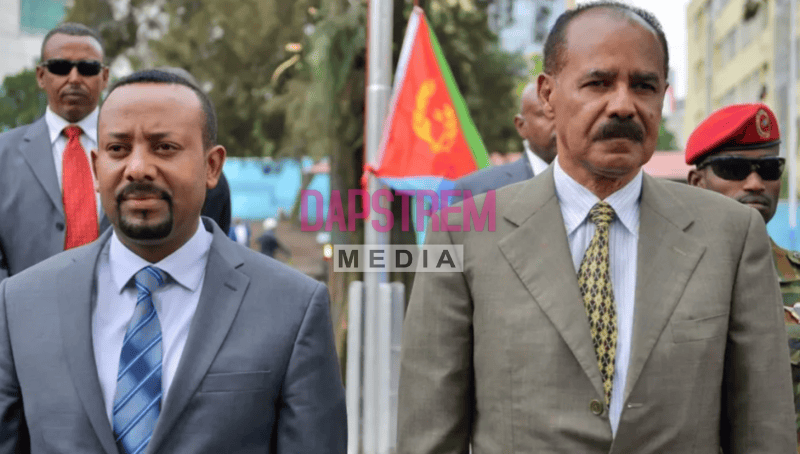
A major breakthrough came in 2018 when Ethiopian Prime Minister Abiy Ahmed and Eritrean President Isaias Afwerki signed a peace agreement that formally ended the state of war between the two countries.
The agreement raised hopes for improved diplomatic relations, economic cooperation and greater stability across the Horn of Africa. It also opened the possibility of renewed trade and communication between the two nations.
However, the rapprochement has not eliminated the underlying tensions. Disagreements over security, territorial sovereignty and Ethiopia’s desire for access to the Red Sea have continued to complicate relations.
The latest deterioration has raised fears that the gains made through the 2018 peace agreement could be reversed.
The G7’s warning is therefore significant because it comes at a time when the region is already struggling with multiple security challenges and unresolved conflicts.
Renewed Fighting in Ethiopia Raises Regional Concerns
The deteriorating relationship between Ethiopia and Eritrea is unfolding alongside renewed fighting in parts of Ethiopia, particularly in the northern Tigray region.
The renewed hostilities have threatened the fragile peace established by the November 2022 Pretoria Agreement, which ended the devastating two-year war between Ethiopia’s federal government and Tigrayan forces.
The agreement was intended to restore peace, facilitate humanitarian assistance and support the political reintegration of the affected region.
However, unresolved disputes over territorial administration, security arrangements and political authority have continued to create tensions.
The renewed fighting has raised concerns that Ethiopia could face another prolonged period of instability, especially if tensions with Eritrea escalate simultaneously.
The possibility of a wider conflict involving multiple armed actors could significantly complicate efforts to restore peace and security.
International observers have warned that the overlapping conflicts could create conditions for a broader regional confrontation, with consequences extending beyond Ethiopia and Eritrea.
The Horn of Africa is strategically important because of its proximity to the Red Sea, the Gulf of Aden and major international shipping routes. Any significant deterioration in security could therefore attract greater involvement from regional and international powers.
G7 Calls for Diplomatic Solutions
The G7 foreign ministers have emphasised that diplomacy remains the most effective way to prevent the worsening situation from developing into a wider conflict.
The ministers urged Ethiopia and Eritrea to pursue peaceful solutions to their disagreements while respecting each other’s sovereignty and territorial integrity.
They also expressed support for diplomatic efforts being undertaken by the African Union and the United Nations to facilitate dialogue between the two countries.
The African Union has an important role in preventing conflicts across the continent and encouraging member states to resolve disputes through peaceful negotiations.
The United Nations, meanwhile, can provide diplomatic support, facilitate communication and help coordinate international efforts aimed at reducing tensions.
The G7’s position underscores the importance of sustained diplomatic engagement, particularly at a time when relations between the two countries appear increasingly fragile.
The ministers also urged external actors to avoid actions that could further complicate the situation or encourage confrontation.
The statement suggests that international powers are increasingly concerned about the possibility of a conflict that could prove difficult to contain once hostilities begin.
Humanitarian Crisis Could Worsen
One of the greatest concerns surrounding the escalating tensions is the potential impact on civilians.
Ethiopia has experienced severe humanitarian challenges in recent years, including displacement, food insecurity, disrupted healthcare services and the consequences of prolonged armed conflict.
Renewed fighting could worsen these challenges, particularly in areas already affected by insecurity.
Thousands of families could be forced to flee their homes in search of safety, while access to food, clean water, medical supplies and other essential services could become increasingly difficult.
Humanitarian organisations operating in affected areas could also face significant obstacles in delivering assistance if security conditions deteriorate.
The G7 ministers specifically called for safe and unhindered humanitarian access, emphasising the need to protect civilians, especially women and children.
The appeal reflects concerns that a wider conflict could further undermine humanitarian operations across the Horn of Africa.
The consequences could extend to neighbouring countries if large numbers of people are displaced across borders.
Countries such as Sudan, Djibouti, Somalia and Kenya could face additional pressure if the crisis results in significant population movements.
The humanitarian implications therefore make the prevention of further escalation a priority not only for Ethiopia and Eritrea but also for the wider region.
Red Sea Trade and Regional Security at Risk
The G7’s warning also highlights the potential consequences of the Ethiopia-Eritrea dispute for international trade and maritime security.
The Red Sea is one of the world’s most important shipping corridors, connecting Europe, Asia and other major global markets through the Suez Canal and the Bab al-Mandab Strait.
The waterway plays a critical role in the movement of petroleum products, manufactured goods, food supplies and other commodities.
Any major security crisis in the surrounding region could affect shipping operations, increase transportation costs and create uncertainty for international businesses.
Ethiopia’s interest in securing access to the Red Sea has added a strategic dimension to the dispute with Eritrea.
A military confrontation between the two countries could potentially affect security calculations across the Red Sea region, particularly if other states become involved.
The G7 ministers warned that further escalation could have serious consequences for international trade, making the dispute a matter of concern for countries beyond Africa.
The region’s strategic importance means that efforts to prevent conflict are likely to remain a major priority for international diplomatic actors.
Wider Implications for the Horn of Africa
The growing tensions between Ethiopia and Eritrea could have far-reaching consequences for the Horn of Africa, a region that has experienced repeated conflicts, political instability and humanitarian emergencies.
The situation is particularly concerning because Ethiopia is also facing tensions with other neighbouring countries and internal armed conflicts.
A wider confrontation could undermine regional cooperation and make it more difficult for governments to address shared challenges, including terrorism, cross-border insecurity, economic development and humanitarian needs.
The Horn of Africa relies heavily on cooperation among its countries to maintain stability and support economic growth.
Escalating tensions between major regional actors could weaken these efforts and create opportunities for further instability.
Kenya and other neighbouring countries have a strong interest in preventing a wider conflict, given their geographic proximity and economic links with Ethiopia.
A destabilised Ethiopia could affect regional trade, security cooperation and cross-border relations.
The situation also underscores the importance of regional institutions such as the African Union and the Intergovernmental Authority on Development in promoting dialogue and preventing conflicts.
International Community Urged to Prevent Further Escalation
The G7’s latest declaration reflects a growing sense of urgency among international actors seeking to prevent the Ethiopia-Eritrea dispute from developing into another devastating war.
The ministers have called for restraint, dialogue and respect for national sovereignty, while supporting diplomatic efforts by the African Union and the United Nations.
However, the effectiveness of these efforts will depend largely on the willingness of both governments to engage in meaningful negotiations and address their underlying disagreements.
Preventing a military confrontation will require more than public statements. It will also require sustained diplomatic engagement, confidence-building measures and a commitment to peaceful coexistence.
The unresolved issue of Ethiopia’s access to the Red Sea will likely remain a central factor in the relationship between the two countries.
Finding a peaceful and mutually acceptable solution to the dispute could help reduce tensions and create opportunities for renewed cooperation.
For Eritrea, safeguarding its sovereignty and territorial integrity remains a key concern. For Ethiopia, securing reliable maritime access is an important economic and strategic objective.
The challenge for regional and international mediators will be to help both countries pursue their interests without resorting to military confrontation.
Conclusion
The G7’s warning over worsening Ethiopia-Eritrea tensions highlights the growing risk of regional escalation across the Horn of Africa.
The two countries’ fragile relationship, combined with renewed fighting inside Ethiopia and disagreements over Red Sea access, has raised fears of another major conflict.
The G7 foreign ministers have urged both governments to exercise maximum restraint, pursue diplomatic solutions and protect civilians from the consequences of further escalation.
The warning also highlights the potential impact of a wider conflict on humanitarian operations, regional security and international trade through the Red Sea.
As diplomatic efforts continue, the future of Ethiopia-Eritrea relations will depend on the willingness of both countries to resolve their disagreements peacefully.
The international community has a critical role to play in supporting dialogue and preventing the situation from deteriorating further.
Ultimately, avoiding another war in the Horn of Africa will require political commitment, regional cooperation and a shared recognition that lasting stability cannot be achieved through confrontation.