Kenyatta National Hospital (KNH) has made a major breakthrough in specialised medical care after successfully performing two rare nerve reconstruction surgeries on a four-year-old boy and a 43-year-old man who lost their limbs in separate accidents.
The procedures, conducted on October 29 and 30, 2026, involved Targeted Sensory Reinnervation (TSR), an advanced surgical technique that redirects sensory nerves to enable amputees to potentially regain sensations such as touch, pressure, vibration, heat and cold through appropriately fitted prosthetic limbs.
According to KNH, the four-year-old boy, identified as Jeremy from Kirinyaga County, became the world’s youngest known recipient of the specialised procedure.
Jeremy lost his left hand in a chaff-cutter accident while playing with another child. An initial attempt to reattach the hand was unsuccessful, resulting in an amputation.
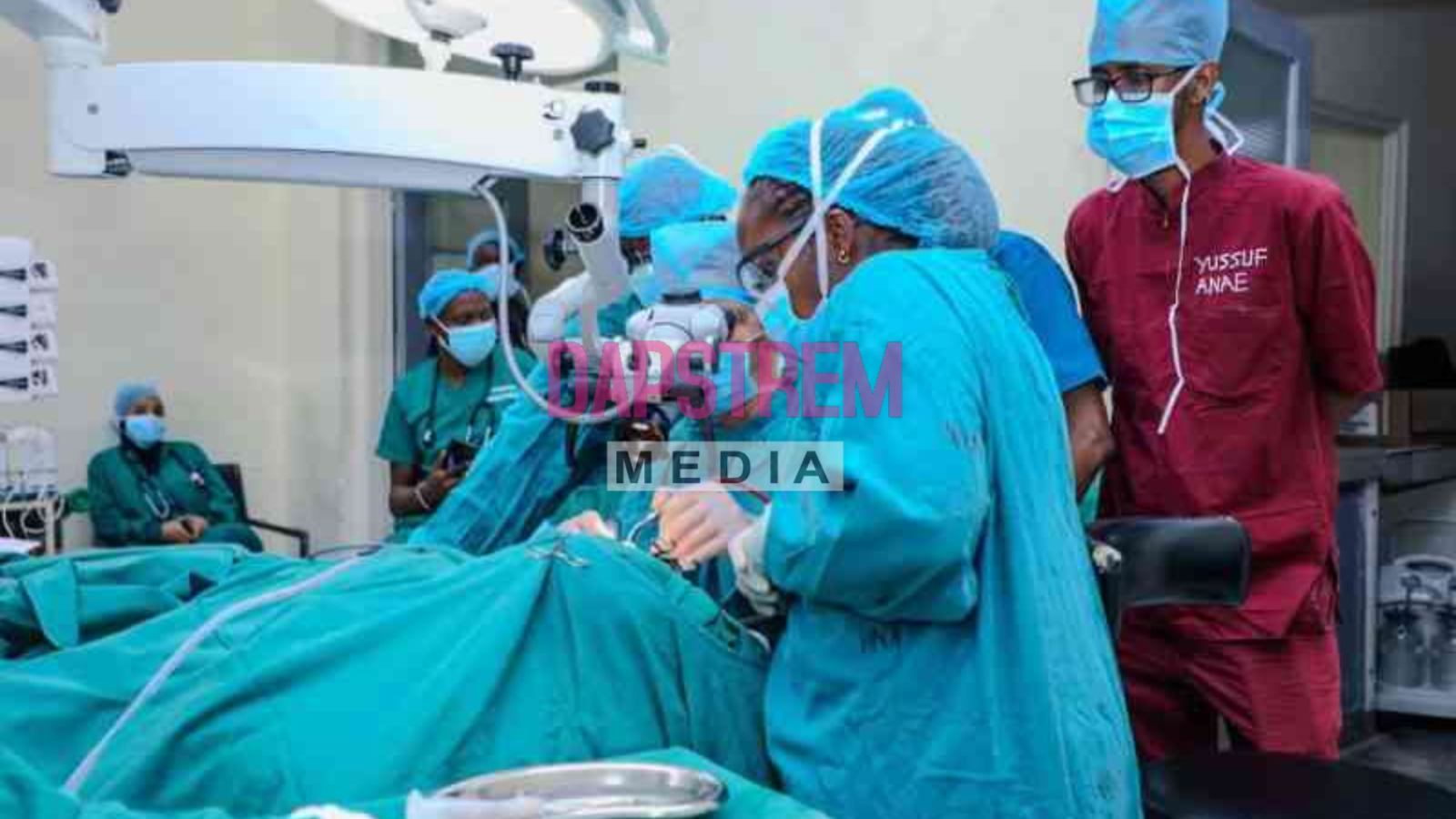
The five-and-a-half-hour operation was performed by Italian plastic and reconstructive surgeon Professor Alexander Gardetto, working alongside a multidisciplinary team of Kenyan specialists.
The second procedure involved Charles Mogire, a 43-year-old painter from Ngong, who lost both arms following a severe electrical accident in November 2025.
Mogire lost his left arm at the shoulder and his dominant right arm above the elbow. Following emergency treatment, skin grafting and subsequent care at KNH, he underwent a five-hour nerve reconstruction operation on October 30.
The hospital said Mogire became only the third patient globally to undergo the transhumeral variant of Targeted Sensory Reinnervation, which is designed for patients with above-elbow amputations.
How the specialised procedure works
Targeted Sensory Reinnervation involves redirecting nerves previously responsible for sensation in an amputated limb to other areas of the body.
Once the nerves heal and integrate with the surrounding tissue, stimulation of the new areas can potentially allow the brain to interpret sensations as originating from the missing limb.
The technique may also help reduce complications associated with amputations, including painful neuromas and phantom limb sensations.
However, the restoration of sensation depends on nerve recovery, rehabilitation and the integration of suitable prosthetic technology.
SHA covers the operations
KNH confirmed that both surgeries were fully covered by the Social Health Authority (SHA), allowing the patients to access the specialised treatment without out-of-pocket surgical expenses.
Both patients received postoperative care and clinical monitoring under the supervision of specialists from KNH and the University of Nairobi before being discharged to continue recovery at home.
KNH Chief Executive Officer Dr Richard Lesiyampe said the achievement demonstrated the hospital’s growing ability to undertake complex medical procedures locally through specialist training, technology and international partnerships.
For Mogire, the operation has renewed hopes of regaining greater independence and eventually returning to his painting profession with appropriate prosthetic support.
The achievement highlights Kenya’s growing capacity in advanced reconstructive medicine and expands treatment possibilities for people living with limb loss.