Ruto Arrives at Parliament Ahead of State of the Nation Address as Kenyans Await His Government’s Performance Report
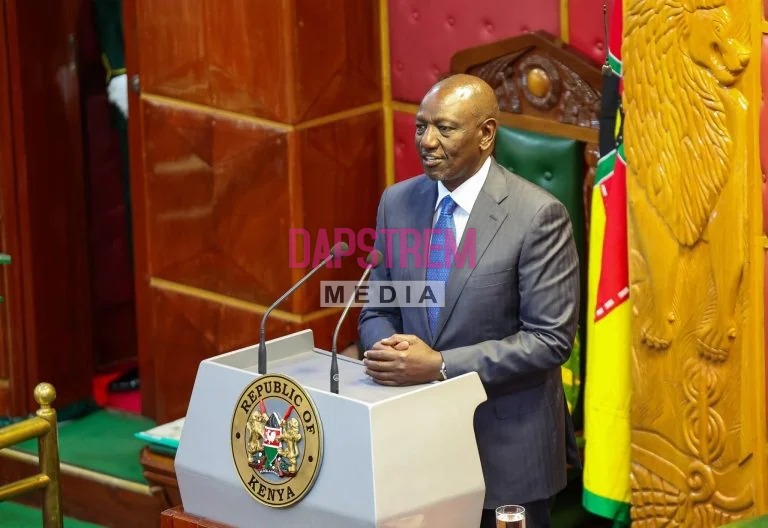
President William Ruto has arrived at Parliament Buildings in Nairobi ahead of his highly anticipated State of the Nation Address, an important constitutional engagement expected to place his administration’s performance under public scrutiny as the country moves closer to the 2027 General Election.
The Head of State is expected to address a joint sitting of the National Assembly and the Senate, outlining the progress made by his administration, highlighting key achievements and explaining the challenges facing the country.
The address, scheduled for Wednesday, November 18, 2026, comes at a particularly significant moment for Kenya. With less than a year remaining before the next General Election, the President faces growing pressure to demonstrate how his government’s policies and development programmes have improved the lives of ordinary citizens.
For many Kenyans, the speech is more than an annual presidential ceremony. It is an opportunity to hear the government account for its promises, explain its decisions and outline what it intends to accomplish during the remaining months of its first term.
The arrival at Parliament marks the beginning of an important national event that brings together elected representatives from both Houses, senior government officials and other invited leaders. The President’s address is expected to attract considerable attention from political leaders, business stakeholders, civil society organisations and members of the public.
According to Parliament’s official programme, the joint sitting is scheduled to begin at 2:30 p.m. in the National Assembly Chamber, where the two Speakers will formally invite the President to deliver his address.
A significant moment in Ruto’s presidency
The 2026 State of the Nation Address is particularly important because it gives Ruto an opportunity to assess his administration’s record since taking office in September 2022.
It is his fourth annual address and is expected to be the final State of the Nation Address of his first term before Kenyans head to the ballot in August 2027.
During the past four years, the Kenya Kwanza administration has pursued several economic and development programmes, including affordable housing, healthcare reforms, agricultural transformation, infrastructure expansion and efforts to create employment opportunities for young people.
The President is expected to use the parliamentary platform to explain the progress made under these programmes and demonstrate how the government’s economic transformation agenda is delivering results.
However, the address also comes at a time when sections of the public continue to raise concerns about the cost of living, taxation, unemployment and the affordability of essential services.
The gap between government announcements and the everyday experiences of ordinary households is likely to remain a major issue during the national conversation surrounding the speech.
For Ruto, the address offers an opportunity to defend his administration’s policies, highlight achievements and explain why Kenyans should remain confident in the government’s development agenda.
It also provides an opportunity to acknowledge areas where implementation has been slower than expected and outline measures intended to address outstanding challenges.
Economic performance and the cost of living expected to dominate
One of the biggest issues expected to feature in the President’s address is the state of the Kenyan economy and the impact of government policies on households and businesses.
The cost of living has remained a major concern for many Kenyans, particularly as families continue to manage expenses related to food, transport, housing, electricity, education and healthcare.
Although the government has pointed to improvements in selected economic indicators, many households want to see those gains reflected in their daily lives.
The President is therefore expected to explain the government’s assessment of economic growth, revenue collection, public debt management, investment and the measures being taken to strengthen the country’s financial position.
Taxation is another issue that could attract attention. Government efforts to increase revenue and finance development programmes have generated public debate, with citizens and businesses calling for a tax system that does not place excessive pressure on already stretched incomes.
The administration will also face questions about how it intends to balance revenue collection with economic growth, job creation and the need to protect vulnerable households.
The proposed Sh5 trillion economic transformation and infrastructure agenda is another major subject likely to feature in the address. The plan includes investments in roads, energy, dams, railways and other development projects intended to support economic activity and improve service delivery.
Kenyans will be interested in hearing how far the government has progressed in implementing these plans, how the projects are being financed and when communities can expect to benefit.
The President will also be expected to explain how his administration intends to maintain economic stability while addressing concerns over public expenditure and the country’s debt obligations.
For ordinary citizens, however, the most important question will remain whether the government’s economic policies are making life more affordable and creating opportunities for people to improve their living standards.
Healthcare reforms and the Social Health Authority
Healthcare is another critical area likely to attract attention during the State of the Nation Address.
The government’s transition from the National Health Insurance Fund to the Social Health Authority (SHA) has been one of the most significant changes in Kenya’s healthcare financing system under the current administration.
The reforms were introduced with the objective of expanding access to healthcare and reducing the financial burden faced by patients, particularly those from low-income households.
However, the implementation of SHA has generated public debate, with some patients and healthcare providers raising concerns about registration, access to services, claims processing and the availability of medical support.
The President is expected to provide an update on the progress of the reforms and explain what his government is doing to address challenges affecting patients and healthcare facilities.
Kenyans will also be interested in hearing about the government’s plans to strengthen public hospitals, improve access to essential medicines, support healthcare workers and expand medical services in underserved areas.
The address comes at a time when public health preparedness has also attracted attention following concerns over infectious diseases, including Ebola in the region.
The government is expected to demonstrate how it is strengthening disease surveillance, improving emergency response systems and ensuring that healthcare institutions can respond effectively to public health threats.
The success of healthcare reforms will ultimately be measured by whether Kenyans can access quality medical services without experiencing financial hardship.
Education, employment and opportunities for young people
Education and youth employment are also expected to form part of the national conversation as the President reports on his administration’s development priorities.
Kenya continues to face pressure to create more employment opportunities for young people, many of whom have struggled to secure stable jobs despite completing their education and acquiring professional qualifications.
Unemployment and underemployment remain important public concerns, particularly among graduates and young people entering the labour market.
The government has previously promoted digital employment, vocational training, entrepreneurship and other initiatives as part of its strategy to expand opportunities for the younger generation.
The State of the Nation Address provides an opportunity for Ruto to explain the progress made in these programmes and outline additional measures intended to support young people.
The administration is also expected to address developments in the education sector, including the recruitment of teachers, implementation of education reforms and efforts to improve learning conditions in schools.
The recruitment of teachers has remained an important issue as institutions continue to require adequate staffing to support effective learning.
Parents and education stakeholders will also be looking for updates on education financing, school infrastructure, curriculum implementation and the government’s plans to ensure that learners from disadvantaged backgrounds are not left behind.
For many young Kenyans, the most important measure of the government’s performance will be whether its programmes are translating into meaningful employment, better education and opportunities to build sustainable livelihoods.
Security, human rights and national stability
National security is another major issue the President is constitutionally expected to address.
Article 132 of the Constitution requires the Head of State to report on measures taken and progress achieved in promoting national values and principles of governance. The annual address also provides an opportunity to account for the country’s security situation and the government’s response to threats facing citizens.
As the country approaches the 2027 General Election, concerns surrounding political violence, insecurity, abductions and the protection of constitutional freedoms are likely to attract greater attention.
Recent incidents involving attacks on political figures, public gatherings and individuals have raised questions about the ability of security agencies to protect citizens regardless of their political affiliations.
The government is therefore expected to explain the measures it is taking to strengthen public safety, improve investigations and ensure that those responsible for criminal activities face the law.
Kenyans will also be interested in hearing how the administration intends to protect democratic freedoms, including freedom of expression, peaceful assembly and the right to participate in political activities.
The approach to policing and accountability will remain important as political competition intensifies ahead of the next General Election.
The President’s position on national unity and the responsibility of political leaders to maintain peace will also be significant during the address.
Tightened security as Parliament hosts the President
The President’s arrival at Parliament has also coincided with heightened security around the parliamentary precincts ahead of the national event.
Security officers have been deployed at key entrances to the National Assembly and Senate, while additional personnel are maintaining surveillance around Parliament Buildings.
The increased security arrangements are intended to ensure that the joint sitting proceeds smoothly and that the President, legislators, invited guests and other participants remain safe throughout the event.
The heightened security comes at a time when political temperatures are gradually rising as parties and political leaders position themselves ahead of the 2027 General Election.
The State of the Nation Address is therefore taking place against a backdrop of increased political activity, public debate and growing expectations about the country’s future.
Parliament is expected to bring together leaders from different political formations, giving the President an opportunity to communicate his administration’s priorities before representatives of the Kenyan people.
What the Constitution requires of the President
The State of the Nation Address is not simply a presidential tradition or political event. It is a constitutional responsibility provided for under Article 132 of the Constitution of Kenya.
Article 132(1)(b) requires the President to address a special sitting of Parliament once every year. Article 132(1)(c) further requires the Head of State to report on measures taken and progress achieved in realising the national values and principles of governance under Article 10.
These values include patriotism, national unity, the rule of law, democracy, participation of the people, human dignity, equity, social justice, inclusiveness, equality, human rights and accountability.
The President is also required to publish details of the measures undertaken and the progress achieved in the Kenya Gazette.
Additionally, the Head of State must submit a report to the National Assembly on the country’s progress in fulfilling its international obligations for debate by legislators.
The annual address therefore provides an important accountability platform through which the Executive reports to Parliament on its performance and constitutional responsibilities.
It gives Members of Parliament an opportunity to examine government priorities, assess progress and raise questions about areas where implementation may have fallen short.
The engagement is particularly important because Parliament represents citizens from different parts of the country, allowing national concerns to be brought directly before the Head of State.
A political test ahead of the 2027 General Election
Beyond its constitutional significance, this year’s State of the Nation Address carries considerable political weight because it comes less than nine months before Kenyans elect their next national and county leaders.
President Ruto and his Kenya Kwanza administration are approaching an important period in which their development record, economic decisions and political promises are likely to face increased scrutiny.
The address provides the President with an opportunity to communicate directly with the country, defend his administration’s record and explain why its policies should continue.
Opposition leaders and other government critics are also expected to examine the speech closely, particularly claims relating to economic performance, development projects, public spending and service delivery.
The political significance of the address is heightened by growing competition ahead of the August 2027 elections, with different political formations seeking to convince voters that they offer the best solutions to Kenya’s challenges.
For the President, the challenge will be to demonstrate that his administration has made meaningful progress while acknowledging the concerns that continue to affect ordinary citizens.
Kenyans will be looking beyond impressive statistics and ambitious promises. They will want specific explanations, measurable achievements and realistic plans that address the problems affecting their communities.
The speech could therefore become an important reference point in the political debate leading to the next General Election.
Kenyans await answers and a clear national direction
As President William Ruto prepares to address the joint sitting of Parliament, expectations remain high across the country.
From the economy and healthcare to education, security, employment and infrastructure, Kenyans want to understand where the country stands and what the government intends to achieve during the remaining months of its first term.
The address offers the Head of State an opportunity to explain his administration’s achievements, acknowledge challenges and outline practical measures for addressing outstanding national concerns.
It also provides an opportunity to reassure citizens that their concerns are being heard and that government policies are focused on improving their quality of life.
Ultimately, the significance of the State of the Nation Address will not be determined by the length of the speech or the number of achievements announced. Its real value will depend on the quality of the information presented, the commitments made and whether those commitments translate into tangible improvements.
With the 2027 General Election approaching, the President’s arrival at Parliament marks the beginning of an important national conversation about governance, accountability and Kenya’s development direction.
The country will now be watching closely as Ruto presents his administration’s account of its performance and outlines his vision for Kenya’s future.