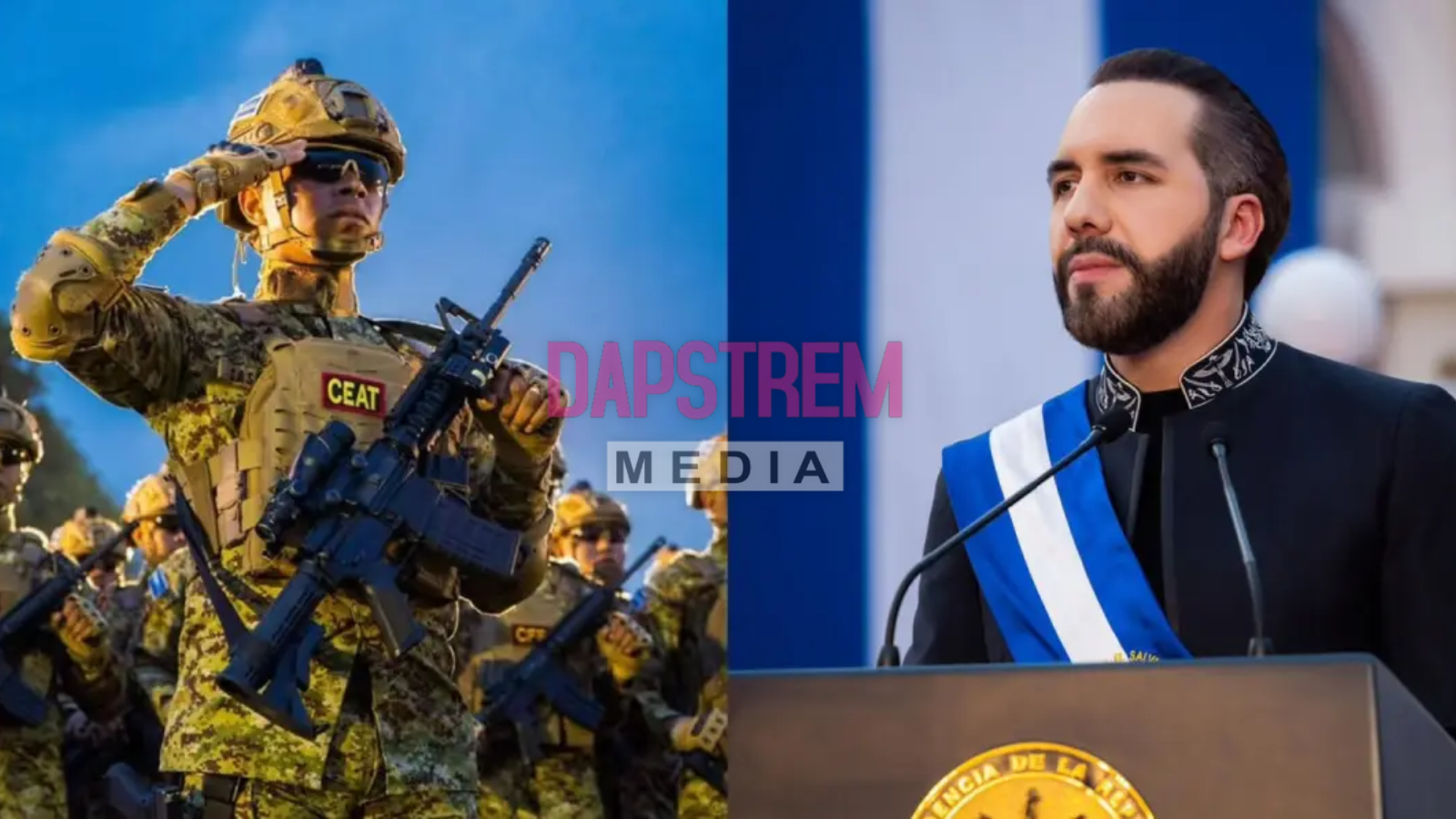
El Salvador has announced plans to withdraw its troops from Haiti immediately after locating and rescuing four missing Salvadoran military personnel, despite growing calls from the Caribbean nation for the Central American country to extend its security deployment.
Salvadoran Security Minister Gustavo Villatoro reaffirmed the position on Monday, November 16, 2026, saying the military operation launched by President Nayib Bukele was primarily intended to recover the four airmen who disappeared following a gang ambush near Port-au-Prince.
Speaking during an event in San Salvador attended by Haitian Security Minister Patrick Pelissier, Villatoro insisted that the mission would end once the missing personnel were found.
“If they reappear tomorrow, as President Bukele said, we will leave,” Villatoro told journalists.
The announcement comes amid uncertainty over the future of El Salvador’s military presence in Haiti, where armed gangs have expanded their influence and continue to challenge government authority.
More than 2,000 Salvadoran troops deployed
Bukele dispatched more than 2,000 Salvadoran troops to Haiti in late October following the disappearance of four aviation technicians who were attacked while travelling in an armoured vehicle near the capital.
The four personnel were serving as part of an international anti-gang security mission backed by the United Nations when their vehicle came under attack on October 18.
The vehicle was reportedly set ablaze during the ambush, forcing the occupants to flee. Their whereabouts have remained unknown, prompting El Salvador to launch an extensive search operation.
The Salvadoran deployment has since taken on a broader security dimension, with its troops participating in operations targeting gang-controlled areas.
Among the reported achievements are the destruction of a property associated with a powerful gang leader and the recapture of Haiti’s national football stadium, Sylvio Cator Stadium, from criminal groups.
Bukele, who has built his political reputation around an aggressive crackdown on organised crime in El Salvador, has previously suggested that his country’s intervention could help weaken Haiti’s powerful gangs.
Haiti seeks extension of Salvadoran deployment
Despite El Salvador’s withdrawal plans, Haiti has expressed interest in retaining the Salvadoran troops to strengthen its fight against armed criminal networks.
Pelissier revealed that Haitian Prime Minister Alix Didier Fils-Aimé was preparing discussions with Salvadoran authorities to explore the possibility of extending the deployment.
Haiti’s government believes the additional military support could help restore security in areas where gangs have established control and disrupted normal economic and social activities.
The two countries have also entered into a security cooperation agreement, although Bukele has declined to disclose its contents, citing security and diplomatic considerations.
Human rights concerns emerge
The expanded military operation has attracted scrutiny from human rights organisations, particularly Amnesty International, which has called for transparency over the security agreement and safeguards against abuses.
Bukele’s domestic security campaign has faced criticism over mass arrests, alleged torture, prolonged detention without trial and other human rights violations.
Haiti’s security crisis remains severe, with armed gangs controlling large parts of Port-au-Prince and surrounding areas. The United Nations-backed Gang Suppression Force continues to face challenges in restoring stability despite international support.
The disappearance of the four Salvadoran personnel has therefore become a major test for both countries.