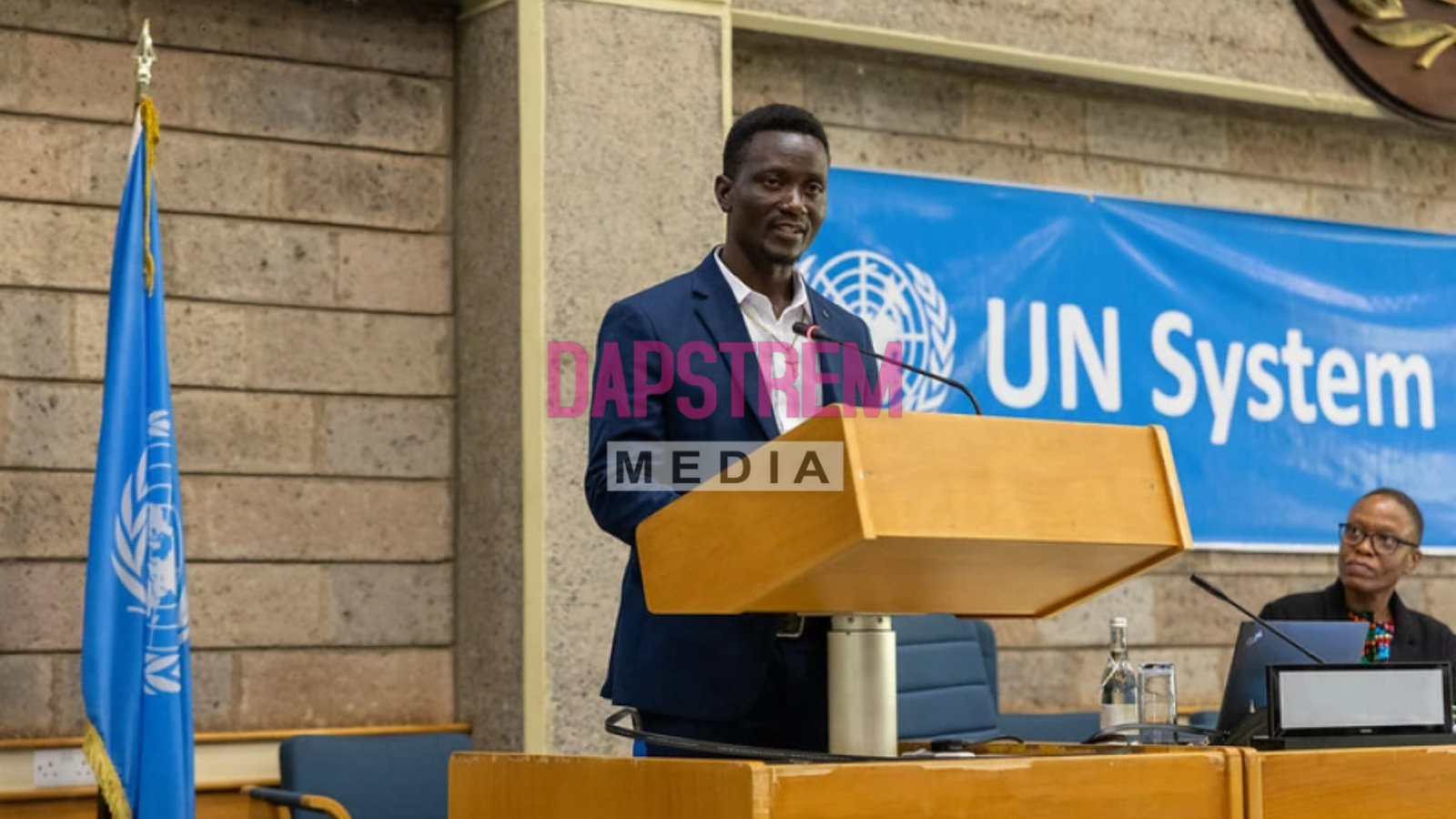
Bornface Owino, a young farmer and agricultural innovator from Homa Bay County, has been named the United Nations in Kenya Person of the Year 2026 in recognition of his contribution to sustainable agriculture, environmental conservation and community development.
Owino, who began farming in 2021, becomes the first person under the age of 30 to receive the annual recognition, according to The Star. His work focuses on improving agricultural productivity while equipping young people and fellow farmers with practical skills to adopt more sustainable farming methods.
The award recognises his efforts to promote climate-smart agriculture in the Lake Victoria basin, where farming communities face challenges associated with changing weather patterns, production costs and the need to improve food security.
The United Nations in Kenya Person of the Year Award celebrates individuals and institutions whose work advances the UN’s Sustainable Development Goals (SDGs) and reflects its commitment to inclusive and sustainable development.
From farming to mentoring other farmers
Owino grows tomatoes, cereals and other horticultural crops using farming techniques designed to improve productivity while conserving natural resources.
His approach incorporates certified seeds, efficient irrigation, integrated pest management and soil conservation. These practices can help farmers manage production risks, use agricultural inputs more effectively and maintain soil health.
Beyond cultivating his own crops, Owino has turned his farm into a demonstration site where other farmers and young people can learn about sustainable agricultural practices.
The initiative provides an opportunity for participants to gain practical knowledge that they can apply to their own farms and agricultural enterprises.
Owino also works with UN Women Kenya to support local farmers by providing seeds, fish fingerlings and agricultural knowledge intended to strengthen production and improve community livelihoods.
His work has attracted attention for combining agricultural innovation with efforts to widen participation in farming, particularly among young people and women.
Recognition for promoting inclusion
UN Women nominated Owino for the award in recognition of his work promoting gender equality and expanding opportunities in agriculture.
UN Women Deputy Representative in Kenya Dan Bazira praised his commitment to creating opportunities for both men and women, describing his work as an example of how inclusive participation can contribute to community development.
The recognition reflects a broader development priority: ensuring that women and young people can access the knowledge, resources and opportunities needed to participate meaningfully in agricultural production and related businesses.
For many rural communities, agriculture remains an important source of food, employment and household income. Supporting young people to participate in the sector can help build skills, encourage entrepreneurship and strengthen local food systems.
Owino said his experience had demonstrated that development should be measured by the opportunities and dignity it creates for communities.
He also expressed confidence that young people could make meaningful contributions to their communities through practical initiatives and innovation.
Agriculture at the centre of Kenya’s development
Owino’s recognition comes as Kenya continues to explore ways of improving agricultural productivity, strengthening food security and helping farmers adapt to climate change.
According to the Kenya National Bureau of Statistics’ Economic Survey 2025, agriculture, forestry and fishing contributed an average of 21.8 per cent of Kenya’s gross domestic product between 2000 and 2024.
In Homa Bay County, agriculture is an important economic activity, supporting households through crop production, livestock keeping and other agricultural enterprises.
The Food and Agriculture Organization of the United Nations has also highlighted climate-smart farming initiatives in the county, including demonstration plots showcasing improved crop varieties, integrated pest management and other agricultural technologies.
Owino’s work complements these broader efforts by demonstrating how individual farmers can share knowledge and encourage the adoption of more sustainable production methods.
According to the report announcing his award, his contribution supports 10 of the 17 Sustainable Development Goals, including No Poverty, Zero Hunger, Gender Equality and Climate Action.
A new generation of agricultural leaders
Owino’s selection places him among a group of Kenyan individuals and organisations recognised by the United Nations for contributions to sustainable development.
The 2025 award went to Professor Michael Ndurumo for his work promoting inclusive education and empowering persons with disabilities. Previous recipients have included Food 4 Education founder Wawira Njiru and the community-based Mikoko Pamoja mangrove conservation project.
The 2026 award was announced in connection with the United Nations’ observance of UN Day on October 24, marking the organisation’s founding in 1945.
Kenyan rugby sevens international and Olympian Kevin Wekesa was named runner-up for his work through Play Green, a sustainability initiative promoting tree planting, recycling, reduced plastic waste and environmentally responsible travel at sporting events.
For Homa Bay, Owino’s achievement brings national and international attention to the role of grassroots agricultural innovation in addressing food security, environmental sustainability and youth employment.
His recognition also sends a message about the potential of young farmers to contribute to development beyond their own farms by sharing skills, supporting fellow producers and creating opportunities within their communities.
As Kenya works to build more resilient food systems, initiatives that combine practical agricultural knowledge with environmental conservation and inclusive economic participation are likely to remain important to the country’s development agenda.