Rose Mbithe, Her Children and Two Police Officers Charged With Murder of Lawyer Kyalo Mbobu
Five people, including politician Rose Mbithe Mulwa, her two children and two police officers, have been charged with the murder of prominent Nairobi lawyer Mathew Kyalo Mbobu, marking a major development in the investigation into his fatal shooting in September 2025.
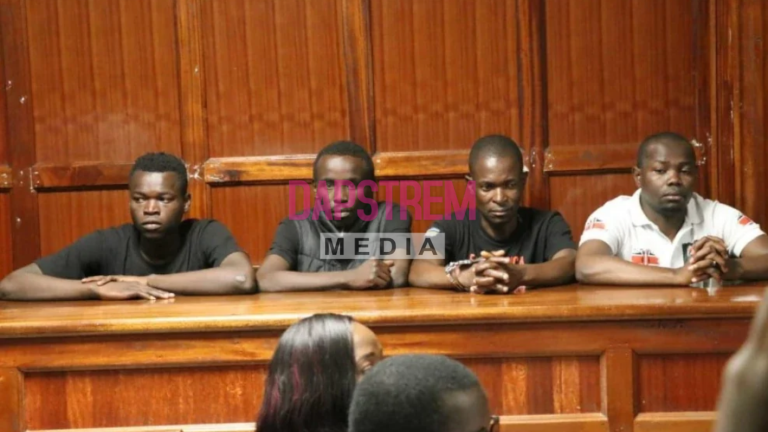
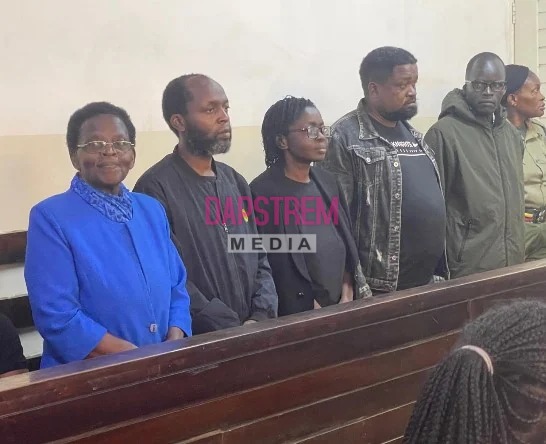
The accused persons appeared before the Kibera High Court on Tuesday, October 27, 2026, where they denied the murder charge. Justice Diana Kavedza entered pleas of not guilty, setting the stage for further proceedings in a case that has attracted considerable public attention because of the identities of the accused and the circumstances surrounding the killing.
Those charged are Rose Mbithe Mulwa, her children Chris Mulwa and Angela Mulwa, and police constables Julius Kipkoech Cheruiyot and Kennedy Kipkemoi Borboroi. The prosecution alleges that the five acted jointly with other people who have not yet been presented before the court to murder Mbobu.
The case concerns the killing of the lawyer along Magadi Road near Brookhouse International School in Karen, Nairobi, on September 9, 2025. Mbobu was shot while driving home from work, in an incident that shocked members of the legal profession and raised questions about the circumstances behind the attack.
The latest court proceedings represent an important step in the prosecution’s efforts to establish what happened, identify the people allegedly involved and present evidence before the court.
However, the accused persons have denied the allegations, and the prosecution must prove its case through the judicial process. None of the five should be regarded as guilty unless the court reaches that conclusion based on the evidence presented.
Five Accused Persons Deny Murder Charge
The proceedings at the Kibera High Court brought together five individuals whom prosecutors accuse of participating in Mbobu’s killing.
Rose Mbithe Mulwa, also known as Rose Mbithe Ndetei, appeared alongside her children, Chris and Angela Mulwa. The other accused persons are police constables Julius Kipkoech Cheruiyot and Kennedy Kipkemoi Borboroi.
The prosecution’s charge sheet alleges that the five, acting jointly with other persons who have not been brought before the court, murdered Mbobu on September 9, 2025.
The charge is brought under Section 203 as read with Section 204 of Kenya’s Penal Code, provisions dealing with murder and its punishment.
During the plea-taking proceedings, Justice Kavedza entered a plea of not guilty for each accused person. The pleas mean that the prosecution must proceed with the case and establish the allegations through admissible evidence.
The court process will provide an opportunity for prosecutors to present evidence and for the defence teams to challenge the allegations, question witnesses and raise any relevant legal arguments.
The inclusion of two police officers among the accused has also drawn attention to the case. Their involvement in the proceedings raises questions that the prosecution will need to address through evidence, including the nature of their alleged participation and any connections established by investigators.
At this stage, however, the charge sheet represents the prosecution’s allegations rather than a final determination of responsibility.
The accused persons retain their constitutional right to a fair trial, and the court will ultimately determine whether the evidence supports the charges against each individual.
How Lawyer Kyalo Mbobu Was Killed
Mbobu was a prominent advocate of the High Court, university lecturer and author. He was shot dead on September 9, 2025, while driving along Magadi Road in Karen, Nairobi.
According to reports on the case, the attack occurred near Brookhouse International School as he travelled home from work.
His death prompted questions about who was responsible for the shooting and whether it was connected to any disputes or other circumstances in his personal or professional life.
An autopsy reportedly established that Mbobu sustained eight gunshot wounds to the chin, neck and chest, causing fatal internal injuries and severe bleeding.
The circumstances of the shooting made the investigation particularly significant. Detectives needed to establish the sequence of events leading to the attack, identify the individuals allegedly involved and determine whether the killing had been planned.
Investigators would also need to examine any available forensic evidence, witness accounts, communications and other material capable of helping the court understand what happened.
The passage of time between the killing and the formal charging of the five suspects reflects the continuing legal process surrounding the investigation. However, the specific evidence against each accused person must be assessed in court rather than inferred from the seriousness of the allegations.
For Mbobu’s family, friends and colleagues, the court proceedings represent an important stage in seeking answers about his death.
For the public, the case has become a test of whether investigators and prosecutors can establish responsibility through a transparent legal process.
Possible Link to a Land Dispute Under Investigation
One of the issues that has attracted attention is the reported connection between Mbobu’s legal work and a family land dispute.
According to earlier court reporting, Mbobu represented Professor David Ndetei in a Mlolongo land case involving Rose Mbithe, who is Ndetei’s former wife. The dispute reportedly ended in a legal victory for Ndetei.
The reported connection has prompted questions about whether the lawyer’s professional role could be relevant to the investigation into his killing.
However, a possible connection between a legal dispute and a criminal investigation must be established through evidence. The existence of a disagreement does not, by itself, prove that it motivated a murder or establish that any particular person was responsible.
Investigators and prosecutors will need to demonstrate any alleged link between the dispute, the accused persons and the killing through evidence presented in court.
The court will also need to distinguish between established facts and allegations made during the investigation.
The case highlights the importance of allowing investigators to follow evidence wherever it leads while ensuring that individuals are not judged solely on the basis of their relationships, disputes or previous legal proceedings.
Police Officers Also Face Murder Charges
The decision to charge two serving or previously serving police constables alongside Mbithe and her children has added another dimension to the proceedings.
The two officers named in the charge are Julius Kipkoech Cheruiyot and Kennedy Kipkemoi Borboroi. Before the latest plea-taking date, the court had directed them to undergo mental assessments to establish whether they were fit to stand trial.
The assessments were ordered after the officers appeared before Justice Kavedza earlier in October, when the court prepared for the formal reading of the charges.
The prosecution subsequently proceeded with the case on October 27, when all five accused persons denied the murder charge.
The inclusion of police officers in a murder prosecution makes it particularly important for the court to examine the evidence carefully. Their alleged involvement must be established through the same fair and lawful process that applies to every accused person.
The prosecution must explain the alleged role of each suspect and demonstrate how the evidence supports the charges. The defence teams, in turn, are entitled to challenge that evidence and present their arguments.
The case also underlines the importance of public confidence in criminal investigations. Where police officers are accused of serious offences, investigations and court proceedings must be conducted in a manner that demonstrates accountability, independence and respect for the law.
Nevertheless, the charges alone do not establish that the officers committed the offence. Their individual responsibility remains a matter for determination by the court.
Prosecutors Indicate Another Suspect Could Be Charged
During the October 27 proceedings, the prosecution informed the court of its intention to charge another suspect in connection with Mbobu’s murder.
The individual identified was Police Inspector Kenneth Kipkemboi Sang, who has also been linked by investigators to the separate killing of clinical psychologist Dr Victoria Nthunya Mutiso.
The prosecution’s indication suggests that investigators may still be pursuing additional lines of inquiry into Mbobu’s death.
However, an intention to charge a suspect is not the same as a completed prosecution. Any additional charge would have to follow the applicable legal procedures, and the evidence against the individual would need to be tested in court.
The development also raises questions about the extent of the alleged network of people involved in the killing. The charge sheet already alleges that the five accused acted jointly with others who have not been brought before the court.
Detectives may therefore continue examining whether other individuals played a role and whether further evidence can establish the circumstances surrounding the attack.
The prosecution will be expected to present its case in a way that identifies the alleged actions of each accused person rather than relying on general allegations.
For now, the court proceedings remain focused on the charges before it, while any further prosecution will depend on the decisions of the relevant authorities and the evidence available.
Second Murder Case Facing Rose Mbithe and Her Children
The case involving Mbobu is particularly significant because Rose Mbithe and her two children are also facing separate murder charges connected to the death of Dr Victoria Nthunya Mutiso.
Mutiso, a clinical psychologist, was killed on July 29, 2026, in Nairobi’s Upper Hill area after reportedly boarding an Uber.
Mbithe, Chris Mulwa and Angela Mulwa were charged alongside two other suspects in that case and denied the allegations before the Milimani High Court in September 2026.
The two murder prosecutions are separate legal matters. Although some of the accused persons appear in both cases, the evidence relating to each killing must be considered independently.
The prosecution must establish the facts and responsibility associated with each alleged offence. Evidence in one case does not automatically prove the allegations in another.
The overlap has nevertheless brought increased public attention to the proceedings involving Mbithe and her children.
The circumstances of both cases have raised questions that the courts will need to address through evidence, legal arguments and the applicable standards of proof.
For the accused persons, the right to a fair trial remains fundamental in both proceedings. They are entitled to challenge the prosecution’s evidence, while the prosecution has the responsibility to present a case capable of proving the charges.
The separate proceedings will therefore be determined according to their respective evidence and legal requirements.
What the Case Means for the Legal Profession
Mbobu’s killing has also raised broader concerns about the safety of lawyers and other professionals who become involved in contentious legal disputes.
Advocates frequently represent clients in matters involving property, commercial interests, family disagreements and other disputes that can be emotionally or financially significant.
Their work requires them to represent clients within the law, regardless of the pressure surrounding a particular case.
When a lawyer is killed, it raises questions not only about the individual circumstances of the attack but also about the security of professionals carrying out their duties.
The investigation into Mbobu’s death is therefore important to members of the legal profession who expect disputes to be resolved through courts and lawful procedures rather than violence.
At the same time, the circumstances of this particular case must be established through evidence. It would be premature to conclude that Mbobu was killed because of his legal work unless the prosecution proves the relevant connection.
The case also reinforces the importance of protecting witnesses, preserving evidence and ensuring that individuals who report crimes can participate in proceedings without intimidation.
A credible judicial process can help establish the facts and provide a lawful avenue for accountability.
For the legal community, the proceedings will be closely watched because of Mbobu’s professional standing and the seriousness of the allegations.
The Importance of a Fair and Transparent Trial
The prosecution of five people over a high-profile killing places considerable responsibility on investigators, prosecutors and the courts.
Detectives must ensure that evidence is gathered lawfully and preserved properly. Prosecutors must assess whether the available evidence supports the charges, while the court must ensure that the proceedings comply with the Constitution and relevant laws.
The defence teams also play an essential role by examining the prosecution’s evidence and protecting the rights of their clients.
A fair trial does not mean that serious allegations should be ignored. It means that the allegations must be proved through a lawful process that allows both sides to present their cases.
This is particularly important when a case attracts intense public interest. Public discussion can sometimes turn accusations into assumed facts before the court has reached a decision.
The fact that the five accused persons have pleaded not guilty means that the allegations remain contested.
The court must therefore determine the case on the evidence presented rather than public opinion, speculation or the identities of those involved.
If the prosecution establishes the charges to the required legal standard, the court can make the appropriate findings under the law. If it fails to do so, the accused persons are entitled to the protection afforded by the justice system.
The process is essential to ensuring that accountability is based on evidence and that the public can have confidence in the outcome.
The charging of Rose Mbithe Mulwa, her children Chris and Angela Mulwa, and police constables Julius Kipkoech Cheruiyot and Kennedy Kipkemoi Borboroi marks a major development in the investigation into the murder of lawyer Mathew Kyalo Mbobu.
The five appeared before the Kibera High Court on October 27, 2026, and denied the charges relating to the fatal shooting along Magadi Road in Karen on September 9, 2025.
The case has attracted attention because of Mbobu’s standing in the legal profession, the reported connection to a land dispute and the inclusion of two police officers among the accused persons.
The prosecution has also indicated that another suspect, Police Inspector Kenneth Kipkemboi Sang, may face charges in connection with the killing.
Mbithe and her children are separately facing charges relating to the murder of clinical psychologist Dr Victoria Mutiso, although each case must be determined on its own evidence.
As proceedings continue, the central question will be whether the prosecution can establish the allegations against each accused person through a fair and transparent trial.
For Mbobu’s family, colleagues and the wider public, the case represents an opportunity for the circumstances of his death to be examined through the justice system.
Ultimately, the court’s responsibility is to establish the facts, protect the rights of all parties and determine criminal responsibility according to the law.