Sifuna Meets Mudavadi and Wetang’ula at Burudi Nabwera’s Requiem Mass Amid Growing 2027 Political Tensions
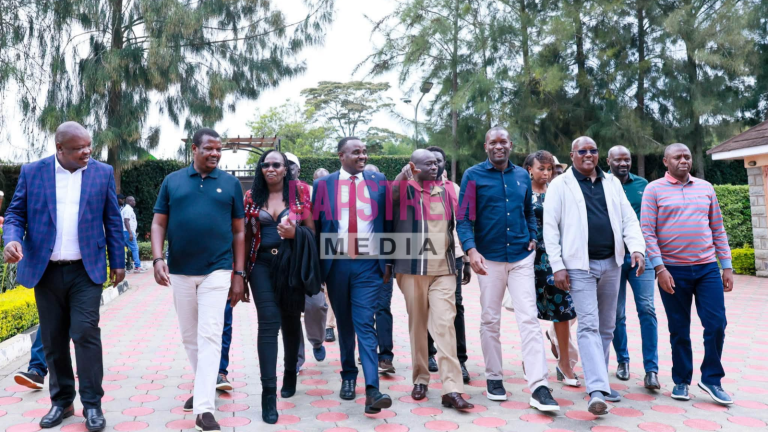
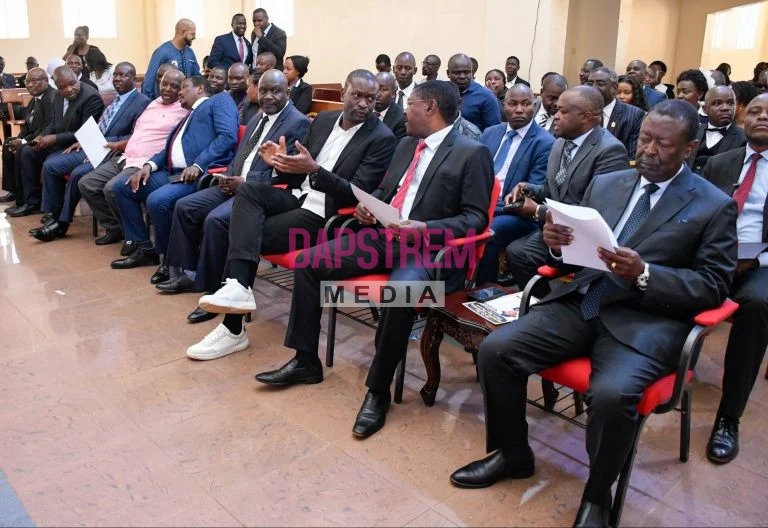
Nairobi Senator Edwin Sifuna on Wednesday, October 21, 2026, met Prime Cabinet Secretary Musalia Mudavadi and National Assembly Speaker Moses Wetang’ula during the requiem mass of veteran diplomat and former Cabinet Minister Burudi Nabwera in Lang’ata, Nairobi. The gathering brought together three prominent political figures at a time when divisions over the country’s political future and the approaching 2027 General Election are becoming increasingly visible.
The three leaders attended the service at Friends Church in Lang’ata to pay their final respects to Nabwera, a respected public servant whose career spanned diplomacy, parliamentary representation and service in government. Sifuna later shared photographs from the event on social media, confirming his attendance at the ceremony honouring the late statesman.
Although the occasion was primarily intended to mourn Nabwera and celebrate his contribution to Kenya, the presence of Sifuna, Mudavadi and Wetang’ula attracted political interest because of their increasingly divergent positions on the country’s leadership and the race towards the 2027 presidential election.
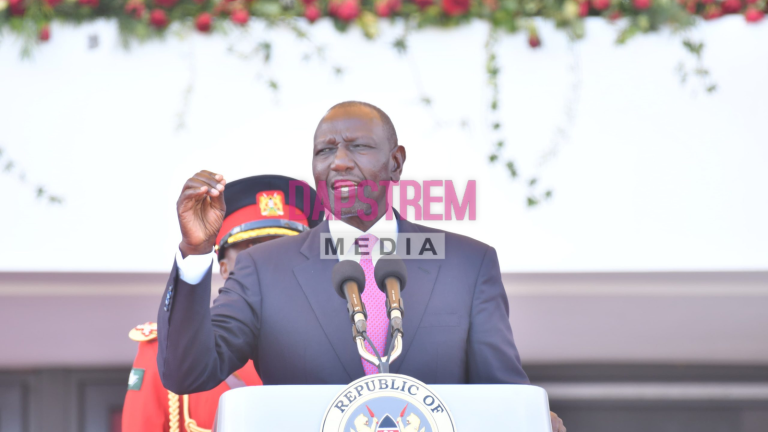
The encounter came against the backdrop of public exchanges between Sifuna and the two senior leaders over the ability of emerging political formations to challenge President William Ruto. Mudavadi and Wetang’ula have questioned whether new political movements have sufficient time, organisational structures and leadership experience to mount a credible presidential campaign. Sifuna, however, has maintained that a movement driven by ordinary citizens can attract nationwide support and compete for power.
The meeting at the requiem mass therefore placed three influential politicians in the same setting at a sensitive moment in Kenya’s political calendar. However, there has been no confirmation that the three held political discussions during the ceremony or that their encounter signalled a change in their respective political positions.
Burudi Nabwera’s Life and Legacy Takes Centre Stage
At the heart of the gathering was the memory of Burudi Nabwera, a veteran Kenyan politician and diplomat whose public service extended across several decades.
Nabwera held a number of senior positions in government, including serving as Kenya’s first ambassador to the United States and its first permanent representative to the United Nations. His diplomatic assignments placed him among the pioneers who helped establish Kenya’s presence in international affairs during the country’s early years as an independent nation.
He also served as Minister of State in the Office of the President and became the first Member of Parliament for Lugari Constituency after its creation in 1988. His career brought together international diplomacy, national governance and elective politics, making him a notable figure in Kenya’s political history.
His death on October 8, 2026, prompted tributes from leaders who remembered his contribution to the country and the communities he served. Among those who mourned him were Mudavadi and Co-operatives and MSMEs Cabinet Secretary Wycliffe Oparanya, who praised his dedication to public service and his contribution to Kenya’s diplomatic relations.
Nabwera’s career also reflected a period when Kenya was building its institutions and strengthening its relationships with other countries. His work as a diplomat helped connect the country to international platforms, while his later involvement in domestic politics placed him closer to the concerns of ordinary citizens and regional development.
The requiem mass provided an opportunity for family members, friends, political leaders and other mourners to reflect on that legacy. It also brought together politicians whose own careers and ambitions are closely connected to the future direction of Kenyan politics.
The gathering served as a reminder that, beyond political competition, Kenya’s public life is shaped by individuals whose contributions often extend beyond electoral cycles. Nabwera’s career in diplomacy and government remains an important part of the country’s institutional history.
Sifuna’s Political Ambitions Put Him on a Collision Course With Established Leaders
Sifuna’s presence at the requiem mass came at a time when his political future has become a subject of national debate.
The Nairobi Senator has emerged as one of the prominent figures associated with the Linda Mwananchi movement, which has attracted supporters opposed to the cooperation between sections of the Orange Democratic Movement (ODM) and President Ruto’s administration.
His political position has become more pronounced following his removal as ODM Secretary-General, a development that marked a turning point in his relationship with the party’s leadership.
The Office of the Registrar of Political Parties formalised the change in July 2026. On September 10, the Political Parties Disputes Tribunal upheld his removal after dismissing his challenge to the party’s disciplinary process.
Rather than retreating from public political engagement, Sifuna continued promoting an alternative political platform. He subsequently pursued The Equitable Party and was unveiled as its presidential candidate on October 4, 2026, according to reports.
The move has placed him among the emerging figures seeking to challenge the existing political establishment ahead of the August 2027 General Election.
Through the Linda Mwananchi movement, Sifuna and his allies have sought to present an alternative to established political arrangements, emphasising the role of ordinary citizens and supporters who want a different approach to leadership.
The movement’s challenge is to turn its public appeal into a functioning political organisation capable of competing nationally. It must establish effective structures, develop a clear policy agenda, organise its supporters and demonstrate that it can reach voters beyond its existing political base.
Sifuna has expressed confidence that these objectives are achievable despite the limited time remaining before the election. His position directly contrasts with the concerns raised by Mudavadi and Wetang’ula, who have argued that presidential leadership requires substantial preparation and organisational capacity.
The encounter at Nabwera’s requiem mass thus took place while the senator was attempting to expand his political influence and convince Kenyans that a new political vehicle can compete against established parties.
Mudavadi Questions Whether New Political Parties Are Ready for 2027
Mudavadi has emerged as one of the most vocal critics of the idea that newly established political formations can quickly develop the structures needed to compete for the presidency.
Speaking during a church service in Kapsabet, Nandi County, on Sunday, October 18, the Prime Cabinet Secretary questioned whether political parties formed only months before an election could develop the policies, organisational structures and frameworks required to mount a serious campaign.
He challenged proponents of new parties to explain how they would prepare credible policy proposals and establish the networks needed to compete nationally within the remaining period.
Mudavadi’s remarks were widely interpreted as a response to the growing political ambitions of Sifuna and other emerging opposition figures.
His argument centres on the practical demands of running a presidential campaign. In Kenya, a candidate seeking the presidency must build a national support base, organise campaign teams, communicate policies, recruit candidates and navigate the legal and administrative requirements governing elections.
A political movement may attract attention through rallies, public statements and social media engagement, but sustaining that momentum across the country requires a much broader organisational effort.
Mudavadi’s position reflects his emphasis on preparation, institutional strength and political experience. He has cautioned against treating the presidency as an experiment, arguing that the country’s leadership should not be entrusted to formations that have not demonstrated their readiness to govern.
For Sifuna and his supporters, however, the challenge is to show that established political parties do not have an exclusive claim to experience or effective leadership. They argue that new movements can draw on public dissatisfaction and the determination of citizens seeking political change.
The disagreement therefore reflects two competing approaches to the coming election: one that emphasises established structures and demonstrated experience, and another that seeks to build an alternative political force around public mobilisation and a new leadership agenda.
The meeting at the requiem mass did not resolve that disagreement. Instead, it highlighted how the debate over the country’s future leadership is unfolding alongside ordinary public events involving the country’s political class.
Wetang’ula Challenges the Opposition’s Ability to Defeat Ruto
Wetang’ula has also questioned whether the current opposition has the experience and capacity to defeat President Ruto in the 2027 election.
Speaking during a boda boda empowerment event in Bungoma County on Monday, October 19, the National Assembly Speaker argued that the presidency is a serious responsibility and should not be entrusted to leaders without sufficient experience.
He maintained that Kenya has historically elected leaders with considerable leadership experience and questioned whether the emerging opposition figures possessed the capacity to dislodge Ruto from power.
Wetang’ula also urged the Luhya community to support Ruto’s re-election bid, arguing that cooperation with the president could strengthen the region’s prospects in the next political contest.
His remarks reflect the political calculations facing Western Kenya, a region whose voting patterns and leadership alliances could influence the outcome of the 2027 election.
Mudavadi and Wetang’ula occupy influential positions within the current administration and have long been prominent figures in Western Kenya politics. Their support for Ruto places them on a different political path from Sifuna and the leaders associated with Linda Mwananchi.
Wetang’ula has also publicly expressed his own interest in the 2032 presidential election, saying he has the necessary qualifications and experience to lead the country. His remarks suggest that political calculations within the region extend beyond the immediate contest in 2027.
The region’s leadership question is therefore becoming increasingly important. While established leaders are advocating continuity and political cooperation with the current administration, emerging figures are attempting to create a different political direction.
For Sifuna, building a national profile will require persuading voters that he can offer a credible alternative to the current government. For Mudavadi and Wetang’ula, the challenge will be maintaining their influence while defending the political arrangements they believe can deliver the best outcomes for their supporters.
Western Kenya’s Political Future Remains a Key Question
The disagreement involving Sifuna, Mudavadi and Wetang’ula also reflects the wider competition for political influence in Western Kenya.
The region has played an important role in Kenya’s elections, with its leaders frequently negotiating alliances with presidential candidates and national political coalitions.
Mudavadi and Wetang’ula have been among the region’s most recognisable political figures. Their positions in government have given them a central role in national political discussions, while their networks across Western Kenya have helped shape regional political negotiations.
Sifuna’s emerging movement, meanwhile, is attempting to challenge the traditional arrangement in which regional leaders negotiate political influence through established national coalitions.
Supporters of the Linda Mwananchi movement want to build a broader political platform that can mobilise voters across regional boundaries. Their strategy depends on turning the movement’s appeal into a national organisation with the ability to compete for elected positions and influence the presidential race.
The effort faces significant challenges. A successful presidential campaign requires more than popularity or public criticism of the government. It also demands funding, a policy programme, party organisation, a strong network of candidates and the ability to mobilise voters in different parts of the country.
At the same time, established political leaders cannot assume that their existing networks will automatically guarantee support in the next election. Voters’ priorities can change, and political alliances may shift as campaigns develop.
The contest is therefore likely to involve competing efforts to win public confidence, establish regional support and demonstrate national appeal.
For Western Kenya, the question is whether its political leaders will continue supporting the existing administration or whether alternative movements can persuade voters to embrace a different direction.
The answer will depend on how the competing groups organise themselves, the messages they take to voters and the alliances they build before the election.
A Requiem Mass Amid an Increasingly Competitive Political Climate
The gathering at Friends Church in Lang’ata illustrates how public events can bring together political figures who disagree sharply on matters of national leadership.
The service was convened to honour Nabwera, not to host a political negotiation. His family had previously called for the funeral arrangements to remain focused on mourning and celebrating his life of public service rather than becoming a platform for political rivalry.
That context is important as the country approaches another election cycle. The presence of politicians from different political camps at a funeral or memorial service does not, by itself, establish that they have reached an agreement or changed their political positions.
Sifuna, Mudavadi and Wetang’ula remain associated with different political strategies and competing views about the country’s leadership. Their appearance at the same event offered a moment of shared mourning, even as the national political debate continued around them.
For Sifuna, the coming months will be critical as he seeks to establish his movement and demonstrate that it can compete in a national election. For Mudavadi and Wetang’ula, the challenge is to defend their position that experience, structures and established political networks remain essential to a credible presidential campaign.
For the wider electorate, the debate raises questions about what voters expect from political parties, how new movements can become credible alternatives and whether established leaders can maintain public support amid changing political demands.
The 2027 election is expected to test these competing approaches. Political leaders will need to convince voters not only that they can win an election but also that they have practical plans for addressing the country’s economic, social and governance challenges.
The Road to 2027 Continues
The meeting between Sifuna, Mudavadi and Wetang’ula at Burudi Nabwera’s requiem mass came at a time when political competition ahead of the 2027 General Election is intensifying.
While the three leaders gathered to pay their respects to a veteran diplomat and former Cabinet minister, their encounter attracted attention because of the public disagreement over Sifuna’s presidential ambitions and the capacity of emerging political movements to challenge Ruto.
Mudavadi has questioned whether new parties can establish the policies and structures required for a serious campaign, while Wetang’ula has argued that the presidency requires substantial leadership experience. Sifuna, meanwhile, has continued promoting Linda Mwananchi and The Equitable Party as vehicles for building a broader political alternative.
Their competing positions reflect a wider debate about political experience, public participation, party organisation and the future of Kenya’s opposition.
As the election approaches, the strength of these political projects will ultimately be tested through their ability to mobilise voters, present credible policies and demonstrate that they can govern effectively.
For now, the requiem mass remained an occasion to remember Nabwera and his contribution to Kenya. Yet the presence of three influential leaders at the service offered a snapshot of the political landscape they will navigate as the country moves towards the next general election.