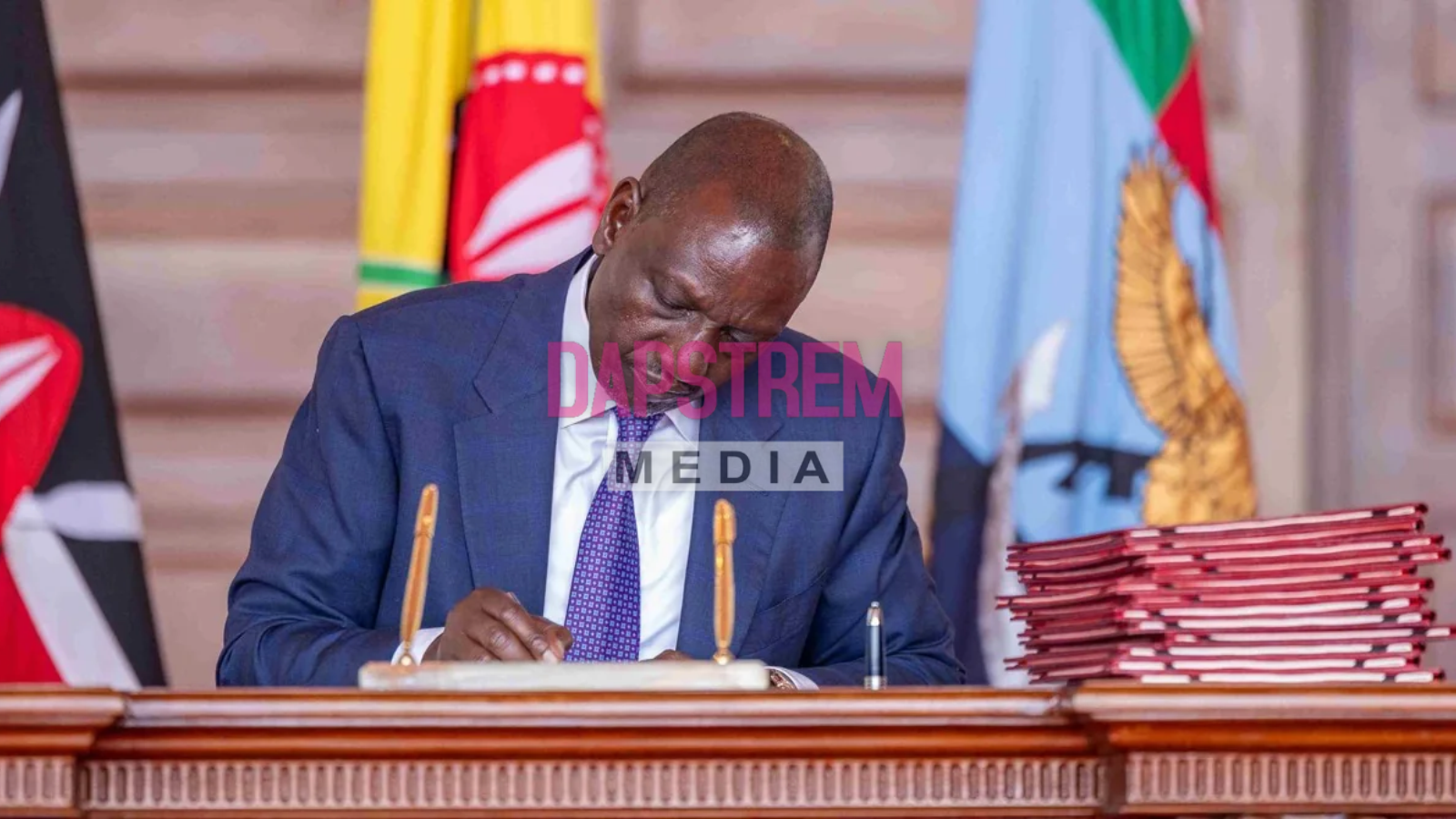
President William Ruto has assented to two Senate-sponsored Bills into law, paving the way for additional funding to county governments and introducing new safeguards for the administration of county assemblies.
The President signed the County Governments Additional Allocations Bill, 2026, and the County Assembly Services (Amendment) Bill, 2023, at Eldoret State Lodge in Uasin Gishu County on Monday, October 19.
The two laws address key aspects of devolution, with one providing additional resources to county governments for the 2026/2027 financial year and the other establishing clearer procedures for managing county assembly officials and staff.
Counties to Receive KSh71.09 Billion
The County Governments Additional Allocations Act, 2026, provides for approximately KSh71.09 billion in additional funding to the country’s 47 county governments during the 2026/2027 financial year.
The allocation represents an increase of approximately KSh425.6 million from the KSh70.67 billion provided in the previous financial year.
The money will come from the national government’s share of revenue, statutory entitlements, and loans and grants from development partners.
The funding is intended to support essential services and development programmes, including healthcare, agriculture, drought response, climate change resilience, water and sanitation, and the construction of county headquarters.
It will also help counties meet obligations relating to Universal Health Coverage personnel and Community Health Promoters.
Deputy Chief of Staff Josephat Nanok described the legislation as important for county governments seeking to plan their budgets and utilise the additional resources.
The law also introduces reporting requirements to strengthen accountability. The National Treasury Cabinet Secretary must publish quarterly reports detailing actual transfers to county governments, while county treasurers are required to record the allocations and include them in their financial reports.
New Safeguards for County Assembly Officials
The second law, the County Assembly Services (Amendment) Act, 2023, seeks to strengthen governance and administration within county assemblies.
It establishes procedures for the removal of members of County Assembly Service Boards and the suspension or removal of county assembly clerks.
The legislation also provides safeguards for staff serving on secondment, particularly regarding their employment rights and benefits, while reinforcing the right to fair administrative action.
The changes are intended to address administrative disputes involving county assembly leadership and employees by providing clearer procedures for disciplinary and removal decisions.
County assemblies play a crucial role in devolved governance through legislation, representation and oversight of county executives. Their administrative structures support these responsibilities, making clear employment and governance procedures important for their effective operation.
What the New Laws Mean for Kenyans
The additional funding could help county governments finance public services and development projects, but its actual impact will depend on timely disbursements, responsible budgeting and effective implementation.
Stronger reporting requirements are intended to improve transparency in how the funds move from the National Treasury to county governments and how they are accounted for.
Meanwhile, the new safeguards for county assembly officials could help reduce administrative disputes and provide greater clarity on the procedures governing their employment.
The signing of the two Bills marks another step in the implementation of devolution, placing responsibility on national and county institutions to ensure the laws achieve their intended objectives.
For residents, the key test will be whether the additional resources translate into improved healthcare, water access, infrastructure and other essential services, while county assemblies implement the new governance safeguards fairly and consistently.