MPs Launch Probe into Motorcycle Financing Firms Over Consumer Exploitation Claims
Members of Parliament have launched a fresh investigation into motorcycle financing companies following growing complaints from boda boda riders who allege that some lenders impose excessive interest rates, introduce unclear charges and use unfair debt recovery practices.
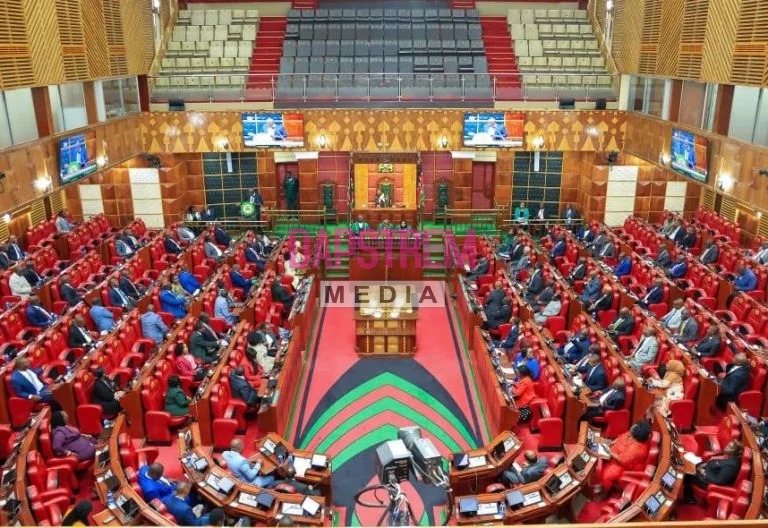
The National Assembly’s Departmental Committee on Finance and National Planning is reviewing the Buy Now, Pay Later (BNPL) and motorcycle asset financing sector to establish whether existing regulations adequately protect borrowers. The inquiry comes amid concerns that some riders are struggling to repay loans despite making substantial payments towards motorcycles they depend on for their daily income.
Committee Chairperson Kuria Kimani has warned financing companies that they will be required to explain their lending practices, regulatory compliance and measures for protecting customers. Lawmakers are particularly concerned about allegations that borrowers have paid amounts several times higher than their original loans without receiving sufficient information about the total cost of credit.
According to reports published on Friday, October 16, 2026, the committee has received 110 complaints involving alleged exploitative lending practices. Some borrowers reportedly claim to have paid two to four times the original loan amount, raising questions about interest calculations, additional fees and the transparency of financing agreements.
The investigation could have significant implications for thousands of motorcycle operators who rely on asset financing to acquire motorcycles and earn a living. It could also influence how non-bank lenders disclose loan terms, manage arrears and repossess financed assets.
MPs Seek Answers Over High Interest Rates and Hidden Charges
At the centre of the parliamentary inquiry are complaints about the cost of acquiring motorcycles through financing arrangements.
Many boda boda operators cannot afford to purchase motorcycles outright. Instead, they enter into agreements that allow them to make an initial deposit and pay the remaining amount through daily, weekly or monthly instalments.
The arrangement can provide an opportunity for people with limited savings to acquire an income-generating asset. However, the financial benefits depend heavily on the repayment terms, interest rates, fees and conditions attached to the agreement.
Borrowers have alleged that some financing arrangements do not clearly explain the amount being financed, the interest payable or the additional costs that may arise during the repayment period. Others have raised concerns about the amount they eventually pay compared with the original cost of the motorcycle.
The committee is seeking to establish whether customers receive adequate information before signing financing agreements and whether lenders comply with the legal requirements governing their operations.
A loan agreement should enable a borrower to understand the financial commitment involved before accepting the offer. This includes the amount financed, the applicable interest rate, the repayment period, any compulsory charges and the total amount payable if the borrower meets the agreed terms.
When these details are unclear, customers may struggle to determine whether the financing arrangement is affordable. They may also find it difficult to establish why their outstanding balances remain high despite regular repayments.
The allegations do not mean every motorcycle financing company uses unfair practices. Different lenders may have different pricing models, repayment periods and contractual conditions. The parliamentary inquiry is intended to examine the complaints and establish whether particular practices breach existing laws or consumer protection requirements.
The findings could help distinguish legitimate financing costs from charges that are inadequately disclosed, incorrectly calculated or imposed contrary to the applicable rules.
110 Complaints Raise Questions About the Cost of Motorcycle Loans
The reported 110 complaints have become a major part of the latest inquiry, with some borrowers alleging that their repayment obligations have grown far beyond the original amounts borrowed.
Committee Chairperson Kimani Kuria has indicated that lawmakers continue to receive complaints from customers who say they were not adequately informed about their loan balances and the total cost of credit. Some cases reportedly involve payments reaching three or four times the original loan amount.
Such complaints raise an important question: how much should a borrower reasonably expect to pay when purchasing a motorcycle through financing?
The answer depends on the terms of the agreement. A motorcycle purchased through a cash transaction may cost less than one acquired through a long-term financing arrangement because the latter can include interest and other legitimate costs.
However, borrowers should be able to understand those costs before entering into the agreement. A lender’s pricing structure should not prevent customers from determining how much they owe, how their payments are allocated and what they must pay to complete the purchase.
For example, a rider who borrows money to acquire a motorcycle needs to know whether instalments reduce the principal balance, how interest is calculated and whether late payments attract additional charges.
A borrower who makes regular payments should also be able to obtain an accurate statement showing the payments received, the remaining balance and any outstanding fees.
Without clear records, disagreements may arise over the amount paid, the amount remaining and the conditions required to transfer ownership of the motorcycle.
The committee’s examination of customer statements, payment reconciliation and account management is therefore important. These records can help determine whether complaints arise from unclear contracts, disputed payments, calculation errors or potentially unlawful lending practices.
The reported figures should not be interpreted as proof that every borrower pays several times the original loan amount. They represent complaints that lawmakers intend to examine alongside the lenders’ explanations and relevant documentation.
Boda Boda Riders Depend on Motorcycles for Their Livelihoods
The investigation has attracted attention because motorcycles are more than transport equipment for many boda boda riders. They are the primary tools through which operators generate daily income and support their families.
Across Kenya, motorcycle transport provides employment for riders who ferry passengers, deliver goods and perform other transport-related services. The sector also supports mechanics, spare-parts dealers, fuel retailers, motorcycle sellers and other small businesses.
For many young people and individuals without access to substantial savings, financing provides a route into the industry. A rider may be able to begin working with a relatively small deposit instead of raising the full purchase price.
However, the arrangement can become difficult when instalments consume a large proportion of daily earnings.
A rider’s income may fluctuate depending on customer demand, weather, fuel prices, competition and the condition of the motorcycle. The operator must also account for fuel, maintenance, repairs, insurance and other expenses before determining how much money remains available for loan repayments and household needs.
When earnings fall below expectations, meeting fixed instalment obligations can become a challenge.
The situation may become more difficult if the rider experiences illness, an accident, mechanical problems or an extended period without enough customers. Even temporary disruptions can affect the ability to make payments on time.
If arrears accumulate, the borrower may face additional charges or repossession of the motorcycle, depending on the contract and the applicable law.
Losing the motorcycle can remove the very source of income the borrower needs to clear the outstanding debt. This creates concerns about whether recovery procedures are fair, proportionate and consistent with legal requirements.
Parliament’s inquiry seeks to examine these issues while determining whether the regulatory framework provides sufficient protection for borrowers without undermining legitimate asset financing.
MPs to Examine Motorcycle Repossession and Debt Recovery
Beyond interest rates and additional charges, lawmakers are examining complaints involving the repossession of financed motorcycles.
Repossession is a major concern for borrowers because it can immediately interrupt their ability to earn an income. For a rider whose livelihood depends on a single motorcycle, losing the asset can have consequences that extend beyond the financing agreement.
The National Assembly committee intends to scrutinise the procedures used when borrowers default, including notices issued before repossession, the valuation of recovered motorcycles, their subsequent disposal and how proceeds from sales are applied to outstanding balances.
These questions are important because a financing company and its customer may disagree about the outstanding amount, the notice provided or the circumstances that justified recovery of the asset.
Borrowers need to understand the consequences of missing payments before signing a contract. Equally, lenders must follow applicable legal requirements when enforcing their contractual rights.
The inquiry will therefore need to establish whether the complaints involve failures to provide the required notices, disputes over arrears, unclear contractual conditions or other alleged irregularities.
The valuation and disposal of repossessed motorcycles are also significant. Where an asset is sold to recover a debt, the borrower should be able to understand the value assigned to the motorcycle and how the proceeds were credited to the outstanding balance.
Clear records can help reduce disputes and enable both parties to establish whether the remaining debt has been calculated correctly.
The committee is also examining complaint-handling mechanisms and the oversight of agents and third-party service providers involved in loan recovery. This could help establish whether financing companies adequately supervise the people acting on their behalf.
The allegations remain subject to investigation, and individual cases will need to be assessed using the relevant contracts, payment records, notices and other evidence.
Mogo Auto Under Parliamentary Scrutiny
Mogo Auto Limited has featured in the latest parliamentary discussions following complaints raised by stakeholders in the motorcycle financing sector.
Committee Chairperson Kuria Kimani said the company had been invited to explain its operations but requested that a scheduled meeting be deferred. He warned that the committee could invoke Standing Order 191 to ensure invited firms honour parliamentary invitations.
The committee’s warning reflects its intention to obtain explanations from companies whose lending practices have attracted complaints.
Parliamentary hearings allow lawmakers to examine business models, review relevant documents and question representatives about their compliance with applicable regulations.
The invitation to a company does not establish that it has committed an offence or that all allegations against it are true. The company must have an opportunity to explain its practices and respond to the issues raised.
The committee’s broader review also covers the licensing status of Buy Now, Pay Later providers, their engagement with the Central Bank of Kenya and their compliance with consumer protection safeguards.
Lawmakers are expected to consider evidence from relevant authorities and stakeholders before determining whether changes to the law or regulatory enforcement are necessary.
The outcome could influence how motorcycle financing companies communicate with borrowers, maintain customer accounts and handle disputes involving outstanding balances.
How the In-Duplum Rule Could Affect Borrowers
One of the key legal issues raised in discussions about expensive credit is the in-duplum rule.
The principle is intended to prevent interest on qualifying non-performing loans from accumulating indefinitely. Under the applicable rule, recoverable interest is generally capped at the outstanding principal amount when the loan becomes non-performing, subject to the specific law and circumstances governing the loan.
The rule has attracted attention because some borrowers have complained that interest charges have grown beyond the original amount they borrowed.
Committee Chairperson Kimani has cited the principle in discussing the need for lenders to operate within the legal framework. Lawmakers are examining whether the relevant safeguards are being properly applied in the asset financing sector.
However, the in-duplum rule should not be interpreted as meaning that every motorcycle financing agreement has a universal cap on the total amount payable at twice the motorcycle’s cash price.
Its application depends on the relevant legal provisions, the nature of the credit arrangement and whether the loan meets the conditions covered by the rule. Other components of the total cost, including certain fees or contractual obligations, may require separate legal analysis.
The committee’s inquiry could help clarify the regulatory treatment of different asset financing arrangements and establish whether lenders are complying with the rules applicable to their products.
For borrowers, the broader lesson is the importance of understanding the terms of a financing agreement and seeking clarification where the outstanding balance appears inconsistent with the payment history.
For lenders, clear disclosure and accurate account statements can reduce misunderstandings and demonstrate how charges have been calculated.
Regulatory Gaps and the Role of the Central Bank of Kenya
The investigation comes as Kenya continues to strengthen oversight of non-bank credit providers.
The Business Laws (Amendment) Act, 2024 introduced changes intended to bring non-deposit-taking credit providers under the Central Bank of Kenya’s regulatory oversight. The reforms sought to address concerns about lending practices and improve consumer protection in the credit market.
The expansion of digital and asset financing has created new ways for customers to access credit. However, the growth of these products has also increased the need for effective supervision, transparent pricing and accessible complaint mechanisms.
The committee intends to review how lenders are licensed, whether they comply with applicable requirements and how the Central Bank engages with providers in the sector.
It will also examine customer onboarding, account management, payment reconciliation and communication about arrears or changes to loan accounts.
These areas are important because consumer protection depends on more than the existence of regulations. Borrowers must be able to understand their obligations, access accurate information and seek assistance when they believe a lender has acted improperly.
Regulators must also have effective mechanisms for monitoring compliance and addressing complaints.
The Competition Authority of Kenya has separately warned about risks associated with gaps in the regulation and supervision of credit-only lenders, including hidden charges, misleading loan terms and coercive debt recovery practices.
The parliamentary inquiry could help identify where responsibilities overlap, where enforcement needs strengthening and whether further legislative changes are necessary.
Any proposed changes would need to balance consumer protection with the availability of responsible credit. Financing remains important for people who cannot afford to purchase motorcycles and other productive assets outright.
The goal is to ensure that access to credit does not come at the expense of transparency, fairness or compliance with the law.
What Borrowers Should Consider Before Taking Motorcycle Financing
As Parliament examines the complaints, prospective borrowers can take practical steps to better understand the financial commitments involved in motorcycle financing.
Before signing an agreement, a customer should establish the full cash price of the motorcycle, the deposit required, the amount being financed, the repayment period and the total amount payable over the life of the contract.
The customer should also ask how interest is calculated and whether additional charges apply to insurance, registration, late payments, account management or repossession.
It is important to obtain a written agreement and keep copies of payment receipts, account statements and communications with the lender. These records can help resolve disputes about the amount paid and the balance remaining.
Borrowers should also confirm the conditions under which ownership of the motorcycle will be transferred and what happens if payments are delayed.
Where an instalment is difficult to meet, communicating with the lender through its official channels may help establish whether any lawful repayment arrangement is available. Customers should not assume that informal promises automatically change the terms of a signed agreement.
If a borrower believes that charges are unclear or that a recovery procedure has violated applicable requirements, they should preserve relevant documents and seek guidance from the appropriate regulator or a qualified legal professional.
These precautions cannot eliminate every risk, but they can help borrowers make more informed decisions and provide evidence if a dispute arises.
What Happens Next in the Parliamentary Inquiry?
The National Assembly’s Finance and National Planning Committee has scheduled November 5, 2026, to hear from lenders implicated in the petition, according to reporting published on October 16. The committee has indicated that it intends to complete the inquiry and table a report before the House.
The hearings are expected to give the affected companies an opportunity to explain their business models, pricing structures, customer disclosures and procedures for recovering unpaid loans.
Lawmakers will also be able to examine the evidence presented by borrowers and consider information from the Central Bank of Kenya and other relevant authorities.
The findings may help determine whether the complaints arise from individual contractual disputes, weaknesses in the regulatory framework or practices that warrant further enforcement.
If violations are established, the committee could recommend appropriate legal or regulatory measures. Any penalties or other consequences would depend on the applicable law, the evidence and the decisions of the competent authorities.
The inquiry could also lead to recommendations on clearer disclosure requirements, better customer statements, improved complaint-handling procedures and more transparent repossession practices.
However, the final outcome remains uncertain. As of October 16, 2026, the committee had not published a final report resolving the allegations raised in the current investigation.
The probe marks an important stage in the debate over how Kenya should regulate motorcycle financing while preserving access to credit for small businesses and informal-sector workers.
For boda boda riders, the central concern is whether financing arrangements provide a realistic route to owning an income-generating asset or leave some borrowers struggling with costs they did not fully understand.
For financing companies, the inquiry presents an opportunity to explain their practices and demonstrate compliance with the law.
Ultimately, the findings will help determine what changes, if any, are needed to ensure that motorcycle financing remains accessible while protecting customers from unfair or unlawful lending practices.