Anti-Counterfeit Authority Seizes 323 Bags of Suspected Counterfeit Fertiliser Worth Sh1.6 Million in Kakamega
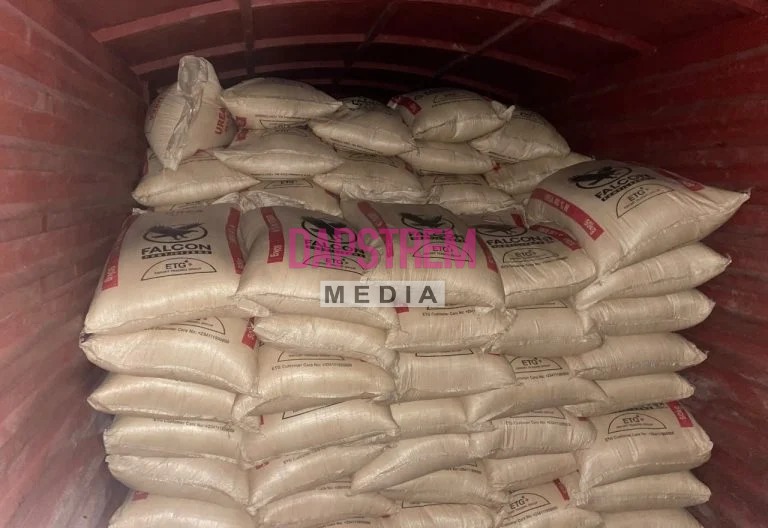
The Anti-Counterfeit Authority (ACA) has seized 323 bags of suspected counterfeit fertiliser worth more than Sh1.6 million in Matungu, Kakamega County, in an operation targeting the alleged illegal diversion and repackaging of government-subsidised agricultural inputs.
The operation has raised fresh concerns about the sale of counterfeit farm products in Kenya and the potential risks facing farmers who depend on fertiliser to improve crop production. Authorities suspect that subsidised fertiliser intended to support farmers may have been diverted from the government programme and repackaged into counterfeit Falcon-branded bags for commercial sale.
According to a report published by People Daily on Friday, October 16, 2026, the operation also led to the seizure of two loaded lorries and industrial packaging equipment believed to have been used in the suspected illegal trade. Two lorry drivers were arrested and were assisting police with investigations, while authorities continued pursuing other individuals suspected of involvement in the scheme.
The seizure highlights the challenges facing regulators as they attempt to protect farmers from fraudulent agricultural products and ensure that subsidised farm inputs reach their intended beneficiaries.
Suspected Diversion of Government Fertiliser
The central concern surrounding the Matungu operation is the suspected diversion of fertiliser supplied through the government’s subsidy programme.
Kenya has used fertiliser subsidies to help farmers access agricultural inputs at more affordable prices. Fertiliser is an important component of crop production because it supplies nutrients that support plant growth and can help improve yields when applied appropriately.
For many small-scale farmers, the cost of agricultural inputs significantly influences the size of the area they cultivate and the amount they can invest in their farms. Subsidised fertiliser is therefore intended to reduce some of the financial pressure associated with farming and support agricultural productivity.
However, suspected diversion of these supplies into unofficial commercial channels threatens to undermine that objective. When fertiliser intended for eligible farmers is allegedly removed from the authorised distribution system and sold elsewhere, the programme risks failing to reach some of the people it was designed to support.
In the Kakamega case, investigators suspect that the fertiliser was repackaged into bags bearing the Falcon brand before being offered for sale at prevailing commercial prices. If established, the allegations would raise questions about the source of the fertiliser, the circumstances surrounding its diversion and the individuals responsible for moving it through the suspected distribution network.
The investigation will be important in establishing how the products were obtained, where they were intended to go and whether other people or businesses participated in the alleged operation.
Two Lorries and Packaging Equipment Seized
The recovery of two loaded lorries and industrial packaging equipment adds another dimension to the investigation.
Unlike a case involving a small quantity of questionable products found in a single shop, the presence of transport vehicles and packaging machinery suggests that investigators are examining a possible supply and repackaging operation.
Transport vehicles can facilitate the movement of agricultural products between storage facilities, distribution points and markets. Packaging equipment can also be used to prepare products for sale under particular brands or in specific bag sizes.
However, the seizure of these items does not, on its own, establish the full scale of the suspected operation or prove that every person connected to the vehicles or equipment was involved in wrongdoing. Investigators must establish how the items were used and determine the roles of the individuals involved.
The seized fertiliser, vehicles and packaging equipment were reportedly secured as exhibits as the investigation continued. The authority had not publicly identified all the individuals being pursued or confirmed whether the two drivers had been formally charged in court at the time of the report.
Further investigations may help establish whether the suspected activity was limited to Matungu or involved a wider network supplying agricultural inputs to other parts of the country.
Farmers Face the Greatest Risk
The suspected counterfeit fertiliser trade presents serious concerns for farmers because the effects of using an unreliable agricultural product may not become apparent until crops begin developing.
Farmers often spend a considerable amount of money preparing their land, purchasing seeds, obtaining fertiliser and hiring labour. Their investment depends partly on the quality of the inputs they use and the suitability of those products for their crops and soil conditions.
When fertiliser does not contain the nutrients indicated on its packaging, or when its quality is compromised, crops may fail to respond as expected. Plants may experience poor growth, and farmers could harvest less than they anticipated despite investing time and money throughout the farming season.
The financial consequences can be substantial, particularly for households that depend on agriculture for their livelihoods. A poor harvest may reduce the income available to pay school fees, purchase food, meet household expenses and prepare for the next planting season.
Farmers who use questionable products may also struggle to establish exactly what went wrong. Crop performance is influenced by several factors, including rainfall, soil conditions, seed quality, pests, diseases and farming practices. As a result, the effects of poor-quality fertiliser may be difficult to separate from other challenges without appropriate testing and agricultural advice.
The Anti-Counterfeit Authority has previously warned that suspected counterfeit fertiliser can threaten crop yields, farmers’ incomes and national food security. In an earlier Kakamega operation reported in May 2026, a multi-agency team seized 250 bags of suspected counterfeit fertiliser alongside packaging materials and fertiliser labelled as government subsidy stock marked “Not for Sale.”
The latest reported seizure reinforces the need for farmers to pay attention to where they purchase agricultural inputs and to seek assistance when products appear suspicious.
How the Alleged Scheme Could Affect Food Security
Agriculture remains central to the livelihoods of many Kenyan households and plays an important role in supplying food to local markets. Any activity that compromises the quality or availability of agricultural inputs can therefore have consequences beyond the individual farmer.
Fertiliser is used across different farming systems to support crop growth and maintain productivity. Where farmers receive products that do not meet the expected standards, they may experience disappointing results even after investing in land preparation, planting and other farm activities.
If poor-quality inputs affect production, farmers may have less produce available to sell, reducing their earnings and potentially affecting the supply of certain crops to local markets. The actual impact depends on the quantity and quality of the affected products, the number of farmers exposed and the crops involved.
It would, however, be premature to conclude that the Matungu seizure has already affected national food production. The operation represents an enforcement action against suspected illegal activity, and the wider consequences will depend on the findings of the investigation.
Nevertheless, the case illustrates why the integrity of agricultural inputs matters to the country’s food system. Protecting farmers from fraudulent products helps safeguard their investments and supports efforts to maintain reliable agricultural production.
The issue is particularly important because counterfeit products can be difficult for ordinary buyers to identify. Packaging may look convincing, and farmers may not have access to equipment or laboratory services that would allow them to verify the contents of every bag before purchasing it.
Government Subsidy Programme Under Scrutiny
The suspected diversion of subsidised fertiliser also raises concerns about the management and accountability of agricultural support programmes.
Subsidies are designed to reduce the cost of selected farm inputs and make them more accessible to eligible farmers. For the intended benefits to reach households, however, products must move through reliable distribution channels and remain available to the people who qualify for them.
If subsidised stock is diverted into unofficial markets, eligible farmers may struggle to obtain the products at the intended prices. The situation could also create opportunities for traders to profit from the difference between subsidised supply and commercial market prices.
The government and relevant agencies therefore face the challenge of ensuring that subsidised fertiliser is properly accounted for from the point of supply to the point of distribution.
Effective oversight may involve tracking stock movements, verifying deliveries, inspecting storage facilities and investigating unexplained shortages. Cooperation between agricultural authorities, enforcement agencies and legitimate suppliers can also help identify suspicious transactions and prevent products from being channelled into unauthorised markets.
The allegations in Kakamega will need to be examined carefully to determine where the fertiliser originated, how it was allegedly diverted and whether the suspected repackaging violated applicable laws or programme requirements.
Any enforcement action should be based on the evidence gathered and established through the appropriate legal process.
ACA Intensifies Efforts Against Counterfeit Agricultural Inputs
The Anti-Counterfeit Authority is responsible for combating trade in counterfeit goods and protecting consumers and legitimate businesses from products that infringe intellectual property rights or misrepresent their identity.
Its work is especially important in sectors where counterfeit products can have economic, safety and livelihood consequences. Agricultural inputs are one such area because farmers rely on accurate product information and dependable quality when making purchasing decisions.
In the Matungu operation, the authority’s actions focused on suspected counterfeit fertiliser, alleged repackaging and the possible diversion of subsidised supplies. The recovery of packaging machinery and transport vehicles may also assist investigators in examining how the products were handled and moved.
The ACA has repeatedly emphasised the importance of cooperation between enforcement agencies in addressing counterfeit trade. Its earlier Kakamega operation involved the Directorate of Criminal Investigations, the Kenya Bureau of Standards and Government Chemists.
Such cooperation can be useful because investigations may require different forms of expertise, including criminal investigation, product examination and the assessment of packaging or labelling.
The latest case will also test the ability of authorities to follow the supply chain beyond the point where suspected products are discovered. Seizing bags at one location can interrupt an alleged operation, but identifying the source of the products and any wider distribution network may be necessary to prevent similar activity from continuing elsewhere.
What Farmers Should Check Before Buying Fertiliser
The operation is a reminder for farmers and agricultural input dealers to exercise caution when purchasing or selling fertiliser.
Farmers should prioritise authorised and reputable suppliers and request receipts showing the product purchased, the quantity and the price paid. Keeping purchase records can be useful if a product later raises concerns or if a complaint needs to be investigated.
Buyers should also examine packaging for inconsistencies, damaged seals, unusual labelling or missing product information. A bag that carries markings indicating that it is government-subsidised stock and is marked “Not for Sale” should raise questions if it is being offered through an unauthorised commercial channel.
However, appearance alone cannot conclusively establish whether fertiliser is genuine. Counterfeit packaging can sometimes look convincing, while damaged packaging does not automatically prove that the contents are counterfeit. Where doubts arise, farmers should seek verification from the relevant authorities or trusted agricultural professionals rather than relying on improvised tests.
The ACA has urged farmers and members of the public to purchase agricultural products from authorised and reputable dealers, verify product authenticity and report suspicious products or activities.
Farmers who suspect that they have purchased counterfeit fertiliser should preserve the packaging, receipt and any relevant transaction details where possible. These records may help authorities establish the product’s origin and trace its distribution.
Agricultural input dealers also have a responsibility to source their stock responsibly, maintain accurate records and avoid selling products whose origin or authenticity they cannot adequately establish.
Investigations Expected to Establish Those Responsible
Although the seizure represents a significant enforcement action, several questions remain to be answered.
Investigators will need to establish the origin of the fertiliser, the circumstances under which it was allegedly diverted, how the repackaging was carried out and the intended destinations of the products. They may also seek to determine whether the suspected activity involved additional storage facilities, transporters or distributors.
The arrest of two drivers does not, by itself, establish their guilt or determine the responsibility of other individuals. Their roles and any allegations against them must be assessed through the investigation and appropriate legal proceedings.
The value of the seized products, reported at more than Sh1.6 million, also highlights the financial interests that may be involved in the suspected trade. However, the final value and legal status of the seized goods will depend on the evidence and any subsequent findings by the relevant authorities.
Authorities have not publicly established a connection between the latest Matungu operation and other investigations involving suspected counterfeit fertiliser in Kenya. Any suggestion of a wider network linking separate cases would therefore require additional evidence.
The outcome of the investigation could provide further information about the methods allegedly used to move and repackage the products, the people involved and the measures required to prevent similar incidents.
Protecting Farmers and Restoring Confidence in Agricultural Inputs
The seizure in Matungu, Kakamega County, highlights the importance of protecting the agricultural supply chain from suspected counterfeit products and the illegal diversion of subsidised farm inputs.
For farmers, the issue goes beyond the purchase price of a bag of fertiliser. It concerns the reliability of the product, the protection of their investment and the possibility of achieving the harvest needed to support their households.
For the government, the case raises questions about the protection of subsidised supplies and the effectiveness of measures intended to ensure that agricultural support reaches its intended beneficiaries. For legitimate manufacturers and dealers, counterfeit trade can undermine consumer confidence and create unfair competition.
The seizure of 323 bags of suspected counterfeit fertiliser, alongside two loaded lorries and industrial packaging equipment, marks an important development in the enforcement effort reported in Kakamega. The reported arrest of two drivers and the continuing investigation may help authorities establish the full circumstances surrounding the suspected operation.
Ultimately, the effectiveness of the response will depend not only on the seizure itself but also on the quality of the investigation, accountability for any proven wrongdoing and sustained action to protect the agricultural input market.
Farmers, dealers and the public can contribute by purchasing products through trusted channels, retaining transaction records and reporting suspicious agricultural inputs to the relevant authorities.
As investigations continue, the key questions remain where the fertiliser originated, how it allegedly entered the suspected repackaging operation and whether other individuals or businesses were involved. Answers to those questions will be important in determining the full scope of the case and strengthening efforts to protect farmers and Kenya’s food production system.