KRA Moves to Recover Sh623.4 Million in Tax Arrears From Mike Sonko as First Community Bank Faces Agency Notice Over Unpaid Taxes, Penalties and Accumulated Interest
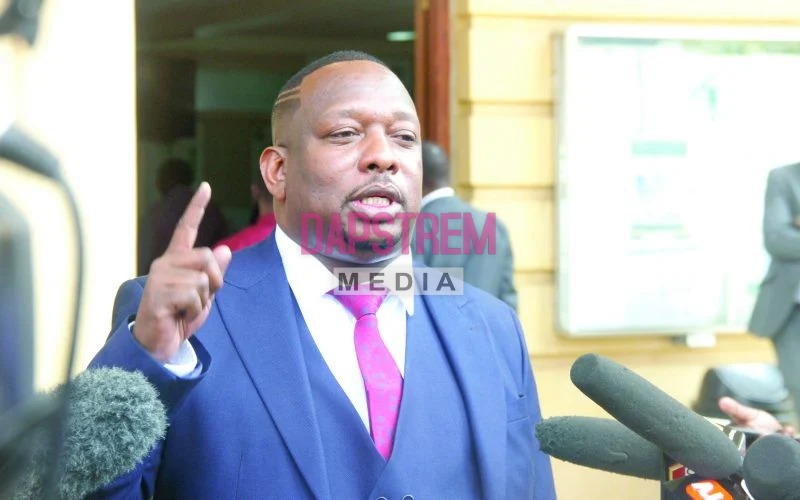
The Kenya Revenue Authority (KRA) has moved to recover Sh623.4 million in alleged outstanding tax arrears from former Nairobi Governor Mike Sonko, escalating a tax dispute that could lead to another legal battle over the collection of public revenue.
The tax authority has issued an agency notice directing First Community Bank to remit money it holds on behalf of Sonko, or any funds it owes him, towards settling the claimed tax liability. The notice, dated October 12, 2026, places the bank at the centre of KRA’s latest recovery efforts.
According to the notice, the total amount being pursued is Sh623,389,105, comprising principal income tax, penalties and accumulated interest. KRA says the alleged arrears relate to the period between January 2015 and December 2019.
The development marks another significant moment in the former Nairobi governor’s tax dispute with the revenue authority. It also highlights the powers available to KRA when pursuing unpaid taxes and the legal responsibilities placed on third parties holding money belonging to taxpayers.
The authority has invoked Section 42 of the Tax Procedures Act, 2015, which allows it to appoint an agent to recover tax debts from money held by another person or institution for a taxpayer. Under the notice, First Community Bank is required to disclose any money it holds on Sonko’s behalf and remit the amount available towards the outstanding liability.
KRA has warned that the bank could become personally liable for the amount specified in the notice if it fails to comply without reasonable cause. The notice will remain in force in the event of partial payment until the amount demanded is fully recovered.
However, the notice does not establish that the entire amount has already been collected. It also does not confirm how much money, if any, is currently held by the bank on Sonko’s behalf.
The latest move therefore raises questions about the amount that can be recovered through the bank, the legal status of the tax liability and whether Sonko will challenge the enforcement measure.
How KRA Arrived at the Sh623.4 Million Figure
The amount being pursued by KRA consists of three components: principal tax, penalties and interest accumulated over time.
According to the agency notice, the principal income tax stands at Sh308,916,928. The penalties amount to Sh15,756,912, while accumulated interest has reached Sh298,715,265. Together, the three components bring the total to Sh623,389,105.
The figures reveal that interest accounts for a substantial share of the overall demand. The amount of interest is almost equal to the principal tax, illustrating how an outstanding tax liability can grow considerably over several years.
Principal tax refers to the underlying tax amount assessed as payable. Penalties may be imposed where the relevant legal requirements for doing so are met, while interest can accumulate on unpaid tax under the applicable tax laws.
In this case, KRA says the liability covers individual income tax for the period between January 2015 and December 2019. The latest notice represents the authority’s effort to collect the stated amount through funds held by a third party.
For taxpayers, the figures illustrate the potential financial consequences of leaving a tax dispute unresolved. A liability that remains unpaid may attract additional charges over time, subject to the applicable law and the circumstances of the assessment.
For the revenue authority, collecting outstanding taxes is part of its responsibility to enforce compliance and raise revenue for government programmes and public services.
However, it is important to distinguish the amount KRA is seeking from the amount it has actually recovered. The notice sets out the authority’s demand, but the available reporting does not confirm that First Community Bank holds sufficient funds to settle the entire liability.
The final outcome will depend on the funds available, compliance with the notice and any relevant legal proceedings that may affect the recovery process.
Why KRA Has Turned to First Community Bank
Rather than relying solely on a direct demand to Sonko, KRA has invoked a legal mechanism that allows it to seek payment through a third party holding money for a taxpayer.
An agency notice under Section 42 of the Tax Procedures Act, 2015, can require a person or institution holding money for a taxpayer, or owing money to that taxpayer, to pay the specified amount to the tax authority in accordance with the law.
This mechanism can be particularly important when KRA is pursuing a taxpayer with outstanding liabilities and money is held by a bank or another institution.
In Sonko’s case, the October 12 notice directs First Community Bank to remit funds available to it that are owed to him or held on his behalf. The bank must also provide a return detailing the money it holds for the former governor.
The approach places a legal obligation on the institution receiving the notice. It is not simply a request for information or a voluntary appeal for payment.
KRA has warned that an agent who fails to comply without reasonable cause may become personally liable for the amount specified. This provision is intended to support compliance with lawful tax recovery notices and prevent appointed agents from ignoring their obligations.
The bank’s role is therefore central to the latest development. However, its appointment as an agent does not establish that it holds the full amount being sought, nor does it confirm that a payment has already been made.
If only part of the amount is available, the notice states that it will remain in force until the specified sum is fully recovered. The authority’s next steps will depend on the funds available and any relevant legal issues that arise.
The latest action also demonstrates that tax enforcement can extend beyond direct communication between KRA and a taxpayer. Where the law permits, third parties may be required to assist in recovering outstanding liabilities.
Sonko’s Earlier Sh385 Million Tax Dispute
The latest recovery notice comes amid another tax dispute involving Sonko and KRA, which has attracted attention because of the sums involved and the legal questions surrounding the treatment of money deposited into his bank accounts.
In August 2026, reports indicated that Sonko intended to challenge a tax assessment of approximately Sh385 million after losing an appeal before the Tax Appeals Tribunal.
The earlier dispute involved deposits totalling about Sh1.4 billion that passed through 11 of his bank accounts between 2013 and 2019. KRA examined the deposits as part of its assessment, while Sonko disputed the taxman’s treatment of the funds. <Cite refs={[“turn518825search8″,”turn518825news2”]}/>
Sonko’s position, as reported in coverage of the earlier case, was that the deposits included money from business activities, loans and property transactions rather than undeclared taxable income.
The dispute illustrates a key issue in tax assessments involving substantial bank deposits: the movement of money through an account does not, by itself, explain the source of every deposit or determine its tax treatment. Authorities may examine financial records and supporting documentation to establish whether particular amounts are taxable under the relevant law.
Taxpayers, in turn, may challenge assessments and present explanations or records they believe support their position.
The Tax Appeals Tribunal dismissed Sonko’s challenge to the earlier assessment, and he subsequently indicated that he intended to pursue the matter in the High Court. <Cite refs={[“turn518825search8″,”turn518825news2”]}/>
Nevertheless, the earlier Sh385 million assessment and the newly reported Sh623.4 million recovery demand should not automatically be treated as the same liability. The available reports do not establish whether the two amounts overlap, arise from separate assessments or are connected through adjustments to the amounts claimed.
That distinction is important because the latest agency notice concerns a specific demand for Sh623,389,105. Any relationship between that demand and the earlier tax dispute would need to be established through the relevant assessment documents or court records.
The new recovery action adds another development to Sonko’s ongoing tax difficulties, but it does not, on its own, resolve every question concerning the separate proceedings.
Previous Court Proceedings Over Sonko’s Bank Accounts
The latest action also comes against the background of earlier legal proceedings involving KRA’s attempts to recover taxes from Sonko through agency notices affecting his bank accounts.
In April 2026, the Tax Appeals Tribunal directed KRA to lift agency notices that had restricted access to certain accounts pending the hearing and determination of the relevant tax appeal. The orders followed interim proceedings in which enforcement measures were suspended while the dispute was being considered.
The proceedings highlighted the legal tension between the tax authority’s responsibility to collect revenue and a taxpayer’s ability to challenge an assessment or enforcement measure.
KRA has powers under the law to pursue outstanding tax liabilities, but the use of those powers can become the subject of legal proceedings where a taxpayer disputes the assessment or seeks relief from enforcement.
A court or tribunal may consider the circumstances of a particular case, including the nature of the dispute and the orders requested by the parties.
However, the earlier orders concerning particular bank accounts do not automatically establish that the October 12 notice to First Community Bank is invalid. Whether those orders affect the latest recovery action depends on their precise terms, the liability involved and any subsequent legal developments.
This is why the distinction between separate notices and proceedings matters. Each enforcement measure must be assessed against the relevant legal documents rather than assumed to have the same status as an earlier action.
The latest notice could prompt further legal steps if Sonko challenges it, but the available reports do not confirm that he has filed a new challenge against this particular demand.
For now, the documented development is that KRA has issued the notice and directed the bank to act in accordance with the law.
What the Tax Procedures Act Says About Agency Notices
Section 42 of the Tax Procedures Act, 2015, provides a legal framework through which KRA can appoint an agent to help recover unpaid tax from money held for a taxpayer or payable to that taxpayer.
The provision gives the tax authority a route to pursue funds through a third party, subject to the requirements of the law. Banks and other institutions that receive valid notices may therefore have responsibilities beyond their ordinary relationship with a customer.
In Sonko’s case, KRA has cited this provision as the basis for directing First Community Bank to remit money towards the alleged arrears.
The authority has also invoked Section 42(13), warning that the bank could become personally liable for the specified amount if it fails to comply without reasonable cause.
The warning underscores the seriousness with which the authority treats agency notices. A recipient cannot necessarily disregard such a notice simply because the underlying taxpayer is a customer of the institution.
At the same time, the existence of an agency notice does not eliminate the possibility of legal questions about the assessment, the notice or its implementation. Such matters must be considered in accordance with the applicable statutory provisions and any relevant court orders.
For taxpayers, the process highlights the importance of responding to tax assessments within the required timelines and seeking appropriate professional or legal advice where a liability is disputed.
For banks and other potential agents, the notice illustrates the importance of understanding their statutory obligations and responding appropriately when served with a valid recovery demand.
The process is designed to enable the authority to collect outstanding taxes while operating within the legal framework governing tax administration.
Why the Recovery Matters for Public Revenue
Tax collection is an important source of government revenue in Kenya. The money collected helps finance public services, infrastructure, administration and other government obligations.
When the tax authority pursues substantial outstanding liabilities, the actions can draw public attention because they concern both the enforcement of tax laws and the collection of money intended for public purposes.
The Sh623.4 million demand involving Sonko has attracted attention partly because of the amount involved and the public profile of the former Nairobi governor.
However, tax compliance is not limited to politicians or prominent businesspeople. Individuals and businesses across the country are required to meet the tax obligations that apply to them.
The consistent enforcement of tax laws is important for public confidence in the revenue system. If taxpayers believe that compliance requirements are applied unevenly, confidence in the fairness of the system can weaken.
At the same time, enforcement must follow established procedures, and disputed liabilities should be handled through the mechanisms provided by law.
The latest case therefore raises broader questions about how tax authorities balance effective revenue collection with the rights of taxpayers to challenge assessments.
It also demonstrates why accurate reporting is important. A recovery demand should not be described as money already collected, and an alleged tax liability should not automatically be presented as proof of deliberate tax evasion or criminal wrongdoing.
The relevant distinction is that KRA says the amount remains outstanding and has taken steps to recover it. The eventual outcome will depend on compliance, available funds and any legal proceedings that affect the demand.
What Happens Next?
The next stage will depend largely on First Community Bank’s response to the notice and the amount of money, if any, available for recovery.
The bank has been directed to remit funds it holds for Sonko or owes him towards the stated liability and to provide a return detailing the money held on his behalf.
If the available funds are insufficient to cover the entire demand, the notice states that it will remain in force until the amount specified is fully recovered. KRA has also warned of the consequences of non-compliance without reasonable cause.
Another important question is whether Sonko will challenge the latest enforcement measure. Given his earlier tax dispute and the reported intention to pursue a separate assessment in the High Court, further legal proceedings remain a possibility, although no challenge to this particular notice has been confirmed in the reports available.
Any subsequent court action could clarify the scope of the notice, its relationship with other tax proceedings and the legal arguments raised by the parties.
It will also be important to establish whether the Sh623.4 million demand is connected to any earlier assessment or constitutes a separate liability. The available information does not settle that question.
Until further details emerge, the notice represents KRA’s latest attempt to recover the amount it says is outstanding.
The case serves as a reminder that tax disputes can continue for years and that interest and penalties may substantially increase the amount being pursued. It also highlights the significant role third-party institutions can play in the collection of tax debts under Kenyan law.
Ultimately, the outcome will depend on the relevant tax records, the funds available for recovery, compliance with the agency notice and any legal decisions that may follow.
For now, KRA has made its position clear: it wants to recover Sh623,389,105 in alleged tax arrears from former Nairobi Governor Mike Sonko, and it has directed First Community Bank to remit any money it holds for him or owes him towards settling the demand.
The latest development places the tax dispute back in the public spotlight, with attention now turning to the bank’s response and whether the former governor will take further legal action.