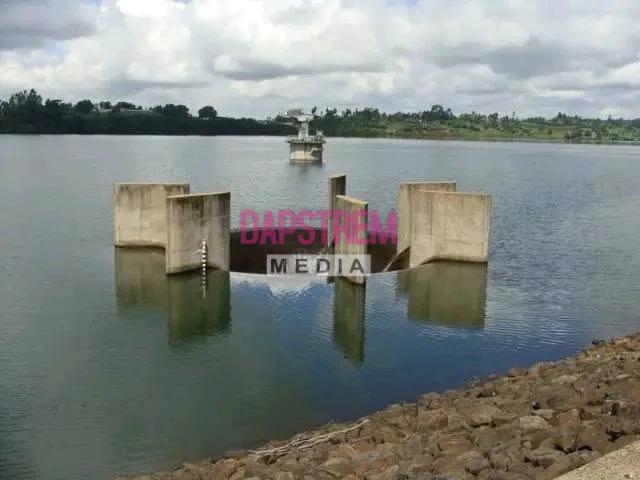
Nairobi Water Announces 35% Water Production Cut as Ndakaini Dam Levels Decline
Nairobi Water attributed the production reduction to declining storage levels at Thika and Ndakaini dams, which serve as principal sources of water for Nairobi and surrounding areas.
The company explained that the reservoirs have experienced reduced inflows following below-average rainfall within their catchment areas. The decline has placed pressure on the available water reserves, prompting the utility to take measures aimed at managing the remaining supply.
In its public notice, Nairobi Water stated that the reduced inflows had necessitated a temporary reduction in water abstraction to preserve the available reserves and ensure sustainable supply over the coming months.
The decision means that the company will have to distribute the available water more cautiously as it responds to the changing conditions.
Ndakaini Dam, located in Murang’a County, is a major water reservoir supplying Nairobi. It plays an important role in supporting the capital’s water needs, alongside other sources and treatment infrastructure.
The dam’s water levels are closely influenced by rainfall within its catchment areas. When rainfall is below average, the amount of water flowing into the reservoir declines, potentially affecting the volume available for treatment and distribution.
The current situation demonstrates how changing weather conditions can directly affect the availability of essential services in a rapidly growing city.
Ngethu and Kigoro Water Treatment Plants Affected
The 35 per cent production reduction is expected to affect operations at Ngethu and Kigoro water treatment plants, which supply Nairobi and neighbouring areas.
The two facilities form part of the water infrastructure responsible for treating and distributing water to millions of consumers.
With production reduced, Nairobi Water will have to adjust the amount of water supplied to different areas depending on the available reserves and distribution requirements.
The company has warned that the reduction will lead to longer intervals between water supply schedules. This means households and businesses that previously received water more frequently could experience extended periods without supply.
The adjustment is expected to affect residential estates, commercial premises, public institutions and other consumers that depend on the affected water service providers.
Although the company has described the reduction as temporary, the duration and severity of the rationing will depend largely on reservoir recovery, rainfall patterns and the amount of water flowing into the dams.
Nairobi Water is expected to continue monitoring the situation and reviewing production levels periodically as conditions change.
Seven Water Service Providers Set to Be Affected
The production reduction is expected to affect customers served by Nairobi City Water and Sewerage Company and six other water service providers that rely on the affected supply system.
The companies include:
-
Nairobi City Water and Sewerage Company
-
Kiambu Water and Sanitation Company
-
Githunguri Water and Sanitation Company
-
Karuri Water and Sanitation Company
-
Mavoko Water and Sewerage Company
-
Olkejuado Water and Sewerage Company
-
Ololaiser Water and Sewerage Company
The impact will extend beyond Nairobi County, affecting consumers in parts of Kiambu, Machakos and Kajiado counties.
The affected providers will have to adjust their distribution schedules in response to the reduced production from the treatment plants.
For residents in neighbouring towns and areas served by these companies, the announcement signals the possibility of more frequent water shortages and longer waiting periods between supply cycles.
The situation also highlights the interconnected nature of water infrastructure in the Nairobi metropolitan region, where several counties depend on shared water sources and treatment systems.
Households and Businesses Face Growing Pressure
The reduction in water production is expected to create additional pressure on households and businesses that already experience irregular water supply.
For many residents, water is essential for cooking, cleaning, bathing, washing clothes and maintaining sanitation. Longer rationing periods could make these daily activities more difficult, particularly in homes without adequate storage facilities.
Families may be forced to purchase water from private vendors when supply from the main distribution network becomes unavailable.
This could increase household expenses, especially for low-income residents who may struggle to afford additional water purchases.
Businesses are also likely to feel the impact of the reduced supply.
Restaurants, hotels, salons, laundries, cleaning companies and other water-dependent enterprises require reliable access to water to maintain their operations.
A prolonged shortage could disrupt business activities, increase operating costs and affect service delivery.
Schools, hospitals and other public institutions also depend on consistent water supply for sanitation, hygiene and routine operations.
Hospitals, in particular, require water for cleaning, patient care, sterilisation and other essential services. Any extended interruption could place additional pressure on institutions that lack sufficient storage capacity.
The reduction therefore presents a challenge that extends beyond individual households, affecting different sectors of the city’s economy and public service system.
Nairobi Water Urges Residents to Use Water Sparingly
Nairobi Water has appealed to customers to exercise patience and cooperate with the company as it manages the available reserves.
The utility has also urged residents to use water prudently, avoid unnecessary wastage and prioritise essential household and other critical needs during the period.
The company’s appeal comes as the city prepares for longer rationing intervals due to the reduced production.
Residents are encouraged to make arrangements for storing water whenever supply is available. Households with storage tanks and containers may be better positioned to cope with extended periods without water.
However, water conservation remains important for all consumers, regardless of their storage capacity.
Simple measures such as repairing leaking taps, avoiding unnecessary running water, reusing suitable water for cleaning and carefully managing household consumption can help reduce demand.
Residents should also ensure that water storage containers are clean and properly covered to protect the quality of stored water.
The company has apologised for the inconvenience caused by the reduction and appealed for public understanding as it works to manage the available resources.
Water Supply Challenges in Nairobi Continue
The latest announcement comes amid a series of water supply interruptions affecting different parts of Nairobi in recent weeks.
On November 9, Nairobi Water announced a separate 24-hour interruption affecting several residential estates, commercial areas and public institutions to facilitate the installation of new pipe connections near Kianda School along Waiyaki Way.
The scheduled shutdown was expected to affect areas including Westlands, Riverside, Parklands, Kilimani, Kileleshwa, Lavington, Upper Hill, Lower Hill, Madaraka, Kibera, Jamhuri and parts of Lang’ata.
Earlier, between October 26 and October 29, the company announced a three-day interruption following emergency repairs on the NCT-Kigoro-Gigiri-Kabete pipeline.
The company has also undertaken other maintenance and connection works aimed at improving the reliability of water distribution.
However, the latest production reduction differs from those previous interruptions because it is primarily linked to declining water reserves at the dams.
While infrastructure maintenance can be completed within a scheduled period, the recovery of reservoir levels depends on rainfall and other environmental conditions.
This means the current situation could require more sustained water management measures.
The distinction is important for residents because the reduced production is expected to affect supply schedules beyond a single maintenance exercise.
Below-Average Rainfall Raises Concerns Over Water Security
The decline in water levels at Thika and Ndakaini dams has renewed concerns about water security in Nairobi and its surrounding areas.
Rainfall plays a critical role in replenishing reservoirs and maintaining the supply needed to meet the demands of households, businesses and public institutions.
When rainfall is insufficient, water levels decline and the amount available for treatment becomes limited.
The situation can be particularly challenging in urban centres where population growth and economic activity continue to increase demand for water.
Nairobi has experienced sustained growth, with new residential developments, commercial buildings and industrial activities placing additional pressure on existing water infrastructure.
As demand increases, maintaining a reliable supply becomes more difficult, especially during periods of below-average rainfall.
The current reduction demonstrates the importance of planning for periods of limited water availability.
Water conservation, improved infrastructure, protection of catchment areas and investment in additional sources could help strengthen the city’s ability to manage future shortages.
The Need for Long-Term Solutions
The announcement has also highlighted the importance of developing long-term strategies to improve water supply reliability in Nairobi and neighbouring counties.
Although rationing can help preserve available reserves during periods of shortage, it does not address all the underlying challenges affecting water security.
Investment in additional water sources, storage facilities, treatment capacity and distribution infrastructure could help reduce the pressure on existing reservoirs.
Protecting catchment areas is equally important. Forests and other natural ecosystems help regulate water flows, support rainfall patterns and reduce soil erosion that can affect reservoirs.
Authorities may also need to strengthen public awareness campaigns on water conservation and encourage households, businesses and institutions to adopt sustainable water-use practices.
Rainwater harvesting could provide an additional source for non-drinking uses in homes and commercial premises, while properly managed storage facilities can help consumers cope with temporary supply interruptions.
The development of resilient water infrastructure is particularly important as cities continue to expand and weather patterns become increasingly unpredictable.
For Nairobi, the challenge is not only to manage the current shortage but also to ensure that future demand can be met without placing excessive pressure on existing water sources.
Nairobi Residents Advised to Prepare for Longer Rationing Periods
With the 35 per cent reduction in water production taking effect immediately, residents of Nairobi and neighbouring areas are being urged to prepare for longer intervals between water supply schedules.
The affected water service providers will have to adjust distribution in response to the reduced production at Ngethu and Kigoro treatment plants.
The duration of the reduced supply will depend on the recovery of reservoir levels and the amount of rainfall received within the catchment areas.
Nairobi Water has assured customers that it will continue monitoring the situation and reviewing production volumes as conditions change.
The company has also appealed for patience, understanding and cooperation as it manages the available reserves.
For households, businesses and institutions, the immediate priority will be to conserve water, make adequate storage arrangements and avoid unnecessary consumption.
The decline in Ndakaini and Thika dam levels serves as a reminder of the importance of protecting water resources and ensuring sustainable management of the supply system.
As Nairobi continues to grow, maintaining reliable access to water will remain a critical challenge requiring coordinated efforts from water utilities, government authorities, businesses and residents.
The latest announcement underscores the need for responsible water use and long-term investment in infrastructure to ensure that the capital and its surrounding counties can withstand future periods of water scarcity.