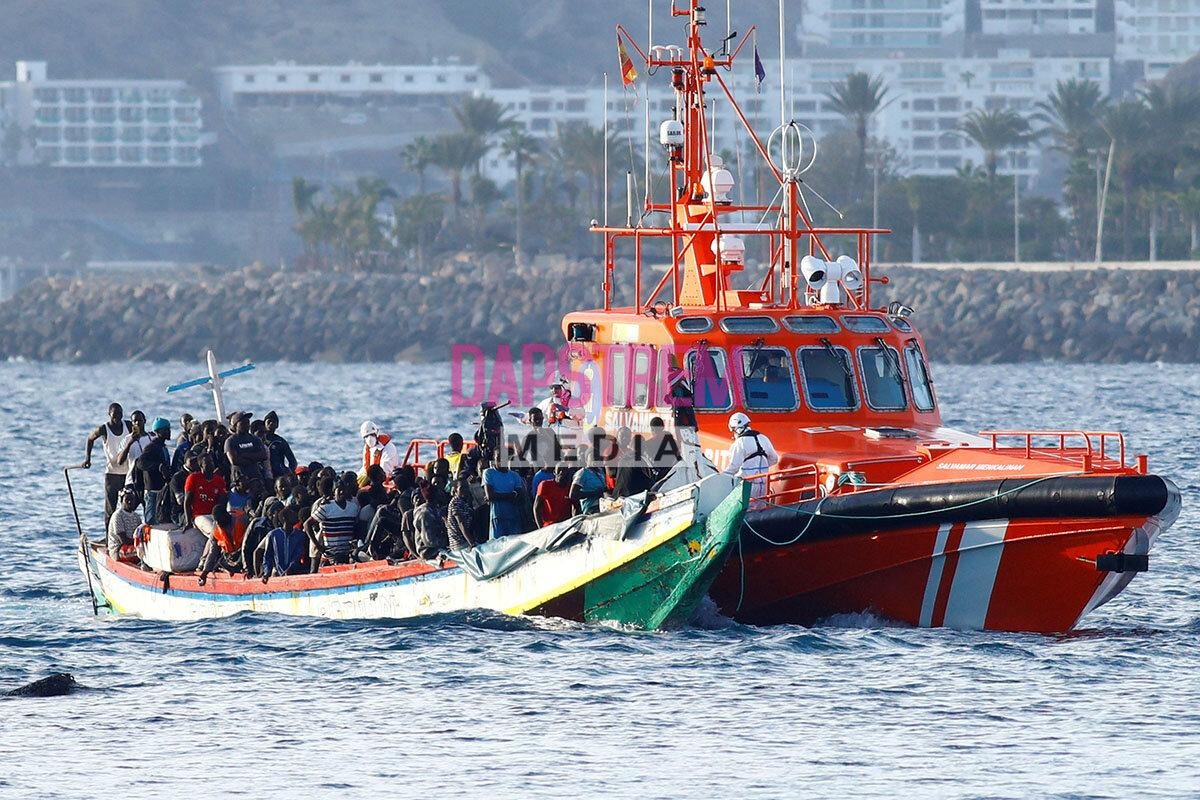
At Least 34 Dead After Europe-Bound Migrant Boat Sinks Off Senegal
At least 34 people have died after a boat carrying migrants and refugees sank off the northwestern coast of Senegal while attempting to reach Europe through the dangerous Atlantic Ocean route. The tragedy has renewed concerns about irregular migration, human smuggling networks and the growing number of people losing their lives while pursuing opportunities outside their home countries.
The small vessel, commonly known as a pirogue, capsized off the coast near Kébémer, between Senegal’s capital, Dakar, and the northern city of Saint-Louis. The boat was reportedly heading towards Spain’s Canary Islands, a major entry point for migrants attempting to reach Europe from West Africa.
According to reports from the Senegalese authorities, the initial recovery operation found 21 bodies and one survivor. However, the death toll later increased to at least 34 as rescue and recovery efforts continued. An indeterminate number of passengers were also reported missing, raising fears that the number of fatalities could increase further.
Al Jazeera+2
The incident is among the latest deadly maritime disasters involving migrants attempting to cross the Atlantic Ocean in search of better living conditions and economic opportunities.
The tragedy has once again exposed the dangers faced by thousands of people who undertake irregular journeys using poorly equipped boats, often travelling for several days across open waters without adequate safety equipment, food or medical supplies.
For families of those who died, the journey that began with hopes of a better future has ended in devastating loss. Meanwhile, authorities continue to face pressure to strengthen efforts against human trafficking and people-smuggling networks responsible for organising dangerous crossings.
Senegalese Authorities Continue Search and Rescue Operations
Following the incident, Senegal’s Interior Ministry confirmed that rescue operations had been launched to locate survivors and recover the bodies of those who died.
The initial statement indicated that 21 bodies had been recovered, with only one person found alive. However, the death toll subsequently rose to at least 34, according to the Senegalese Press Agency and Action for Human Rights and Friendship, a local organisation involved in migrant rights issues.
Authorities said the number of passengers aboard the vessel had not yet been established, making it difficult to determine how many people remained missing.
There were also differing accounts regarding the exact time of the accident. While some reports placed the sinking on Saturday, November 7, migrant support groups indicated that it may have occurred on Friday, November 6.
The uncertainty surrounding the number of passengers and the circumstances of the sinking has complicated efforts to establish the full extent of the tragedy.
Senegalese President Bassirou Diomaye Faye expressed his condolences to the affected families and assured the public that government agencies had been mobilised to respond to the disaster.
He said state authorities and resources were being deployed to locate missing passengers, provide assistance to survivors and support families affected by the incident.
The country’s Interior Minister was also expected to visit the affected region to meet families and convey the government’s condolences.
The ongoing response highlights the seriousness of the incident and the challenges facing authorities as they attempt to deal with another deadly migration disaster along Senegal’s coastline.
Dangerous Atlantic Migration Route Claims More Lives
The sinking occurred along one of the world’s most dangerous migration routes, connecting West Africa to Spain’s Canary Islands through the Atlantic Ocean.
Thousands of migrants from Senegal and neighbouring countries attempt the crossing every year, hoping to reach Europe in search of employment, education, security and improved living conditions.
The journey is particularly dangerous because many migrants travel aboard overcrowded wooden boats that are not designed for long-distance ocean voyages.
These vessels often lack adequate navigation equipment, communication systems, life jackets and emergency supplies. Their passengers are therefore exposed to unpredictable weather, powerful ocean currents and mechanical failures.
Unlike conventional passenger vessels, many of the boats used by people-smuggling networks are poorly maintained and lack the safety standards required for extended journeys across the Atlantic.
The distance involved also makes rescue operations difficult. Once a boat encounters problems far from the coastline, passengers may have limited chances of receiving immediate assistance.
The International Organization for Migration has repeatedly highlighted the dangers associated with the Atlantic route, particularly as increased surveillance around traditional departure points pushes some migration journeys further south.
Such changes can extend journeys considerably, exposing passengers to longer periods at sea and increasing the likelihood of shipwrecks, dehydration and disappearance.
The latest Senegal disaster demonstrates how dangerous the journey remains despite ongoing efforts by governments and international organisations to prevent irregular migration.
More Than 635 Migrants Died Along the Atlantic Route in Five Months
The latest tragedy comes amid growing concerns over the number of migrants dying while attempting to reach Europe’s Canary Islands.
According to figures from Spanish migrant rights organisation Walking Borders, at least 635 people died along the Atlantic migration route during the first five months of 2026.
The organisation estimated that approximately 21 people died for every 100 migrants who successfully reached the Canary Islands during that period.
Los Angeles Times+1
These figures highlight the enormous risks associated with the journey, particularly for individuals who rely on informal migration networks to organise their transportation.
Many migrants leave their countries with limited financial resources, making them vulnerable to exploitation by smugglers who promise safe passage to Europe.
In some cases, passengers pay substantial amounts of money for journeys that offer no guarantee of reaching their intended destinations.
The risks are further increased by the use of overcrowded vessels, inadequate preparation and limited access to emergency services.
The Atlantic Ocean can become particularly dangerous when weather conditions change unexpectedly. Strong winds and rough waves can overwhelm small boats, leaving passengers with little opportunity to escape.
The latest disaster is therefore not an isolated incident but part of a wider humanitarian crisis involving thousands of people attempting dangerous maritime journeys.
Human rights organisations have continued calling for stronger protection measures, improved rescue operations and policies that address the underlying reasons people risk their lives to migrate.
Search for Better Opportunities Continues to Drive Irregular Migration
The growing number of people attempting to reach Europe through dangerous maritime routes reflects broader economic and social challenges affecting several West African countries.
For many migrants, the decision to leave home is influenced by unemployment, poverty, limited economic opportunities, insecurity and the desire to provide better lives for their families.
Young people are particularly affected by these challenges. With limited employment opportunities in some communities, Europe is increasingly viewed as a destination where individuals can potentially secure jobs, earn higher incomes and improve their living standards.
However, the journey often involves considerable financial and personal sacrifices.
Some migrants sell property, borrow money or use their family savings to pay individuals promising to facilitate their passage to Europe.
Unfortunately, not everyone who undertakes the journey reaches their destination. Some disappear at sea, while others are intercepted by authorities and returned to their countries of origin.
The tragedy off Senegal illustrates the human cost of these migration patterns.
For the families involved, the loss extends beyond the individuals who died. Parents lose their children, children lose their parents, and communities are left dealing with the consequences of journeys that were supposed to create better futures.
The situation also raises questions about the economic conditions that continue to push people towards dangerous migration routes.
While governments have increased efforts to prevent irregular migration, addressing unemployment, poverty and limited opportunities remains an important part of finding sustainable solutions.
Creating opportunities within African countries could help reduce the pressure on young people to undertake life-threatening journeys in search of a better future.
Senegal Intensifies Crackdown on Human Smuggling Networks
Following the latest disaster, Senegalese authorities reiterated their determination to combat people-smuggling networks operating along the country’s coastline.
The government has indicated that it intends to strengthen cooperation with neighbouring countries to prevent illegal departures and disrupt networks involved in organising dangerous maritime journeys.
People-smuggling operations often involve organised networks that recruit migrants, arrange transportation and collect payments before facilitating departures from coastal communities.
These networks may exploit the desperation of individuals seeking better opportunities, convincing them that reaching Europe is worth the risks involved.
However, many migrants are transported using vessels that lack basic safety equipment and are unsuitable for long-distance journeys.
The Senegalese government has therefore placed greater emphasis on maritime surveillance, enforcement operations and cooperation with neighbouring countries.
Authorities also reported intercepting another migrant vessel on Friday, November 6, carrying 142 people who were attempting to reach Spain.
The group included 23 women, two babies and two other children, alongside migrants from Senegal, The Gambia, Guinea-Bissau, Guinea and Nigeria.
The interception demonstrated that attempts to cross the Atlantic remain ongoing despite increased security measures.
The government has maintained that stronger regional cooperation is necessary to address the networks facilitating these journeys.
However, efforts to prevent irregular migration remain complicated by the extensive coastline shared by West African countries and the ability of smuggling networks to change departure locations.
Canary Islands Experience Increased Migrant Arrivals
While Senegal continues dealing with the aftermath of the tragedy, authorities in Spain’s Canary Islands are also facing renewed pressure following a significant increase in migrant arrivals.
The Canary Islands have become one of the main destinations for migrants travelling from West Africa through the Atlantic Ocean.
Spanish authorities on the island of El Hierro declared an emergency following a surge in arrivals during the first week of November 2026.
According to local authorities, more than 3,300 migrants arrived aboard approximately 30 boats since the beginning of the month.
The increased arrivals have placed additional pressure on reception facilities, emergency services and local infrastructure.
El Hierro’s regional council president, Alpidio Armas, expressed concern about the situation, pointing to the difficulties associated with accommodating large numbers of arriving migrants on an island with a relatively small population.
The island has approximately 11,400 residents, making the sudden increase in arrivals particularly challenging for local authorities.
The emergency declaration was intended to facilitate greater cooperation and support from higher-level institutions as authorities responded to the situation.
The developments highlight the growing complexity of migration management along the Atlantic route.
While some migrants manage to reach Spain, others are intercepted before departure or during the journey. Tragically, many lose their lives before reaching European territory.
The latest disaster off Senegal has therefore drawn attention to the difficult circumstances facing both African departure countries and European destinations.
Increased Border Surveillance Has Changed Migration Routes
Another factor contributing to the dangers of irregular migration is the increasing surveillance of traditional departure points along the West African coastline.
Countries including Senegal, Mauritania and Morocco have strengthened maritime patrols and security operations aimed at preventing unauthorised departures.
Although these measures are intended to disrupt smuggling networks, they have also influenced the routes used by migrants attempting to reach Europe.
According to reports, increased patrols around traditional departure locations have encouraged some smuggling networks to operate further south, including along the coastlines of The Gambia, Guinea-Bissau and Guinea.
These alternative departure points can extend the distance migrants must travel before reaching the Canary Islands.
The International Organization for Migration has warned that such changes can add hundreds of kilometres to journeys, increasing exposure to dangerous ocean conditions.
Longer journeys also mean greater dependence on limited food and drinking water supplies, while passengers remain exposed to unpredictable weather.
The situation demonstrates that border enforcement alone may not eliminate irregular migration. Instead, it can change the routes used by people-smuggling networks, sometimes creating even more dangerous conditions for migrants.
A comprehensive response therefore requires cooperation between African and European governments, stronger action against criminal networks and investment in opportunities that address the reasons people leave their homes.
International Community Faces Renewed Calls to Address Migration Crisis
The latest shipwreck has renewed calls for African governments, European countries and international organisations to strengthen their response to the growing migration crisis.
Humanitarian organisations have consistently warned that preventing dangerous migration requires more than increasing border patrols and intercepting boats.
They argue that governments must also address the economic and social challenges that force people to consider irregular migration.
Improving access to education, creating employment opportunities, supporting entrepreneurship and strengthening economic development could help reduce the pressure on young people to leave their countries through dangerous routes.
There are also calls for stronger search and rescue operations to ensure that people experiencing difficulties at sea can receive assistance before situations become fatal.
The international community faces the challenge of balancing border security with the protection of human rights and the need to prevent avoidable deaths.
The Senegal disaster is another reminder that migration is not simply a question of border control. It is also a humanitarian issue involving people who are willing to risk everything in pursuit of better living conditions.
As investigations and recovery efforts continue, attention is expected to remain focused on the circumstances surrounding the sinking and the identities of those who lost their lives.
The deaths of at least 34 migrants after a boat sank off Senegal’s northwestern coast have once again exposed the dangers associated with irregular migration from Africa to Europe.
The vessel was heading towards Spain’s Canary Islands when it capsized, leaving dozens dead and an uncertain number of passengers missing. Only one survivor had initially been reported as rescued.
The tragedy comes amid continued attempts by thousands of West Africans to reach Europe through one of the world’s most dangerous maritime routes.
Despite increased border surveillance and government efforts to dismantle smuggling networks, people continue risking their lives in overcrowded and poorly equipped vessels.
The incident highlights the urgent need for stronger maritime rescue operations, regional cooperation and economic interventions aimed at addressing the root causes of irregular migration.
As Senegal mourns the victims, the disaster serves as another painful reminder of the human cost of the search for better opportunities abroad.