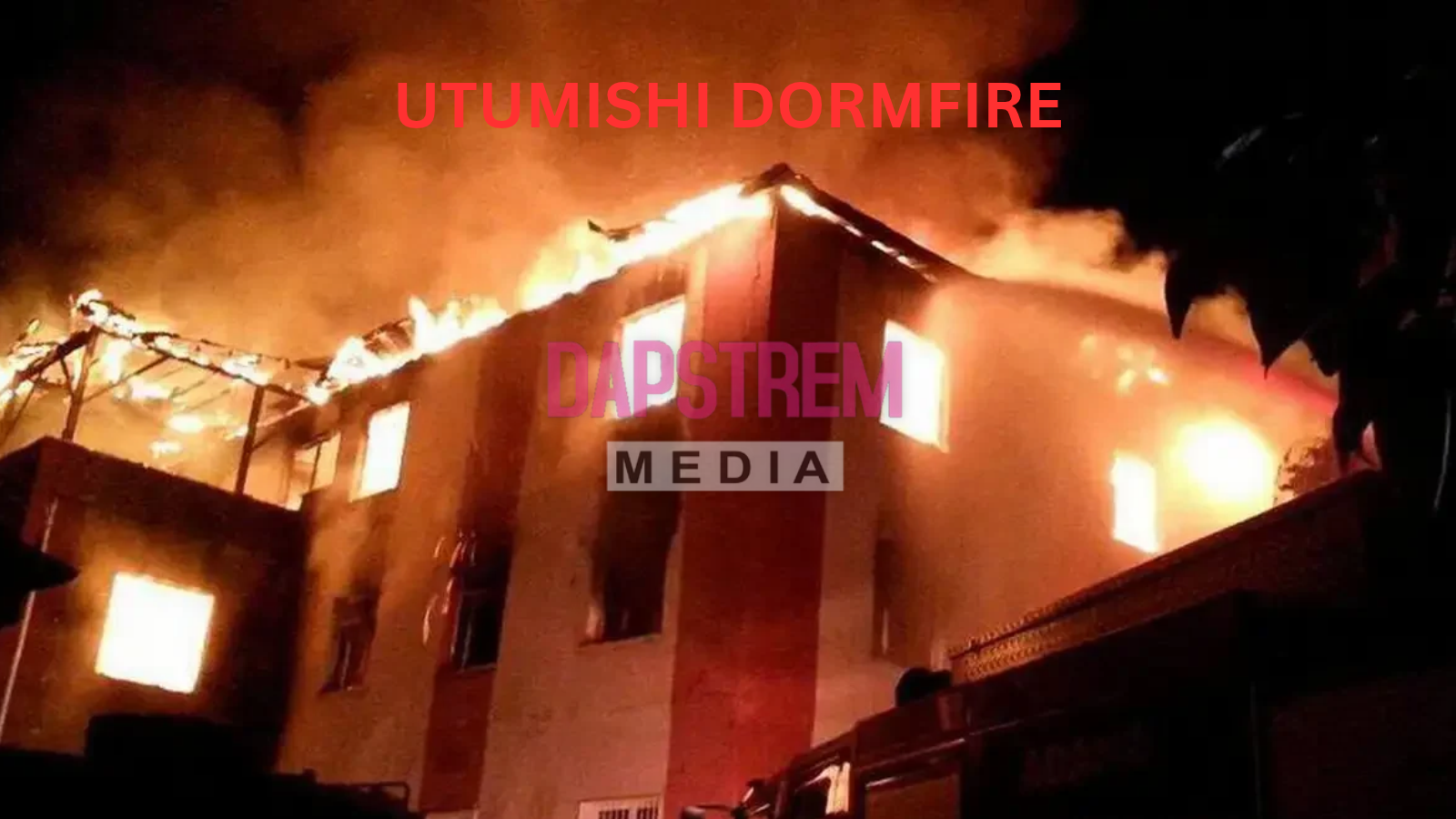
Two minors charged in connection with the deaths of 16 students in the Utumishi Girls Academy dormitory fire have approached the Office of the Director of Public Prosecutions (ODPP) seeking plea-bargaining negotiations, introducing a new development in a case that has drawn national attention to school safety and criminal accountability.
The applications were brought to the attention of the Kibera High Court on Monday, October 26, when lawyers representing the accused informed Justice Diana Kavedza that they had initiated discussions with the prosecution over possible plea agreements.
According to court proceedings reported by Citizen Digital and The Standard, the prosecution confirmed receiving a formal request from one of the minors, identified in court as Subject 3. A second defence lawyer told the court that he had written to the ODPP seeking similar negotiations on behalf of another accused student.
The developments mark a significant turn in proceedings involving eight minors charged with 16 counts of murder following the fatal fire at Utumishi Girls Academy Senior School in Gilgil, Nakuru County, in May.
However, the requests do not mean that either accused has entered a guilty plea or that an agreement has been reached. The proposed negotiations remain subject to further consultations and the applicable legal procedures.
Prosecution confirms receipt of plea-bargaining request
During the court session, State Counsel Linda Ndambiri confirmed that the ODPP had formally received the application submitted on behalf of Subject 3 through defence lawyer Odiero Osiemo.
The prosecution indicated that preliminary engagement had already taken place with the lawyer and the minor’s parents, but further consultations were necessary before the process could proceed.
The family needed additional time to obtain proper instructions from the child, highlighting the importance of ensuring that any decision is made with appropriate legal advice and an understanding of its consequences.
Separately, lawyer P.K. Nganga informed the court that he had written to the ODPP seeking plea-bargaining negotiations for another accused student after consultations with the child’s parents.
He also requested enhanced visits to Kamae Borstal Institution to allow him to consult with his client and discuss the proposed negotiations.
The prosecution indicated that it had not yet formally received the second request at the time of the court appearance.
Meanwhile, lawyers representing the other six minors said they were still consulting their clients and the children’s parents before deciding whether to pursue similar arrangements.
Court allows consultations as case awaits next direction
Justice Kavedza allowed the plea-bargaining discussions to continue and directed that the parents of all eight minors be granted two enhanced visits per month, coordinated with the institution where the children are being held.
The visits are intended to facilitate consultations between the accused children, their parents and their legal representatives as they consider their options.
The judge also directed that the case be mentioned every two weeks to monitor progress in the negotiations. The next court mention was scheduled for November 11, 2026.
The court did not announce a concluded plea agreement, and the prosecution and defence are expected to provide an update on whether the negotiations have progressed.
The judge’s directions are intended to establish whether the parties can reach an agreement or whether the case should proceed towards a full hearing.
Eight students face 16 murder counts
The case stems from a devastating fire that swept through a dormitory at Utumishi Girls Academy Senior School in Gilgil on the night of May 27–28, 2026.
The blaze killed 16 students and injured 79 others, according to Reuters’ reporting on the case. The incident triggered widespread grief and renewed scrutiny of safety standards, student welfare and security in Kenya’s boarding schools.
In July, eight students were charged with 16 counts of murder before the Kibera High Court. All eight pleaded not guilty when the charges were presented.
The court proceedings have been conducted under measures designed to protect the identities of the accused, who are minors. Their identities have therefore remained shielded in accordance with child-protection requirements.
The seriousness of the charges has placed the case at the centre of a difficult public debate involving the rights of children accused of serious offences, the need for accountability and the interests of families who lost their loved ones.
The latest applications introduce the possibility of resolving some aspects of the proceedings through negotiated agreements, although the outcome remains uncertain.
What a plea bargain means in the case
Plea bargaining is a formal legal process through which the prosecution and an accused person negotiate an agreement concerning a criminal case. Depending on the circumstances and applicable law, this may involve an admission of guilt to an agreed charge or other permissible terms.
Any proposed agreement must satisfy the relevant legal requirements and receive the necessary court approval.
In the Utumishi case, the distinction between requesting negotiations and reaching an agreement is particularly important. The applications currently before the prosecution do not, on their own, establish guilt, determine the final charges or settle the question of responsibility for the deaths.
The process must also account for the fact that the accused are children. Their legal representation, understanding of the proposed terms and ability to make informed decisions are central considerations as discussions proceed.
The court will need to be updated on the progress of the negotiations before the next steps in the case become clear.
Education continues while the minors remain in custody
Despite the ongoing proceedings, the court was informed that the eight minors were continuing with their education while being held at Kamae Borstal Institution.
Children’s officer Hilda Mbatha told the court that the students were attending classes and were expected to sit their second-term examinations the following week.
Justice Kavedza directed that their education should continue without interruption, underscoring the need to protect the children’s educational interests while the criminal process unfolds.
The court also addressed arrangements for enhanced family visits, recognising the importance of consultations between the minors, their parents and their lawyers as the plea-bargaining question is considered.
The case is scheduled to return to court on November 11 for an update on the negotiations and further directions.
A case with far-reaching implications
The Utumishi Girls tragedy has raised difficult questions about the safety of learners in boarding schools and the responsibilities of institutions charged with protecting children.
For the families of the 16 students who died, the proceedings represent an important part of the search for answers and accountability. Survivors and affected families have also had to contend with the physical and emotional consequences of the fire.
At the same time, the proceedings must respect the rights of the accused minors, including the presumption of innocence and the protections afforded to children within the justice system.
The plea-bargaining requests therefore introduce a new stage in a case with profound consequences for the families involved and the wider education sector.
Whether negotiations will produce an agreement remains to be seen. For now, the prosecution and defence have been given an opportunity to explore the requests while the court continues to supervise the process.
The next mention on November 11 is expected to provide greater clarity on whether the negotiations will proceed or whether the case will move towards a full hearing.
Until then, the central questions surrounding the tragedy remain before the court, and no final determination of criminal responsibility has been made.