UPDF to Withdraw From Lubero Town After Nearly Two Years in Eastern DRC
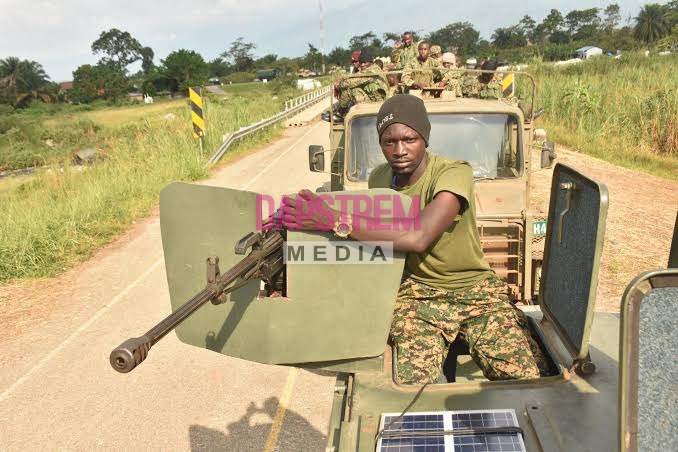
The Uganda People’s Defence Forces (UPDF) has announced plans to withdraw its troops from Lubero Town in eastern Democratic Republic of Congo (DRC), bringing an end to nearly two years of military presence in the strategic North Kivu area.
The withdrawal, which is expected to begin within the next two weeks, will see Ugandan forces hand over security responsibilities to the Armed Forces of the Democratic Republic of Congo (FARDC). The announcement was made on Friday, November 27, 2026, by Colonel Chris Magezi, the Acting Director of Defence Public Information at Uganda’s Ministry of Defence and Veteran Affairs.
According to the UPDF, its troops have been operating in Lubero since January 2025 as part of efforts to pursue remnants of the Allied Democratic Forces (ADF), an armed group that has been responsible for attacks in both Uganda and eastern Congo.
The Ugandan military said its deployment in the area was aimed at countering ADF fighters who had moved into North Kivu and Ituri provinces to escape pressure from joint military operations.
The planned withdrawal marks an important development in the security arrangements between Uganda and the DRC, particularly as the two countries continue to cooperate in efforts to weaken armed groups operating along their shared border.
However, the announcement also raises questions about the security situation in Lubero, the capacity of Congolese forces to maintain stability after the departure of Ugandan troops and the future direction of the wider military campaign against armed groups in eastern Congo.
The UPDF has not disclosed the number of troops involved in the withdrawal, the exact date of their departure or the specific reasons behind the decision. What the military has confirmed is that the process will involve a transfer of security responsibilities to the Congolese army.
Lubero’s strategic importance in eastern Congo
Lubero is located in North Kivu province, one of the areas most affected by decades of conflict in the eastern Democratic Republic of Congo.
The region has experienced persistent insecurity involving numerous armed groups, including the ADF, M23 and several local militias. Their activities have contributed to displacement, destruction of property, disruption of trade and repeated attacks against civilian communities.
Lubero and its surrounding territory occupy an important position within North Kivu’s security and transportation network. The area is connected to major commercial centres, including Butembo, and lies within a region where military movements and control of roads can influence access to communities and economic activity.
The presence of armed groups in the wider region has made it difficult for authorities to guarantee lasting security. Civilians have often found themselves caught between competing forces, with many forced to flee their homes in search of safety.
For Uganda, the security situation in eastern Congo is also a national concern. Armed groups operating from Congolese territory have historically posed threats to Uganda, making cooperation with Kinshasa an important part of its regional security strategy.
The deployment of Ugandan troops to Lubero was therefore not an isolated military operation. It formed part of a broader effort to prevent armed groups from using eastern Congo as a base for attacks against neighbouring countries.
The withdrawal will now test whether the security gains made during the deployment can be maintained by Congolese forces after Uganda’s troops leave the town.
Operation Shujaa and the fight against the ADF
The UPDF deployment in Lubero was carried out under the broader framework of Operation Shujaa, a joint military campaign launched by Uganda and the DRC in November 2021.
The operation was established to target the Allied Democratic Forces and other armed groups considered a threat to regional security.
The ADF originated in Uganda during the 1990s before establishing bases in eastern Congo, where it has carried out attacks against civilians and security forces.
The group has also developed links with the Islamic State, which has claimed responsibility for some attacks associated with its operations.
Over the years, the ADF has become one of the most persistent security threats in the eastern DRC. Its fighters have operated in remote areas, taken advantage of difficult terrain and moved between communities and forested zones to avoid military pressure.
Operation Shujaa was designed to weaken the group’s operational capacity through coordinated military action by Ugandan and Congolese forces.
The campaign has involved operations in parts of North Kivu and Ituri, where ADF fighters have established bases and networks.
Ugandan authorities have repeatedly argued that the joint operation has disrupted the group’s activities and forced its fighters to move away from areas where they previously operated.
The deployment to Lubero was part of this wider effort, particularly after ADF remnants moved into the area to escape pressure from ongoing military operations.
The planned withdrawal from Lubero does not, however, mean that Operation Shujaa has ended. The UPDF has confirmed that the joint offensive remains ongoing, meaning Ugandan troops will continue participating in operations elsewhere in eastern Congo.
This distinction is important because the announcement concerns the withdrawal from a particular town rather than a complete military disengagement from the DRC.
The handover to the Congolese army
One of the most important aspects of the announcement is the decision to transfer security responsibilities in Lubero to FARDC.
The Congolese army has long faced the challenge of securing a vast territory affected by multiple armed conflicts. Its operations have been complicated by the presence of numerous armed groups, difficult terrain, limited infrastructure and the need to protect large civilian populations.
The handover will therefore place renewed responsibility on Congolese forces to maintain security in Lubero and prevent armed groups from exploiting any gaps created by the departure of Ugandan troops.
A successful transition will require careful coordination between the two armies. The withdrawal must be organised in a way that allows FARDC to take over military positions, maintain patrols and respond effectively to potential threats.
Security handovers are particularly sensitive in conflict-affected areas because even a temporary reduction in military presence can create opportunities for armed groups to reorganise or move into previously contested locations.
For residents of Lubero, the most important question is whether the transition will lead to greater stability or expose communities to renewed insecurity.
The Congolese government will need to ensure that its forces have sufficient personnel, equipment and logistical support to maintain control of the area.
It will also need to strengthen cooperation with local authorities and communities, who often possess valuable information about the movements and activities of armed groups.
The wider security challenges facing eastern DRC
The withdrawal comes at a time when eastern Congo continues to face a complex security environment.
The region is home to several armed groups whose activities are driven by different political, economic and social factors. Some operate through local militia networks, while others have broader regional ambitions or links to neighbouring countries.
The ADF remains a major concern because of its history of attacks against civilians and its ability to operate across parts of North Kivu and Ituri.
At the same time, the conflict involving M23 and other armed actors has placed additional pressure on security forces and civilian communities in the region.
The existence of multiple conflicts means that military operations against one group do not automatically resolve the wider security crisis.
Even when an armed group is pushed out of a particular area, its fighters may move elsewhere, regroup or establish new networks.
This has been one of the persistent difficulties facing military campaigns in eastern Congo. Operations can produce immediate territorial gains, but sustaining those gains requires effective governance, local security and the protection of civilians.
The withdrawal from Lubero therefore needs to be understood within this wider context.
The departure of Ugandan troops may represent a change in the deployment of forces, but the underlying challenges facing the region remain.
Uganda and the DRC’s security partnership
The military cooperation between Uganda and the DRC has developed significantly since the launch of Operation Shujaa.
The two countries share a long border and have common interests in preventing armed groups from destabilising their territories.
Uganda has repeatedly expressed concern about the ADF’s presence in eastern Congo, while the Congolese government has sought assistance in confronting armed groups that have weakened its control over parts of the country.
The joint operation reflects the recognition that insecurity in eastern Congo cannot be addressed entirely through isolated national efforts.
Armed groups can move across borders, exploit gaps in security arrangements and establish networks that extend beyond one country.
For this reason, cooperation between Uganda and the DRC has included joint planning, military operations and coordination in areas affected by insurgent activity.
The planned withdrawal from Lubero is likely to require continued communication between the two governments to ensure that the transfer of responsibilities does not disrupt the broader campaign.
Although the UPDF will leave the town, the military has indicated that its involvement in Operation Shujaa will continue.
This suggests that Uganda’s security engagement in eastern Congo will remain focused on the wider objective of weakening the ADF and preventing the group from threatening regional stability.
The concerns of civilians
For communities living in Lubero and surrounding areas, military announcements are ultimately measured by their impact on everyday life.
Residents of eastern Congo have endured years of displacement, insecurity and uncertainty. Many families have been forced to abandon their homes, farms and businesses because of attacks by armed groups.
The presence of military forces can provide a sense of protection, but it can also bring disruption when operations involve movement through populated areas or when fighting occurs near civilian settlements.
As Ugandan troops prepare to leave, residents will be watching closely to see whether Congolese forces can maintain security and prevent new attacks.
The authorities will also need to ensure that civilians are not neglected during the transition.
Security operations should be accompanied by efforts to restore access to essential services, support displaced families and enable communities to resume economic activities.
For many residents, peace means more than the absence of gunfire. It means being able to travel safely, attend school, cultivate land, access healthcare and earn a living without fear.
The withdrawal will therefore be judged not only by the successful movement of military personnel but also by whether it contributes to a safer environment for ordinary people.
What the withdrawal means for regional stability
The planned departure from Lubero highlights the changing nature of military cooperation in eastern Congo.
Uganda’s deployment was intended to address a specific security challenge, and the withdrawal now signals a transition in how that mission will be carried out in the area.
However, the decision also places greater responsibility on Congolese institutions to sustain security gains and strengthen their presence in communities affected by conflict.
If the handover is well coordinated, it could help reinforce the role of FARDC and demonstrate progress in the management of joint security operations.
If the transition is poorly managed, it could create uncertainty and increase the risk of renewed activity by armed groups.
The coming weeks will therefore be important in determining how the withdrawal unfolds and whether the security arrangements in Lubero remain effective.
The UPDF has not announced plans to end its entire presence in eastern Congo. Its statement makes clear that Operation Shujaa will continue, even as troops leave the town.
This means the withdrawal should not be interpreted as the end of Uganda’s military cooperation with the DRC.
Instead, it represents a local change in deployment within a much larger regional security effort.
A new phase in the fight for lasting peace
The UPDF’s planned withdrawal from Lubero after nearly two years of deployment marks a significant moment for eastern Congo.
It brings an end to one phase of Uganda’s military presence in North Kivu while placing the Congolese army at the centre of the next stage of security management in the town.
The move also highlights the continuing importance of Operation Shujaa, which remains active in the fight against the ADF and other armed groups operating in eastern Congo.
For Uganda and the DRC, the priority will be to ensure that the withdrawal does not weaken their shared security objectives.
For FARDC, the handover will be an opportunity to demonstrate its ability to protect communities and maintain control of territory without relying on a permanent foreign military presence.
For civilians in Lubero, the expectation is straightforward: that the departure of Ugandan troops will not create another period of uncertainty, but instead contribute to a more stable and secure environment.
Ultimately, the success of the withdrawal will depend on what follows. Military deployments may change, troops may leave and operations may shift to new locations, but the need for lasting peace in eastern Congo remains urgent.
The region will continue to require coordinated security efforts, effective governance and sustained attention to the needs of communities that have suffered for far too long.
The planned UPDF withdrawal is therefore not the conclusion of the conflict in eastern Congo. It is another important development in a long and difficult effort to restore security, protect civilians and build a future in which armed groups no longer determine the lives of millions of people.