Justin Muturi Appointed to Commonwealth Observer Mission for Gambia Elections
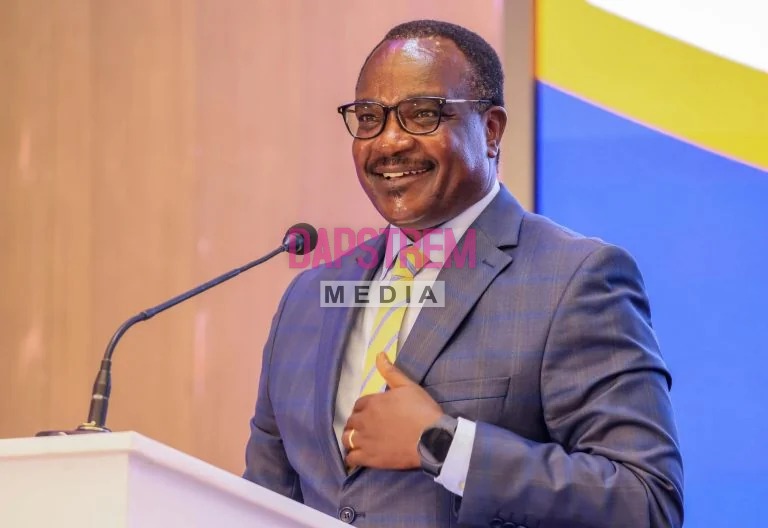
Former Kenyan Attorney-General Justin Muturi has secured an international role after being appointed to the Commonwealth Observer Mission for elections in The Gambia. The appointment places the experienced Kenyan politician and lawyer among a team of observers expected to assess the conduct of the West African country’s electoral process and determine whether it meets democratic standards.
The assignment is significant not only for Muturi but also for Kenya’s representation in international democratic institutions. It highlights the role experienced African leaders can play in promoting credible elections, strengthening democratic governance and encouraging respect for the will of voters across the Commonwealth.
The Commonwealth Observer Mission is expected to monitor the electoral environment, examine the preparations made by relevant institutions and assess whether the election is conducted in a transparent, credible and peaceful manner. Its work will be important in a country where democratic institutions and electoral confidence remain central to the political process.
Muturi joins international team led by former Lesotho Prime Minister
Muturi will serve alongside six other distinguished members drawn from different Commonwealth countries and professional backgrounds. The mission will be chaired by former Lesotho Prime Minister Dr Pakalitha Mosisili, whose experience in national leadership and regional diplomacy is expected to guide the team’s work.
Other members include Professor Aderemi Isola Ajibewa of Nigeria, a former Director of Political Affairs at the Economic Community of West African States (ECOWAS) Commission. The delegation also includes Professor Cynthia Barrow-Giles of Saint Lucia, an expert in constitutional governance and politics.
Sierra Leone will be represented by Marcella Samba-Sesay, Executive Director of the Campaign for Good Governance. South African electoral expert Professor Mandlakayise Anthony Mchunu and Sri Lankan media and politics specialist Deepanjalie Abeywardana are also part of the team.
The composition reflects the Commonwealth’s approach to election observation, which brings together individuals with different areas of expertise. Elections involve more than the actual casting of ballots. They also require effective legal frameworks, credible electoral institutions, responsible media coverage and respect for the rights of voters and candidates.
Muturi’s background in parliamentary leadership and public service is therefore relevant to the assignment. His experience is expected to contribute to the mission’s assessment of democratic governance and the institutions responsible for managing elections.
The team will be supported by Commonwealth Secretariat officials led by Lindiwe Maleleka, a Political Adviser in the Electoral Support Section.
Commonwealth+1
What the Commonwealth Observer Mission will do
The primary responsibility of the Commonwealth Observer Mission will be to independently assess the electoral process in The Gambia and determine whether it meets the democratic standards to which the country has committed itself.
The observers are expected to examine the political environment before election day, including the preparations made by the Independent Electoral Commission, the activities of political parties and the general atmosphere surrounding the campaigns.
They will also assess whether candidates have a fair opportunity to present their policies to voters and whether citizens can participate in the election without intimidation, discrimination or unnecessary restrictions.
Another important area will be the role of the media. Independent and responsible media coverage is essential during elections because it allows voters to receive information about candidates, political parties and their proposed policies.
The observers may therefore examine whether media institutions provide fair coverage and whether candidates have reasonable opportunities to communicate with the electorate.
On election day, the mission will assess the voting process, including the opening of polling stations, the treatment of voters, the handling of ballots and the transparency of the counting process.
The observers will also examine how electoral authorities manage the announcement and transmission of results.
These activities are important because the credibility of an election depends on the entire process rather than the final figures alone.
A country may successfully organise voting across its territory, but concerns about voter registration, campaign fairness, political intimidation or the counting process can still undermine public confidence.
The Commonwealth says its observer groups are independent and impartial. They do not take over the responsibilities of national electoral authorities or supervise the election. Instead, they assess the process and provide recommendations aimed at strengthening democratic institutions.
Following an election, the mission is expected to prepare a report outlining its findings and recommendations.
Commonwealth+1
The Gambia prepares for a closely watched presidential election
Muturi’s appointment comes as The Gambia prepares for a presidential election scheduled for December 5, 2026.
The West African country is heading into another important electoral contest, with incumbent President Adama Barrow seeking a third term in office.
The Independent Electoral Commission has cleared nine candidates to participate in the presidential race, setting the stage for competition among political leaders seeking to govern the country for the next five years.
Barrow’s candidacy has attracted attention because the election will provide another opportunity for voters to assess his leadership and the direction of his administration.
His opponents will seek to convince voters that they can offer alternative approaches to the country’s economic and governance challenges.
Issues such as employment, economic reforms, public services and the general cost of living are expected to feature prominently in the political debate.
The election will also test the strength of The Gambia’s democratic institutions and their ability to manage a competitive presidential contest.
For the Commonwealth, the deployment of observers is intended to support confidence in the process by providing an independent assessment of how the election is conducted.
The Commonwealth is not the only international organisation paying attention to the vote. The European Union has also deployed an Election Observation Mission to The Gambia, with its own team tasked with assessing the electoral process independently.
Reuters+1
Why the appointment matters to Kenya
Muturi’s selection represents an opportunity for Kenya to contribute to international efforts aimed at strengthening democracy and promoting credible elections.
Kenya has considerable experience with competitive elections, constitutional reforms, parliamentary oversight and debates surrounding electoral transparency.
Although the country has experienced political disagreements and disputes over electoral processes, its democratic institutions have continued to play an important role in shaping national governance.
Muturi has occupied several influential public offices during his career. He previously served as Speaker of the National Assembly, Attorney-General and Cabinet Secretary for Public Service.
His experience in Parliament is particularly relevant because legislatures play an important role in democratic systems. They provide oversight over the Executive, represent citizens and participate in the development of laws governing national institutions.
As Speaker of the National Assembly, Muturi presided over parliamentary proceedings and worked within an institution responsible for legislation, public accountability and representation.
He also served as Chairperson of the Commonwealth Parliamentary Association’s Africa Region Executive Committee between 2018 and 2022. That experience gave him exposure to parliamentary cooperation and governance issues across the continent.
kenyans.co.ke+1
His appointment to the Gambia mission therefore builds on a career that has involved both national leadership and engagement with international parliamentary institutions.
It also provides an opportunity for Kenya to be represented in discussions about democratic governance beyond its borders.
The appointment should, however, be understood as an individual professional responsibility rather than a role in which Muturi represents the Kenyan government in determining the outcome of The Gambia’s election. Commonwealth observers are appointed in their individual capacities and are expected to act independently.
The Commonwealth’s wider role in promoting democracy
The appointment also highlights the Commonwealth’s longstanding involvement in election observation and democratic development.
The organisation brings together countries that share historical, institutional and political links, with democracy, the rule of law and good governance among its central values.
Over the years, the Commonwealth has deployed observer groups to elections in different member states, providing independent assessments of electoral processes and recommendations for improvement.
According to the organisation, it has observed more than 200 elections in over 40 countries since 1980.
Its observer missions are designed to assess whether elections are conducted in accordance with national laws and relevant regional and international standards.
The organisation also works with member countries between elections to strengthen electoral institutions, improve voter participation and support the implementation of recommendations made by previous observer groups.
Commonwealth
This work is important because credible elections are a foundation of democratic governance. They give citizens an opportunity to choose their leaders, hold political parties accountable and influence the direction of their countries.
However, democracy cannot be measured by the presence of polling stations alone. It also depends on whether citizens enjoy political freedoms, whether opposition parties can operate freely and whether electoral institutions remain independent.
International observer missions provide an additional layer of scrutiny by examining these issues and highlighting areas that require attention.
Their findings can help governments, electoral commissions, political parties and civil society organisations identify weaknesses and improve future electoral processes.
For The Gambia, the presence of the Commonwealth mission will provide an opportunity for its electoral arrangements to receive international attention and independent assessment.
A significant international assignment for Muturi
For Muturi, the appointment comes at a time when he remains active in Kenya’s political environment as a co-principal of the Ukombozi Alliance.
His selection demonstrates that his experience in public service and parliamentary leadership continues to attract attention beyond Kenya’s political landscape.
The assignment will require him to work with other members of the delegation, engage with relevant stakeholders and contribute to an objective assessment of the electoral environment.
It will also require impartiality, particularly because election observation involves examining the conduct of political actors and institutions without favouring any candidate or party.
The mission’s credibility will depend on its ability to assess the process fairly and present findings based on evidence gathered during its work.
The Commonwealth has emphasised that its observer groups operate independently and are expected to make their own assessments rather than advance the interests of individual member governments.
As the December 5 presidential election approaches, attention will increasingly turn to the preparations by The Gambia’s electoral authorities, the campaigns by presidential candidates and the conduct of the voting process.
Muturi’s appointment places him at the centre of an international effort to monitor these developments and assess whether the election reflects the democratic will of Gambian voters.
Ultimately, the importance of the assignment will extend beyond the individual appointment. It will contribute to the wider conversation about electoral integrity, democratic accountability and the responsibility of institutions to protect the rights of citizens.
For Kenya, it is another opportunity to contribute experienced public figures to international governance initiatives. For The Gambia, the mission offers independent scrutiny of an important presidential election.
As voters prepare to choose their next president, the Commonwealth observers will be expected to assess whether the process provides a credible, transparent and inclusive opportunity for citizens to exercise their democratic rights.