Jubilee Party has appointed a three-member committee to spearhead negotiations with like-minded opposition parties as political formations step up efforts to build a united front ahead of Kenya’s 2027 General Election.
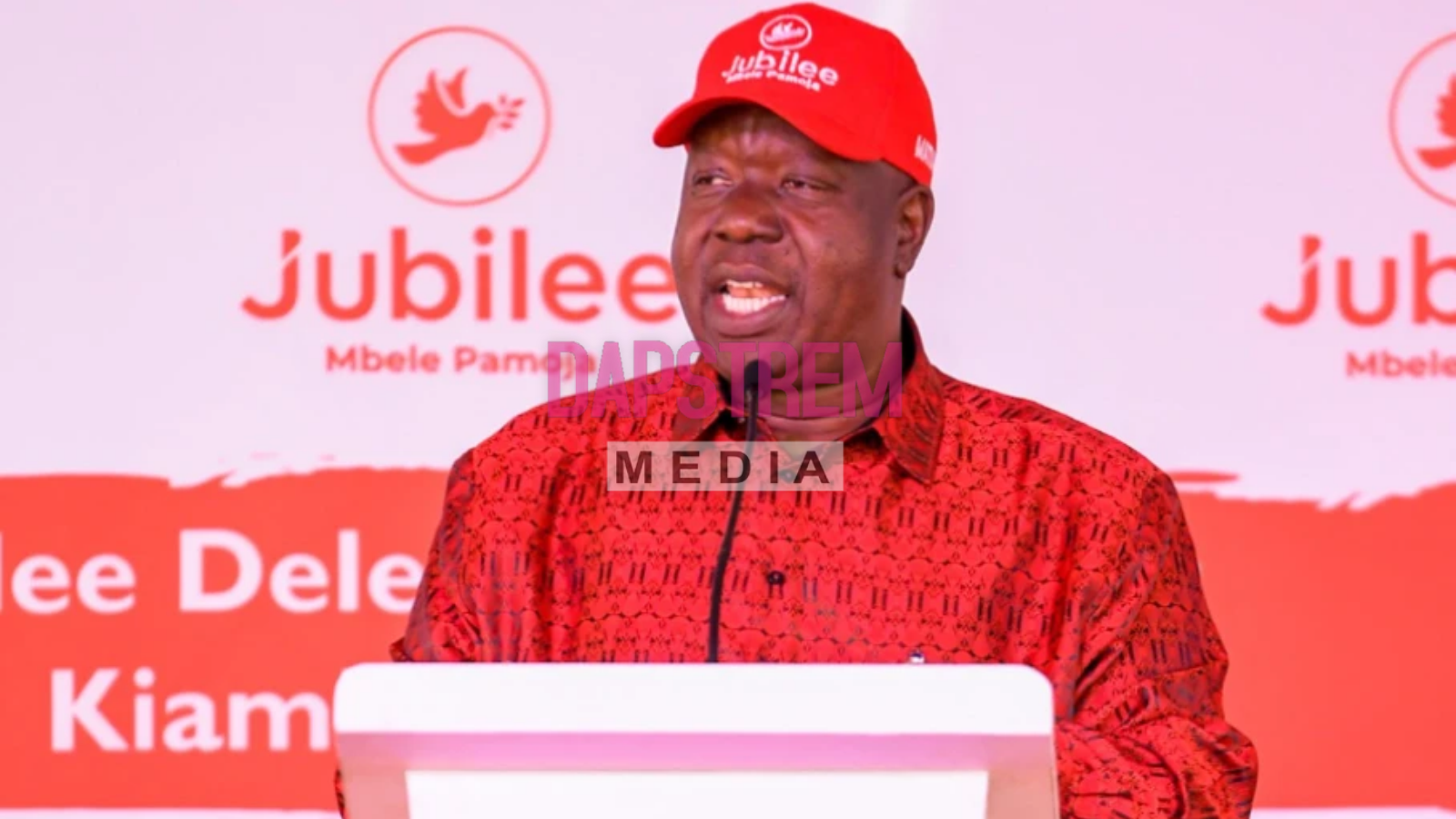
The party’s National Executive Committee (NEC), chaired by party leader and presidential candidate Fred Matiang’i, approved the formation of the Inter-Party Coalition Building Committee during a meeting held on Tuesday, October 27, 2026. The decision was announced on Wednesday.
The committee will be chaired by former Murang’a Senator Kembi Gitura, with Jubilee Secretary General Moitalel Ole Kenta and Janet Ong’era serving as members.
Its main responsibility will be to engage other opposition parties and coalitions, explore possible political partnerships and develop proposals aimed at strengthening cooperation ahead of the August 2027 elections.
The move signals Jubilee’s intention to formalise its role in the ongoing opposition unity negotiations, although the party has not announced a new coalition agreement or confirmed that the talks have produced a final arrangement.
Committee to review Ukombozi Alliance agreement
One of the committee’s key assignments is to review the draft Deed of Agreement for the Ukombozi Alliance (TUA) and recommend amendments where necessary.
The team will also consult other opposition parties to identify areas of common interest and develop proposals for closer political cooperation. Its recommendations will be submitted to Jubilee’s National Executive Committee for consideration and further direction.
The party said the initiative was informed by its membership in the Azimio la Umoja One Kenya Alliance and the need to strengthen unity among opposition formations before the next General Election.
However, the committee’s appointment does not mean Jubilee has formally joined a new alliance. Its immediate task is to negotiate, examine the proposed agreement and present recommendations to the party leadership.
The announcement also did not specify a deadline for completing the negotiations or identify which parties would be approached first.
Matiang’i faces the challenge of uniting opposition leaders
The initiative comes as opposition leaders attempt to reconcile competing political ambitions and agree on a common strategy for challenging President William Ruto in 2027.
Matiang’i, a former Interior Cabinet Secretary under retired President Uhuru Kenyatta, has been positioning himself as a presidential contender while participating in broader discussions on opposition cooperation.
In an interview reported by Daily Nation on October 5, Matiang’i acknowledged that the negotiations were difficult because the participating parties had different leaders, interests and presidential ambitions. He said the process required respect for each party and candidate as the opposition worked towards a possible common ticket.
The central challenge is how to build an alliance that can coordinate its campaign without sidelining leaders who also want to contest the presidency.
A successful agreement would need to address more than the selection of a presidential candidate. The parties would also have to negotiate a shared policy programme, mechanisms for resolving disagreements and the distribution of responsibilities within the coalition.
These questions are particularly important in Kenya, where pre-election alliances have often brought together parties with different political traditions and regional support bases.
In September, Matiang’i said the opposition was seeking a framework that would allow participating parties to retain their identities while working towards a common political platform. He also argued that the alliance should be built on agreed principles rather than simply on the objective of winning an election.
Those positions provide context for Jubilee’s decision to establish a committee specifically tasked with reviewing an agreement and developing proposals for cooperation.
Opposition unity remains a work in progress
Jubilee’s move comes amid wider consultations among opposition figures seeking to coordinate their political activities before the 2027 elections.
The discussions involve leaders with their own parties, support bases and presidential ambitions. These competing interests make the question of who should lead a joint presidential ticket one of the most sensitive issues facing the opposition.
Matiang’i has acknowledged that reaching consensus will require accommodating the interests of different parties and candidates. The negotiations must therefore establish a process