University Lecturers’ Strike Enters Second Week as CBA Talks Collapse, Leaving Students in Limbo
The nationwide strike by lecturers and other university workers in Kenya has entered its second week, with negotiations between the government and university staff unions failing to produce an agreement to restore normal learning in public universities.
The industrial action, which began on October 2, 2026, has disrupted teaching, examinations and other academic activities, leaving hundreds of thousands of students uncertain about when they will return to their classrooms. The dispute centres on the 2025–2029 Collective Bargaining Agreement (CBA), with unions demanding better salaries, improved allowances, stronger medical benefits, additional academic staff and clear commitments on how the agreement will be funded.
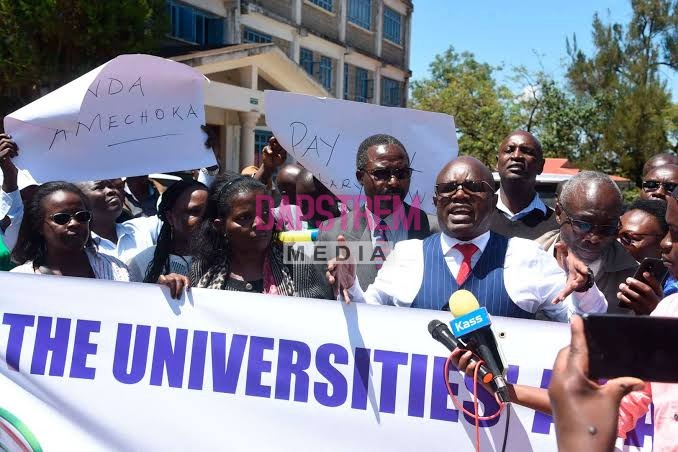
The latest round of negotiations collapsed on Monday, October 12, after university unions rejected a government counter-offer reportedly worth Sh12 billion. The Universities Academic Staff Union (UASU) and the Kenya Universities Staff Union (KUSU), alongside the Kenya Union of Domestic, Hotels, Educational Institutions, Hospitals and Allied Workers (KUDHEIHA), maintain that the proposal does not adequately address their demands.
The breakdown has prolonged uncertainty across the higher education sector, with students facing interruptions to their studies while lecturers insist they will not return to work without a satisfactory settlement.
The strike has also reopened questions about the government’s handling of salary negotiations in public universities. It comes less than a year after a previous 49-day industrial action ended in November 2025 following negotiations and a return-to-work agreement. The failure to conclude the latest CBA has once again placed lecturers, university management, the Ministry of Education and the National Treasury at odds.
For students, the immediate concern is the uncertainty surrounding academic calendars, examinations, graduation dates and the completion of their courses. For lecturers and other university employees, the dispute concerns their pay, working conditions and whether commitments made during previous negotiations will translate into lasting improvements.
The government has called for continued engagement and urged lecturers to resume their duties, but the unions say previous discussions have not delivered an acceptable financial proposal. With the strike continuing, pressure is mounting on all parties to find a lasting solution before the disruption causes further damage to university education.
Why University Lecturers Are on Strike
The current strike follows months of disagreements over the terms and funding of the 2025–2029 CBA. A collective bargaining agreement sets out negotiated employment terms between workers and their employers, including salaries, allowances, benefits and other working conditions.
For university lecturers, the new agreement is intended to address remuneration and employment issues affecting academic staff in public universities. However, negotiations have stalled over the financial value of the agreement, the government’s counter-offer and the process through which the proposed terms should be funded and implemented.
UASU, KUSU and KUDHEIHA rejected the latest proposal from the Inter-Public Universities Councils Consultative Forum (IPUCCF), which represents public university employers in the negotiations. The unions argued that the offer did not adequately reflect their demands or the cost of implementing the proposed agreement.
The unions also say the negotiations have taken too long. They point to a return-to-work formula signed on November 5, 2025, which included a commitment to conclude negotiations for the 2025–2029 CBA within 30 days. According to the unions, that commitment was not honoured, leaving important questions unresolved months after the previous strike ended.
The disagreement is not limited to basic salaries. University staff are seeking adjustments to allowances, medical cover and other employment benefits. They have also raised concerns about recruitment, promotions, pension arrangements and the need to ensure that universities have enough academic staff to serve growing student populations.
UASU Secretary-General Constantine Wasonga has questioned how the government arrived at its latest financial proposal. He argued that the Sh12 billion offer was insufficient when compared with the demands contained in the current agreement.
Wasonga cited previous collective bargaining agreements, saying the 2013–2017 agreement cost approximately Sh15 billion, while the 2017–2021 agreement amounted to about Sh16.5 billion. He also said the 2022–2025 agreement involved approximately Sh9 billion for basic salaries and automatic annual increments.
The union argues that the latest agreement covers additional areas, including commuter allowances and medical benefits, making it difficult to understand how the government considers its current offer sufficient.
The unions have therefore demanded a more detailed financial proposal that reflects the actual cost of their demands. They want negotiations to move beyond general assurances and focus on specific salary percentages, allowances and funding commitments.
Their position is that a CBA must be negotiated meaningfully with employee representatives rather than determined through proposals they consider inadequate. They have warned that the strike could continue or escalate unless the government presents an acceptable offer and concludes the agreement.
The government, on the other hand, must consider the cost of public-sector salaries alongside other competing demands on the national budget. That financial pressure is part of the challenge facing the negotiating teams, but it has not resolved the disagreement over what constitutes a fair and affordable settlement.
Government’s Sh12 Billion Offer Fails to Break the Deadlock
The latest setback came after talks between university unions and the government’s Inter-Ministerial Committee on Monday, October 12. The meeting was expected to help narrow the differences between the parties and establish a path towards ending the nationwide strike.
However, the discussions failed to produce a deal. One of the concerns raised by the unions was the absence of the National Treasury, which they consider central to resolving the financial questions surrounding the CBA.
The government reportedly presented a Sh12 billion package intended to support a return to work, but the unions rejected it, saying it did not provide a credible basis for resolving the dispute.
UASU maintained that the government should explain how the proposed figure had been calculated and demonstrate how it would address the specific demands submitted by the unions. The union also argued that the current CBA should not be assessed using a financial framework that fails to account for the additional benefits and commitments being sought.
The disagreement over the amount reflects a wider problem in the negotiations: the parties have yet to agree on the financial value of the employment package and how the cost should be distributed over the four-year agreement.
For the unions, accepting a proposal without sufficient detail could mean returning to work while important issues remain unresolved. For the government, increasing the offer would require a clear assessment of the cost and the availability of public funds.
The challenge is to establish a figure that can be justified financially while addressing the concerns of university employees. Without a transparent breakdown of the proposal, the parties risk remaining trapped in a cycle of competing claims and counter-offers.
The unions have also rejected a proposed allocation of Sh9.76 billion for the four-year agreement, arguing that it does not adequately reflect the scope of the current negotiations.
The latest breakdown means students cannot yet rely on a confirmed date for the resumption of normal academic activities. Unless the parties return to negotiations with proposals that narrow the gap, the dispute could continue to affect university operations.
The collapse of talks also demonstrates that simply convening meetings is not enough to resolve a dispute that has persisted for months. The negotiating teams need to identify the issues that can be settled immediately, establish realistic timelines for those that require additional work and agree on a transparent method for calculating the cost of the CBA.
A lasting agreement will require both sides to move beyond broad assurances and provide commitments that can be measured, funded and implemented.
Salary Increases, Allowances and Staffing at the Centre of the Dispute
One of the main issues driving the strike is the level of salary adjustments proposed for university employees.
Lecturers say their remuneration must reflect changes in the cost of living, inflation and the purchasing power of their salaries. They argue that salary adjustments that fall behind rising expenses leave workers struggling to meet basic needs, even when their nominal earnings increase.
The unions have called for salary adjustments that reflect the demands presented during negotiations. They have also raised concerns about the harmonisation of allowances, arguing that differences in benefits and outdated rates can create unfairness among employees performing comparable duties.
Housing costs, transport expenses and medical bills have placed additional pressure on household budgets. For university workers living in major towns and cities, rent and commuting costs can consume a substantial share of monthly income.
KUSU Secretary-General Charles Mukhwaya has urged the government to return to negotiations with specific proposals on salaries, housing allowances and medical benefits. He has argued that a small adjustment would not adequately protect workers against inflation and rising living costs.
UASU has also raised concerns about delayed payments, pension arrangements and remittances that can affect workers’ ability to access bank loans. UASU Chairperson Grace Nyongesa has argued that prolonged delays erode the value of payments because the purchasing power of money falls over time.
The unions are also demanding clear commitments on recruitment and promotions. Public universities have continued to serve large student populations, but academic staffing remains a concern in the dispute.
Where universities lack sufficient lecturers, existing staff may have to handle large classes, supervise numerous students and balance teaching with research and administrative responsibilities. These pressures can affect the quality of instruction and the amount of individual attention students receive.
Recruiting additional academic staff could help universities manage enrolment, reduce workloads and strengthen teaching and research. However, hiring requires funding for salaries, benefits and other employment costs, making it another issue that must be addressed through the wider financial settlement.
The unions also want allowances to be harmonised and provisions relating to car loans and mortgages to be considered in the CBA. They argue that the agreement should address the wider employment conditions affecting staff rather than focus narrowly on basic pay.
These demands help explain why the negotiations have proved difficult. The dispute is not about a single salary increase but a broader package of remuneration, benefits, staffing and funding commitments.
For a settlement to hold, the parties will need to establish which demands can be implemented immediately, which require additional budgetary approvals and how the agreed terms will be monitored over the life of the CBA.
Students Bear the Brunt as Learning and Examinations Stall
While lecturers and the government negotiate over salaries and working conditions, university students are among those facing the most immediate consequences.
The strike has disrupted teaching, examinations and other academic operations across public universities. Students who expected to attend lectures, complete coursework or sit examinations have been left uncertain about how the interruption will affect their academic progress.
For students in their final years, the disruption can be particularly stressful. Some may be preparing to complete projects, undertake practical assessments or meet requirements for graduation. A prolonged strike could delay these milestones and affect their plans for employment, internships or further studies.
Students who depend on university accommodation, transport arrangements or meals may also face additional costs if they have to remain near campus while waiting for learning to resume. Others may have already travelled home and must decide when to return, often without a clear timetable.
The consequences can extend beyond individual students. Families paying tuition-related expenses, rent and upkeep may struggle to manage the costs of an academic calendar that is repeatedly interrupted. Students who rely on loans, bursaries or financial support tied to specific study periods may also find it difficult to plan their finances.
Universities themselves face operational challenges during a strike. Administrative offices may be affected, research activities can be interrupted and arrangements for examinations or student services may have to be revised.
The disruption also raises concerns about the academic calendar. When teaching stops for an extended period, universities may have to adjust semester dates, compress learning schedules or reschedule examinations. Any changes require coordination among university management, staff and students.
However, a hurried return to class without a sustainable agreement could create the risk of another strike if the same issues remain unresolved. That is why students need more than a temporary suspension of industrial action. They need a settlement that gives universities a reasonable chance of completing the academic year without repeated interruptions.
University management and the government should keep students informed about the status of negotiations and any confirmed changes to academic calendars. Clear communication can help students make practical decisions about travel, accommodation, examinations and graduation plans.
Students should not be left relying on rumours or unverified social media updates to determine when they will return to class. Universities need to communicate official decisions through recognised channels once they have been confirmed.
Ultimately, the disruption demonstrates how employment disputes within public institutions can affect people who have no direct role in the negotiations. Students have invested time, money and effort in their education, and they deserve a timely resolution that allows them to continue their studies.
Government Says Previous CBA Arrears Have Been Cleared
The government has defended its handling of the dispute, arguing that it has taken steps to address outstanding obligations under previous collective bargaining agreements.
Education Cabinet Secretary Julius Migos Ogamba has said that salary arrears under the 2017–2021 and 2021–2025 CBAs have been cleared. He has urged lecturers to return to work while negotiations on the current agreement continue.
The government has also maintained that it is committed to resolving the outstanding issues and has encouraged the unions to allow discussions to proceed rather than prolong the disruption to learning.
President William Ruto has said his administration is engaging the lecturers to understand the concerns behind the strike. He has acknowledged that some of the issues date back several years and pledged to take responsibility for addressing the outstanding problems.
However, the unions insist that clearing arrears under previous agreements does not resolve their current demands. They say the 2025–2029 CBA must be concluded on its own terms and that a new financial proposal is required to address the outstanding issues.
This distinction is important. Payment of arrears under an earlier agreement settles obligations associated with that agreement, but it does not automatically determine salary adjustments, allowances or benefits under a subsequent CBA.
The parties must therefore avoid treating progress on previous agreements as a substitute for completing the current negotiations. At the same time, the government needs to demonstrate how the proposed settlement can be funded and how any agreed commitments will be implemented.
A transparent explanation of the government’s financial position could help reduce mistrust. The unions, in turn, need a clear opportunity to present and justify their demands through a process that allows the parties to compare proposals using the same assumptions.
Without that shared basis, the negotiations risk becoming a contest between figures rather than a process for reaching a workable agreement.
The government has also urged lecturers to obey court orders relating to the strike. This adds a legal dimension to the dispute, alongside the industrial relations and funding questions. The parties will need to navigate the applicable legal requirements while continuing efforts to settle the underlying employment disagreement.
The most sustainable outcome would combine compliance with the law, a credible financial proposal and an agreed timetable for implementing the CBA.
Why the Dispute Keeps Returning to Public Universities
The current strike has revived concerns about the repeated cycle of negotiations, industrial action and temporary return-to-work agreements in Kenya’s public university sector.
The previous nationwide strike lasted 49 days and ended on November 5, 2025, after the government and unions signed a return-to-work formula. That agreement included plans to settle Sh7.9 billion in salary arrears under the 2017–2021 CBA and conclude negotiations for the 2025–2029 agreement within 30 days.
The failure to conclude the new agreement has brought the sector back to a nationwide shutdown less than a year later.
Repeated strikes can weaken confidence in the ability of institutions to honour agreements and resolve employment disputes through dialogue. When workers believe that commitments will not be implemented on time, they may become less willing to accept assurances that lack clear deadlines or enforceable arrangements.
At the same time, frequent interruptions make it harder for universities to plan their academic calendars, manage budgets and maintain continuity in teaching and research.
The dispute also exposes the importance of involving all the institutions responsible for funding and implementing public-sector employment agreements. The Ministry of Education, university councils, the National Treasury and the relevant remuneration authorities each have roles in the process.
If the parties negotiate terms without resolving how those terms will be funded, the agreement may remain difficult to implement. Similarly, if financial proposals are developed without sufficient engagement with the unions, they may be rejected before the parties reach a meaningful compromise.
A more effective process would establish a clear timetable, identify the information required from each party and provide a transparent method for assessing salary and benefit proposals.
It would also distinguish between issues that require immediate decisions and those that need longer-term reforms. For example, the parties could agree on a process for addressing staffing shortages while negotiating the financial terms of salaries and allowances.
Any interim arrangement would need to be accepted by the relevant parties and comply with the law. It should not simply postpone the same dispute without resolving the causes of the disagreement.
The lesson from the repeated strikes is that industrial peace cannot depend solely on persuading workers to return to class. It requires agreements that are negotiated in good faith, funded realistically and implemented within clear timelines.
What Happens Next?
With the strike entering its second week and the latest negotiations failing to produce a settlement, attention now turns to whether the government and the unions can return to the negotiating table with proposals that narrow the gap.
The unions have warned that they will continue the industrial action until the government presents an acceptable offer and concludes the 2025–2029 CBA. They want specific salary adjustments, clear commitments on allowances and medical benefits, and assurances about the funding of the agreement.
The government will need to address these concerns while assessing the cost of the proposed package and ensuring that any settlement can be implemented. The involvement of the National Treasury will be particularly important because the dispute centres heavily on the financial value of the agreement.
The parties could make progress by agreeing on a transparent cost calculation, clarifying which benefits are included in the proposed package and setting deadlines for outstanding decisions. A credible implementation schedule would also help establish accountability once the agreement is concluded.
For university students, the priority is a reliable date for the resumption of learning and clear information about examinations and academic calendars. For lecturers and other staff, the priority is an agreement that addresses their employment concerns rather than another temporary arrangement that leaves key issues unresolved.
The unions and the government both have a responsibility to consider the wider consequences of the dispute. Prolonged disruption threatens students’ academic progress, while unresolved employment grievances can undermine staff morale and the quality of university education.
A lasting settlement will require compromise, but compromise should be based on transparent figures, realistic commitments and a shared understanding of what the agreement is expected to deliver.
As the strike continues, the government faces growing pressure to produce a proposal that can secure the support of university workers. The unions, meanwhile, will need to assess whether any revised offer adequately addresses their demands and provides sufficient guarantees for implementation.
Until that happens, public universities remain caught in uncertainty, with students waiting to resume their studies and staff continuing to press for a resolution.
The collapse of the latest talks is therefore more than another failed meeting. It is a warning that the problems affecting university employment relations remain unresolved and that temporary solutions have not prevented another nationwide shutdown.
The immediate task is to restore learning, but the longer-term objective must be to create a reliable process for negotiating and implementing collective bargaining agreements. Kenya’s public universities need stability to teach students, conduct research and contribute to national development.
That stability will depend on whether the government and the unions can move beyond the current stalemate and reach an agreement that is financially credible, legally sound and acceptable to the people expected to implement it.