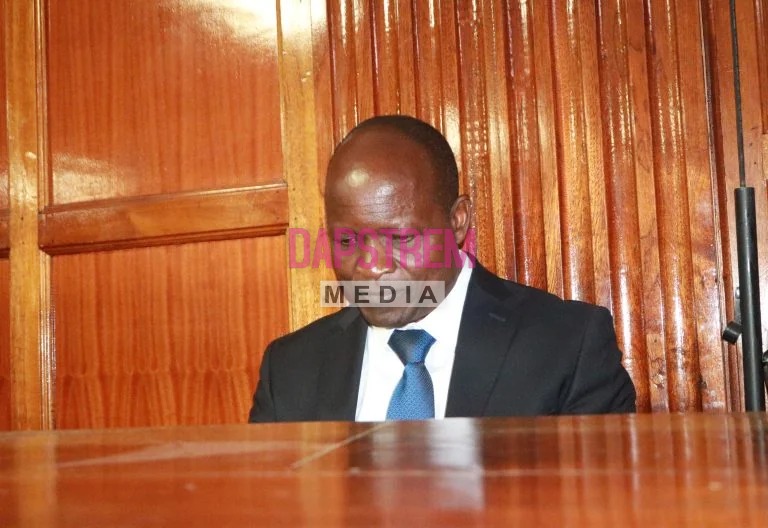
Sharon Otieno Murder: Okoth Obado Sentenced to 25 Years in Prison
Former Migori Governor Okoth Obado has been sentenced to 25 years in prison for the murder of Sharon Otieno, bringing a significant chapter in one of Kenya’s most disturbing and closely followed criminal cases to a major turning point.
The sentence was delivered on Friday, November 27, 2026, by High Court Judge Cecilia Wairimu Githua at the Milimani Law Courts in Nairobi. Obado’s former personal assistant, Michael Juma Oyamo, was also sentenced to 25 years in prison, while former Migori County Clerk Caspal Ajwang Obiero received an 18-year prison term.
The sentencing follows their conviction on July 23, 2026, after the court found that the prosecution had established their involvement in Sharon’s murder beyond reasonable doubt. The three men had denied the charges during the trial, but the court ultimately concluded that they played different roles in a criminal plan that led to the death of the young university student.
The decision marks an important moment for Sharon’s family, who have endured years of grief, uncertainty and a lengthy legal battle in pursuit of justice. It also brings renewed attention to the circumstances surrounding her death and the responsibility of those found guilty of taking part in the crime.
Court Rejects Pleas for Leniency
During the sentencing proceedings, the court considered submissions from the prosecution, the defence teams and Sharon’s family. The convicted men had asked for leniency, with their lawyers seeking non-custodial sentences on the basis of their personal circumstances, family responsibilities and other mitigating factors.
Obado’s defence had particularly appealed for a non-custodial sentence, arguing that he was a first offender and had previously served in public positions, including as a teacher, principal and governor. His lawyers also cited his health concerns and the reconciliation efforts that had taken place between him and Sharon’s family.
However, the court found that the aggravating circumstances surrounding the murder outweighed the mitigating factors presented by the defence.
In her sentencing remarks, Justice Githua described Obado as the principal architect of the criminal enterprise that led to Sharon’s killing. The judge said he had provided the motive and financial resources that supported the plan, while Oyamo played a role in facilitating its execution.
Obiero, who was the former Migori County Clerk, was also found to have played a part in the events surrounding the murder.
The court’s decision to impose custodial sentences reflects the seriousness with which it viewed the crime. The judge rejected the argument that reconciliation or financial support to Sharon’s children should determine whether Obado would serve a prison sentence.
The court emphasised that punishment for a serious criminal offence cannot be based primarily on the financial dependence of a victim’s family on the person convicted. Such an approach, the judge indicated, could create a dangerous precedent in which offenders escape appropriate punishment because they are able or willing to provide financial assistance.
The court also declined to order compensation or restitution to Sharon’s family, explaining that there was insufficient evidence to establish the extent of the loss and damage suffered. Although the judge acknowledged the family’s pain and financial burden, she said the court needed adequate supporting material to make a proper assessment.
The sentences handed to the three men were therefore based on the court’s assessment of their individual responsibility and the gravity of the crime.
The Tragic Story of Sharon Otieno
Sharon Otieno was a 26-year-old student at Rongo University whose life was cut short in September 2018. At the time of her death, she was seven months pregnant.
Her murder shocked the country and attracted widespread attention because of the circumstances surrounding the case and the involvement of a powerful political figure.
On September 3, 2018, Sharon was abducted after leaving a hotel in Rongo alongside Nation Media Group journalist Barrack Oduor. The journalist managed to escape, but Sharon was taken away by her attackers.
Her body was discovered the following day in a thicket near Kodera Forest in Homa Bay County. The discovery sparked public outrage and prompted a major investigation into the circumstances of her disappearance and death.
The case quickly became one of the most prominent criminal investigations in the country, with detectives from the Directorate of Criminal Investigations taking over inquiries into the killing.
As investigations progressed, Obado, Oyamo and Obiero were arrested and charged with murder. Their prosecution involved a lengthy trial that examined evidence, witness accounts and the alleged roles of the accused in the events leading to Sharon’s death.
The court eventually found that the murder was not a spontaneous act but a planned crime in which the accused persons played distinct roles.
The conviction of the three men in July 2026 represented a major milestone in the case. Their sentencing on November 27 now provides a further judicial conclusion to the criminal proceedings, although the impact of Sharon’s death continues to be felt by her family and the wider community.
A Family That Has Carried the Burden for Years
For Sharon’s parents and relatives, the legal process has been a painful journey that has lasted nearly eight years.
The family has had to endure repeated court appearances, public scrutiny and the emotional strain of revisiting the circumstances of Sharon’s death. During the proceedings, they told the court about the financial burden they had incurred while pursuing justice, including expenses related to attending hearings and funeral arrangements.
The family had also expressed concern about the welfare of Sharon’s three children, who were left without their mother following the tragedy.
In a surprising development during the mitigation proceedings, Sharon’s mother, Melida Auma, appealed to the court to consider a non-custodial sentence for Obado. She said the family had forgiven the former governor and feared that a lengthy prison sentence would create further emotional pain.
Her appeal was also connected to the children’s future, with the family hoping that Obado would continue supporting them financially.
However, Sharon’s father, Douglas Zacharia Otieno, drew a distinction between Obado and the other two convicted men. While he expressed a willingness to accept leniency for the former governor following reconciliation efforts, he maintained strong feelings against Oyamo and Obiero.
The family’s position highlighted the complicated nature of justice after a devastating crime. For some victims’ relatives, punishment is essential to accountability, while others may seek reconciliation and practical support for the children or dependants left behind.
The court acknowledged the family’s views but ultimately maintained that the sentence had to reflect the seriousness of the offence and the law’s responsibility to protect the wider public interest.
Justice, Accountability and the Meaning of the Sentence
The sentencing of Obado and his co-convicts carries wider implications beyond the individuals involved in the case.
First, it reinforces the principle that public office and political influence do not place anyone above the law. Obado once held a powerful position as the governor of Migori County, but his former status did not prevent the court from holding him accountable after finding him guilty.
The case also demonstrates the importance of a judicial process that examines evidence and determines criminal responsibility through the courts. Despite the public attention and intense emotions surrounding the murder, the proceedings ultimately reached a conclusion based on the evidence presented before the judge.
The sentences further underline the seriousness of planned murder and the consequences of participating in a criminal enterprise. By assigning different prison terms to the three convicts, the court recognised their respective roles while maintaining that each had contributed to the crime.
The case also raises important questions about restorative justice, forgiveness and the rights of victims’ families. Sharon’s parents demonstrated that it is possible for a family to seek reconciliation with one convicted person while demanding accountability from others.
Nevertheless, the court made it clear that forgiveness does not automatically erase criminal responsibility. A murder case is not solely a private dispute between two families; it is also an offence against the state and society.
The decision therefore sends a message that serious crimes must be addressed through the justice system, even where reconciliation has taken place.
A Painful Chapter Reaches a Major Turning Point
The 25-year prison sentence imposed on Okoth Obado brings a major development in the long-running Sharon Otieno murder case. His co-convicts, Michael Juma Oyamo and Caspal Ajwang Obiero, will also serve substantial prison terms following their respective sentences.
The court’s decision closes an important stage of the criminal proceedings that began after Sharon’s murder in 2018. It also represents a moment of accountability for a crime that shocked the country and left a family struggling with an irreversible loss.
For Sharon’s loved ones, no sentence can restore the life that was taken or replace the mother their children lost. However, the judgment provides a formal recognition of the criminal responsibility established by the court and marks the culmination of years of seeking justice.
As the three men begin serving their sentences, the case will remain a reminder of the devastating consequences of violence, the importance of protecting vulnerable individuals and the responsibility of the justice system to hold offenders accountable.
Sharon Otieno’s story is ultimately one of a young woman whose future was tragically cut short. Her death continues to serve as a sobering reminder that behind every high-profile criminal case are human lives, grieving families and children whose futures are permanently changed.
The sentencing of Obado and his co-convicts may bring the courtroom proceedings to a major conclusion, but the loss suffered by Sharon’s family will remain long after the judgment has been delivered.