Sifuna Breaks Silence on Alleged Fallout with Babu Owino as Linda Mwananchi Leadership Dispute Takes Centre Stage
Nairobi Senator Edwin Sifuna has broken his silence on growing claims of a political fallout between him and Embakasi East Member of Parliament Babu Owino, offering his account of the disagreements surrounding the leadership and political direction of the Linda Mwananchi movement.
In an interview with Citizen Radio on Thursday, November 19, 2026, Sifuna addressed questions about the reported differences, explaining how the group settled on a political party and how he eventually became its party leader and presidential candidate ahead of the 2027 General Election.
His remarks come days after Babu Owino publicly revealed details of an alleged initial agreement in which Sifuna was expected to become the movement’s presidential candidate while he would serve as party leader.
Babu claimed that the arrangement changed after the group left the Orange Democratic Movement (ODM), with some members pushing for Sifuna to take both the presidential candidacy and party leadership positions.
The claims sparked fresh debate about the relationship between the two politicians, who previously appeared united in their efforts to build Linda Mwananchi into a formidable political movement capable of challenging President William Ruto’s administration.
Sifuna, however, has disputed the suggestion that he betrayed his colleagues or deliberately sidelined Babu. He maintained that the decision-making process involved discussions among several leaders who wanted to establish a common political vehicle through which they could pursue their political ambitions.
The senator’s explanation has brought renewed attention to the internal negotiations that shaped Linda Mwananchi, particularly the question of who should control the party machinery and how the movement’s leading figures should share political responsibilities.
With the 2027 elections approaching, the disagreement has become an important test of the movement’s ability to maintain unity while accommodating the individual ambitions of its prominent members.
Sifuna explains how the political disagreement began
According to Sifuna, discussions about establishing a common political party began after tensions within ODM forced several leaders to consider alternative political arrangements.
The group wanted to establish a new political home that would allow its members to continue working together and pursue their political ambitions without depending on the existing party structures.
Sifuna explained that the leaders agreed to examine political parties owned by members of the group before settling on one that could serve as their common vehicle.
He revealed that five leaders presented their political parties for consideration. They included Babu Owino, Caroli Omondi, Godfrey Osotsi, George Natembeya and Caleb Amisi.
A sub-committee comprising the owners of the respective parties was established to submit the relevant documents for legal assessment.
The legal team was expected to examine the parties’ registration status, ownership, structures and compliance with electoral requirements before recommending the most suitable option.
After the assessment, the group eventually agreed to settle on the Equitable Party as its common political vehicle.
Sifuna pointed to the decision by some leaders to abandon their individual political platforms and join the selected party as evidence that the process involved collective compromise.
He also mentioned former Meru Governor Kawira Mwangaza and Mavoko MP Patrick Makau among those who joined the arrangement.
The senator’s account differs from Babu’s earlier explanation, which suggested that his party was initially expected to become the movement’s political vehicle before the arrangement changed.
The disagreement therefore appears to centre on different interpretations of the discussions and understandings reached by the leaders during the process of establishing a common political platform.
Capital FM+1
Why Sifuna became party leader and presidential candidate
One of the most significant issues addressed by Sifuna was how he ended up occupying the positions of party leader and presidential candidate, despite claims that Babu had initially been considered for party leadership.
The Nairobi Senator maintained that the leadership arrangement was agreed upon collectively and was not imposed on other members of the movement.
He questioned why colleagues would trust him with the responsibility of seeking the country’s highest political office but fail to trust him with the leadership of the party through which he would pursue that ambition.
Sifuna argued that the decision was not intended to undermine Babu or deny any member an opportunity to advance their political interests.
His explanation suggests that the leadership question was discussed as part of the broader effort to establish a unified political organisation rather than as a personal contest between the two politicians.
However, the matter has remained contentious because party leadership carries considerable political influence. A party leader can have significant control over organisational structures, internal decision-making, nominations and the direction of the political outfit.
For politicians preparing to contest major elective positions, retaining influence over a political party can also provide an important form of political security.
This is particularly relevant in Kenya, where political parties often play a central role in determining candidates, negotiating coalitions and mobilising voters during election periods.
Babu had previously explained that he wanted to retain his own political party to protect his political interests while supporting Sifuna’s presidential ambitions.
He argued that the two leaders could pursue different political positions without one having to surrender their independent political structures.
The Embakasi East MP had also maintained that their earlier understanding involved Sifuna becoming the presidential candidate while he served as party leader.
Sifuna’s latest explanation therefore provides a different account of how the leadership arrangement was reached, leaving questions about the original discussions and the expectations of individual members.
Capital FM+2
Sifuna dismisses claims that he betrayed his colleagues
During the interview, Sifuna also pushed back against suggestions that he had betrayed Babu Owino and other leaders who helped establish the Linda Mwananchi movement.
He argued that the allegations circulating on social media did not necessarily reflect the actual state of relationships among the movement’s leading figures.
The senator maintained that Babu, Siaya Governor James Orengo and other colleagues had not personally confronted him with accusations that he had wronged them.
He challenged those spreading claims of a personal fallout to distinguish between political disagreements and the breakdown of personal relationships.
His remarks appeared aimed at calming speculation that the disagreements over party leadership had completely destroyed the working relationship between the politicians.
Sifuna also expressed concern that discussions about internal disagreements were distracting attention from the movement’s broader political objectives.
He argued that Linda Mwananchi had a responsibility to the Kenyans who had placed their hopes in the movement and that its leaders should concentrate on building a strong political organisation.
The senator revealed that the group had held more than 100 meetings in an effort to convince its members to operate under one political party.
Those discussions, according to his account, were intended to find a compromise that would allow different political leaders to work together while pursuing their individual ambitions.
He further indicated that leaders who preferred to retain their own political parties were allowed to continue with those arrangements.
His position was that political differences should not automatically be interpreted as personal hostility or evidence that the entire movement was collapsing.
Capital FM
Babu Owino’s position and the earlier agreement
Babu Owino’s earlier remarks are central to the debate because they brought the alleged leadership disagreement into the public domain.
In an interview published on November 14, the Embakasi East MP explained that he and Sifuna had initially agreed on a political arrangement in which Sifuna would become the presidential candidate while he would serve as party leader.
Babu claimed that the understanding changed after the group left ODM, with some members arguing that the person seeking the presidency should also lead the party.
He maintained that both politicians needed room to grow politically and that their ambitions should not be structured in a way that placed one leader above the other.
The MP also explained that he had established his own political party before the Linda Mwananchi movement emerged. He said retaining an independent political platform was important because political alliances could change and leaders needed to protect their interests.
Babu referred to the impeachment of former Deputy President Rigathi Gachagua, arguing that political leaders should understand the importance of having their own party structures.
He also maintained that politics should be guided by clearly negotiated interests rather than personal trust alone.
Despite the disagreement, Babu insisted that he was not competing with Sifuna because their political ambitions were different. While Sifuna was pursuing the presidency, he was preparing to contest the Nairobi gubernatorial seat.
He also maintained that he supported Sifuna’s presidential ambitions, even as he pursued a separate political path.
His comments suggest that the dispute is not necessarily about whether the two politicians can support each other’s ambitions, but about how their political interests and organisational responsibilities should be accommodated.
Citizen Digital+1
Linda Mwananchi faces an important test of unity
The disagreement comes at a critical moment for the Linda Mwananchi movement, which has been positioning itself as an alternative political force ahead of the 2027 General Election.
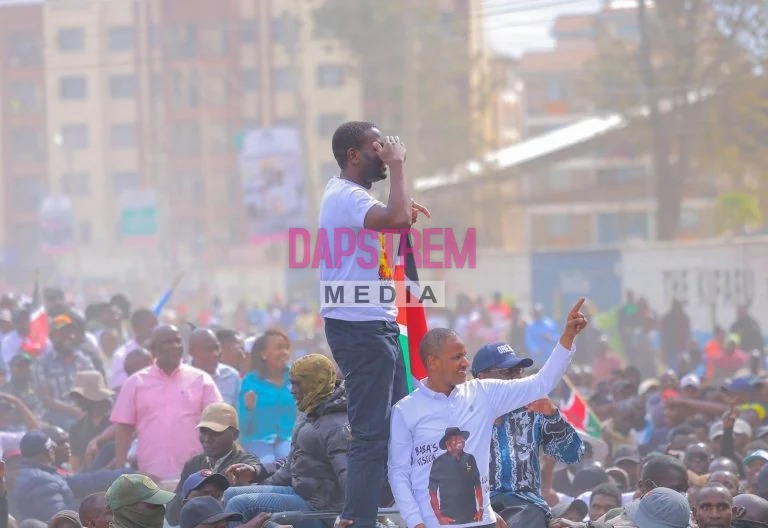
The movement gained attention through public rallies and political mobilisation involving leaders who had become increasingly critical of the direction of ODM and the Kenya Kwanza administration.
Sifuna and Babu were among its most recognisable figures, with their public appearances attracting significant interest from supporters and political observers.
Their partnership helped give the movement visibility, particularly among young people and Kenyans dissatisfied with the current political establishment.
However, the question of which political party should carry the movement’s ambitions has emerged as a major source of disagreement.
Sifuna initially faced difficulties in establishing Linda Mwananchi as a political party and subsequently joined the Equitable Party, which was later rebranded as the Linda Mwananchi Movement party.
Babu, meanwhile, pursued a separate political arrangement through his own political outfit, which became known as the Mwananchi Party.
These developments have raised questions about whether the movement can maintain a united political front while its leading figures retain separate political structures.
The challenge is particularly significant because political movements require more than popular rallies and public declarations to succeed in elections. They also need functioning party structures, clear leadership arrangements, grassroots networks, resources and agreed nomination procedures.
Without proper coordination, disagreements over leadership and political interests could weaken mobilisation efforts and create opportunities for rival political groups to attract dissatisfied members.
The situation also places pressure on other prominent figures associated with Linda Mwananchi, including James Orengo, Godfrey Osotsi, George Natembeya, Caleb Amisi and Caroli Omondi, to help maintain cooperation within the broader political formation.
Their ability to manage disagreements and agree on a common strategy could determine whether the movement develops into a serious electoral force or struggles with internal divisions.
Capital FM+2
The 2027 General Election adds pressure
With the August 2027 General Election approaching, the disagreements between Sifuna and Babu have wider political implications.
Sifuna has emerged as one of the prominent opposition figures positioning himself for the presidency, while Babu has been building his political profile around his ambition to become Nairobi governor.
Both positions require substantial political organisation, financial resources, grassroots support and strong relationships with other political leaders.
For Sifuna, maintaining the support of influential figures within Linda Mwananchi could strengthen his presidential ambitions and help him build a national political network.
For Babu, retaining an independent political platform could give him greater control over his Nairobi gubernatorial campaign and future political decisions.
The two ambitions are not necessarily incompatible. However, the leaders must agree on how their political structures will work together, particularly when it comes to coalition arrangements, campaign activities and the distribution of responsibilities.
Their disagreement also highlights a familiar challenge in Kenyan politics, where political alliances are often built around shared interests but can become complicated when individual ambitions begin to take shape.
As the election approaches, voters will be interested in whether the movement can provide a clear alternative to the established political parties.
The ability of its leaders to resolve internal disagreements could influence public confidence in their capacity to manage a larger political organisation and eventually govern the country.
For supporters who viewed Linda Mwananchi as a platform for political change, the latest developments are a reminder that unity must be supported by clear agreements and a common understanding of the movement’s future.
Sifuna urges leaders to focus on the bigger picture
In his latest remarks, Sifuna appeared keen to move the conversation away from personal disagreements and towards the movement’s broader political objectives.
His position is that the expectations of Kenyans who support Linda Mwananchi should take priority over disagreements surrounding individual leadership positions.
The senator argued that the movement cannot afford unnecessary distractions when it has a responsibility to build a political organisation capable of competing in the next General Election.
His remarks could be interpreted as an attempt to reassure supporters that the reported disagreements do not necessarily mean the movement has abandoned its original mission.
However, the questions raised by Babu’s earlier account remain important and may require further engagement among the leaders involved.
A lasting resolution will likely depend on whether the politicians can establish clear agreements concerning party leadership, presidential candidacy, individual political ambitions and the future management of their political organisations.
For now, Sifuna has offered his side of the story, disputing allegations that he deliberately sidelined his colleagues and explaining how he believes the party leadership arrangement was reached.
Babu has also maintained that he supports Sifuna’s presidential ambitions despite choosing to protect his own political interests.
Whether their explanations will settle the matter remains to be seen.
What is clear is that the future of Linda Mwananchi will depend heavily on how its leading figures manage their differences as they prepare for the 2027 political contest.
The latest exchange has therefore opened another chapter in the movement’s political journey, placing its leadership, unity and long-term ambitions under public scrutiny.