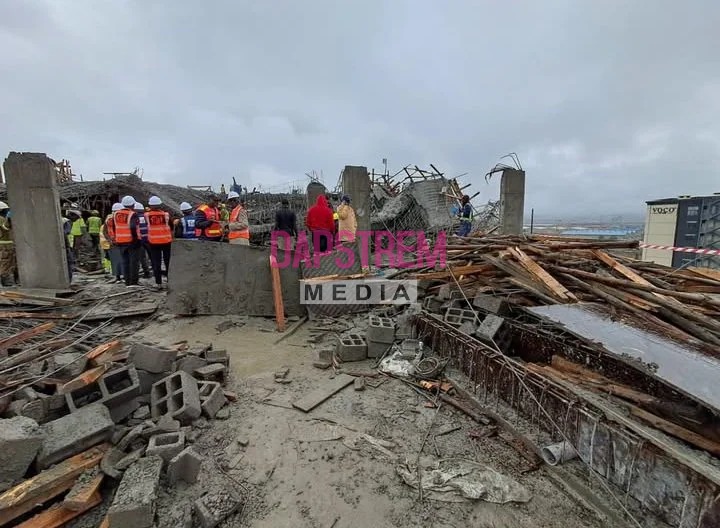
Three Rescued as Building Collapses in Syokimau, One Person Missing
Three people have been rescued after a building under construction collapsed in Syokimau, Machakos County, triggering an emergency search and rescue operation. One other person was reported missing as rescue teams rushed to the scene to search through the debris.
The incident occurred on Friday, November 13, 2026, raising fresh concerns about construction safety and the enforcement of building regulations in the Nairobi metropolitan area.
The Kenya Red Cross confirmed the incident in an update, saying three people had been rescued and taken to hospital for medical attention. The humanitarian organisation also confirmed that one person remained unaccounted for as emergency teams continued searching the site.
The rescue operation brought together different emergency response teams, including the Kenya Red Cross Action Team, local authorities, police officers and other response partners. Their immediate priority was to locate the missing individual and ensure that anyone trapped beneath the collapsed structure received assistance.
The incident has once again drawn attention to the dangers associated with construction activities, particularly where buildings are still undergoing development and workers are exposed to potential structural failures.
Rescue teams launch emergency operation
Following the collapse, emergency responders were deployed to the scene to coordinate rescue efforts and assess the situation.
The Kenya Red Cross said its response team was working alongside other agencies to search for the missing person and provide assistance to those affected.
The three rescued individuals were rushed to hospital, although further details about their identities and the extent of their injuries had not immediately been established.
Rescue teams faced the urgent task of examining the debris and determining whether anyone else could have been trapped inside the structure.
Police officers and other emergency personnel also moved to secure the affected area, helping to create space for rescue workers and prevent members of the public from interfering with the operation.
Such incidents require close coordination because collapsed buildings can contain unstable sections that may shift during rescue activities. Responders must therefore assess the structure carefully before moving debris or attempting to reach people who may be trapped.
The Kenya Red Cross indicated that it would provide further information as the operation progressed.
Authorities expected to investigate the cause
Although the immediate priority remained the rescue operation, attention is also expected to turn to the circumstances surrounding the collapse.
Officials from the National Construction Authority and Machakos County Government are expected to examine the site and establish whether the building had obtained the necessary approvals and complied with construction safety requirements.
Investigators will also need to establish the condition of the structure before the incident and whether the construction work followed approved architectural and structural designs.
The cause of the collapse had not been officially established in the initial reports. It would therefore be premature to attribute the incident to poor workmanship, substandard materials or negligence before investigations are completed.
However, the incident raises important questions about the supervision of construction projects and the responsibility of developers, contractors and relevant regulatory authorities.
The National Construction Authority plays an important role in regulating the construction industry in Kenya. Its responsibilities include registering construction projects, accrediting contractors and monitoring compliance with relevant construction standards.
County governments also have responsibilities involving development approvals, building inspections and enforcement of planning regulations.
These institutions are expected to ensure that buildings are constructed according to approved plans and that developers observe the safety requirements throughout the construction process.
Where violations are identified, authorities have a responsibility to take appropriate enforcement action before unsafe structures expose workers and members of the public to danger.
Fresh concerns over building safety in Kenya
The Syokimau incident comes amid growing public concern over building collapses in Nairobi and surrounding areas.
Over the years, several construction-related disasters have exposed weaknesses in building supervision, regulatory enforcement and compliance with approved construction standards.
One of the most recent major incidents occurred in Eastleigh, Nairobi, where an under-construction building collapsed on October 23, 2026.
The Eastleigh disaster triggered a major multi-agency rescue operation involving police officers, the Kenya Red Cross, the Kenya Defence Forces and other emergency responders.
The incident resulted in multiple casualties, with eight people confirmed dead and four rescued alive by November 6. Three others were still reported missing after the search operation was concluded.
The tragedy raised serious questions about construction approvals, inspection procedures and the responsibilities of individuals involved in the development.
Investigations into the Eastleigh collapse also placed renewed attention on the need for accountability within the construction sector.
The Syokimau incident therefore comes at a time when Kenyans are demanding stronger measures to prevent unsafe buildings from being constructed or occupied.
Why construction safety inspections matter
Building collapses can have devastating consequences for construction workers, residents, business owners and surrounding communities.
Construction sites often involve heavy machinery, concrete structures, steel reinforcement and other materials that require careful handling and professional supervision.
A failure in structural design, construction methods or temporary support systems can expose workers to serious danger.
For this reason, construction projects must undergo appropriate technical assessments at different stages of development.
Architects, engineers, contractors and site supervisors all have specific responsibilities in ensuring that buildings meet the required standards.
Developers must also ensure that they engage qualified professionals and obtain the necessary approvals before undertaking construction activities.
Regular inspections are equally important because a building that appears stable during one stage of construction may develop serious weaknesses as additional floors and structural components are added.
Authorities must therefore maintain effective monitoring systems instead of relying solely on documents submitted during the initial approval process.
The Syokimau collapse provides another reminder that construction safety must remain a priority throughout the development of a building.
Public safety remains a priority
The incident has also highlighted the importance of coordinated emergency response systems in dealing with disasters.
The Kenya Red Cross and other emergency agencies play an important role in responding to accidents, floods, building collapses and other emergencies across the country.
Their ability to reach affected locations quickly can make a significant difference when people are trapped or injured.
Members of the public also have a responsibility to cooperate with emergency personnel during rescue operations.
Residents should avoid approaching unstable structures or entering restricted areas because falling debris and shifting building materials can cause additional injuries.
They should also allow rescue teams sufficient space to operate and avoid spreading unverified information about victims or the circumstances surrounding an incident.
Families seeking information about affected individuals should rely on official updates from the relevant authorities and emergency response agencies.
Pressure mounts for stronger enforcement of building regulations
The collapse is likely to renew calls for stronger enforcement of construction regulations, particularly in rapidly developing areas around Nairobi.
Syokimau has experienced significant residential and commercial development over the years, attracting investors and property developers seeking to meet growing demand for housing and business premises.
However, rapid urban development must go hand in hand with proper planning, professional supervision and strict adherence to safety requirements.
The increasing demand for buildings should never become an excuse for overlooking structural standards or bypassing regulatory procedures.
County governments and national agencies must ensure that construction projects are properly assessed and monitored from the approval stage to completion.
Developers who violate safety regulations should also face appropriate legal consequences where investigations establish wrongdoing.
At the same time, authorities must improve public awareness and encourage residents to report suspected unsafe construction activities before they develop into disasters.
The latest incident demonstrates that construction safety is not merely a technical issue affecting engineers and developers. It is a public safety concern that directly affects workers, families and entire communities.
As rescue teams continue their efforts to locate the missing person, attention will remain on the condition of the affected building and the findings of the expected investigations.
For now, the priority is to account for everyone affected, provide medical assistance to the rescued individuals and establish what led to the collapse.
The incident serves as another urgent reminder that every construction project must meet the required safety standards to protect human lives.