Ghana Could Lose 550,000 Jobs to Rising Heat by 2040, ILO Warns
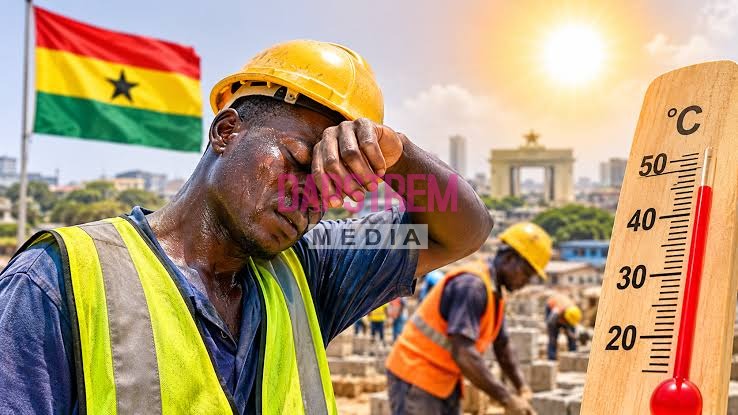
Ghana could lose the equivalent of 550,000 full-time jobs by 2040 as rising temperatures and workplace heat stress reduce working hours and labour productivity, according to new studies by the International Labour Organization (ILO).
The projection is based on a low-emissions climate pathway, meaning the employment impact could become more severe under higher-emissions scenarios.
The findings form part of a wider assessment covering Ghana, Ethiopia and Senegal. Across the three countries, heat stress could account for approximately 2.46 million full-time equivalent jobs in lost working time by 2040.

The studies also project combined annual Gross Domestic Product (GDP) losses of approximately US$67 billion across the three countries compared with the historical reference period.
Ghana Faces Growing Economic Pressure From Extreme Heat
According to the ILO findings, Ghana could experience annual GDP losses of approximately US$23.2 billion by 2040 because of reduced working hours and productivity associated with workplace heat stress.
The impact is already being felt. In 2023, heat stress accounted for the equivalent of more than 345,000 additional full-time jobs lost in Ghana compared with an average year during the historical reference period.
Agriculture represented around two-thirds of these estimated working-time losses, highlighting the vulnerability of workers whose livelihoods depend on outdoor activities.
The projections do not mean that 550,000 people will necessarily become unemployed. Rather, they represent the equivalent amount of full-time working hours that could be lost as workers reduce their activity or become less productive because of excessive heat.
Agriculture and Construction Among the Most Exposed Sectors
Agriculture and construction are among the industries expected to face significant pressure as temperatures continue to rise.
Both sectors involve physically demanding tasks, often performed outdoors and under direct sunlight.
Farmers, construction workers and other outdoor employees may struggle to maintain normal working hours during periods of extreme heat. This can reduce productivity, affect earnings and increase workplace health and safety risks.
However, the impact is not limited to outdoor occupations. The ILO warns that manufacturing, transport, trade and services could also experience disruptions.
Workers in the informal economy are particularly vulnerable because many depend on daily earnings and may not have access to paid leave, adequate cooling facilities or other forms of workplace protection.
Ethiopia and Senegal Also Face Major Job Losses
The ILO assessment shows that Ghana is part of a wider regional challenge affecting several African economies.
Ethiopia is projected to experience the equivalent of approximately 1.78 million full-time jobs lost by 2040, while Senegal could face losses equivalent to 129,000 jobs.
Their combined annual GDP losses are estimated at US$33.3 billion for Ethiopia and US$10.5 billion for Senegal.
Together with Ghana’s projected US$23.2 billion loss, the three countries could experience approximately US$67 billion in annual economic losses by 2040.
The research also found that heat stress had already affected working time and economic output in all three countries in 2023.
ILO Calls for Measures to Protect Workers
The ILO says governments, employers and workers need to work together to reduce the impact of rising temperatures on employment and productivity.
Among the proposed measures are adjusting working hours to avoid the hottest periods of the day, introducing suitable rest breaks and providing shaded working areas.
Employers are also encouraged to ensure workers have access to drinking water and cooling facilities, while governments are urged to strengthen occupational safety and health standards.
The organisation further highlights the importance of social protection, particularly for informal-sector workers who may lose essential income when they are unable to work during extreme heat.
Fanfan Rwanyindo Kayirangwa, the ILO Regional Director for Africa, said heat stress should be recognised as an employment, health and economic issue rather than only an environmental concern.
She emphasised that protecting workers from excessive heat also helps safeguard livelihoods, businesses and the resilience of national economies.
Climate Change Becoming a Workplace Challenge
The findings are a reminder that climate change is not only affecting the environment but also the way people work and earn a living.
For Ghana, where agriculture and other labour-intensive activities support many livelihoods, preparing for rising temperatures will be increasingly important.
The ILO studies form part of a six-country research initiative that also covers Lebanon, the Maldives and Sri Lanka. The research combines climate projections, labour market data and economic modelling to examine the effects of workplace heat stress.
As temperatures continue to rise, the challenge for governments and businesses will be finding ways to protect workers while maintaining productivity and economic growth.
The projected loss of 550,000 full-time equivalent jobs places the issue firmly on Ghana’s employment and economic agenda, with the decisions made today potentially shaping the future of its workforce.