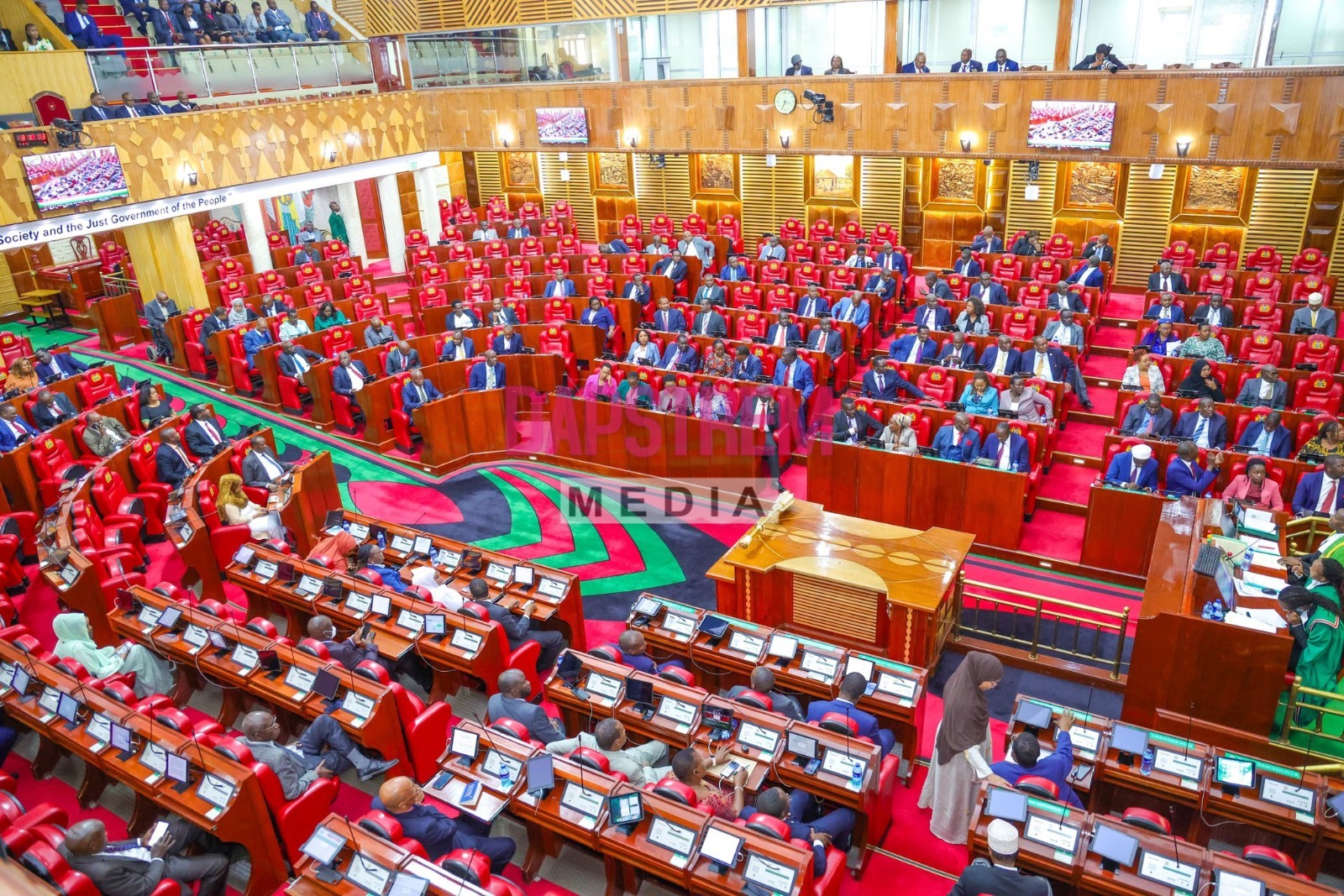
MPs Vote to End IEBC Livestreaming of Election Results Ahead of 2027
Kenya’s preparations for the 2027 General Election have entered a new phase of debate after Members of Parliament voted to remove the legal requirement compelling the Independent Electoral and Boundaries Commission (IEBC) to livestream election results as they are announced at polling stations. The decision has raised fresh questions about electoral transparency, public accountability and the measures needed to protect the credibility of the country’s next elections.
The National Assembly passed the Elections (Amendment) (No. 2) Bill, 2024, on Thursday, October 22, 2026, paving the way for changes to Section 39 of the Elections Act, which governs the determination, transmission and declaration of election results. The proposed changes would remove the specific statutory requirement for the IEBC to establish a mechanism for livestreaming results from polling stations, potentially changing how Kenyans follow the counting and announcement of votes in 2027. People Daily
The decision comes at a sensitive time as political parties, election observers, civil society organisations and ordinary citizens begin preparing for the next General Election. With the presidential race expected to attract intense political competition, the way votes are counted, transmitted, verified and announced will remain a major concern.
For many Kenyans, livestreaming has become an important feature of election coverage. It allows citizens to follow the announcement of results at polling stations without necessarily travelling to the locations where votes are counted. Through television, online platforms and social media, members of the public can observe the process as electoral officials announce results.
The removal of the legal requirement therefore represents more than a change in election procedures. It raises questions about how much access the public will have to the results announcement process and whether the remaining safeguards will provide sufficient transparency ahead of the 2027 polls.
What the proposed changes mean for the IEBC
At the centre of the controversy is Section 39 of the Elections Act, which outlines how election results should be determined, transmitted and declared. The existing framework includes a requirement for the IEBC to establish a mechanism for livestreaming results announced at polling stations.
The proposed amendment seeks to remove that specific requirement from the law. If the changes become law in their current form, the commission would no longer be legally compelled under that provision to livestream results as they are announced.
However, the distinction between removing a mandatory livestreaming requirement and ending all electronic transmission of election results is important. The proposed changes do not automatically eliminate electronic transmission, verification procedures or the publication of polling-station results forms.
The IEBC would still have responsibilities relating to the management of election results, including their verification and official declaration. The proposed framework also retains provisions for transmitting presidential results electronically and publishing results documents through an online public portal.
This means that the central question is not whether Kenya will abandon electronic election management altogether. Instead, the debate concerns whether the public should continue to have a legally guaranteed opportunity to watch results being announced in real time.
Livestreaming and electronic transmission serve related but different purposes. Electronic transmission moves results through the electoral system, while online publication allows people to access official records. Livestreaming enables the public to watch the announcement itself as it happens.
Although these mechanisms can complement one another, removing one does not necessarily mean the others will stop operating. Nevertheless, critics argue that the loss of a mandatory live feed could reduce the immediacy of public scrutiny during a crucial stage of the electoral process.
Why livestreaming has become an important electoral safeguard
Kenya’s debate over election transparency cannot be separated from the country’s electoral history. The disputed 2007 General Election and the violence that followed exposed the devastating consequences of a breakdown in public confidence in electoral institutions.
The experience prompted years of discussions about electoral reforms, accountability and the need to strengthen the credibility of elections. Kenya’s 2010 Constitution established principles requiring electoral systems to uphold transparency, accountability, accuracy and verifiability.
Livestreaming became one of the mechanisms through which the public could follow the announcement of results at polling stations. It also enabled journalists, political parties and election observers to compare figures announced at the source with those later transmitted and tallied at constituency and national levels.
This comparison can help identify discrepancies and prompt questions about figures that appear inconsistent. While livestreaming alone cannot guarantee a free and fair election, it offers an additional avenue through which citizens can observe the process and scrutinise the information being released.
For journalists, the system provides a direct source of information during election coverage. Newsrooms can monitor results as they emerge, compare them with official records and provide updates to audiences without relying entirely on delayed announcements or second-hand information.
Political parties and candidates also benefit from access to the same public information. Their agents can compare results from polling stations with the figures recorded in official documents and raise concerns through the appropriate electoral or legal channels.
For ordinary voters, livestreaming offers an opportunity to follow the process from wherever they are. A voter in a remote village or a Kenyan living abroad can monitor the announcement of results without being physically present at a tallying centre.
Removing the legal obligation to provide that access has therefore attracted concern among those who believe public scrutiny should remain a central feature of election management.
David Maraga opposes the move
Former Chief Justice David Maraga has emerged among the prominent voices opposing the proposed changes. In a statement shared on social media on Friday, October 23, 2026, Maraga argued that the Constitution requires Kenya’s electoral system to uphold accuracy, verifiability, security, accountability and transparency.
Maraga warned against measures that could weaken public scrutiny of the electoral process. He also linked the debate to Kenya’s past electoral challenges, arguing that protecting the integrity of elections is essential to safeguarding the will of voters.
The former Chief Justice said he would work with the People’s Coalition for Electoral Reforms to oppose what he considers a rollback of electoral transparency. His position reflects wider concerns about whether removing the mandatory livestreaming provision would weaken safeguards that have helped citizens follow election results.
Maraga’s opposition adds a legal and constitutional dimension to the debate. The question facing the country is whether the proposed changes will provide adequate safeguards for transparency and accountability, even if the law no longer expressly requires the commission to livestream polling-station announcements.
The debate is likely to continue as political leaders, legal experts and electoral reform advocates examine the consequences of the amendment ahead of the 2027 General Election. People Daily
The controversy surrounding the legal framework
The current debate also draws attention to earlier court proceedings concerning the legal treatment of livestreamed election results.
Under the previous framework, the Elections Act required the IEBC to establish a mechanism for livestreaming results announced at polling stations. However, the provision also stated that the streamed results were intended for public information and would not form the basis for the commission’s declaration.
That qualification became the subject of a legal challenge. In 2018, the High Court declared the disputed provision unconstitutional, with the decision subsequently upheld by the Court of Appeal, according to reports on the legislative dispute.
The court questioned the logic of making polling-station results available to the public while limiting their significance in determining the final outcome. The concern was that livestreamed figures should not be treated as separate from the official results from which the final tally is derived.
The current legislative proposal takes a different approach by seeking to remove the express livestreaming requirement from the replacement provisions altogether.
Critics argue that eliminating the requirement does not resolve the broader question of how citizens should access and scrutinise election results. Instead, they believe the country should strengthen the legal framework to ensure that transparency mechanisms operate alongside accurate and verifiable results management.
Supporters of changes to election law, however, may argue that the legal framework needs to be aligned with the procedures used to verify official results and address practical challenges in transmitting information from polling stations.
Whatever the arguments for reform, the debate highlights the importance of ensuring that amendments to election law do not create uncertainty about public access to information or the accountability of electoral officials.
What the changes could mean for the 2027 General Election
The implications of the decision will largely depend on the final legal framework and how the IEBC implements its responsibilities during the next General Election.
If the mandatory livestreaming requirement is removed and no equivalent obligation is introduced, the commission would not be legally required under that provision to broadcast polling-station announcements live. The IEBC could still choose to provide live broadcasts voluntarily, but the public would no longer have the same specific statutory guarantee.
This could affect how quickly Kenyans receive information during the counting and announcement process. Without a mandatory live feed, journalists and members of the public may have to rely more heavily on published results forms, official electronic transmission systems, statements from the commission and information gathered by accredited observers.
Such alternatives can still provide important safeguards, particularly if the IEBC publishes results promptly and makes the underlying documents easy to access. However, the effectiveness of these measures will depend on their reliability, accessibility and consistency across polling stations.
For instance, a public portal containing scanned results forms could allow voters and political parties to compare official records. But access to documents is not exactly the same as watching an announcement unfold in real time. The two mechanisms serve complementary purposes.
The 2027 election will therefore test whether the remaining procedures can maintain public confidence in the absence of a mandatory livestreaming obligation.
The commission will need to communicate clearly about how results are transmitted, verified and published. It will also need to ensure that the procedures are understood by voters, candidates, political parties and observers well before election day.
Any uncertainty about the process could fuel speculation, particularly in closely contested races where small differences in results may attract intense public attention.
The role of the IEBC in maintaining public confidence
The IEBC will remain central to the management of the 2027 General Election regardless of the final position on livestreaming. Its constitutional responsibilities include conducting elections and referendums and ensuring that the electoral process meets the required standards.
Public confidence in the commission will depend not only on the technology it deploys but also on how openly it explains its procedures and responds to concerns.
Electronic systems can help improve the speed and organisation of results management, but technology alone cannot guarantee trust. Voters must also be confident that the systems are secure, the figures are accurately recorded and the process can withstand independent scrutiny.
The commission will therefore face pressure to explain how the proposed changes affect public access to results. It may also need to clarify whether alternative transparency measures will be available during the announcement and tallying process.
Clear communication ahead of the election could help prevent misinformation and unnecessary anxiety. Voters should understand which results documents will be published, where they can find them, how discrepancies can be reported and what procedures govern the official declaration of results.
The commission should also ensure that political parties and accredited observers have access to the information permitted by law. Such measures would help preserve confidence even if the legal requirement for livestreaming is removed.
Ultimately, the success of the electoral process will depend on whether Kenyans can independently examine the information needed to understand how official results are established.
Political parties and candidates prepare for a new debate
The decision is also likely to influence political discussions ahead of the 2027 presidential and parliamentary contests. Electoral procedures often become a major campaign issue, especially when political parties disagree over how results should be announced and verified.
Candidates and their supporters will want assurances that votes will be counted accurately and that any disputes will be handled through established legal channels. For parties competing in closely contested constituencies, access to reliable results information will be particularly important.
The livestreaming debate could therefore become part of the wider political conversation about electoral fairness. Leaders opposed to the amendment may use it to demand stronger transparency safeguards, while those supporting changes may defend the need to revise the legal framework.
However, it is important to distinguish political criticism from evidence of wrongdoing. Removing a legal requirement to livestream results does not, by itself, establish that an election will be manipulated. Similarly, retaining livestreaming would not automatically eliminate every possible electoral irregularity.
The issue is whether the safeguards in place provide sufficient opportunities to verify results, identify errors and resolve disputes fairly.
A credible election requires more than confidence expressed by political leaders. It requires procedures that can be independently examined and a legal framework that gives voters confidence that their choices will be accurately recorded.
What it means for journalists and election observers
The proposed changes could also affect how journalists cover the 2027 polls. During previous elections, media organisations have used livestreamed results to monitor developments and provide updates as figures emerge from polling stations.
Without a mandatory live feed, newsrooms may need to strengthen their verification procedures by collecting official results forms, working with correspondents and accredited observers, and comparing information from multiple reliable sources.
Such work could become more demanding, particularly when results emerge simultaneously from thousands of polling stations across the country.
Election observers will also remain important in documenting how votes are counted and results are announced. Their reports can help establish whether procedures were followed and whether complaints require further investigation.
The media, however, must avoid publishing unverified figures or presenting incomplete tallies as final outcomes. Election reporting requires caution because premature claims can mislead voters and intensify political tensions.
The IEBC’s official declarations will remain central to the process, while journalists should continue distinguishing between preliminary reports, figures from individual polling stations and legally declared results.
At the same time, access to official documents and timely information will be essential. If livestreaming is no longer mandatory, the availability of accurate, accessible and regularly updated results records could become even more important to responsible election coverage.
A test of transparency ahead of the next polls
The National Assembly’s decision has placed the future of mandatory election livestreaming at the centre of Kenya’s preparations for 2027. The debate touches on a fundamental question: how can the country maintain public confidence in election results while ensuring that the legal framework supports accurate and accountable results management?
The proposed changes do not automatically end electronic transmission or online publication of election results. Nevertheless, removing the express legal requirement for livestreaming would take away a distinct mechanism through which citizens have followed polling-station announcements in real time.
The next steps in the legislative process will determine the Bill’s final legal status and the rules that will govern the election. Until the process is completed, the precise legal position should be distinguished from the consequences expected under the proposed framework.
As the country approaches another election cycle, public scrutiny of electoral reforms is likely to intensify. Political leaders, legal experts, civil society organisations and ordinary citizens will continue to debate whether the remaining safeguards are sufficient to protect the credibility of the process.
For the IEBC, the challenge will be to demonstrate that results can be accurately recorded, independently checked and transparently communicated. For Parliament, the responsibility will be to ensure that changes to election law remain consistent with the Constitution and do not undermine the public’s ability to hold electoral institutions accountable.
For voters, the central concern remains straightforward: their ballots must be counted accurately, their choices must be respected and the final results must be credible.
As Kenya moves towards the 2027 General Election, the controversy over livestreaming is likely to remain a major test of the country’s commitment to electoral transparency and public trust.