Shakahola Massacre: Government Releases Eight Bodies to Families for Burial as DNA Tests Identify Victims and Renew Calls for Justice and Accountability
The government has released eight bodies linked to the alleged starvation cult associated with controversial preacher Paul Nthenge Mackenzie to families for burial, offering a measure of closure to relatives who have spent months waiting to establish the fate of their loved ones.
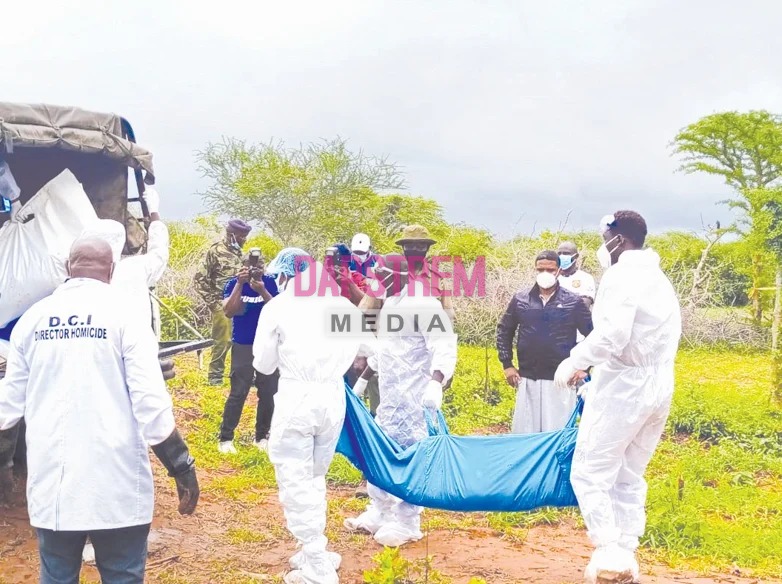
The remains were recovered from Binzaro Forest in Kilifi County, a site linked to the wider Shakahola tragedy that shocked Kenya and raised serious questions about religious extremism, public safety and the protection of vulnerable people.
The release followed DNA tests that helped authorities identify the victims through matches with their living biological relatives. Government pathologist Richard Njoroge said 14 victims had been matched to relatives, but only eight bodies had been collected, leaving six families yet to reclaim their loved ones’ remains.
The eight bodies released include four belonging to relatives from two families in Migori County, two from a family in Homa Bay County and another two from a family in Busia County. The remains had been held at Malindi Sub-County Hospital as forensic experts worked to establish the identities of those who died.
According to reports published on October 15, 2026, authorities are continuing efforts to identify the remaining victims and reunite their remains with their families for dignified burial.
For the families receiving the remains, the development marks an important but painful stage in a long search for answers. While the confirmation of a loved one’s identity can bring relief after prolonged uncertainty, it also makes the reality of the loss impossible to ignore.
Family Discovers the Fate of Six Missing Relatives
One of the most heartbreaking developments involves a family from Migori County that discovered six relatives had died after their remains were identified through DNA testing.
Titus Omondi said the results confirmed the deaths of his younger brother, Charles Seth Okinyi Olum, his brother’s wife, Emily Adoyo Okinyi, and their four children.
The family had previously believed that Charles, who worked as a prison officer, had travelled to Russia with his family in search of better opportunities. Their disappearance had therefore left relatives without a clear understanding of what had happened to them.
The DNA results eventually brought the uncertainty to an end, revealing that the six family members were among those whose remains had been recovered from Binzaro Forest.
Omondi said his family had provided DNA samples, which were subsequently matched with the recovered remains. He expressed relief that they could finally prepare to give their relatives a dignified send-off.
The case illustrates the painful uncertainty that has confronted families searching for people who disappeared after joining groups associated with Mackenzie. Some relatives spent months or years believing their loved ones were still alive, only to receive confirmation of their deaths through forensic investigations.
For families in similar circumstances, the process of identification is about more than collecting a body. It offers an opportunity to mourn, organise a funeral, preserve family memories and begin confronting a loss that may have remained unresolved for years.
However, the emotional burden does not disappear with the release of the remains. Families must still cope with grief, unanswered questions and the difficult task of rebuilding their lives after losing relatives under deeply disturbing circumstances.
Binzaro Forest Deaths Renew Concerns Over the Shakahola Tragedy
The latest development has renewed attention on Binzaro Forest, where investigators recovered dozens of bodies and human remains during investigations into suspected deaths linked to the same controversial religious movement associated with the Shakahola massacre.
Government pathologist Richard Njoroge said homicide detectives recovered 53 bodies and 44 body parts from shallow graves in Binzaro village.
Investigators suspect the deaths are connected to the alleged starvation cult associated with Mackenzie, whose teachings have been at the centre of one of Kenya’s most disturbing criminal investigations in recent years.
The discoveries in Binzaro expanded concerns beyond the original Shakahola Forest burial sites. They raised further questions about the number of people who may have been affected, how long the alleged activities continued and whether more missing people could still be among the unidentified remains.
The Shakahola tragedy first attracted national and international attention in 2023, when authorities began uncovering mass graves in a forest in Kilifi County. Investigators linked many of the deaths to allegations that followers of Mackenzie’s Good News International Church had been encouraged to fast to death in anticipation of meeting God.
The deaths included children and adults, while post-mortem examinations and investigations pointed to different circumstances surrounding some victims’ deaths. The scale of the discoveries shocked the country and prompted renewed scrutiny of religious organisations, oversight mechanisms and the response of law enforcement agencies.
Mackenzie and associates have faced criminal proceedings connected to the deaths. Allegations against accused individuals must, however, be distinguished from matters established through court findings.
The Binzaro discoveries have reinforced the need for thorough investigations, reliable forensic evidence and continued efforts to establish the identities of those who died.
DNA Testing Remains Central to Identifying the Victims
DNA analysis has played a crucial role in identifying the remains recovered from the forest sites. In cases involving bodies that have been buried for extended periods or severely damaged, visual identification alone may not provide reliable answers.
Forensic experts compare genetic material obtained from recovered remains with samples provided by biological relatives. When the results establish a match, authorities can notify families and begin the process of releasing the remains for burial.
The process can be technically demanding and emotionally difficult. Families must provide samples and wait for the results, sometimes without knowing whether their missing relatives are among those recovered.
The release of eight bodies demonstrates the importance of continued cooperation between investigators, medical experts, families and other agencies involved in the identification process.
Authorities have urged relatives of missing people to visit Malindi Sub-County Hospital or their nearest Kenya Red Cross office to submit DNA samples for comparison with profiles generated from recovered remains.
The appeal is particularly important for families who may have lost contact with relatives who travelled to Kilifi or joined religious groups without informing their wider families of their plans.
Some people may initially have believed that their missing relatives had travelled elsewhere for work, religious activities or other opportunities. Others may have had no information about their last known whereabouts.
Providing DNA samples could help such families establish whether their loved ones are among the victims whose remains have been recovered.
The identification process also matters for the integrity of the wider investigation. Accurate records can help investigators connect individuals to specific cases, while preserved forensic information may remain important in ongoing legal proceedings.
Authorities therefore face the dual responsibility of treating the deceased with dignity and ensuring that the evidence needed to establish what happened is properly maintained. <Cite refs={[“turn910154view0″,”turn910154view1”]}/>
Six Bodies Remain at the Mortuary as Families Await Collection
Although eight bodies have been released, six of the 14 victims identified through DNA testing had not been collected by their families at the time of the latest reports.
The outstanding cases highlight the practical and emotional challenges surrounding the return of remains after mass-fatality incidents.
Some families may need additional time to organise transportation, funeral arrangements and other logistical requirements. Others may be struggling with grief or the difficult circumstances surrounding their relatives’ deaths.
The process can also be complicated when family members live far from Kilifi County or when several relatives have died in the same incident. In such cases, the responsibility of organising funerals and making decisions can fall on a small number of surviving family members.
Authorities have continued to encourage families with missing relatives to come forward for identification. The objective is to ensure that as many victims as possible are identified before decisions are made about the long-term handling of unclaimed remains.
The wider Shakahola case has already raised concerns about the large number of bodies and body parts that remained in temporary storage while authorities worked through identification and forensic procedures.
In September 2026, Kilifi County said 443 bodies and body parts associated with the wider tragedy were still being held at Malindi Sub-County Hospital. The county announced plans to give families an opportunity to claim the remains before proceeding with arrangements for the unclaimed bodies.
That process has drawn concern from families and public officials who want to ensure that all reasonable identification efforts are exhausted before burial takes place.
The Wider Shakahola Burial Process Faces Difficult Questions
The release of the eight bodies comes against the background of a broader debate about what should happen to the hundreds of remains still awaiting identification or collection.
Kilifi County has previously indicated that it intends to conclude the handling of unclaimed remains by December 2026. Officials have said any eventual burial should be organised in a way that preserves the possibility of identifying victims in the future.
However, families searching for missing relatives have expressed concern that a mass burial could make it more difficult to obtain answers if DNA testing and other identification work are not adequately completed.
In September, some relatives called for DNA evidence and identification records to be preserved before unclaimed remains are interred. Their concern is understandable: a family that has spent years searching for a missing person may still hope that new information will eventually establish what happened.
Public officials have also questioned whether the communication surrounding deadlines for claiming remains has been sufficiently broad. Relying only on formal notices may fail to reach families who do not regularly access government publications or newspapers.
Wider communication through television, radio, social media, local administrators and community organisations could help inform more families about the available identification procedures.
Authorities must balance the need to resolve a prolonged and difficult process with the rights and needs of families who may still be searching for their loved ones. The handling of the remains should also preserve relevant evidence and allow future identification where possible.
The latest release of eight bodies is therefore an important development, but it does not mean that the wider identification process is complete. Many families may still be waiting for answers, and the government’s next steps will remain under scrutiny.
A Tragedy That Continues to Affect Kenyan Families
More than three years after the Shakahola discoveries began drawing national attention, the tragedy continues to affect families across Kenya.
The deaths have prompted difficult conversations about religious freedom, manipulation, child protection, the regulation of religious institutions and the responsibility of authorities to intervene when credible warning signs emerge.
Religious belief is an important part of life for many Kenyans, and the actions alleged in the Shakahola and Binzaro cases should not be treated as representative of religious communities generally. The central concern is the alleged exploitation of vulnerable people through teachings and practices that exposed them to grave harm.
The tragedy has also demonstrated how people can become isolated from relatives and wider support networks. When a family member disappears, those left behind may not immediately know where to seek help or whether the person is still alive.
Public awareness, accessible reporting channels and cooperation between families and law enforcement agencies can help authorities respond to missing-person cases more effectively.
The investigations also underline the importance of taking reports of coercion, extreme fasting, child endangerment and other potentially harmful practices seriously. Protecting people requires a response that respects lawful religious activity while addressing credible threats to life and safety.
For the families who have now received the remains of their loved ones, the immediate priority is to organise burials and mourn in peace. For those whose relatives remain unidentified or unclaimed, the search for answers continues.
The return of the eight bodies offers some families the opportunity to begin a formal process of saying goodbye. Yet it also serves as a reminder that the wider tragedy has not been resolved for everyone.
Authorities Urged to Continue Identification Efforts
As the government continues to release identified remains, authorities face pressure to ensure that the remaining cases receive the same attention.
The priority is to notify families, facilitate DNA matching, explain the procedures for claiming remains and provide clear information about any deadlines affecting unclaimed bodies.
Support for bereaved families is also important. Counselling and other psychosocial services can help relatives manage the emotional consequences of receiving confirmation that a missing loved one has died.
Where families face financial or logistical obstacles, practical guidance may help them understand what assistance is available and how to complete the collection process.
Authorities should also communicate clearly about how forensic records will be preserved and how families can seek further identification in the future. Transparency is essential in a case where uncertainty has already prolonged the suffering of many households.
The eight bodies released for burial represent progress in a process that has been difficult for both investigators and relatives. However, the remaining six identified bodies awaiting collection and the wider pool of unidentified or unclaimed remains show how much work remains.
For the families finally preparing to bury their loved ones, the hope is that the ceremonies will offer a measure of peace after a long period of uncertainty. For the country, the continuing investigation remains a reminder of the importance of protecting vulnerable people, responding to warning signs and ensuring that every victim is treated with dignity.
Ultimately, the release of the bodies is not simply an administrative milestone. It is a deeply human moment for families who have waited to learn the fate of people they loved. Their search for answers deserves compassion, transparency and a sustained commitment from the authorities responsible for completing the process.