Senate Summons IEBC Over Failure to Attend 2027 Election Preparedness Briefing
The Senate has summoned the Independent Electoral and Boundaries Commission (IEBC) after the electoral body failed to honour three invitations to appear before a parliamentary committee and explain its preparedness for the 2027 General Election. The move has renewed attention on the commission’s readiness, accountability and the urgent need to strengthen public confidence in Kenya’s electoral process.
Kenya’s preparations for the 2027 General Election have entered a critical stage, with the Senate stepping up pressure on the country’s electoral commission to provide clear answers about its readiness to conduct the polls. The decision to summon the Independent Electoral and Boundaries Commission (IEBC) follows the commission’s failure to attend three separate invitations to appear before a parliamentary committee.
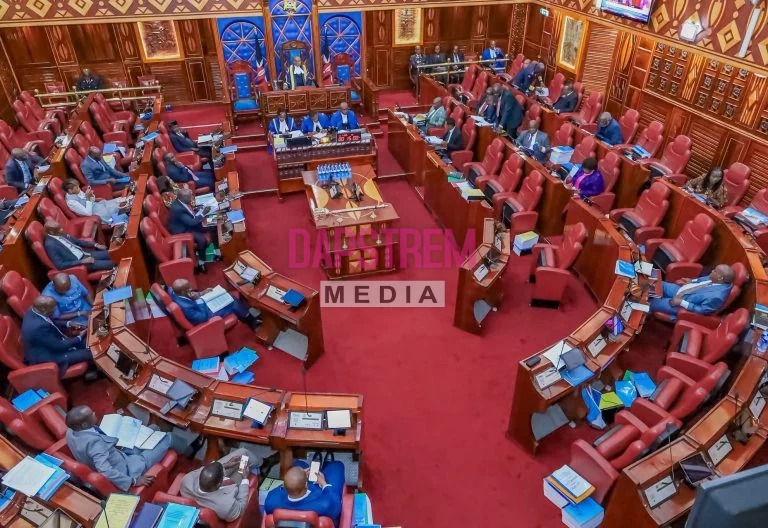
The Senate Standing Committee on National Cohesion, Equal Opportunity and Regional Integration, chaired by Turkana Senator James Lomenen, issued the summons on Thursday, November 26, 2026. The commission is expected to appear before the committee next Thursday to explain the measures it has put in place to ensure that the forthcoming election is conducted in a free, fair, credible and peaceful manner.
The development comes at a time when electoral preparedness has become one of the most important national conversations. With the 2027 General Election scheduled for August 10, the country has less than a year to ensure that all the necessary institutions, systems and procedures are ready to support a transparent and credible electoral process.
The Senate’s action is therefore more than a parliamentary disagreement over attendance. It is a reminder that election preparedness is a matter of national importance and that every institution entrusted with protecting democracy must remain accountable to the people it serves.
Senate Demands Accountability From the Electoral Commission
According to the committee, IEBC had been invited on three occasions to brief senators on its preparedness for the 2027 General Election but failed to honour the invitations.
The committee expressed concern over the commission’s absence, noting that electoral institutions play a critical role in protecting the integrity of elections and strengthening public confidence in the democratic process.
Through the summons, the commission will be required to explain its level of preparedness and respond to questions from senators regarding the steps it has taken to ensure that the country is adequately prepared for the next election.
The committee has emphasised the importance of accountability, institutional cooperation and timely engagement in the electoral preparation process.
The Senate’s position reflects the expectation that IEBC should maintain open communication with Parliament and other relevant institutions, particularly as the country approaches a major constitutional exercise that affects millions of citizens.
Parliamentary committees provide an important platform for examining the performance of public institutions, reviewing their plans and identifying possible challenges before they become serious national problems.
In this case, the committee’s interest is centred on ensuring that the commission has a clear and realistic plan for conducting the 2027 elections.
The failure to attend the previous invitations has raised questions about the level of cooperation between the electoral body and the parliamentary committee. While the summons is intended to secure the commission’s appearance, the eventual briefing will be an opportunity for IEBC to clarify its position and demonstrate the progress it has made.
The commission is expected to provide senators with a comprehensive explanation of its preparedness, including the administrative, technical and logistical arrangements required for the election.
Why Election Preparedness Matters
Election preparedness is one of the most important responsibilities of an electoral commission. A successful General Election does not begin on polling day. It requires months, and in some cases years, of planning, consultation, procurement, voter registration, public education and coordination with other institutions.
For Kenya, the 2027 election will be a major test of the country’s democratic institutions. The electoral commission must ensure that every eligible voter has a fair opportunity to participate, that political parties compete under clear rules and that the results reflect the will of the electorate.
The process also requires a reliable voters’ register, effective election technology, adequate polling materials, trained election officials and sufficient security arrangements.
Any weakness in these areas could affect the credibility of the entire electoral process.
The Senate’s demand for an update is therefore timely. By seeking information on the commission’s readiness before the election approaches, lawmakers have an opportunity to identify areas that require urgent attention and encourage corrective measures.
The objective should not simply be to establish whether IEBC has prepared a timetable. It should be to determine whether the commission has the resources, personnel, systems and institutional support needed to implement that timetable successfully.
A credible election requires more than assurances. It requires evidence of progress, clear targets and the ability to meet deadlines.
IEBC Faces Pressure Over Public Confidence and Electoral Reforms
The summons comes against the backdrop of growing pressure from political leaders and other stakeholders who have raised concerns about the credibility and transparency of the 2027 electoral process.
Opposition leaders have recently intensified their demands for electoral reforms, insisting that outstanding concerns must be addressed before the country heads into the next General Election.
Among the issues raised are calls for an independent audit of the voters’ register, transparency in the procurement of election technology, electronic transmission of results and greater openness in the presidential results-tallying process.
The concerns have become a central part of the ongoing debate about the commission’s preparedness.
On November 19, 2026, a consultative meeting between IEBC and political party leaders ended in a walkout by opposition leaders, who accused the commission of failing to adequately address their concerns.
The developments have placed the electoral commission under increasing scrutiny, with political actors demanding greater transparency and assurances that the next election will be conducted in a manner that commands public confidence.
The Senate summons adds another layer of accountability to the ongoing debate.
While political parties and opposition leaders have raised concerns from their respective positions, Parliament has a constitutional responsibility to scrutinise public institutions and ensure that they operate within the law.
The committee’s engagement with IEBC could therefore provide an opportunity to separate political disagreements from practical questions about electoral preparedness.
The commission must be able to explain what has been achieved, what remains outstanding and how it intends to address the challenges that could affect the election.
The Challenges Facing the 2027 Election Preparations
The electoral commission is operating within a demanding environment as it prepares for the next General Election.
One of the major concerns is the procurement of election technology and other essential materials. Such processes require sufficient time to identify suppliers, complete procurement procedures, configure systems, test equipment and ensure that everything is ready for use across the country.
IEBC Chairperson Erastus Ethekon has previously warned that prolonged court battles involving the commission could interfere with its preparations.
The commission has indicated that delays in resolving legal disputes could affect the procurement of election technology and ballot papers, potentially disrupting important activities such as mass voter registration.
The chairperson has also stressed that the constitutional election date leaves little room for adjustments, meaning the commission must work within the established timelines.
These concerns demonstrate why timely parliamentary oversight is necessary.
If there are procurement delays, funding challenges or unresolved legal questions, they must be identified early enough for the relevant institutions to find solutions.
The commission must also ensure that its preparations are not affected by uncertainty surrounding election technology, voter registration and the management of electoral information.
The 2027 election will require extensive coordination between IEBC, the National Treasury, security agencies, political parties, the Judiciary and other stakeholders.
No single institution can successfully deliver a credible election without cooperation from the others.
The Senate’s briefing could help establish whether these partnerships are functioning effectively and whether the commission has received the support it needs to meet its obligations.
The Importance of a Transparent Voters’ Register
One of the most sensitive issues in any election is the voters’ register.
The register determines who is eligible to vote and forms the foundation of the electoral process. Its accuracy and credibility are therefore essential to ensuring that every eligible citizen is represented.
Political leaders and other stakeholders have repeatedly called for greater transparency in voter registration and the verification of voter information.
An accurate register helps prevent duplication, protects the rights of eligible voters and reduces the possibility of disputes over the legitimacy of the electoral process.
The commission must also ensure that voter registration services are accessible to citizens across the country, including those in remote areas and Kenyans living abroad.
The process requires adequate technology, trained personnel and a clear public communication strategy.
The Senate’s engagement with IEBC should therefore examine how far the commission has progressed in updating and verifying the voters’ register, as well as the measures it has adopted to make the process transparent.
The public deserves confidence that the register will be accurate, accessible for lawful scrutiny and prepared within the required timelines.
Election Technology and the Need for Transparency
Technology has become an increasingly important part of election management.
Electronic voter identification, results transmission and other digital systems can improve efficiency, but their effectiveness depends on proper procurement, testing, security and transparency.
The commission must ensure that the technology selected for the 2027 election is reliable and capable of operating under the conditions experienced across Kenya.
It must also establish clear procedures for dealing with technical failures, communication disruptions and other challenges that may arise during voting and the tallying of results.
The public should be able to understand how the systems work and what safeguards are in place to protect the integrity of electoral information.
Transparency in procurement is equally important. Election technology contracts involve significant public resources, and the process must be conducted in accordance with the law.
The Senate has an opportunity to question the commission about its procurement plans, timelines and readiness to deploy the necessary systems.
Such scrutiny would help reassure the public that the commission is taking the technical aspects of election management seriously.
The Role of Parliament in Protecting Democracy
The Senate’s decision to summon IEBC highlights the important role Parliament plays in overseeing public institutions.
Although the commission is constitutionally independent, independence does not mean freedom from accountability.
Public institutions must operate within the law, use public resources responsibly and provide information about their performance when required by the appropriate oversight bodies.
Parliamentary committees are therefore an important part of the country’s democratic system.
Their work helps ensure that institutions do not operate in isolation and that potential challenges are addressed before they affect the public.
In the case of IEBC, the committee’s concerns are directly connected to the rights of Kenyan citizens.
Every eligible voter has a constitutional right to participate in elections, and the electoral commission has a responsibility to create an environment in which that right can be exercised freely and fairly.
The Senate’s summons should consequently be viewed as an opportunity for constructive engagement rather than merely a confrontation between two institutions.
The commission should use the appearance to provide detailed answers, demonstrate its progress and identify areas where additional support or intervention may be necessary.
At the same time, senators should focus on practical solutions that can strengthen the electoral process rather than allowing the discussion to become a political exchange.
A Credible Election Requires Cooperation From All Stakeholders
The responsibility of conducting a successful General Election does not rest on IEBC alone.
Political parties must respect electoral laws, present their concerns through lawful channels and prepare their supporters for peaceful participation.
The Judiciary must be able to resolve electoral disputes within reasonable timelines, particularly where such disputes affect critical preparations.
Government institutions must provide the necessary resources and security support, while civil society organisations and election observers have a role in promoting transparency and accountability.
The media also has an important responsibility to provide accurate information, explain electoral processes and counter misinformation that could undermine public confidence.
Citizens, meanwhile, must remain informed about their voting rights and participate peacefully in the democratic process.
The commission’s preparedness will be strengthened when all these stakeholders work together toward a common objective.
The Senate’s demand for accountability should therefore be accompanied by a broader commitment to cooperation.
The country cannot afford a situation in which institutions delay their responsibilities, ignore important concerns or allow political disagreements to interfere with the preparation of the election.
What Kenyans Expect From IEBC
As the 2027 General Election approaches, Kenyans expect the electoral commission to demonstrate competence, transparency and independence.
The public wants an election in which every eligible voter can cast a ballot without intimidation, every candidate has a fair opportunity to compete and every vote is counted accurately.
Citizens also expect the commission to communicate clearly about its activities and respond promptly to legitimate concerns.
The summons from the Senate provides IEBC with an opportunity to address these expectations directly.
The commission should be prepared to explain its progress in voter registration, election technology, procurement, training of officials and coordination with other institutions.
It should also provide realistic timelines for completing outstanding tasks and explain how it intends to overcome any challenges that may threaten the election schedule.
Public confidence is not built through statements alone. It is earned through consistent performance, openness and the ability to deliver on commitments.
The commission must therefore demonstrate that its preparations are progressing in a manner that meets constitutional requirements and protects the democratic rights of all Kenyans.
Conclusion
The Senate’s decision to summon the Independent Electoral and Boundaries Commission over its failure to attend three parliamentary invitations has brought the question of 2027 election preparedness back into the national spotlight.
With the General Election scheduled for August 10, 2027, the country is approaching a period in which every delay, unresolved dispute or institutional failure could have serious consequences.
The commission’s appearance before the Senate will be an important opportunity to explain its readiness, respond to concerns and demonstrate that it is taking the responsibility of organising the next election seriously.
The ultimate goal should be to ensure that Kenya enters the 2027 election period with a credible voters’ register, reliable technology, adequate resources, transparent procedures and institutions that work together effectively.
A peaceful and credible election is not achieved through last-minute interventions. It is built through early planning, accountability, cooperation and respect for the law.
The Senate has now demanded answers from IEBC. What matters next is whether the commission will provide the assurances, evidence and practical commitments needed to strengthen confidence in the electoral process.
For millions of Kenyans, the 2027 General Election is not simply another political event. It is an opportunity to exercise their democratic rights and determine the country’s future.
That responsibility must be handled with the seriousness, transparency and urgency it deserves.