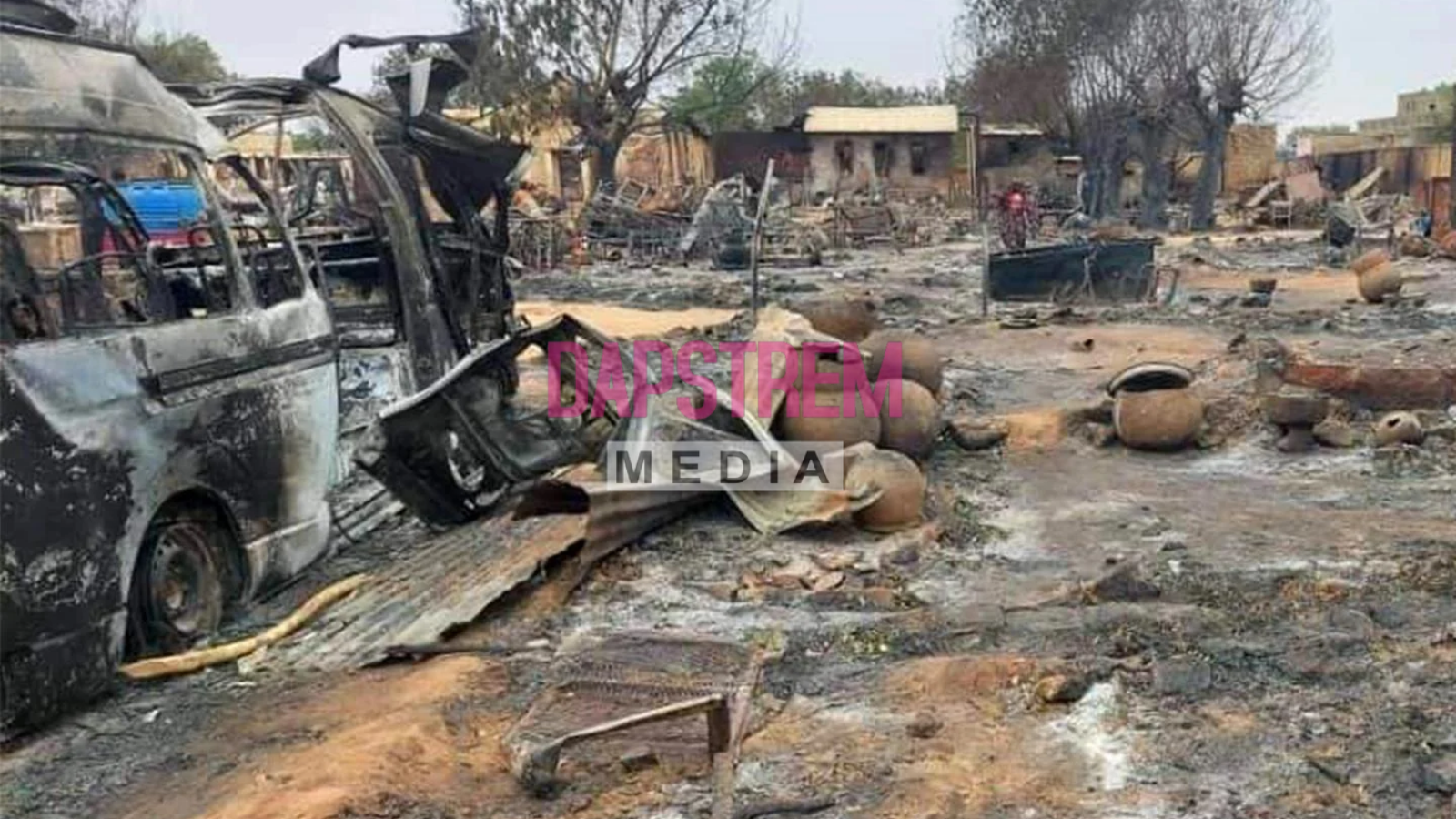
At least 24 civilians, including seven children and six women, have been killed in a fresh wave of violence in South Sudan, highlighting the country’s worsening security crisis and the growing vulnerability of communities caught between armed groups.
The deadly attack occurred between Saturday night and Sunday morning in Bol Bol Boma, an area in Tonj East County, Warrap State, in northwestern South Sudan.
Machuei Bith, the acting commissioner of Tonj East County, told Agence France-Presse (AFP) that armed attackers crossed into the area from neighbouring Unity State and launched an assault that left civilians, including cattle herders, dead.
Bith attributed the attack to fighters belonging to the Sudan People’s Liberation Army in Opposition (SPLA-IO), a movement loyal to former vice-president Riek Machar, who has been under house arrest since March 2025.
The reported death toll rose from an initial 15 to 24 as authorities received further information about the victims. Four armed attackers, reportedly wearing SPLA-IO uniforms, were also killed during the incident, according to the commissioner.
A local police officer confirmed the account on condition of anonymity, warning that the number of casualties could increase. Authorities were expected to dispatch a team to the scene to assess the damage and establish further details.
The latest bloodshed comes amid mounting insecurity in Warrap State, where intercommunal disputes, cattle raids and armed confrontations have repeatedly claimed civilian lives.
Last week, clashes between groups from two districts in Warrap State’s Makuach market left 17 people dead and 23 others injured, according to local authorities. In October, at least 72 people were killed in intercommunal violence along the border between Warrap and Unity states.
South Sudan, which gained independence from Sudan in 2011, has struggled to achieve lasting peace following a devastating civil war that erupted in December 2013. The conflict, fought largely between forces loyal to President Salva Kiir and Machar, killed an estimated 400,000 people before a 2018 peace agreement brought a fragile truce.
However, political tensions and renewed fighting have continued to undermine the agreement, with clashes between government forces and opposition fighters intensifying in recent months.
Beyond the political confrontation, communities in several regions remain trapped in cycles of revenge attacks, cattle theft and competition over land and resources, with widespread access to firearms making local disputes increasingly deadly.
The latest killings underscore the urgent need for stronger civilian protection, accountability and renewed peace efforts. For the families mourning their loved ones in Bol Bol Boma, the immediate reality is another devastating reminder that peace remains painfully elusive in the world’s youngest nation.